African Forest Elephant
Loxodonta cyclotis
Young African elephant walking among trees in a forested reserve 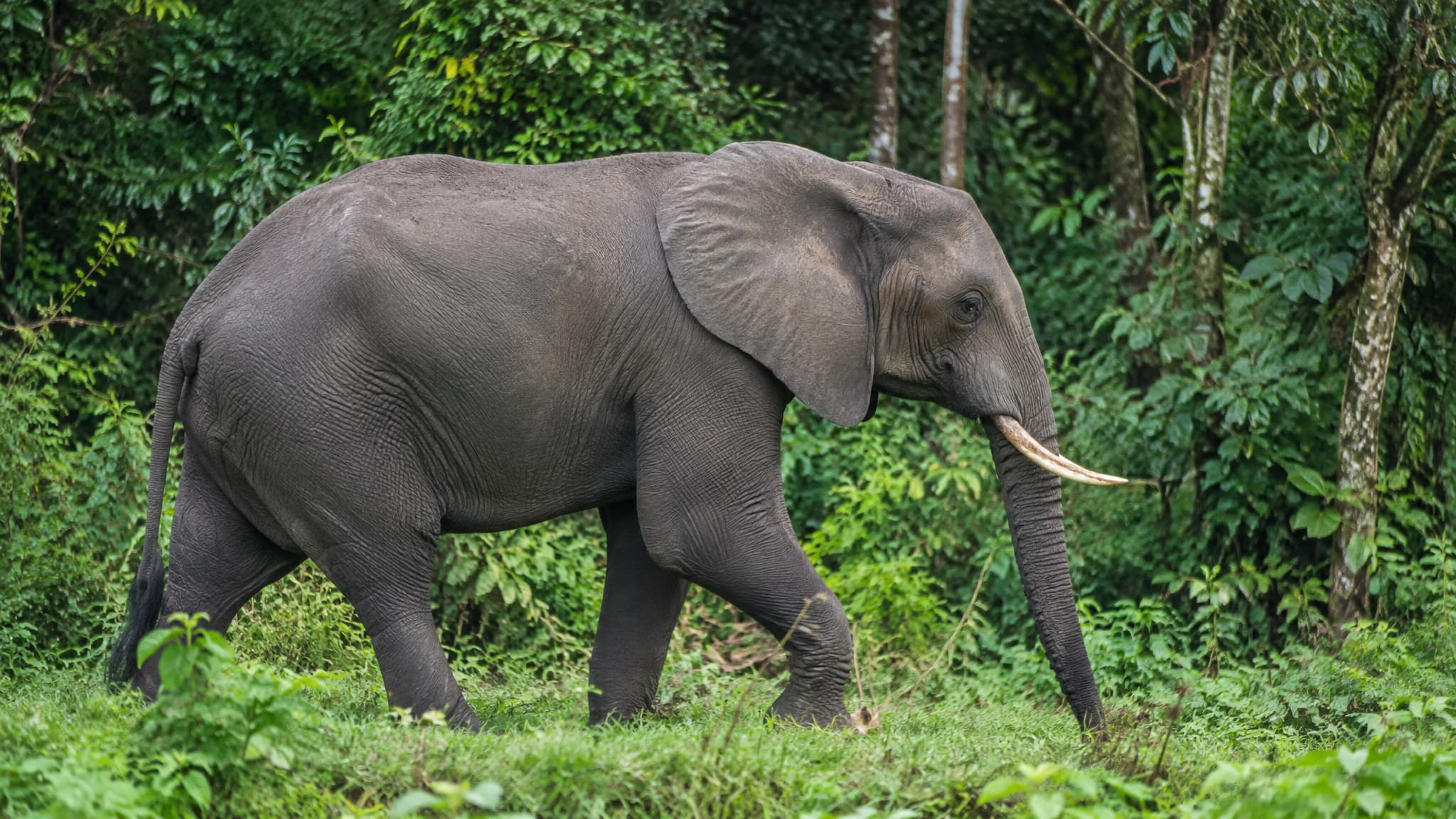 AI-generated
An African elephant walks to the right through dense tropical forest vegetation, shown in side profile with broad rounded ears, a lowered trunk, and visible tusks.

The African forest elephant (Loxodonta cyclotis) is one of three living elephant species and the smaller, forest-adapted cousin of the African savanna elephant. Until genetic studies confirmed it as a separate species in the early 2000s, it was treated as a forest subspecies of a single African elephant. It has rounded ears (the epithet cyclotis means "round-eared"), straighter tusks that point downward to move through dense vegetation, and a more compact build suited to rainforest understory.
Native to the humid forests of central and western Africa, forest elephants live in small matriarchal family groups of two to eight individuals and rarely mingle with other herds. They feed mainly on fruit, leaves, bark, and twigs, and visit forest clearings called bais and mineral-rich soil patches. As they travel, they disperse seeds over long distances and maintain trails and clearings, earning them a role as keystone "gardeners" of the Congo Basin rainforest.
The species is listed as Critically Endangered on the IUCN Red List, with an estimated population decline of more than 80% in recent decades. Poaching for ivory is the primary threat—straight forest-elephant tusks are especially valued on black markets—alongside habitat loss from logging, agriculture, and mining. Protected reserves in countries such as Gabon and the Republic of the Congo remain important strongholds.