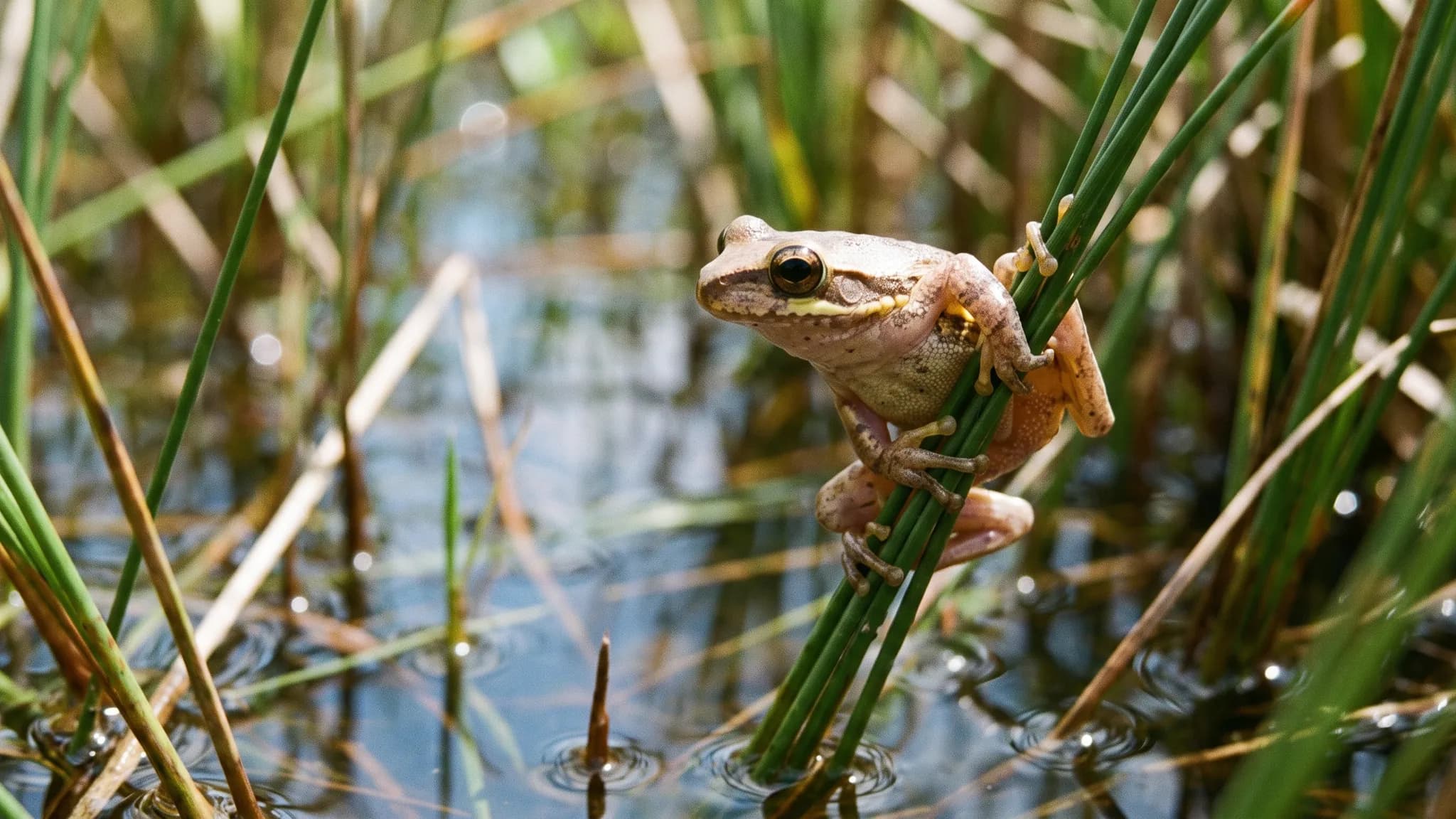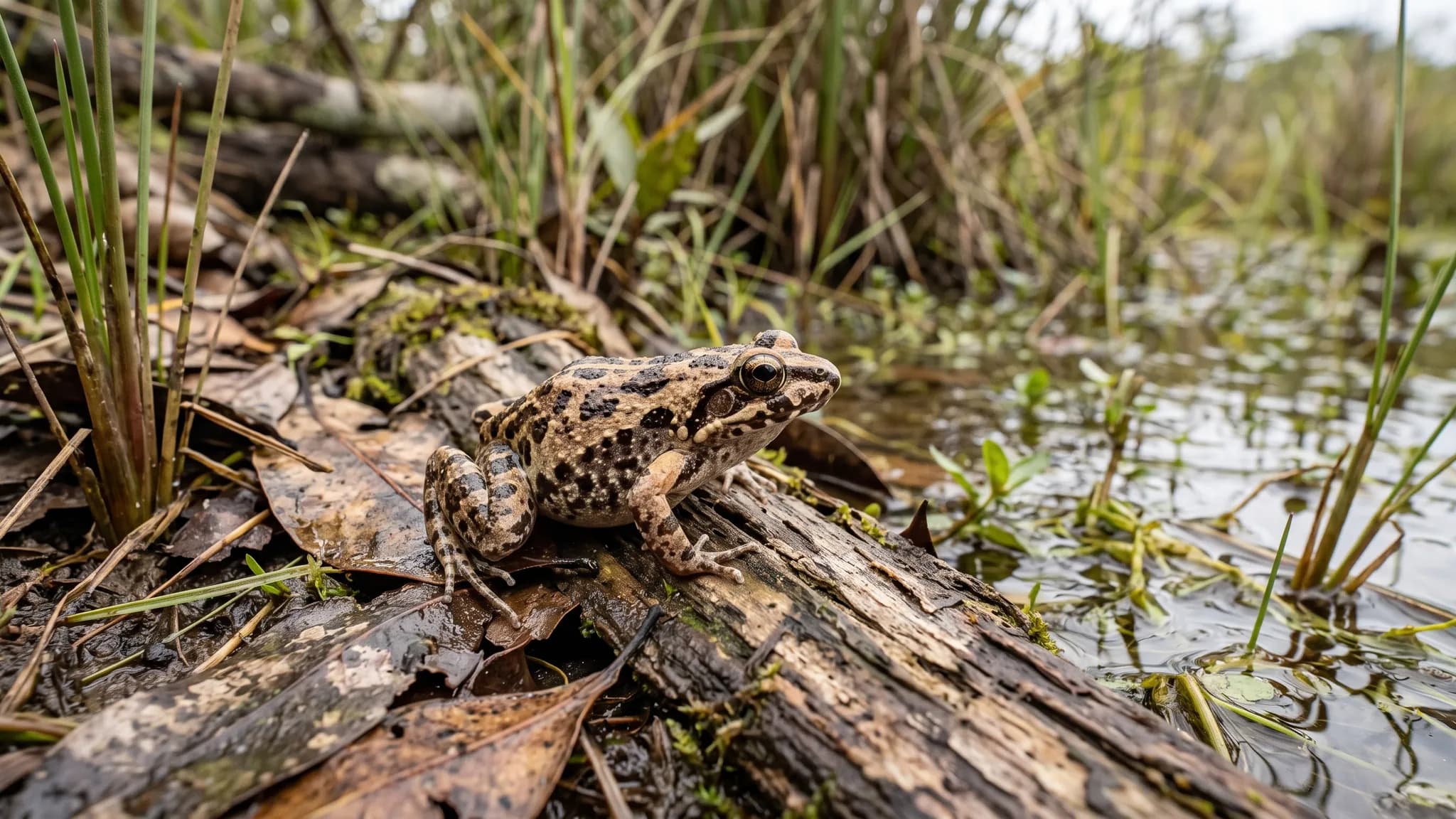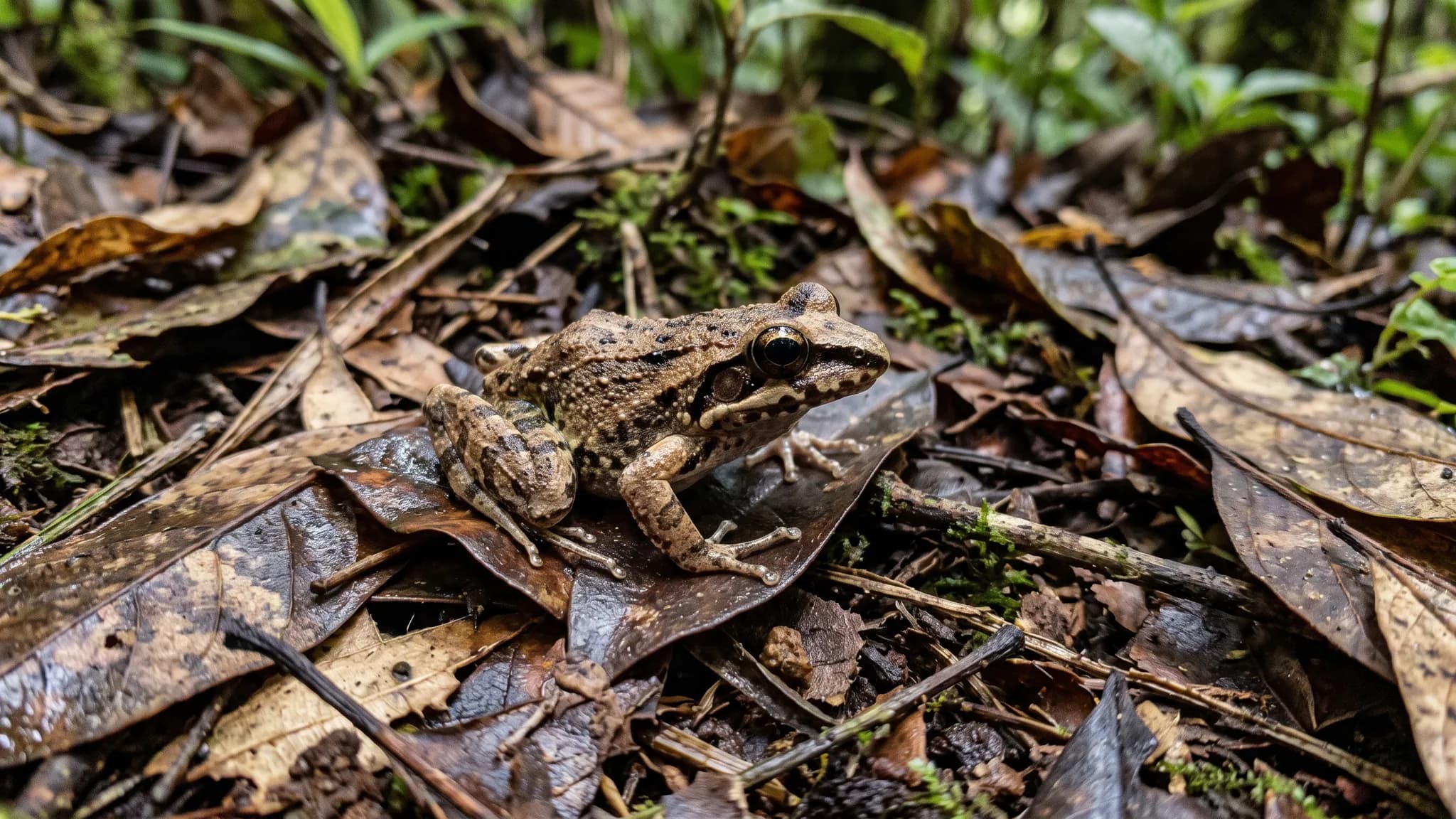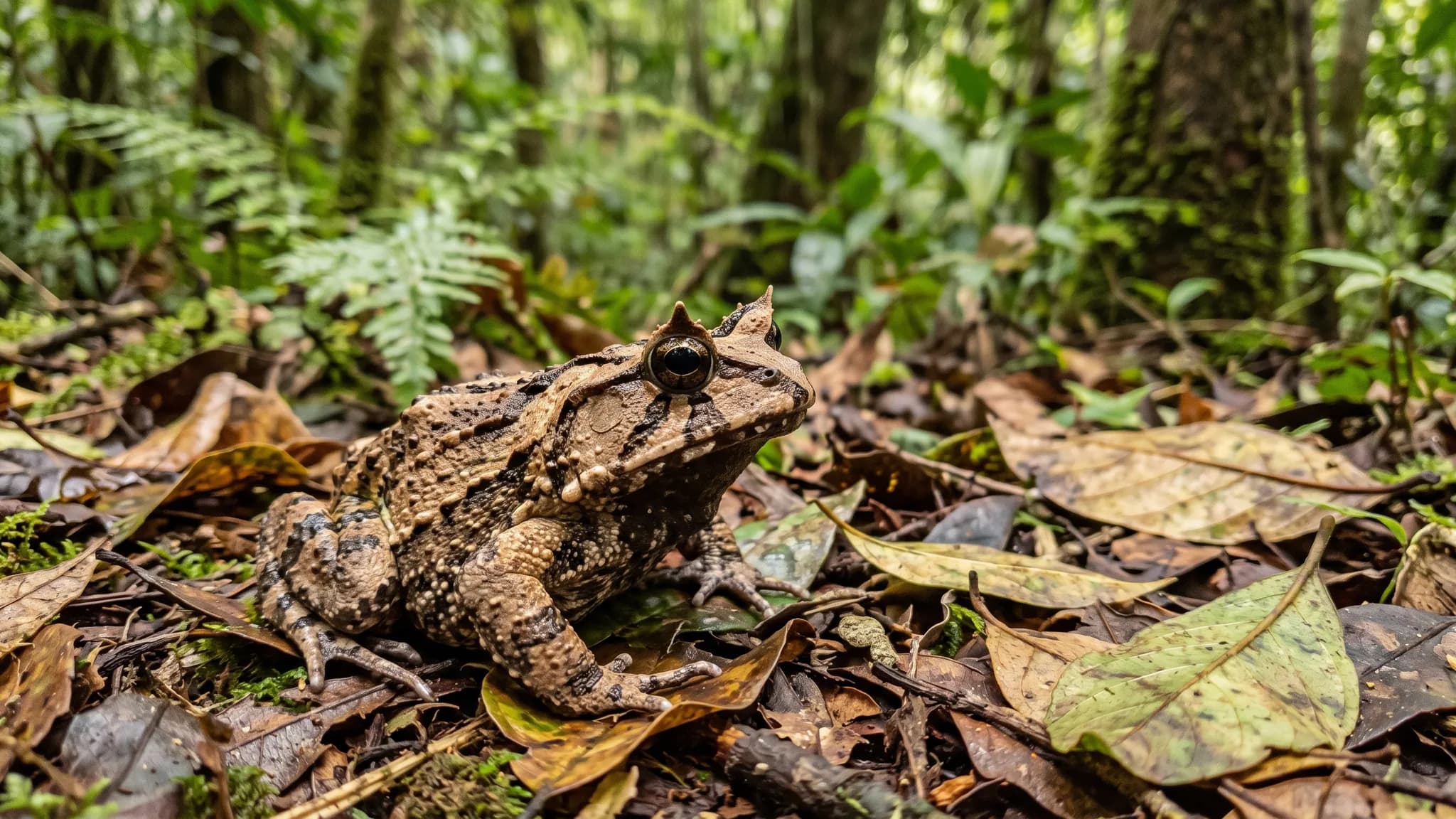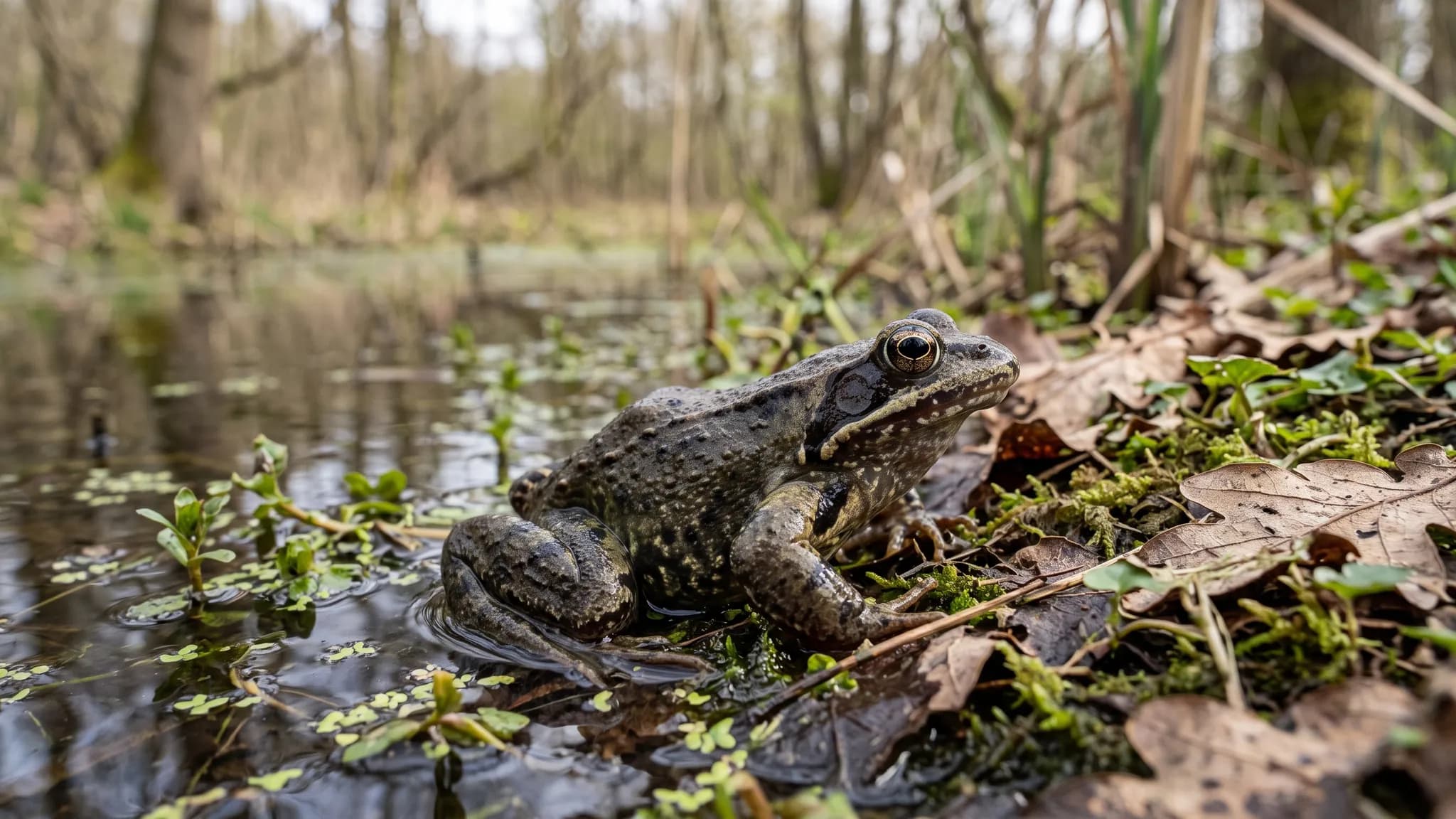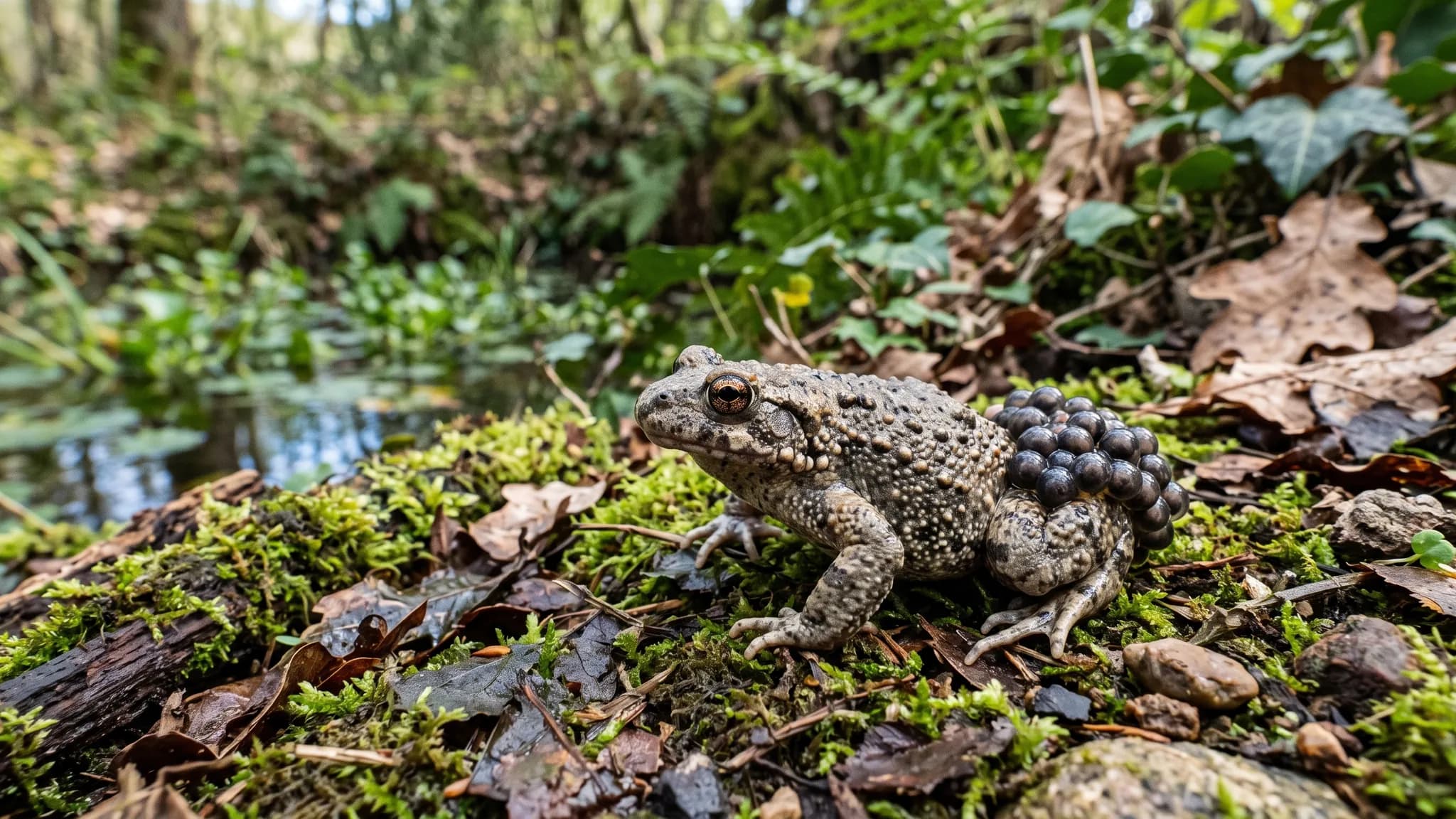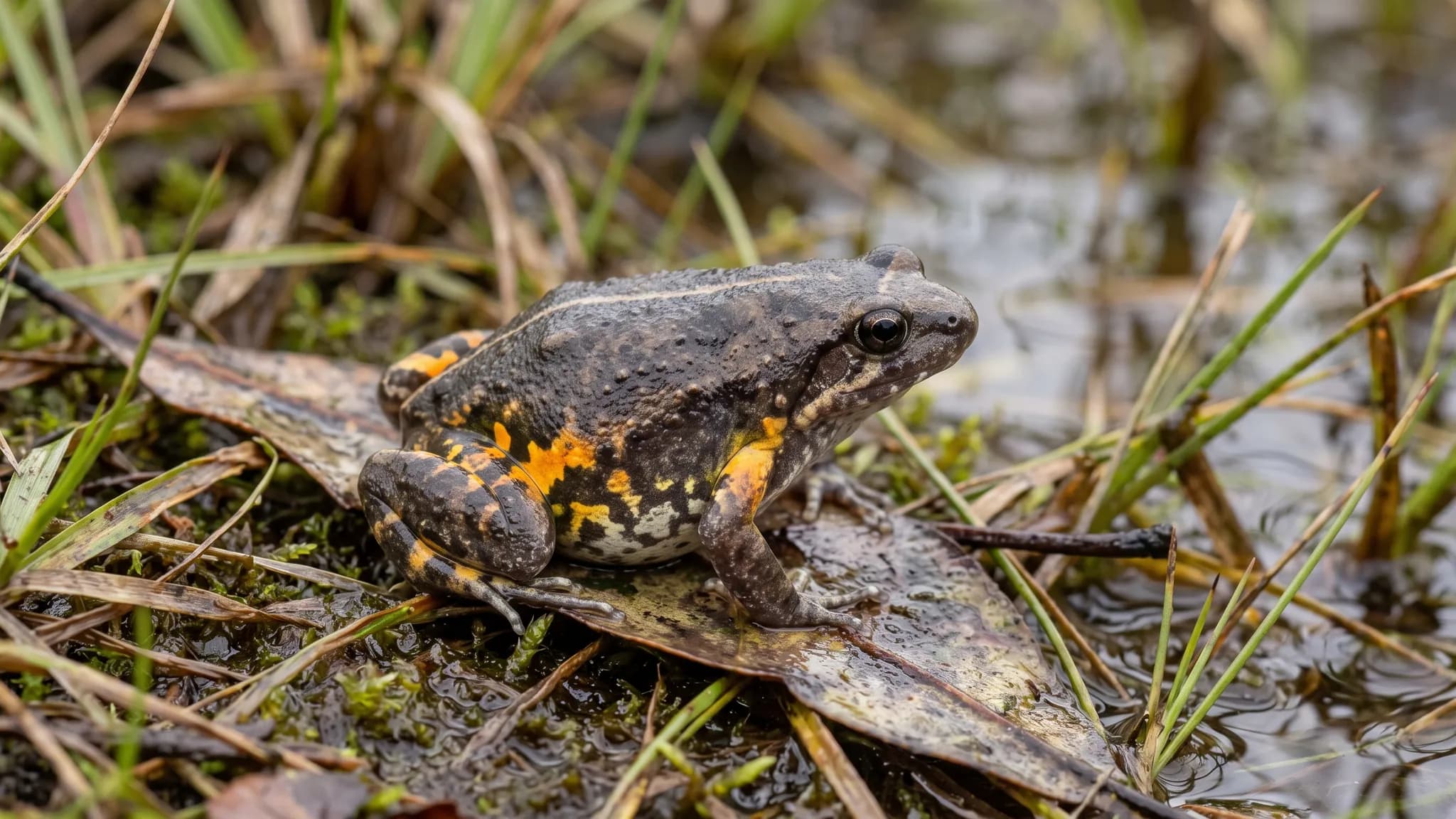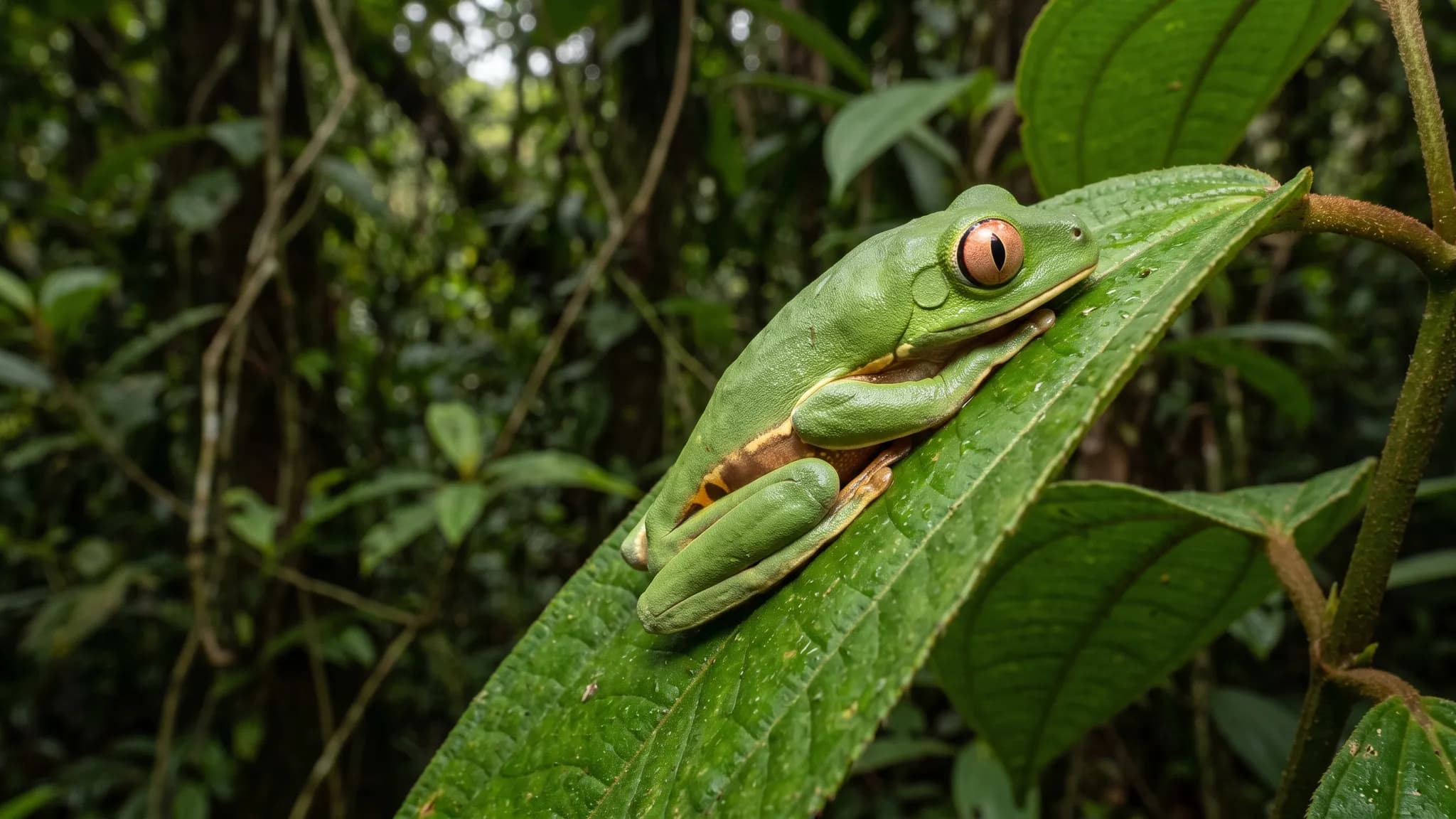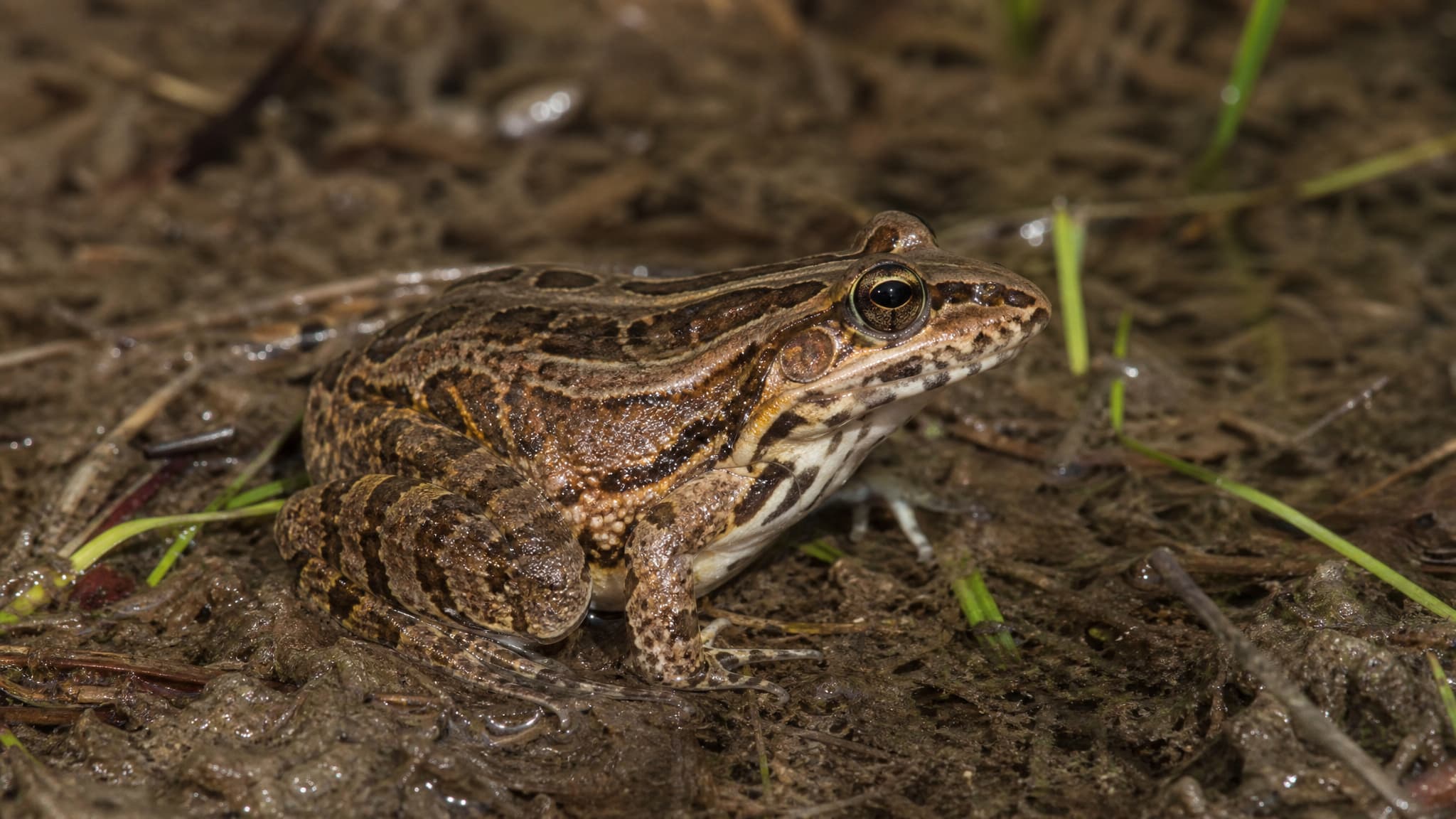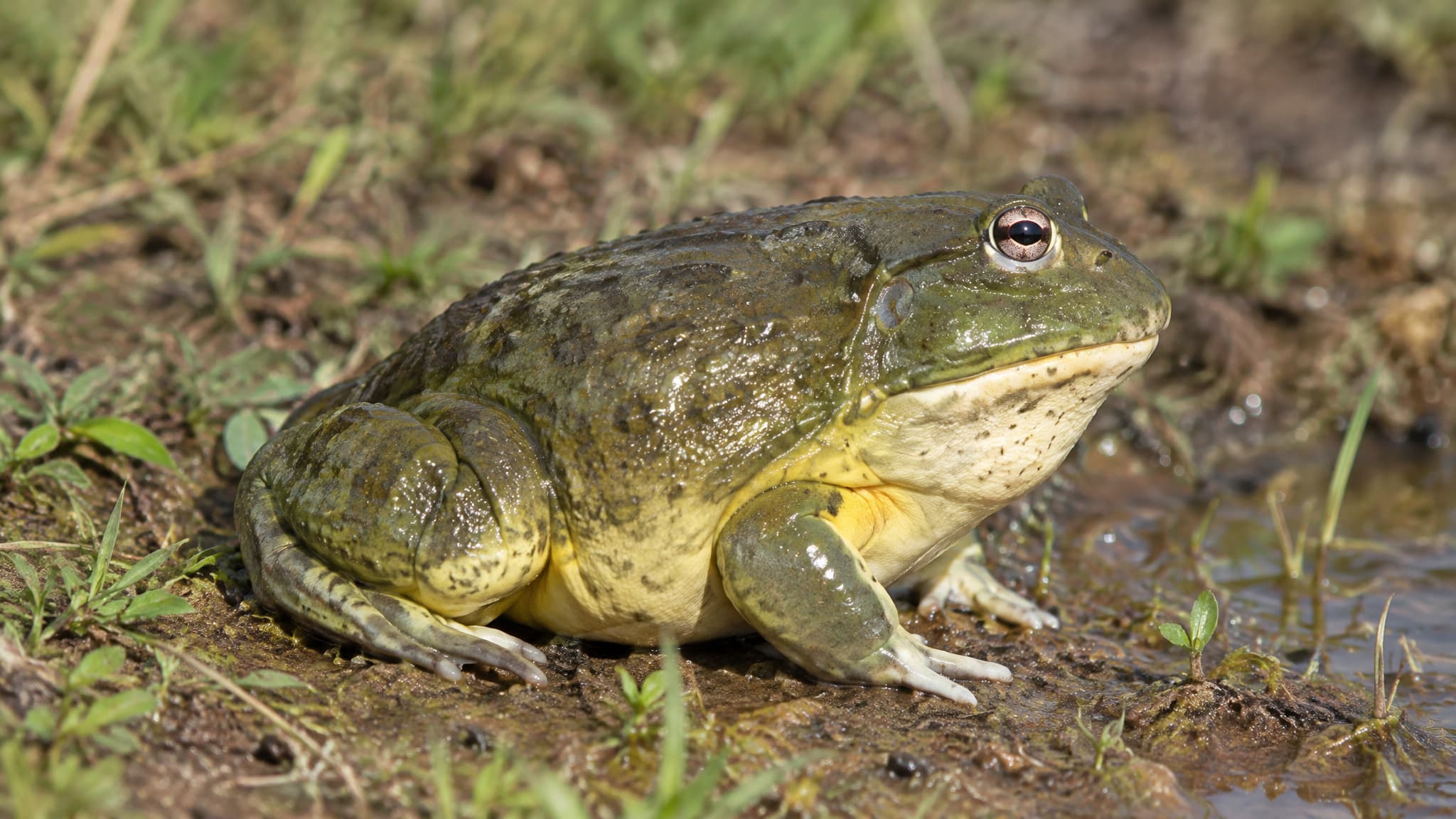
A large African bullfrog crouches in profile on muddy ground beside shallow water, showing a broad mottled olive body, pale throat and belly, prominent eye, and stout limbs.
Wildlife category

Amphibians

Vertebrates that live in water and on land

Published animals

34

Category

Amphibians

Slug

amphibians

Animals In This Category

Browse featured species, habitat clues, and discovery paths for the Amphibians category.

34 animals found

Stična olm
Amphibians

Stična olm

Proteus anguinus

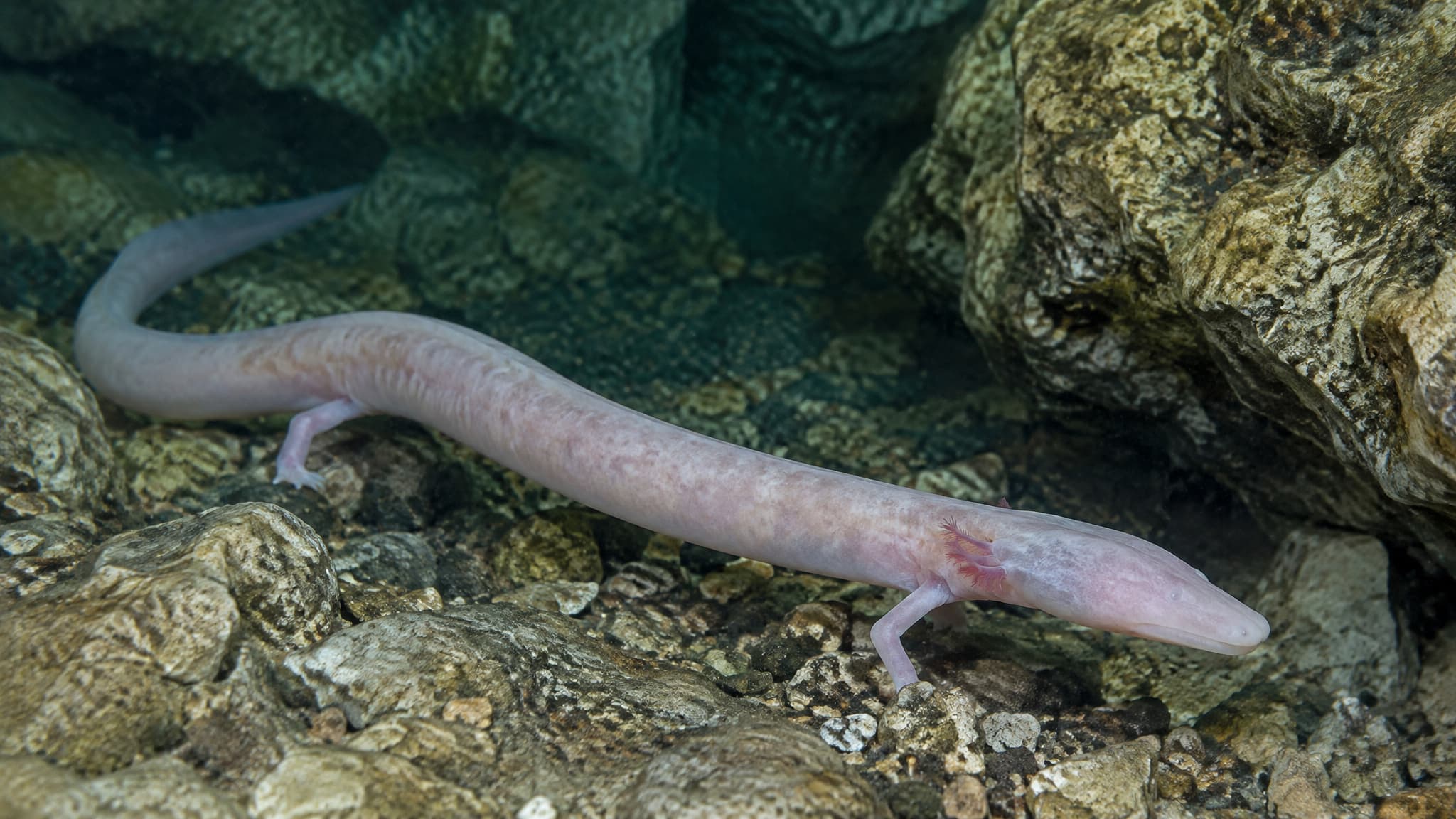
The Stična olm (Proteus anguinus) is a blind cave salamander of the family Proteidae that keeps its larval form, gills included, throughout life. For more than two centuries the olm was treated as a single species spread across the Dinaric Karst. In 2026 Dufresnes and colleagues, followed by Amphibian Species of the World, recognized nine species in the genus Proteus, and the name anguinus, Latin for snake-like, now belongs only to the Stična lineage of central Slovenia. An independent revision by Trontelj and colleagues reached the same nine-species picture and also kept the name for the olms around Stična. Like the other white olms of Slovenia it has unpigmented skin. It is told apart from its closest look-alikes, P. xanthostictus and P. freyeri, by an average combination of a higher and wider head, longer gills and shorter hind limbs. Its sister species is P. freyeri of the neighbouring Dolenjska lineage, which lives only a few kilometres away in the same water network; the two appear to have hybridized in recent times. The species is restricted to the low Dolenjska karst, at the northern edge of the Dinaric Karst. It is known from a narrow west-to-east belt running from the Višnjica valley past Stična and Vir pri Stični to Šentpavel, with an older record at Mačji Dol, in another river system, assigned to it only tentatively. Most records come from karst springs, estavelles and overflow outlets fed by underground water. Almost nothing has been measured for this species alone, so what is known comes from studies of olms in the former broad sense. Those reach 20–30 cm, rarely 40 cm, have regressed eyes covered by skin and live in well-oxygenated water at a stable 8–11 °C. They hunt small crustaceans, snails and some insects, swallow prey whole and can survive up to 10 years without food. Females lay up to 70 eggs about 12 mm across, which take about 140 days to develop at 10 °C. Sexual maturity comes at about 14 years, and adults are estimated to live 68.5 years on average and more than 100 years at most. This is the olm that science met first. The type specimen most likely came from the Virski studenec spring near Stična, olms were kept by the monks of Stična Abbey, and Schreibers based his 1801 study of the olm on animals from this area. The IUCN lists the olm in the broad sense as Vulnerable, with groundwater pollution as a main threat. With an extent of occurrence of only 15 km² and an area of occupancy of 36 km², the 2026 revision recommends that this species be treated as Critically Endangered. Olms have been protected in Slovenia since 1922 and are listed in Annexes II and IV of the EU Habitats Directive.

View Details
Ringed caecilian
Amphibians

Ringed caecilian

Siphonops annulatus

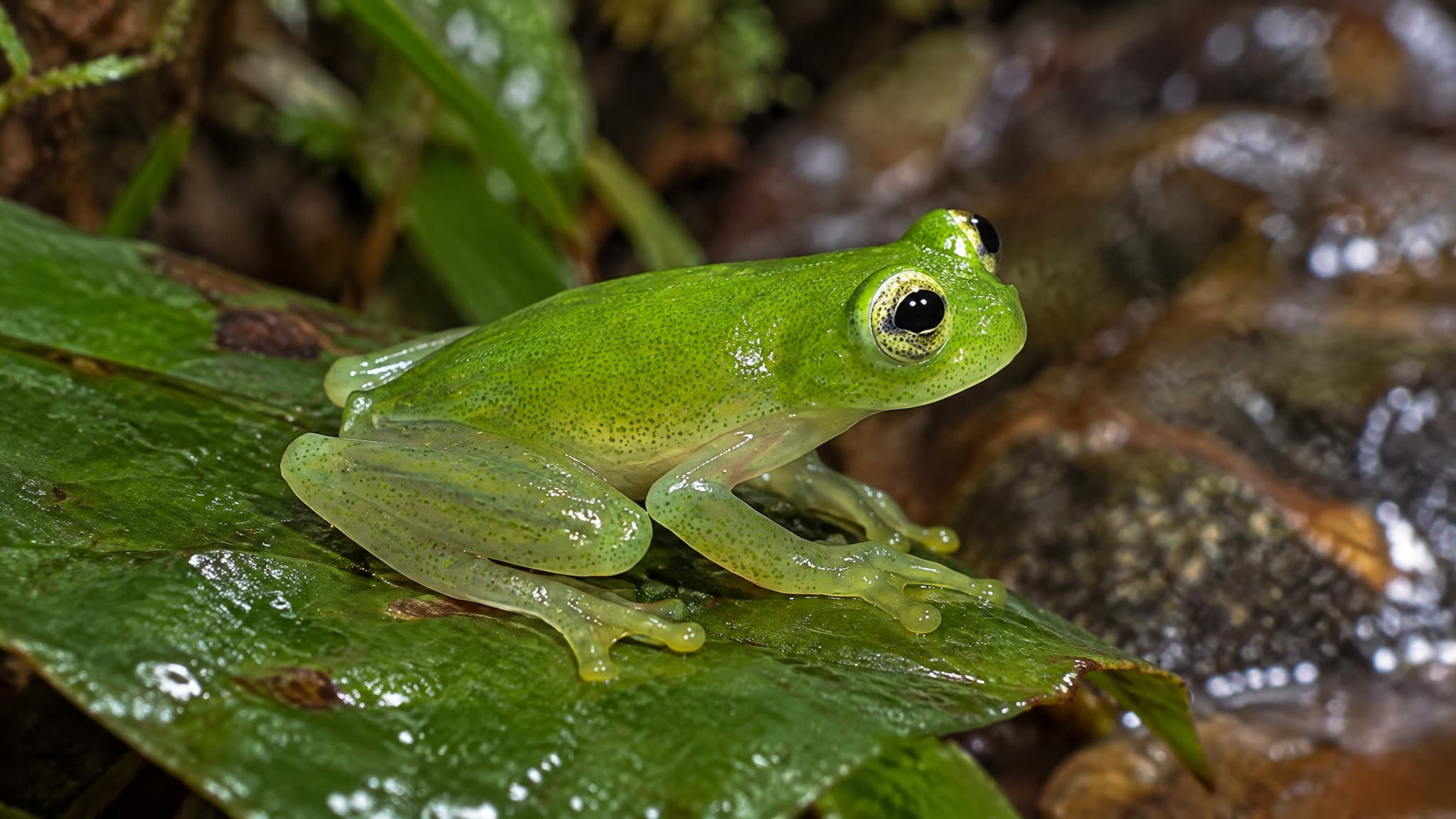
The ringed caecilian (Siphonops annulatus) is a legless, burrowing amphibian of the order Gymnophiona and the family Siphonopidae. Although it looks like a large earthworm or a small snake, it is more closely related to frogs. Adults reach 286–450 mm in total length. The body is cylindrical and slightly wider than it is deep, bluish-black to slate in colour, and circled by annular grooves edged in white or cream, which give the species its name; only the last 3–4 grooves near the rear do not encircle the body. A heavily ossified skull works as a digging tool. It may have the broadest known range of any terrestrial caecilian, spreading across South America east of the Andes. It was first described from Brazil and is also reported from Argentina, Bolivia, Colombia, Ecuador, French Guiana, Guyana, Paraguay, Peru, Suriname and Venezuela. It lives in moist lowland forest, dry and moist savanna, shrubland, seasonally flooded grassland and even pastures, plantations, rural gardens and degraded former forest. In southern Bahia it is abundant in cabruca cacao plantations, where native shade trees keep the leaf litter cool, humid and rich in organic matter. The species spends most of its life underground; tunnels studied in the field reach no deeper than 20 cm. It feeds on invertebrates that live in the soil. Glands in the head release a lubricating mucus that may help it burrow, while glands concentrated in the tail region hold noxious chemicals, much like the poison glands of toads and newts. Venom glands in the lip region release secretions onto the teeth, so a prolonged bite may deliver toxins to prey or attackers. It lays eggs. In a long-term study population, mating took place from late August to early October, egg-laying in November and December when rainfall peaks, and hatching from late December to early January. The young hatch in an undeveloped state and feed on their mother's specially thickened outer skin, a behaviour called maternal dermatophagy, peeling it off with special teeth. A 2024 study in Science, based on 242 hours of film of 16 mothers from cacao plantations in Bahia, showed that they also drink a thick, fat- and carbohydrate-rich fluid from the mother's cloaca and make high-pitched clicks before feeding. The full cycle of maternal care, from egg-laying to independent young, lasts about 3 months. Adult lifespan has not been documented. As a common soil predator it is part of the underground food web of forests and agroforests. The IUCN lists it as Least Concern, and no major threats to the species are known. Researchers note that its survival in southern Bahia is closely tied to keeping traditional shaded cacao farming, which has made the region one of the best natural laboratories for studying caecilians.

View Details
Fleischmann's glass frog
Amphibians

Fleischmann's glass frog

Hyalinobatrachium fleischmanni

Fleischmann's glass frog (Hyalinobatrachium fleischmanni) is a small tree frog of the family Centrolenidae, known for the see-through skin of its underside. Males measure 19–28 mm and females 23–32 mm. The back is pale lime green, sprinkled with tiny dark melanophores and small yellowish spots; the tips of the fingers and toes are yellow and the iris is gold. Seen from below, the belly skin is transparent and the beating heart is visible, while a white sheet of guanine covers several internal organs. The species lives in humid lowland and montane forests, from near sea level to above 1600 m, always close to clear, flowing and often rocky streams. It was long treated as one of the most widespread glass frogs, ranging from Mexico to Ecuador. A 2020 integrative revision by Mendoza-Henao and colleagues split that complex: H. fleischmanni in the strict sense now covers populations from eastern Honduras to Costa Rica, while Mexican and Guatemalan frogs were assigned to H. viridissimum and the southern lineages of Costa Rica and South America to H. tatayoi. It is nocturnal and arboreal. By day it sleeps pressed against the underside of a leaf, and while asleep it stores about 89% of its red blood cells in the liver, becoming 2 to 3 times more transparent, a trick that probably helps it avoid predators. At night it hunts small insects such as crickets, moths and flies, as well as spiders and, at times, smaller frogs. Breeding takes place in the rainy season. Males hold territories on leaves hanging over streams, calling with a single short, high-pitched peep, and will chase or wrestle intruders. Females lay clutches of about 18–30 eggs on the underside of leaves above the water. The male stays with the eggs and moistens them with urine so they do not dry out. The eggs hatch after about 10–15 days, and the tadpoles drop into the stream, where they hide in debris or gravel for 1–2 years before metamorphosis. The lifespan of adults has not been documented. Losses are heavy: about 80% of clutches are eaten or destroyed before hatching, by cat-eyed snakes, harvestmen, fly larvae and fungi, and the fringe-lipped bat hunts calling males. As an insect-eater it likely fills an important role in its forest habitat. The IUCN lists it as Least Concern, although deforestation threatens its streams and urban noise reduces calling activity.

View Details
Panamanian Golden Frog
Amphibians

Panamanian Golden Frog

Atelopus zeteki

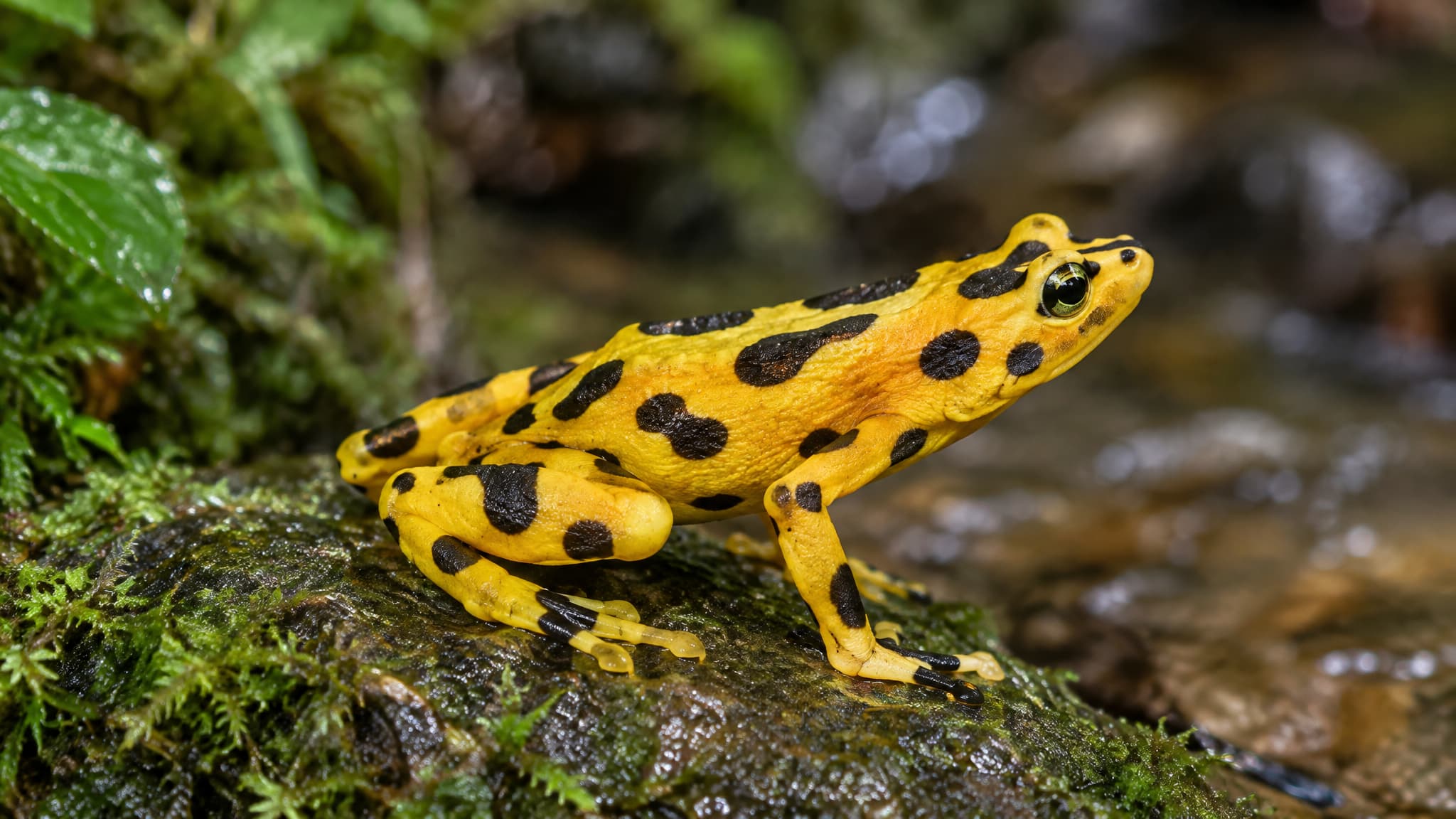
The Panamanian golden frog (Atelopus zeteki) is a small, brightly coloured harlequin toad in the family Bufonidae. Despite its common name, it is a true toad. Adults are bright yellow to gold, often with black spots, and their long, thin limbs give them a spidery walk. Females are clearly larger than males. In dry forests, males measure about 35-40 mm and females 45-55 mm from snout to vent, and animals from wet forests grow larger. The species is endemic to western-central Panama. It lived along streams in the rainforests and cloud forests of the Central Cordillera, at about 335 to 1,315 m above sea level. Males stay near streams all year to defend territories. Females move into the surrounding forest and come back to the water's edge to breed. Adults are insectivores that eat many kinds of small invertebrates, such as beetles, ants and flies. The roar of fast mountain streams can drown out calls, so both sexes signal by waving their front legs at rivals and mates. Their bright colour warns predators of strong skin toxins. These include zetekitoxin, a saxitoxin-like compound not known from any other amphibian. Breeding takes place in the late rainy and early dry season, from about November to January. In amplexus, the male fertilizes strings of 200 to 600 eggs, which the female attaches to rocks in flowing water. Tadpoles hatch after about a week and hold onto the stream bed with a large sucker on the belly. Zoo sources report a lifespan of up to about 12 years. It was once common, and it linked stream and forest food webs: tadpoles grazed in streams and adults hunted invertebrates. The amphibian chytrid fungus Batrachochytrium dendrobatidis caused severe declines, made worse by deforestation, pollution and collection. It is listed as Critically Endangered and possibly extinct in the wild. It survives in captive-breeding programmes in Panama and at North American zoos, and it is a national symbol of Panama.

View Details
Common Mudpuppy
Amphibians

Common Mudpuppy

Necturus maculosus

The common mudpuppy (Necturus maculosus) is a large North American salamander that spends its whole life in water. It is the largest member of its genus. Adults usually measure 20 to 33 cm, and some reach about 40 cm. The body is gray to rusty brown with scattered blue-black spots. It has a flat head, a tail flattened from side to side, short legs and four toes on each foot. Its best-known feature is a pair of bushy red external gills that it never loses. The mudpuppy is neotenic: it keeps its larval body form throughout adulthood and never leaves the water. Its range runs from southeastern Manitoba to southern Quebec, and south to Missouri and northern Georgia. It lives in rivers, permanent streams, weedy ponds and some large lakes. It needs plenty of cover, so it shelters under rocks, logs and plants. It can be found in shallow water or as deep as 30 m, depending on the season. The mudpuppy is mainly active at night, foraging along the bottom and hiding during the day. It is an opportunistic predator, and crayfish make up a large part of its diet. It also eats insect larvae, aquatic worms, snails, small fish, fish eggs and other amphibians, and it will scavenge carrion. Its common name comes from the popular belief that its squeaking sounds like a dog's bark. Courtship and mating take place in autumn, or in winter in southern populations. Eggs are laid in late spring. The female digs a nest under a submerged rock or log, attaches the eggs one by one to the underside, and guards them until they hatch 1 to 2 months later. Clutches range from about 18 to 180 eggs. Mudpuppies take 4 to 6 years to mature and live about 11 years on average in the wild. One captive individual is recorded at 34 years. As a bottom-dwelling predator, the mudpuppy links invertebrate prey such as crayfish to larger predators, including big fish, herons and water snakes. The IUCN lists it as Least Concern with a stable population. Even so, it is sensitive to water pollution and habitat degradation, which makes it a useful indicator of the health of freshwater ecosystems.

View Details
African Bullfrog
Amphibians

African Bullfrog

Pyxicephalus adspersus

The African bullfrog (Pyxicephalus adspersus), also called the giant bullfrog or South African burrowing frog, is the largest amphibian in southern Africa. In most frogs the females are bigger, but here the males are much larger. They can reach about 24–25 cm in snout–vent length and weigh well over a kilogram, while females stay much smaller. The head is very broad and the mouth is huge, with tooth-like bony projections on the lower jaw. The back is olive to green with skin ridges running along it. Males have a yellow to orange throat, and females have a cream-colored one. Distribution and habitat This frog lives across the drier parts of southern Africa, including South Africa, Botswana, Namibia, Zimbabwe, Zambia, Angola and Eswatini. It is one of the most adaptable amphibians and can survive in harsh, seasonally dry places such as the Kalahari edges and the high veld grasslands. It also lives in savanna, shrubland, marshes and farmland, wherever temporary rain-filled pools form. Diet and behavior The African bullfrog is an aggressive ambush predator that eats almost any animal it can overpower and swallow. Its prey includes insects and other invertebrates, other frogs, reptiles, small rodents and birds, and it is sometimes cannibalistic. During long dry spells it digs backward into the soil with its hind feet. Underground it wraps itself in a protective cocoon made of shed skin and can stay dormant for a year or more until the rains return. Reproduction and lifespan Breeding happens in a short burst after heavy rains fill shallow temporary ponds. Males gather in breeding arenas and fight for central positions, and the dominant males mate with most of the females. The tadpoles grow fast and change into frogs within a few weeks. The dominant male stays to guard the eggs and tadpoles. He may even dig channels to connect drying pools to deeper water, though he sometimes eats some of the young he guards. These frogs live about 20 years in the wild, and records suggest they can reach 35–45 years. Ecological role and conservation As a large predator, the species helps keep populations of invertebrates and small vertebrates in check. Birds prey on adults, and turtles and monitor lizards eat the tadpoles. The IUCN lists it as Least Concern worldwide. However, urban growth, roads and the loss of seasonal wetlands have caused local declines, especially in South Africa's Gauteng region.

View Details
Japanese Giant Salamander
Amphibians

Japanese Giant Salamander

Andrias japonicus

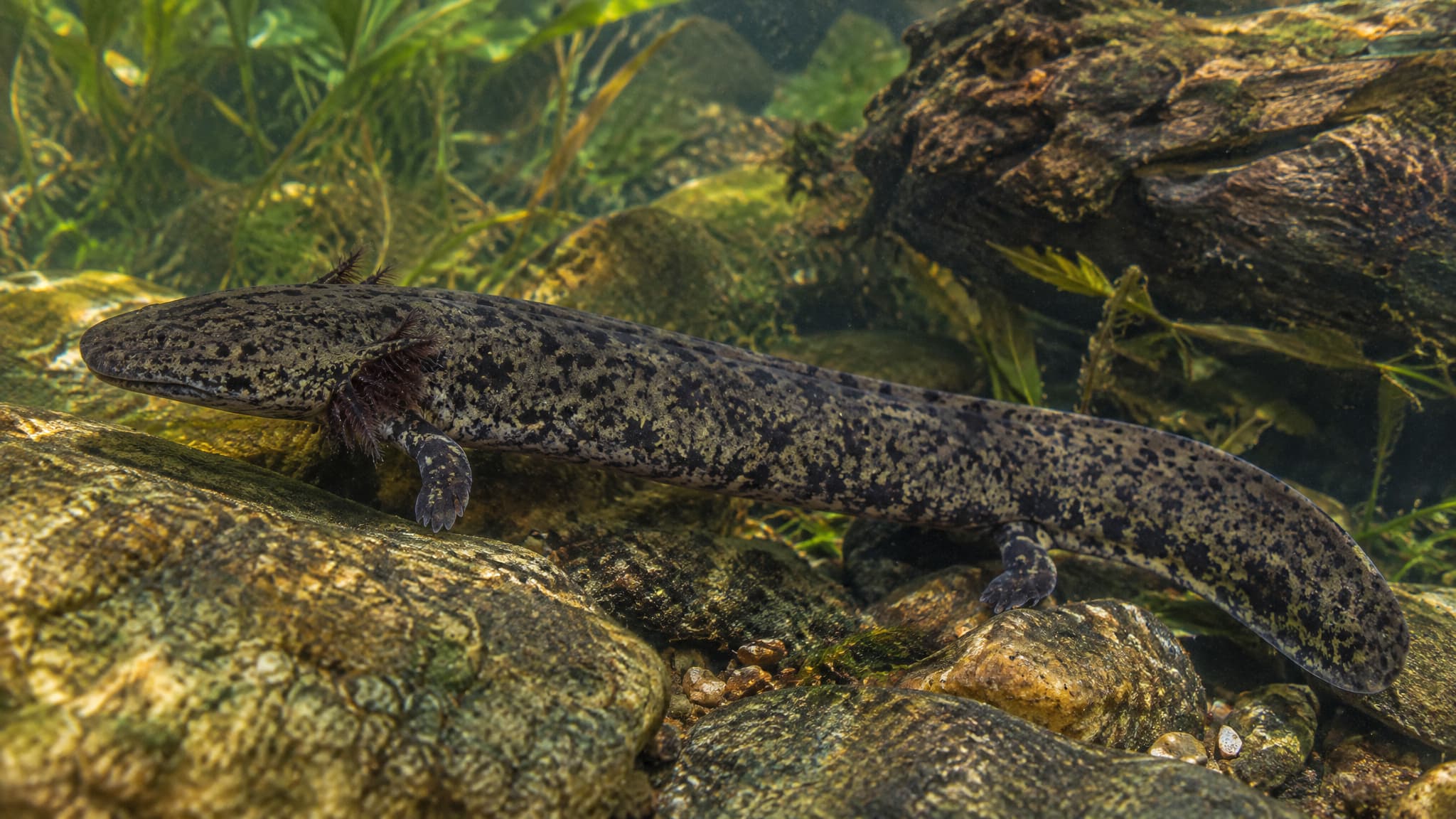
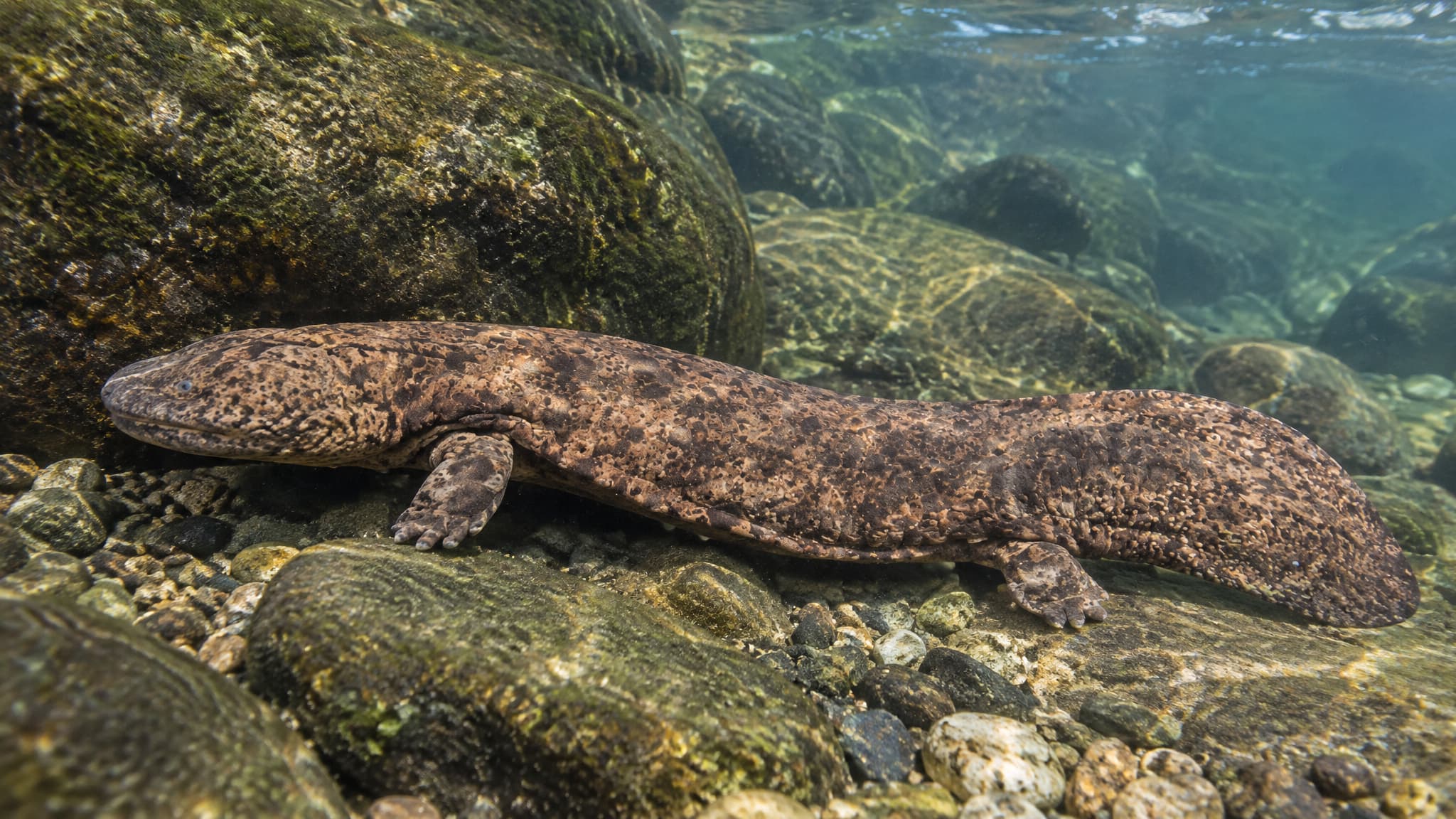
The Japanese giant salamander (Andrias japonicus) is one of the largest living amphibians. Together with its Chinese relatives, it belongs to the family Cryptobranchidae. Adults can reach about 1.5 m in length and weigh up to about 25 kg. The body is heavy and flattened, the head is broad and flat, and the mouth is wide. The wrinkled skin is covered in tubercles and is mottled reddish-brown to dark brown, which helps it blend in with rocky stream beds. Adults have no external gills and breathe mostly through their skin. The species is endemic to Japan. It lives in western Honshu, from around Gifu Prefecture westward, and in parts of Shikoku and northern Kyushu. It is fully aquatic and stays in water its whole life. It lives in cool, clear, well-oxygenated streams and rivers, from small headwater creeks to larger river channels. The range is badly fragmented. The Japanese giant salamander is nocturnal and mostly stays in one area outside the breeding season. It walks along the stream bottom and uses side-to-side body movements for quick bursts of speed. It is a generalist predator that eats freshwater crabs and other crustaceans, fish, insects, worms, frogs and sometimes small mammals. It catches prey by opening its mouth suddenly to suck it in. Its metabolism is very slow, so it can go weeks without eating. When threatened, it can release a strong-smelling milky secretion. Breeding takes place in late August and September. Large males called den-masters take over burrows in stream banks and defend them against other males. Females lay strings of several hundred eggs inside these burrows, and more than one female may use the same den. The den-master guards the eggs and fans them with his tail to supply oxygen. The larvae hatch after about 40 to 60 days, depending on water temperature. This salamander grows slowly throughout its life and can live for more than 50 years. As a top predator in mountain streams, it helps control populations of invertebrates, fish and amphibians. The IUCN lists it as Vulnerable. Main threats include dams and weirs that block its migrations, river engineering and habitat loss. A serious and growing threat is hybridization with introduced Chinese giant salamanders, especially around Kyoto. The species has been protected in Japan for decades and is a designated Special Natural Monument.

View Details
Golden Poison Frog
Amphibians

Golden Poison Frog

Phyllobates terribilis

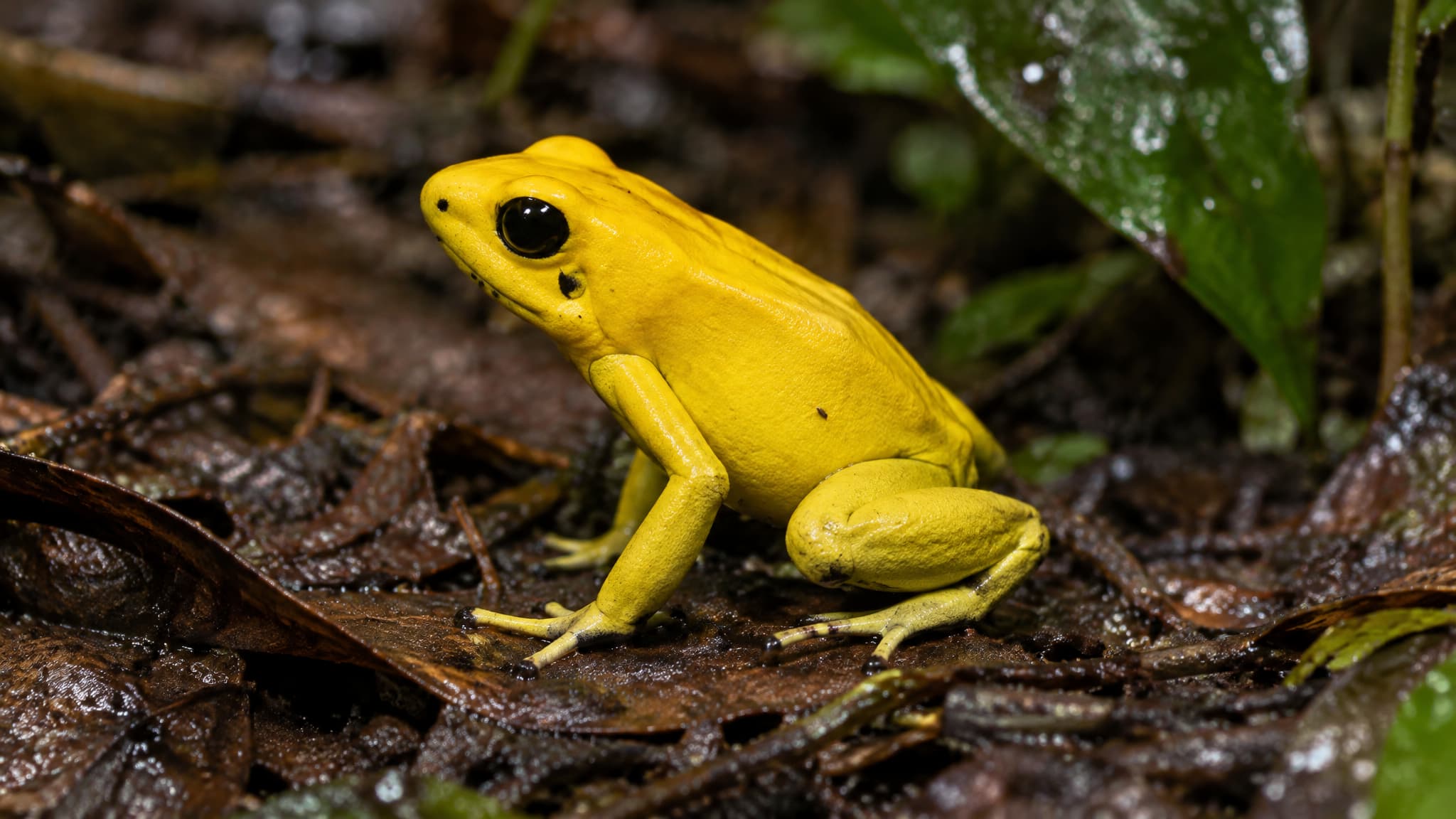
The golden poison frog (Phyllobates terribilis) is widely seen as the most toxic frog known. It is also one of the largest poison dart frogs. Females reach about 47 mm in snout–vent length and males about 45 mm. The skin is smooth to finely granular and has no dark markings. Depending on the population, adults are bright golden yellow, golden orange or pale metallic green. These bright colors warn predators that the frog is poisonous. The species is found only in a small area of lowland rainforest along the Pacific coast of western Colombia. It lives on the forest floor, is active by day and stays on the ground. It is known from only a few locations, and its exact range has been hard to survey. Adults are insectivores. In the wild they mainly eat small ants of the genera Brachymyrmex and Paratrechina, along with termites, beetles and other small invertebrates. They catch prey with a long, sticky tongue. The frog's skin holds steroidal alkaloids: batrachotoxin, homobatrachotoxin and batrachotoxinin A. Researchers think the frog gets these toxins from its wild diet, possibly from melyrid beetles. Frogs raised in captivity are not toxic. A dose of about 2 to 200 micrograms is thought to be lethal to a human. Indigenous Emberá people have traditionally used the toxin on blowgun darts. Males attract females with a long, melodious trill. Courtship and egg-laying have mostly been seen in captivity, where clutches usually hold fewer than 20 eggs, laid on land. The male keeps the eggs moist. After hatching, he carries the tadpoles on his back to small pools of water. Captive frogs have lived to about 5 years, and wild lifespan is not confirmed. Because it is so toxic, the golden poison frog has few natural predators. The snake Leimadophis epinephelus resists its toxins and may eat young frogs. The frog in turn helps control ant and other invertebrate populations on the forest floor. The IUCN lists it as Endangered, and it is on CITES Appendix II. Its populations are declining mainly because forest is cleared for farming within its very small range.

View Details
Dwarf Treefrog
Amphibians

Dwarf Treefrog

Dendropsophus nanus

Dendropsophus nanus, commonly known as the dwarf treefrog, is a diminutive amphibian species belonging to the treefrog family, Hylidae. First described by George Albert Boulenger in 1889, this species is noted for its incredibly small size, with adults measuring approximately 22 millimeters in length—barely larger than a human thumbnail. Physically, the dwarf treefrog is characterized by a triangular snout, prominent eyes with non-translucent eyelids, and a poorly visible tympanum. Males are particularly distinctive due to their conspicuous yellow throats, which aid in field identification. This highly adaptable amphibian boasts a broad geographic distribution across South America, primarily east of the Andes Mountains. Its extensive range encompasses northern Argentina, eastern Bolivia, Brazil, Paraguay, and Uruguay, with documented populations reaching as far north as French Guiana and Suriname. The dwarf treefrog is an abundant and resilient species capable of thriving in a diverse array of habitats, including those facing significant anthropogenic disturbance and urbanization. It is most frequently encountered in open environments, perching low in herbaceous and bushy vegetation situated directly at the edge of standing water. As an insectivore, the diet of Dendropsophus nanus predominantly consists of dipterans—such as flies and mosquitoes—as well as spiders. Ecological studies of their feeding habits in wetlands indicate that this frog employs a "mixed" foraging mode. This strategy places it intermediately between active prey hunting and a stationary "sit-and-wait" ambush approach. During colder winter periods, the species exhibits a distinct survival strategy; instead of maintaining high feeding rates like some sympatric frog species (such as Boana pulchella), it relies significantly on accumulated fat reserves for energy. Breeding typically occurs in temporary waterbodies, where males remain highly active and vocal throughout the year. To attract mates, males broadcast advertisement and courtship calls consisting of rapid, pulsed notes from perches overhanging the water. Experimental acoustic playbacks have revealed that these tiny frogs possess notable acoustic awareness; exposure to conspecific dominant frequencies triggers increased behavioral complexity and territorial aggressiveness among males. Benefiting from its extensive geographic range, stable population dynamics, and remarkable tolerance to human-modified environments, Dendropsophus nanus is assessed as a species of "Least Concern" on the IUCN Red List of Threatened Species. Currently, there are no widespread threats causing significant population declines, ensuring that the dwarf treefrog remains highly secure across its natural South American habitat.

View Details
Cuyaba Dwarf Frog
Amphibians

Cuyaba Dwarf Frog

Physalaemus nattereri

Physalaemus nattereri, commonly known as the Cuyaba dwarf frog or four-eyed frog, is a small, fascinating species of terrestrial amphibian in the family Leptodactylidae. Historically known by the synonym Eupemphix nattereri, this species exhibits slight sexual dimorphism, with females growing slightly larger (ranging from 4.9 to 5.1 centimeters) than males (averaging 4.7 centimeters). Its dorsal coloration ranges from light to dark brown or reddish, adorned with a mosaic pattern of darker stripes or spots, while the ventral side is lighter with dark spots. A truly unusual anatomical feature of this frog is the deep pigmentation of its internal organs, including the testicles, which is a rarity among anurans caused by a dense concentration of melanocytes. Endemic to South America, the Cuyaba dwarf frog is primarily found across central and southeastern Brazil, eastern Bolivia, and Paraguay. It thrives in the Neotropical savanna and the Cerrado biomes, often taking up residence near permanent or temporary water bodies such as swamps and ponds. These aquatic environments are absolutely essential for the frog's nesting behaviors. Despite its wide geographic range, the species is known to be poorly adapted to areas heavily impacted by human activity and urbanization. As a generalist and opportunistic predator, Physalaemus nattereri has a diet heavily focused on social insects. It predominantly consumes termites and ants, which are abundantly available in its terrestrial habitat. However, the frog is most famous for its highly evolved defensive strategies against predators like birds, beetles, and giant water bugs, the latter being primary threats during the frog's vulnerable reproductive and metamorphic stages. The frog's posterior features a pair of large, prominent eyespots, known as ocelli. When threatened, the Cuyaba dwarf frog employs an impressive deimatic, or startle, display. It inflates its lungs with air, lowers its head, and elevates its hindquarters. This posture conspicuously displays the large eyespots, creating a visual illusion of a much larger animal staring down the predator. Beyond the visual bluff, these eyespots house venomous inguinal macroglands that secrete a highly potent, fast-acting toxin, effectively deterring predation and allowing the frog to escape even if it is physically attacked. The species is an explosive breeder, with reproduction closely tied to the rainy season spanning from October to January. Males attract females by emitting a single-harmonic vocalization in short, rhythmic sequences. Adult females demonstrate a significant correlation between their body size and the number of mature eggs they can produce. Despite predation and habitat sensitivity, Physalaemus nattereri maintains a stable population across its wide distribution range. Consequently, the International Union for Conservation of Nature (IUCN) currently assesses the species as Least Concern.

View Details
Clay robber frog
Amphibians

Clay robber frog

Haddadus binotatus

Haddadus binotatus, commonly known as the clay robber frog, is an amphibian species endemic to Brazil. Belonging to the family Craugastoridae, it was historically classified as Eleutherodactylus binotatus in the family Brachycephalidae. It was later moved to the newly established genus Haddadus based on unique morphological features, such as possessing a first finger that is notably larger than the second. This medium-to-large frog typically measures between 35 and 65 millimeters in snout-to-vent length. Its dorsal coloration consists of beige, gray, or brown hues, serving as excellent camouflage against the dry, decomposing leaves of the forest floor. A highly distinguishing characteristic is the frequent presence of a pair of small black spots aligned symmetrically in the middle of its back, which directly inspired its specific epithet, binotatus. As a strictly forest-dwelling species, the clay robber frog is widely distributed throughout the Brazilian Atlantic Forest biome. Its extensive geographic range extends from the southern region of Bahia down to Rio Grande do Sul. Predominantly terrestrial, this frog inhabits the dense leaf litter on the forest floor, although it is occasionally observed resting on low vegetation within the interior or along the edges of both primary and mature secondary forests. Haddadus binotatus is an opportunistic predator with a varied diet, targeting energy-dense prey suited to its relatively large body size. Studies analyzing stomach contents indicate it preys on at least 19 different types of invertebrates, with orthopterans (grasshoppers and crickets), blattodeans (cockroaches), coleopterans (beetles), and spiders forming the bulk of its diet. Behaviorally, it employs a distinct defense mechanism: when physically touched or handled by a predator, the frog is known to urinate to startle and deter the attacker. The reproductive strategy of this species is notable because it completely bypasses the aquatic tadpole stage through direct development. Females deposit large eggs into terrestrial nests hidden among fallen leaves or under decaying logs, and the offspring hatch fully formed as miniature adult frogs. Because it thrives in both primary and secondary forests and remains highly abundant despite historical habitat loss in the Atlantic Forest, the species is classified as Least Concern (LC) by the IUCN and Brazil's ICMBio.

View Details
Boie's Frog
Amphibians

Boie's Frog

Proceratophrys boiei

Proceratophrys boiei, commonly known as Boie's frog or the Rio de Janeiro smooth horned frog, is a moderate-sized amphibian belonging to the family Odontophrynidae. Endemic to eastern and southeastern Brazil, this frog is best known for its remarkable leaf-like camouflage and distinct physical adaptations. The specific epithet honors either Heinrich Boie or his brother Friedrich Boie, prominent German zoologists. Recent taxonomic revisions have refined the delimitation of the species using mitochondrial DNA and comparative morphology to differentiate it from closely related taxa. The species exhibits a robust, broad head and stout body, with a snout-to-vent length ranging from 40 to 62 millimeters in males and up to 74 millimeters in females. The skin on its back and flanks is heavily textured with warts. Its most defining feature is the presence of long, tapering, fleshy horn-like flaps of skin projecting from above the upper eyelids. Its cryptic coloration consists of an irregular geometric pattern combining hues of brown, black, yellow, orange, and red, frequently accented by a broad brown or gray dorsal stripe. When threatened, P. boiei exhibits a highly specialized defensive behavior: it flattens its body against the ground and stiffens its limbs outward, perfectly mimicking a dead leaf to evade detection. Proceratophrys boiei is widely distributed across the Brazilian states of Espírito Santo, Minas Gerais, Rio de Janeiro, São Paulo, Paraná, and Santa Catarina. It primarily inhabits the Atlantic Rainforest and transitional zones reaching into the Cerrado biome, ranging from sea level up to elevations of 1,200 meters. The frog is strictly terrestrial, predominantly found nestled in the leaf litter of primary and secondary woodlands, along forest edges, and in proximity to narrow, permanent, slow-flowing streams or swamps. The diet of P. boiei is strictly insectivorous and relies heavily on ground-dwelling arthropods. Analyses reveal that beetles (Coleoptera) and grasshoppers or crickets (Orthoptera) comprise the vast majority of its prey volume. Researchers have observed a positive correlation between the body size of the frog and the volume of prey it consumes. Because of its diet, it plays a meaningful role in controlling forest invertebrate populations. Additionally, the species serves as a vital model organism for amphibian sex chromosome evolution, possessing a uniquely high amount of satellite DNA and a highly heterochromatic metacentric 'W' sex chromosome in females. Reproduction aligns with the regional rainy season, peaking between September and January. Males call to females at night from the ground or near slow-flowing forest streams utilizing a single internal vocal sac, and eggs are deposited directly into adjacent swamps or streams. The IUCN assesses Proceratophrys boiei as a species of 'Least Concern' due to its broad geographic range and large, stable populations. Nevertheless, it faces localized threats from habitat fragmentation driven by agriculture, wood plantations, livestock grazing, human settlement, and occasional harvesting for the illegal exotic pet trade.

View Details
European Common Frog
Amphibians

European Common Frog

Rana temporaria

Rana temporaria, commonly known as the European common frog or grass frog, is a resilient, semi-aquatic amphibian belonging to the true frog family, Ranidae. Adults typically range between 6 and 13 cm in length, with females generally growing larger than males. Their skin coloration is highly variable, featuring shades of olive green, grey, brown, yellow, and occasionally pink or red. They are easily identified by a distinct dark patch or mask situated just behind their eyes, oval horizontal pupils, and long, powerful hind legs with webbed toes designed for jumping and swimming. The species boasts an extensive geographic range across the Palearctic region. Native to Great Britain, Ireland, and continental Europe, their range extends eastward into Asia as far as Japan. Remarkably tolerant of cold climates, they range further north in Scandinavia than any other amphibian, successfully surviving above the Arctic Circle. They inhabit woodlands, grasslands, hedgerows, and acid bogs. Though they rely on shallow, still water bodies like ponds and puddles for breeding, they spend much of the year as terrestrial foragers. Man-made habitats like suburban garden ponds have become critical for sustaining local populations. As carnivorous amphibians, Rana temporaria are primarily active at night. Their diet largely consists of a variety of invertebrates, including flies, earthworms, slugs, and snails. Lacking prominent physical defenses, they form a vital link in the ecosystem's food web and are hunted by herons, birds of prey, foxes, otters, snakes, and domestic cats. To survive freezing winter temperatures, they hibernate by sheltering under logs, inside compost heaps, or overwinter entirely submerged in the mud at the bottom of ponds, relying on cutaneous respiration to breathe directly through their moist skin. Rana temporaria are recognized as explosive breeders. In early spring, hundreds of individuals may migrate simultaneously to ancestral breeding ponds to mate during a brief, intense window. Females lay large rafts of spawn that can contain up to 2,000 black eggs, each protected by a clear jelly capsule. These eggs hatch into tadpoles within two to four weeks. The tadpoles undergo a metamorphic life cycle, slowly transitioning from aquatic, gill-breathing larvae into juvenile terrestrial frogs, eventually reaching reproductive maturity at around two to three years of age. Globally, the International Union for Conservation of Nature (IUCN) lists Rana temporaria as a species of Least Concern due to its vast distribution and large global population. However, local populations are experiencing declines. Primary environmental pressures include rampant habitat degradation, the filling of natural breeding ponds, pollution, and amphibian diseases. Their innate drive to migrate to historical breeding sites makes them highly vulnerable to traffic fatalities. Conservationists urge the public to create wildlife-friendly garden ponds to offset habitat loss.

View Details
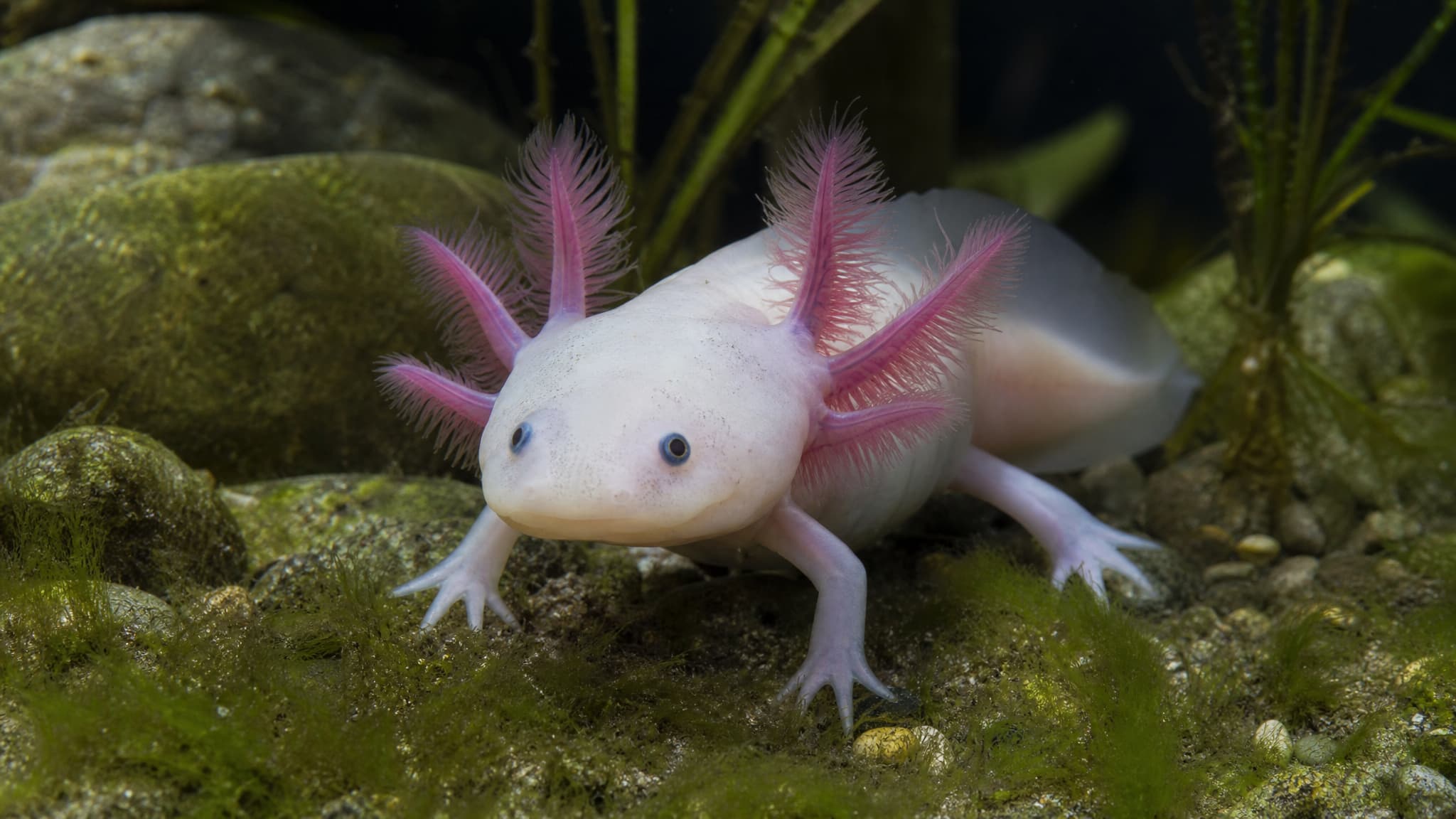
Common midwife toad
Amphibians

Common midwife toad

Alytes obstetricans

The common midwife toad (Alytes obstetricans) is a small, fascinating amphibian belonging to the family Alytidae. Characterized by a broad and stocky build, adults typically reach a snout-vent length of 3.5 to 5.5 centimeters, with females generally growing larger than males. They possess a large, flat head with prominent eyes featuring vertical, slit-shaped pupils. Their dorsal skin is mostly smooth but textured with small granules and a distinct row of large warts running down either side. The underbelly is paler and frequently dotted with cream spots. They also feature small parotoid glands, as well as distinct gland complexes located on their underarms and ankles. Native to several countries across Western Europe, this species is found in Belgium, France, Germany, Luxembourg, the Netherlands, Portugal, Spain, and Switzerland, and has also been introduced to the United Kingdom. The common midwife toad relies on a dual-habitat ecosystem. On land, they favor open to semi-open landscapes that are structurally rich, utilizing sun-exposed hiding places like rocky areas, stone piles, embankments, and quarry walls. These terrestrial environments range from temperate and dry forests to shrublands, agricultural fields, and urban spaces. As adults, common midwife toads are terrestrial predators that primarily consume a variety of terrestrial invertebrates. However, their aquatic tadpoles display opportunistic feeding behaviors. They act as both predators and scavengers, and have even been documented feeding on earthworms and the remains of deceased amphibians. Because some tadpoles are deposited late in the breeding season during July or August, they frequently overwinter in the water before metamorphosing, growing to exceptionally large sizes of up to 80 or 90 millimeters in length. The species earns its unique common name through an extraordinary display of paternal care. Unlike most amphibians that lay eggs directly into the water, Alytes obstetricans mates on land. As the female expels a strand of eggs, the male fertilizes them externally and then wraps the strings around his hind legs and back. A single male can carry 150 or more eggs from up to three different clutches. He carries them continuously on land to protect them from aquatic predators. Once the eggs are fully developed and ready to hatch, the male wades into shallow, permanent, or slow-drying bodies of water, allowing the fully formed tadpoles to safely emerge into the aquatic environment. The International Union for Conservation of Nature (IUCN) classifies the common midwife toad as a species of "Least Concern" due to its historically wide geographic distribution. Despite this broad categorization, the species faces significant localized declines. The primary threats include ongoing habitat loss, fragmentation, and the degradation of essential aquatic breeding sites. Furthermore, these toads are highly susceptible to chytridiomycosis, a fatal infectious amphibian disease caused by the fungal pathogen Batrachochytrium dendrobatidis. This disease has severely impacted certain populations, most notably those residing in the Pyrenees mountains.

View Details
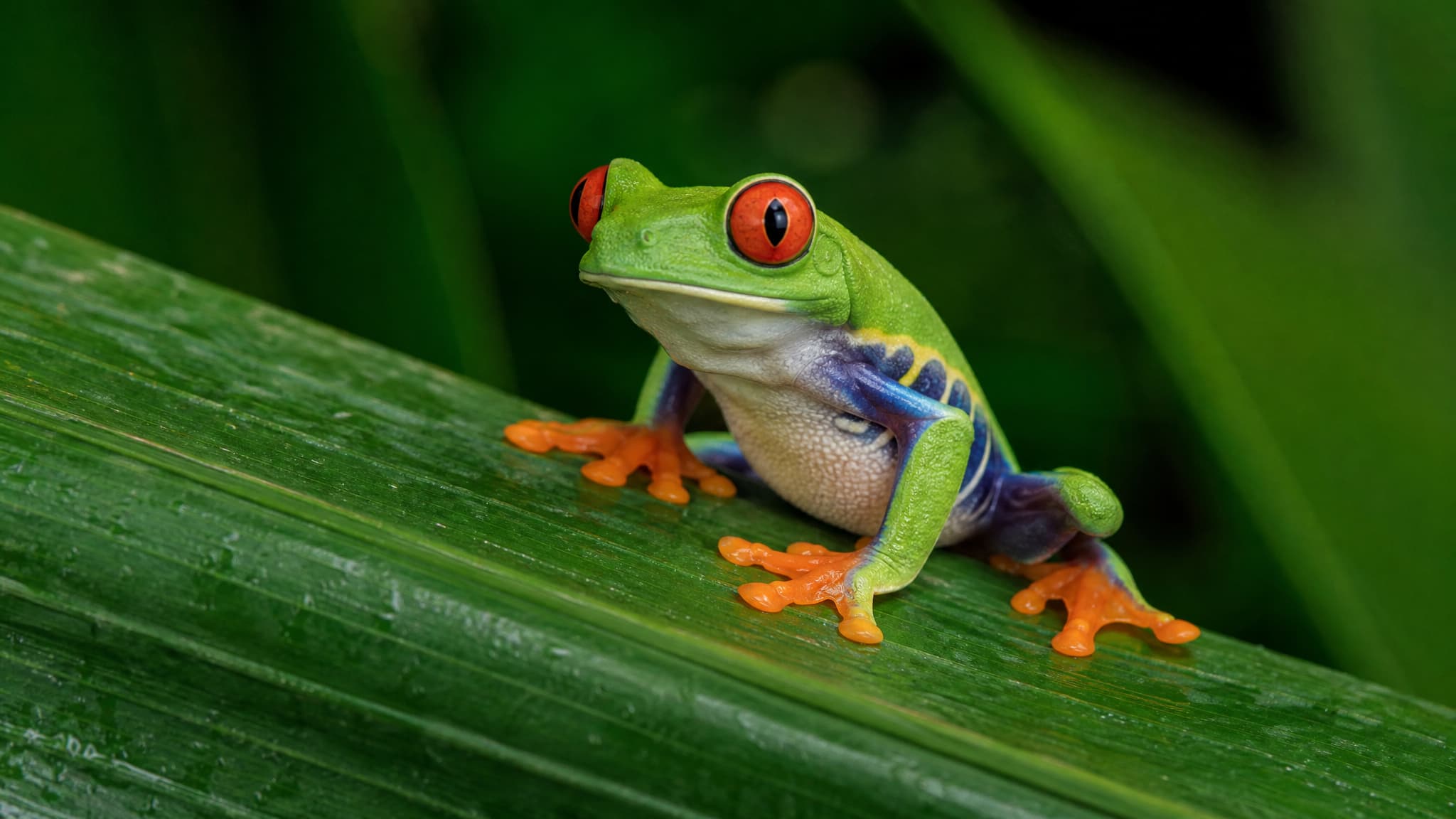
Two-colored oval frog
Amphibians

Two-colored oval frog

Elachistocleis bicolor

Elachistocleis bicolor, commonly known as the two-colored oval frog, is a small amphibian species belonging to the microhylid family (Microhylidae). First described and classified by French entomologist Félix Édouard Guérin-Méneville in 1838, this species is widely distributed across the wetlands and forests of South America. It boasts stable populations in Argentina, Brazil, Paraguay, and Uruguay. Locally, it is known by a variety of vernacular names, including rana pinguino or sapito panza amarilla in Spanish-speaking regions, and rã-coxinha, sapinho-apito, or sapo-guarda-de-duas-cores in Brazil. As its local Brazilian name rã-coxinha implies, Elachistocleis bicolor possesses a distinctly plump, ovoid (oval-shaped) body terminating in a small, sharply triangular head. The species exhibits slight sexual dimorphism in size: adult males typically range from 23 to 32 millimeters in length, whereas adult females are slightly larger, measuring between 27 and 36 millimeters. Its specific epithet, bicolor, highlights its striking two-toned appearance. The frog features a dark, brownish-gray dorsum (back) that contrasts sharply with an immaculate, spotless yellow venter (belly). This frog species is highly adaptable and occupies a diverse array of terrestrial and semi-aquatic habitats. Its natural range includes seasonally flooded native grasslands, dry forests, and moist tropical forests. In Brazil, its distribution is notably widespread, extending from the Amazon basin in the north down through the southern states of Rio Grande do Sul and Santa Catarina. Elachistocleis bicolor demonstrates remarkable ecological resilience and is known to tolerate highly anthropized (human-altered) environments. It is frequently found in rural gardens, urban areas, and commercial agricultural zones, including non-native eucalyptus and pine forestry plantations. Elachistocleis bicolor is primarily nocturnal and leads a semi-fossorial lifestyle, meaning it is adapted to digging and spends substantial time underground or beneath leaf litter. During periods of aestivation—typically warm, dry spells when standing water evaporates—it exhibits the fascinating behavior of sheltering directly inside subterranean ant and termite nests. Its diet is strictly myrmecophagous, consisting almost entirely of ants and termites actively foraged. Termites serve as a critical dietary staple during the dry, inactive season, while ants are heavily targeted during the active wet season. Researchers hypothesize that consuming these specific ants allows E. bicolor to secrete mildly toxic or unpalatable chemical compounds through its skin, granting the frog immunity from attacks when hiding inside ant nests. Breeding is intrinsically linked to seasonal weather patterns. Elachistocleis bicolor is an explosive breeder that reproduces in temporary, semi-permanent, and permanent bodies of water. Its reproductive phase correlates directly with heavy, continuous rainfall and primarily takes place during the wet season, which runs from October to April. Upon hatching, the tadpoles are highly active foragers in the water column. According to the IUCN Red List and Brazil’s ICMBio, Elachistocleis bicolor is assessed as a species of "Least Concern" (LC). The overall population is considered abundant, widespread, and stable, facing no immediate threat of extinction.

View Details
Brownbelly leaf frog
Amphibians

Brownbelly leaf frog

Phyllomedusa distincta

Phyllomedusa distincta, commonly known as the brownbelly leaf frog, is a captivating arboreal amphibian endemic to the Atlantic Forest biome of Brazil. Described by B. Lutz in 1950, this species belongs to the family Phyllomedusidae (formerly placed within Hylidae). It is highly adapted to life in the trees, typically thriving in subtropical or tropical moist lowland primary and secondary forests, as well as freshwater marshes at elevations up to 1,000 meters above sea level. These frogs prefer heterogeneous microhabitats and are most frequently observed perching on shrubs near standing water, an environment critical for their reproductive success. The reproductive behavior of the brownbelly leaf frog is particularly fascinating. Males advertise their presence using a distinct vocal call composed of three pulsed notes, usually grouped in pairs with a slightly descending frequency. The species is known to exhibit polyandry, a mating system where a single female may mate with multiple males simultaneously. During reproduction, females lay their eggs on foliage that directly overhangs permanent bodies of water. Upon hatching, the tadpoles drop from the leaves into the aquatic environment below to complete their metamorphosis into juvenile frogs. Genetically, Phyllomedusa distincta is a diploid species with a karyotype of 2n=26. In certain syntopic regions of São Paulo State, it coexists with a closely related tetraploid species, Phyllomedusa tetraploidea (2n=52). Remarkably, the two species naturally interbreed to produce viable triploid hybrids (2n=39). These hybrids are not completely sterile, offering scientists a unique opportunity to study natural polyploidy and vertebrate evolution in the wild. Ecologically, these frogs play a significant role in their habitat, but they face mounting challenges. While globally classified as "Least Concern" by the IUCN due to its broad overall range, the global population is declining. Regional assessments often consider it rare and highly threatened. Habitat fragmentation caused by urbanization, logging, agriculture, and silviculture is the primary global threat. Locally, emerging threats include the introduction of predatory fish like tilapia and devastating outbreaks of Ranavirus, which have caused mass mortalities among tadpoles. Beyond its ecological importance, Phyllomedusa distincta holds significant biomedical value. Like many leaf frogs, it secretes a cocktail of active molecules from its skin glands. Most notably, these secretions contain antimicrobial peptides known as dermaseptins. Scientific research has demonstrated that these dermaseptins exhibit potent activity against Trypanosoma cruzi, the parasite responsible for Chagas disease, without harming mammalian cells. This unique property underscores the frog's potential in the development of novel therapeutic and prophylactic treatments.

View Details
Common Toad
Amphibians

Common Toad

Bufo bufo

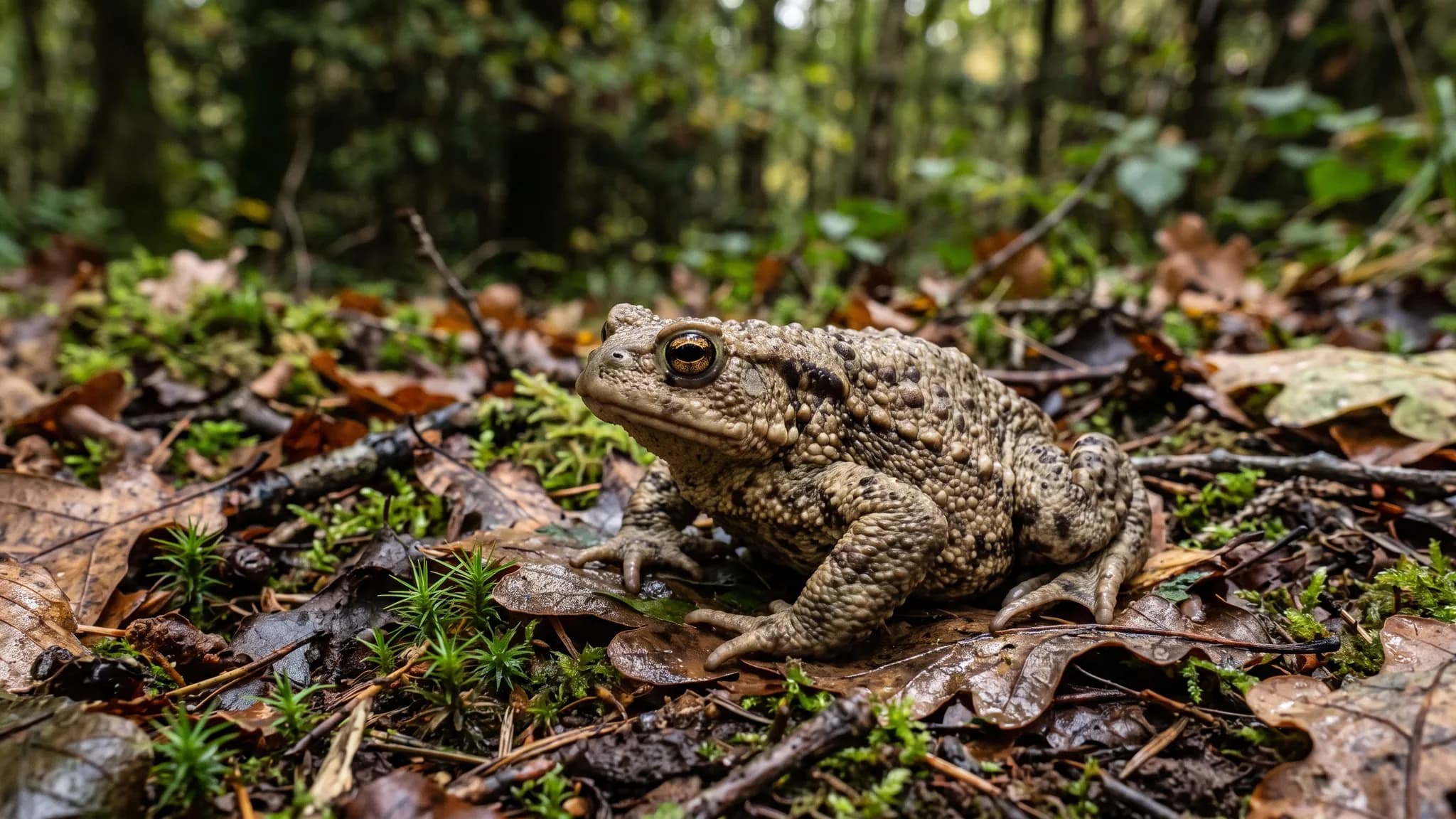
Bufo bufo, widely known as the common toad or European toad, is a robust amphibian belonging to the family Bufonidae. It forms part of a complex of closely related toad species and is found extensively throughout most of Europe. Its geographic range also extends into the western stretches of North Asia and a small portion of Northwest Africa, though it is notably absent from Ireland, Iceland, parts of Scandinavia, and some Mediterranean islands. This species is visually distinguished by its heavy-set body, short hind legs, and rounded snout. Its skin is characteristically warty and ranges in color from olive-brown to grayish or dark brown, allowing for excellent camouflage among soil and woodland debris. Due to its short legs, it generally moves with a slow, ungainly walk rather than hopping. As a primary defense mechanism, the toad secretes a noxious substance called bufotoxin from its skin and the prominent parotoid glands located behind its copper-colored eyes, rendering it highly unpalatable and deterring most predators. Highly adaptable, the common toad occupies a diverse array of habitats, including woodlands, grasslands, heathlands, farmlands, and wetlands. Adult common toads are highly terrestrial, spending the daytime hiding under log piles, stones, or leaves, and hibernating during the winter months in solitary or group refuges. They are predominantly nocturnal, emerging at dusk to hunt. Their diet consists of invertebrates such as slugs, snails, spiders, insects, and earthworms, caught with a sticky tongue. Because they consume vast amounts of garden pests, they are highly beneficial to agriculture. Larger adult toads have even been documented consuming small vertebrates like grass snakes, slow worms, and harvest mice. The reproductive cycle features a massive annual migration in early spring, usually taking place on the first warm, damp evenings of the year. Guided by a strong homing instinct, the toads return to their ancestral breeding ponds, which are generally larger and deeper than those preferred by frogs. Female toads lay their eggs in distinct, long double strings wrapped securely around aquatic vegetation. The developing tadpoles carry chemical toxins, a trait that protects them from the predatory fish that often inhabit these deeper ponds. Globally, Bufo bufo is classified as a species of Least Concern on the IUCN Red List due to its expansive range and large overall population. However, populations in specific regions, such as the United Kingdom, have experienced noticeable declines in recent years. A primary threat to the species is habitat fragmentation and the intersection of busy road networks across their traditional migration routes. To combat the widespread road mortality of toads migrating to breeding pools, conservation initiatives like volunteer-led toad patrols and specialized wildlife tunnels beneath highways have been implemented.

View Details
Lesser Treefrog
Amphibians

Lesser Treefrog

Dendropsophus minutus

Dendropsophus minutus, commonly known as the lesser treefrog, is a small and highly adaptable species of tree frog within the family Hylidae. Characterized by a short head, a rounded snout, and an indistinct tympanum, these frogs exhibit distinct sexual dimorphism; males possess bright yellow throats while females have white ones. Their dorsal coloration is highly variable, ranging from shades of orange and brown to tan, often accented by intricate dorso-lateral stripes referred to as "hourglass" or "bivittata" patterns. Interestingly, recent studies indicate that their coloration is influenced by habitat, with individuals in open grasslands displaying much higher color saturation than their forest-dwelling counterparts. This species boasts an exceptionally broad geographic range across the Neotropics, occurring east of the Andes. Its distribution spans across Argentina, Bolivia, Brazil, Colombia, Ecuador, French Guiana, Guyana, Paraguay, Peru, Suriname, Trinidad and Tobago, Uruguay, and Venezuela, ranging from sea level up to elevations of 2,000 meters. Ecologically versatile, the lesser treefrog is primarily arboreal but thrives in pristine tropical forests, dry savannas, flooded lowland grasslands, and intermittent freshwater marshes. It also demonstrates a remarkable tolerance to human-altered landscapes, frequently inhabiting pasturelands, rural gardens, and urban areas. As a nocturnal and crepuscular generalist, Dendropsophus minutus relies on an opportunistic foraging strategy to capture a variety of small arthropods. Stomach content analyses reveal that true bugs (Hemiptera) and spiders (Araneae) are fundamental components of their diet, supplemented by flies and other small invertebrates. This varied diet allows them to successfully capitalize on the diverse prey available in both closed canopy forests and open environmental settings. The lesser treefrog is known for continuous gametogenesis, allowing reproduction to persist throughout the year whenever ecological conditions are favorable. During breeding seasons, males gather near still bodies of water to establish perches on aquatic plants and shrubs. They emit shrill advertisement calls, leading to loud "mass concerts" that extend from dusk into the night. Males are highly territorial and defend their calling sites through vocalizations and physical combat, though some adopt a silent "satellite" strategy to intercept females. Mating occurs via axillary amplexus, which is sometimes so competitive and indiscriminate that males mistakenly attempt to mate with completely different frog species. Currently classified as a species of "Least Concern" by the IUCN, the lesser treefrog maintains large, stable populations aided by its extreme adaptability to degraded habitats. However, its broad classification may soon change. Extensive genetic and phylogeographic analyses suggest that Dendropsophus minutus is actually a cryptic species complex hiding numerous distinct evolutionary lineages. As scientists uncover deep genetic divergences and highly structured regional diversity, future taxonomic revisions are anticipated to reclassify these geographically distinct populations into multiple unique species.

View Details
Snouted Treefrog
Amphibians

Snouted Treefrog

Scinax fuscovarius

Scinax fuscovarius, commonly known as the snouted treefrog or fuscous-blotched treefrog, is a species of amphibian in the family Hylidae. In Brazil, it is famously referred to as "perereca-de-banheiro" (bathroom treefrog) because it often seeks refuge in human plumbing fixtures, and "raspa-cuia" due to the unique, scraping sound of its mating call. Originally described in 1925 as Hyla fuscovaria by Adolfo Lutz, this highly adaptable frog has successfully integrated into both natural and human-altered environments across South America. This medium-sized treefrog reaches a snout-vent length of up to 48 millimeters. It exhibits sexual dimorphism, with females typically growing larger and heavier than males. Its dorsal coloration is highly variable, ranging from dark or yellowish-brown to olive green or pale yellow, usually marked by irregular black or dark brown spots. Notably, the hidden areas of its limbs display distinct yellow and black patterns. A distinguishing morphological feature is its tympanum, which is noticeably larger than the adhesive discs on its fingers and toes. Widely distributed throughout South America, Scinax fuscovarius is native to Argentina, Bolivia, Brazil, Paraguay, and Uruguay. It thrives in open environments such as moist savannas, subtropical or tropical shrublands, flooded grasslands, and freshwater marshes. Within Brazil, it is commonly encountered in the Atlantic Forest, Cerrado, and Pantanal biomes, though it generally avoids dense, deep forests. Its remarkable tolerance for degraded habitats allows it to flourish in pasturelands and urban settings, often taking shelter in cool, damp bathrooms or drains during the day. As a nocturnal species, the adult frog emerges at night to actively forage for food, retreating to moist hiding spots when the sun rises. The species plays a complex ecological role, serving as both a predator and a host to a variety of parasites, including nematodes, trematodes, and mite larvae. Its tadpoles act as a vital energy link between aquatic and terrestrial ecosystems; they consume zooplankton, testate amoebae, rotifers, and ciliates, facilitating nutrient cycling in their freshwater habitats. The reproductive cycle is closely tied to the warm season and periods of high rainfall, featuring a prolonged breeding period that can last up to seven months. Males actively seek mates by swimming along the edges of ponds and flooded fields, emitting their characteristic scraping calls from the water's surface. The species is highly prolific; females lay massive clutches ranging from 1,000 to over 4,800 eggs (averaging around 2,892), which hatch into aquatic larvae. Because of its vast geographic range, large population, and exceptional adaptability to anthropogenic environments, Scinax fuscovarius is listed as a species of "Least Concern" on the IUCN Red List of Threatened Species, facing no significant widespread threats.

View Details
Cuvier's foam froglet
Amphibians

Cuvier's foam froglet

Physalaemus cuvieri

Physalaemus cuvieri, commonly known as Cuvier's foam froglet or the Barker frog, is a widespread amphibian belonging to the family Leptodactylidae. Originally described in 1826 by Austrian zoologist Leopold Fitzinger, this species is well known across South America. In Brazil, it is famously referred to as the "rã-cachorro" or dog-frog because its distinctive vocalizations closely resemble the barking of a dog. The geographic range of this adaptable frog is remarkably extensive, covering much of Argentina, Brazil, Paraguay, and Uruguay, with potential populations in Bolivia and Venezuela. Physalaemus cuvieri is highly adaptable and thrives in a diverse array of ecosystems. It inhabits dense canopies like the Atlantic Forest, open savannahs such as the Brazilian Cerrado, and heavily modified landscapes including flooded grasslands and livestock pastures. It can be found from sea level up to elevations of 2,000 meters (6,562 feet). As an insectivore, the Barker frog plays a vital role in controlling local invertebrate populations. Studies analyzing stomach contents indicate a diet heavily reliant on termites (Isoptera) and ants (Formicidae). In complex ecological communities where it shares territory with other sympatric frog species, such as Physalaemus atim or Physalaemus kroyeri, this frog maintains a narrow but specialized dietary niche. This resource partitioning enables multiple amphibian species to coexist harmoniously without intense direct competition for food. The reproductive biology of Physalaemus cuvieri is distinguished by the creation of specialized foam nests. Breeding typically occurs in temporary water bodies like seasonal ponds, small puddles, and even water-filled cow hoofprints. The adult constructs a protein- and carbohydrate-rich foam nest that adheres to blades of grass or vegetation near the water's edge. This nest provides a protective microenvironment that shields the eggs and developing larvae from desiccation, suffocation, and predators, while facilitating the vertical transfer of beneficial microbial communities to the offspring. The International Union for Conservation of Nature (IUCN) assesses Physalaemus cuvieri as a species of Least Concern (LC). Its vast geographic distribution, large population sizes, and tolerance to habitat modification contribute to this favorable conservation status. However, local populations are not entirely immune to environmental pressures. Significant localized threats include habitat destruction from agricultural expansion, land clearing with fire, pollution of waterways by agricultural runoff and pesticides, and ecological damage caused by gold mining operations.

View Details
African Clawed Frog
Amphibians

African Clawed Frog

Xenopus laevis

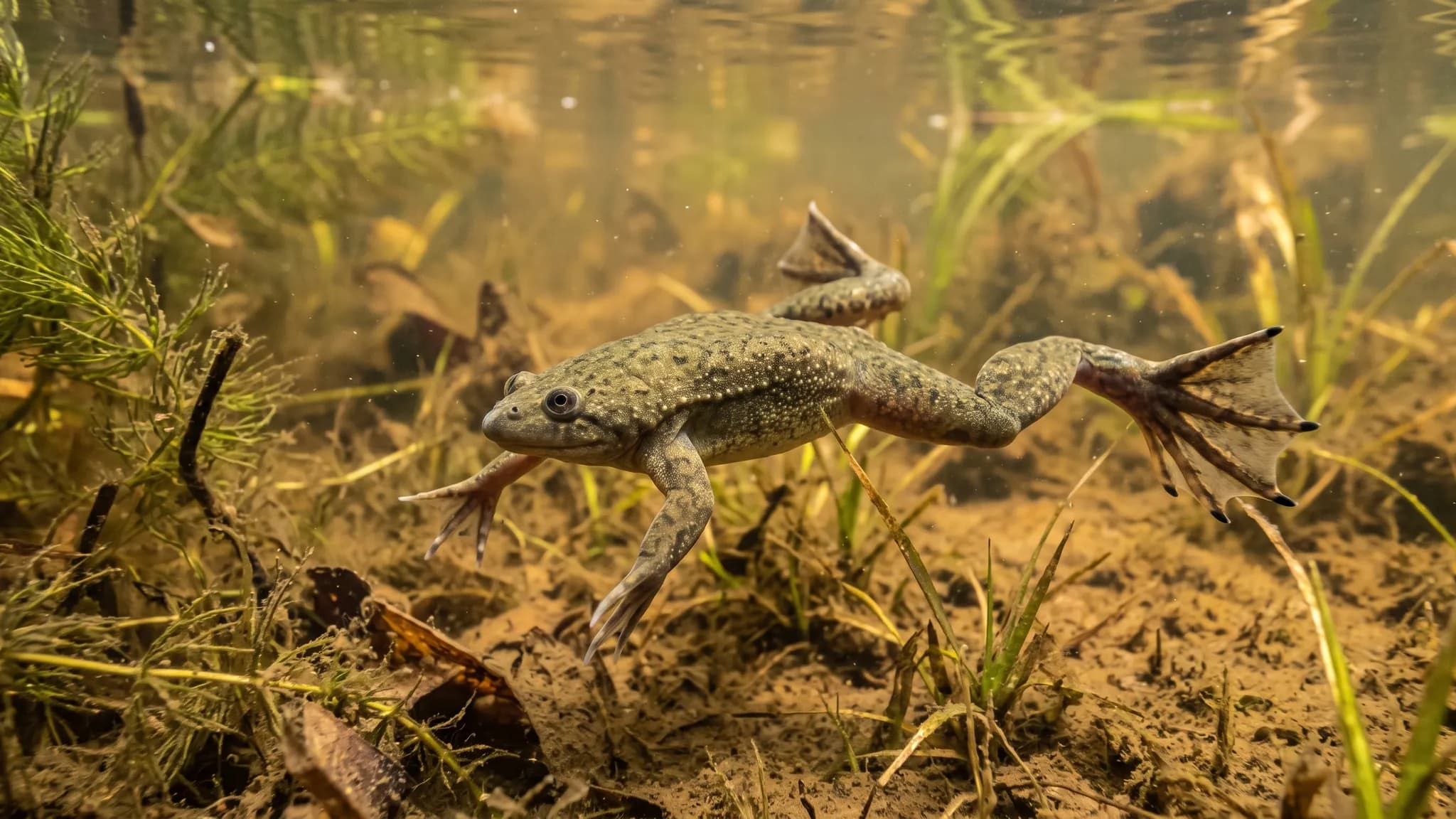
The African clawed frog (Xenopus laevis) is a strictly aquatic amphibian native to sub-Saharan Africa. Belonging to the family Pipidae, this species is uniquely adapted to a life entirely underwater. It is perhaps best known for its monumental role in human science, having served as the world's first reliable pregnancy test before becoming one of the most important model organisms in modern biological research. Despite its scientific value, its remarkable adaptability has allowed it to become a highly successful and damaging invasive species globally. Morphologically, Xenopus laevis exhibits several fascinating adaptations for its aquatic lifestyle. It possesses a flattened, hydrodynamic body without visible external eardrums or vocal sacs. Instead of vocal cords, it uses subcutaneous cartilaginous disks to produce underwater vocalizations. Members of the family Pipidae are completely toothless and tongueless. To feed, the frog uses its front limbs to manually push food into its mouth, relying on a hyobranchial pump to suck in prey. The species derives its common name from the distinct, keratinized black claws on the three inner toes of its large, fully webbed hind feet, which are used to tear apart larger food items. Because their vision is relatively poor, African clawed frogs rely heavily on a highly sensitive lateral line system, a keen sense of smell, and their sensitive fingers to locate food in murky waters. They are voracious scavengers and predators, feeding heavily on aquatic invertebrates, small fish, and the eggs and tadpoles of native amphibians. This opportunistic and aggressive feeding strategy ensures their survival in a wide variety of aquatic habitats, from stagnant ponds to slow-moving streams. Reproduction in Xenopus laevis is famously prolific. Females can produce large batches of eggs year-round, which develop externally and rapidly. This trait made them central to the 'Hogben test' in the 1930s, where human chorionic gonadotropin (hCG) from a pregnant woman's urine would induce the frog to ovulate within 12 hours. Today, this reproductive capacity makes them an unparalleled model organism for developmental biology. Furthermore, they are extensively used in genetics due to their allotetraploid genome, and in regenerative medicine because tadpoles can completely regenerate their central nervous system after severe injury. Ecologically, while they are a natural part of aquatic food webs in sub-Saharan Africa, their global export for medical and scientific use has led to unintended consequences. Accidental escapes and deliberate releases from laboratories and the pet trade have established invasive populations in North America, South America, Europe, and Asia. In these introduced ranges, their voracious appetite allows them to outcompete native species and decimate local aquatic biodiversity. Consequently, Xenopus laevis is highly monitored and classified as an invasive species of significant ecological concern in numerous countries.

View Details
Oriental Fire-Bellied Toad
Amphibians

Oriental Fire-Bellied Toad

Bombina orientalis

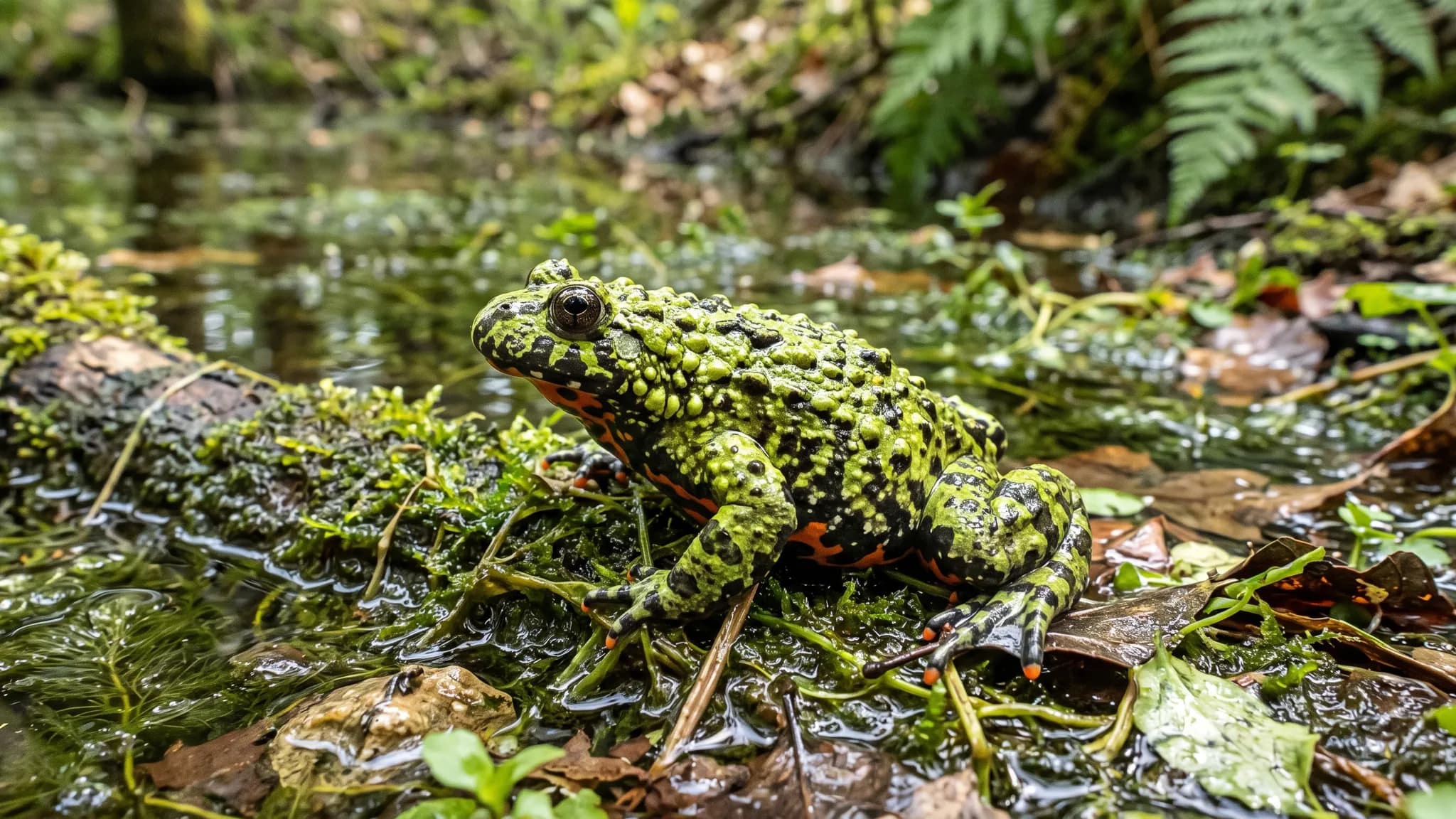
The Oriental fire-bellied toad (Bombina orientalis) is a small, semi-aquatic anuran native to East Asia. Despite its common name, it is not a true toad of the family Bufonidae, but rather a member of the primitive disc-tongued frog family Bombinatoridae. Adults typically reach a snout-vent length of 4.0 to 5.5 cm. Dorsally, the skin is covered with rough, glandular tubercles and is colored in vibrant shades of bright green or brownish-grey with bold, irregular black spots. The species exhibits striking aposematic coloration on its ventral surface, characterized by intense red or orange patches mottled with deep black. Their eyes sit prominently on top of the head with distinctive triangular or heart-shaped pupils, and they lack visible external eardrums. This species is widely distributed across Northeast Asia, ranging through northeastern China, the Korean Peninsula, and the southern Russian Far East, with historical introductions noted in Japan and near Beijing. It thrives in temperate, semi-aquatic ecosystems including mixed deciduous and coniferous forests, slow-moving streams, flooded river valleys, roadside ditches, and shallow vegetated ponds. During warmer months, these toads are active both day and night, basking near water margins. When winter approaches, they retreat into terrestrial burrows, leaf litter, or deep underwater crevices beneath stream beds to undergo hibernation. Bombina orientalis is famous for its specialized antipredator display known as the unkenreflex. When cornered by a terrestrial predator, the toad flattens and arches its spine upwards, elevating its limbs to expose the vivid red-orange coloration on its belly and palms. This serves as a warning sign of the milky, pungent cutaneous toxins secreted by its granular dorsal glands. These secretions contain bioactive regulatory peptides, such as bombesin, as well as antimicrobial compounds that induce severe irritation in mucosal membranes and deter birds and small mammals. The diet of the Oriental fire-bellied toad is composed of a broad range of invertebrates, including beetles, flies, earthworms, aquatic insects, and small mollusks. Breeding takes place from late spring through mid-summer, often stimulated by warm monsoon rains. Males produce soft, bell-like calls to attract females to shallow water pools, engaging in inguinal amplexus where the male clasps the female around the waist. Females lay several clutches of 40 to 100 eggs on submerged vegetation. Tadpoles develop rapidly, metamorphosing in 6 to 14 weeks. Under captive and optimal wild conditions, these hardy anurans can live for 12 to 16 years. Ecologically, Bombina orientalis acts as both an efficient insectivore and an important prey resource for specialized wetland predators. It is classified as Least Concern on the IUCN Red List due to its broad geographical distribution and large populations. However, localized populations face threats from agricultural chemical runoff, deforestation, and wetland drainage. Furthermore, its gentle temperament and vivid coloration make it one of the most widely traded amphibians in the global pet trade.

View Details
Labyrinth Frog
Amphibians

Labyrinth Frog

Leptodactylus labyrinthicus

The labyrinth frog is a very large, heavy-bodied South American frog. It is also known as the pepper frog, South American pepper frog, or pepper foam frog. Adults are generally brown to reddish brown with darker markings, while the pale underside bears dark, maze-like vermiculations that inspired the English common name. It has a broad head, strong limbs, and, in males, robust forelimbs and thumb spines used in contests. Its natural range includes the open formations of central and southeastern Brazil, eastern Paraguay, and the Argentine provinces of Misiones and Corrientes. It is especially associated with the Cerrado and Caatinga, but can occupy a varied mosaic of grassland, marsh edges, pastures, forest margins, streams, and ponds. Populations reported from parts of Amazonian Brazil are introduced rather than part of its original distribution. This is chiefly a nocturnal, opportunistic predator. Large adults consume invertebrates and may take other vertebrates, including frogs and reptiles. Its tadpoles have an unusually predatory diet: after leaving the nest they can feed on carrion as well as the eggs and larvae of other frogs. In this way, the species functions both as a substantial predator and as prey within wetland and seasonal-pond food webs. Breeding is linked to rains. Males call near temporary or permanent water and defend breeding areas. A pair makes a foam nest in an excavated basin on land close to water; most eggs in the nest are unfertilized trophic eggs, which nourish the developing larvae. Flooding rains carry the tadpoles into water, where metamorphosis is completed. Lifespan has not been reliably documented. The species is assessed as Least Concern, but drainage of wetlands, habitat conversion, pollution, collection, and introduced populations can still affect local populations.

View Details
Amazon milk frog
Amphibians

Amazon milk frog

Trachycephalus resinifictrix

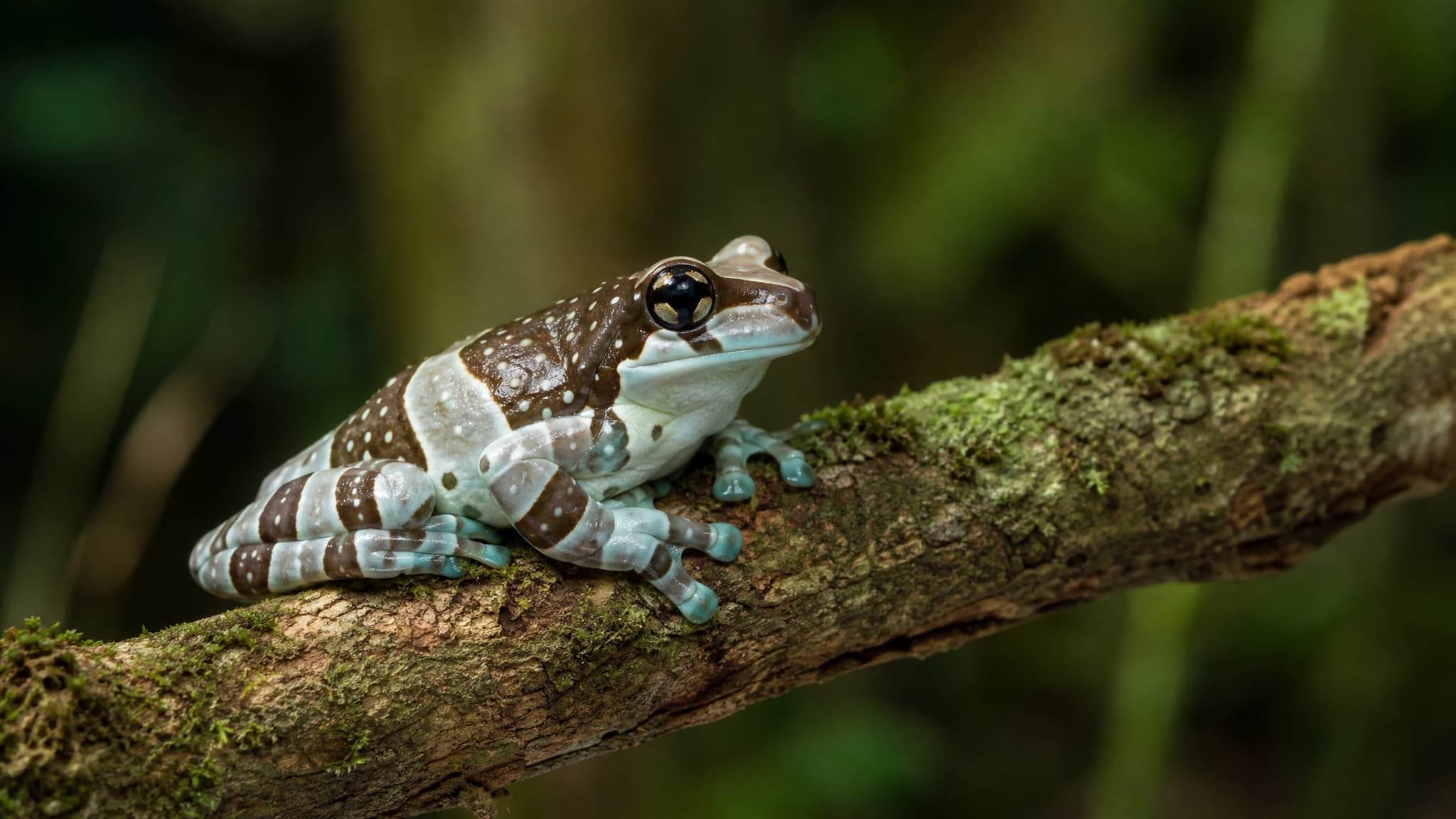
The Amazon milk frog is a large, arboreal hylid frog of northern South America. It is also known as the Mission golden-eyed tree frog. Adults have a pale greenish-gray to brownish-gray back crossed by dark brown or gray bands and blotches; the markings are often stronger in young frogs. Its rough-looking, bumpy skin, golden eyes, broad head, and large adhesive toe discs make it well adapted for climbing. Females can reach about 10 cm in snout–vent length, whereas males are usually smaller. When disturbed, the frog may release a milky skin secretion, which gives it its English common name and is a defensive trait rather than milk. The secretion should not be handled carelessly, as amphibian skin secretions can irritate predators and people. This species is chiefly associated with the canopy of primary tropical rainforest in the eastern Amazon Basin of Brazil and the Guianas—French Guiana, Guyana, and Suriname. It spends much of its life above the forest floor, using water-filled tree cavities both as shelter and as breeding sites. Records farther west in the Amazon need care because the identities of some populations relative to related Trachycephalus species remain unresolved. Nocturnal males call loudly from suitable flooded cavities and may defend these valuable sites. Adults take a range of invertebrates and sometimes small vertebrates. Females lay hundreds to thousands of eggs as a surface film in cavity water. Tadpoles hatch quickly, feed largely on detritus and, opportunistically, eggs, and can complete metamorphosis in captivity in roughly six to ten weeks. By consuming animals in the canopy and by having larvae that process material in tiny tree-hole pools, the species links rainforest food webs above the ground. It is assessed as Least Concern, but logging, forest conversion, pollution, and disturbance can harm local populations by reducing mature forest and the water-holding cavities it requires. Wild lifespan is unknown; captive individuals have been reported to live around 6–8 years.

View Details
Fire Salamander
Amphibians

Fire Salamander

Salamandra salamandra

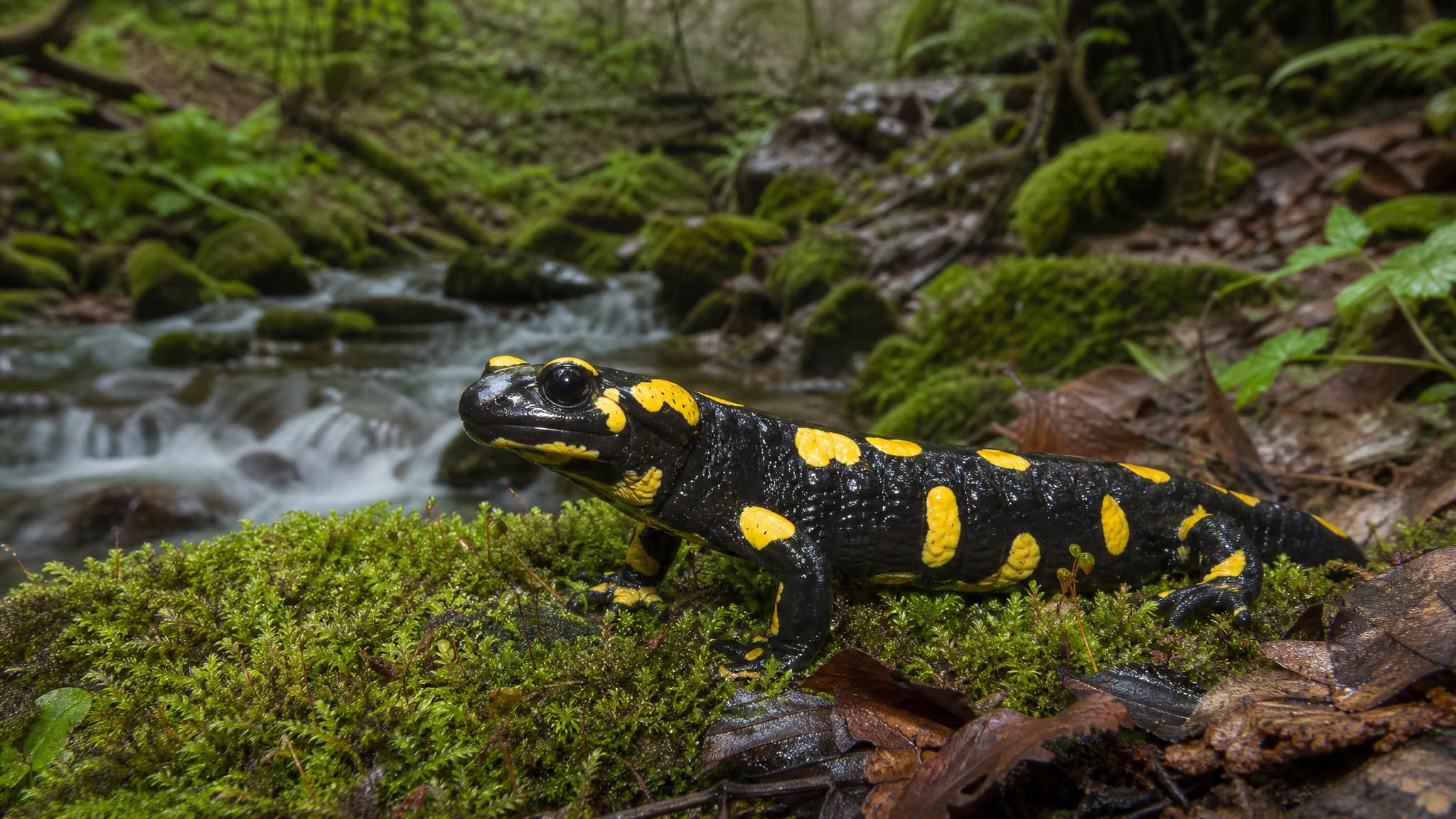
The fire salamander is a large, robust European salamander, best known for its glossy black body marked with bright yellow to orange spots, blotches, or bands. Marking patterns differ greatly among individuals and populations. Adults are usually about 15–25 cm long, although some grow longer; females are often somewhat larger than males. Its conspicuous colors are warning coloration, associated with defensive skin secretions from glands including the prominent parotoid glands behind the eyes. It occurs across much of central and southern Europe, with parts of its range extending into northern Africa and western Asia. Adults live mainly on land in humid, shaded woodland, sheltering beneath stones, logs, leaf litter, and in crevices. They require access to clean ponds, springs, or slow streams for reproduction, and are most likely to emerge on mild, wet nights. A secretive, generally solitary predator, the fire salamander feeds chiefly on small invertebrates such as earthworms, slugs, insects, millipedes, centipedes, and beetles. It hunts using vision when light is available and relies more heavily on scent in darkness. By consuming ground-dwelling invertebrates, it participates in forest-floor food webs; in turn, its toxic secretions and warning colors help deter many predators. Courtship and fertilization occur on land: a male deposits a spermatophore, which the female takes up internally. Females retain developing, yolk-fed embryos and later release advanced larvae into water; in some populations, young may be born already metamorphosed. Larvae develop in freshwater before becoming terrestrial juveniles. Individuals can live for more than 14 years, and captive animals have reached roughly 24 years. The species is assessed globally as Least Concern, but this does not eliminate local risk. Habitat loss, fragmentation, water pollution, road mortality, collection, and emerging amphibian diseases can harm populations. Protection of moist forests, safe breeding waters, and connected terrestrial habitat is important, particularly because adults may repeatedly use the same home ranges and overwintering sites.

View Details
American Bullfrog
Amphibians

American Bullfrog

Lithobates catesbeianus

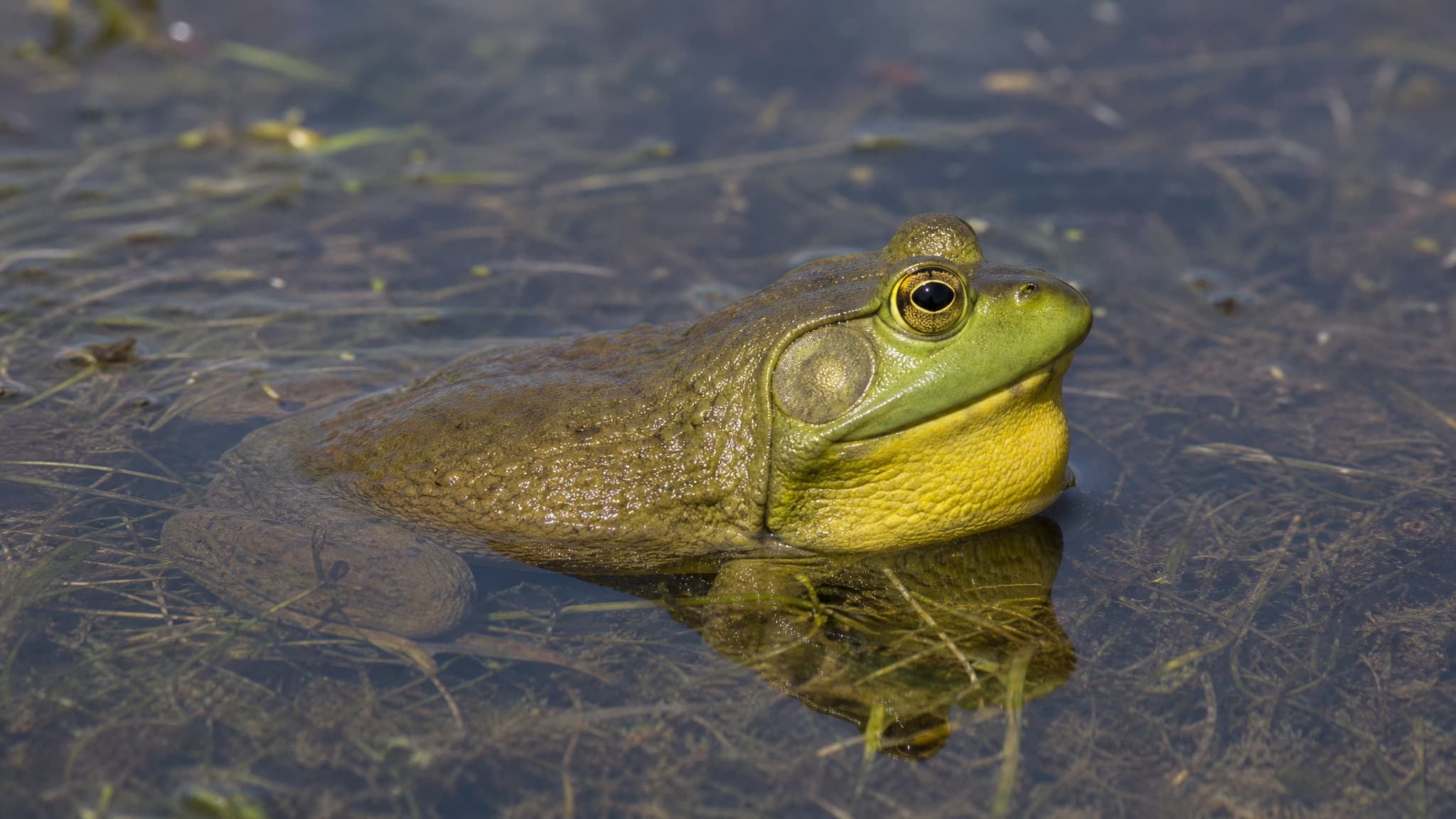
The American bullfrog is a very large, robust true frog, usually olive green to brown with darker mottling on the back. Adults commonly measure about 9–15 cm in body length, and exceptionally large individuals can be substantially bigger. Its broad head, powerful fully webbed hind feet, and conspicuous circular tympanum behind each eye are useful field marks. In breeding males, the tympanum is larger than the eye and the throat may become yellow; females generally have a tympanum no larger than the eye. Native to eastern and central North America, this frog occupies warm freshwater habitats including ponds, lakes, marshes, sluggish rivers, reservoirs, canals, and vegetated wetlands. It requires water for breeding and for its long larval development. People have moved it widely for food production and trade, and established introduced populations occur in western North America and in parts of Europe, Asia, and South America. Adults are ambush predators, waiting at the water’s edge or among aquatic plants before snapping up prey with a rapid tongue strike. Their broad diet includes insects, crustaceans, fish, other amphibians, reptiles, and occasionally small birds or mammals; cannibalism also occurs. Tadpoles feed mainly on algae and other plant-based material. The species is active in warm, moist conditions and may overwinter underwater in mud in colder parts of its range. Breeding is seasonal and involves loud, low male calls and defended aquatic territories. Females release large floating egg masses, sometimes containing thousands of eggs. Eggs may hatch within days, but metamorphosis can take many months to several years depending on climate and habitat. Wild individuals commonly live about 7–9 years, while captive animals have reached roughly 16 years. In its native ecosystems, the bullfrog is both a predator and prey species and helps link aquatic and terrestrial food webs. Globally it is listed as Least Concern because of its broad distribution, but its conservation significance is complex: where introduced, it can prey on native fauna, compete with other amphibians, and may contribute to pathogen transmission. Preventing releases and managing established populations are therefore important in vulnerable regions.

View Details
Surinam toad
Amphibians

Surinam toad

Pipa pipa

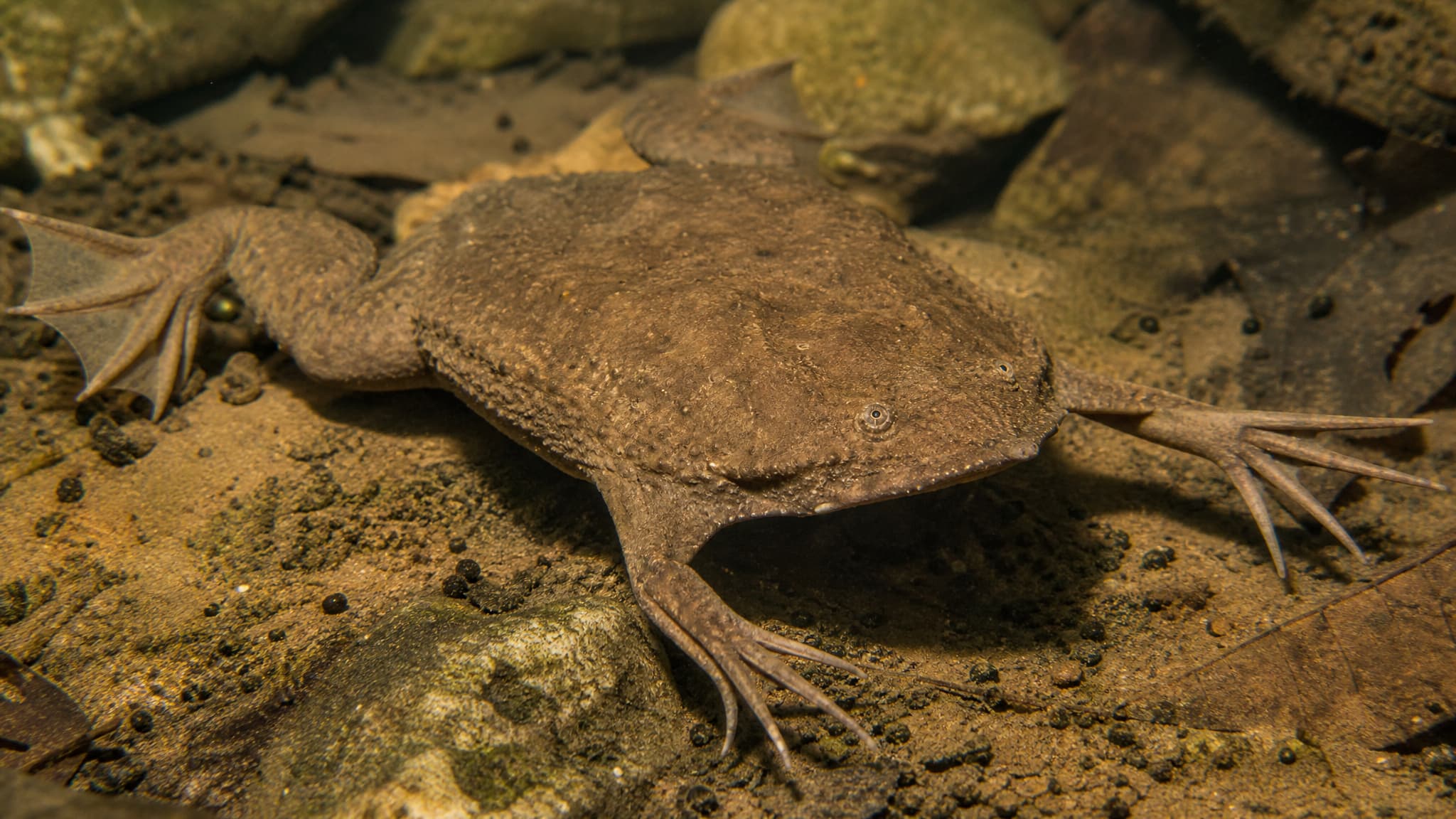
The Surinam toad is an unmistakable, fully aquatic frog with an extremely flat, broad body, a triangular head, and tiny lidless eyes positioned high on the head. Its brown to olive skin, often marked with darker mottling, helps it disappear against mud and leaf litter. Adults are commonly about 10.5–17 cm long, and the front fingers end in distinctive star-like sensory organs. It occurs across tropical northern and central South America, from the Amazonian lowlands into the Guianas and Trinidad. Rather than living on land like many frogs, it occupies quiet, muddy freshwater habitats including ponds, swamps, slow rivers, canals, and flooded forest. It normally remains submerged, surfacing periodically to breathe. This species hunts chiefly at night or from still ambush positions. Tongueless and toothless, it uses its sensitive fingertips to locate worms, aquatic insects, crustaceans, and small fish, then draws prey into its mouth by suction or manipulates it with its forelimbs. By feeding on small aquatic animals, it is both a predator in freshwater food webs and potential prey for larger aquatic predators. Its reproduction is especially notable. During underwater courtship, a male clasps a female and the pair performs repeated somersaults; fertilized eggs are pressed into the female's back, where skin forms individual brood chambers around them. Young undergo direct development rather than a free-swimming tadpole stage and emerge roughly three to four months later as miniature toads. Captive animals have been reported to live around eight years; wild longevity is less well documented. Pipa pipa is generally assessed as Least Concern because of its broad range, but wetland degradation and forest conversion for agriculture, ranching, and logging can damage the calm freshwater habitats on which it depends. Molecular research also indicates that populations currently called Pipa pipa may conceal several distinct species, so continued taxonomic and field study is important for interpreting its distribution and conservation needs.

View Details
Blacksmith Treefrog
Amphibians

Blacksmith Treefrog

Boana faber

Blacksmith Treefrog Boana faber is a large South American treefrog in the family Hylidae. It is known as the blacksmith treefrog or smith frog, names associated with its loud, metallic-sounding calls; in Brazil it is widely called sapo-ferreiro or sapo-martelo. Adults are robust for a treefrog, commonly about 8.5–10 cm from snout to vent. Their coloration is usually brown, grayish brown, or olive-brown, helping them blend into bark and muddy wetland margins. A conspicuous tympanum and a dark line extending rearward from the snout are useful field marks. The species occurs from eastern through southern Brazil and reaches southeastern Paraguay and Misiones Province in northeastern Argentina. It is strongly associated with the Atlantic Forest region, including humid tropical forest, forest edges, and vegetation around ponds, swamps, streams, and other quiet or slow-moving freshwater. Although arboreal in form and able to perch on trunks and vegetation, it depends on water-margin habitat for reproduction. This frog is chiefly nocturnal. Adults forage on small terrestrial invertebrates, while the diet of the larvae remains comparatively little studied; tadpoles have been observed feeding on aquatic macrophyte material. Its most remarkable behavior occurs in the breeding season: males excavate shallow mud basins, often called “pans,” then call from them and defend the sites against rival males. Enlarged prepollical spines near the thumbs can be used during male contests. A female inspects a male’s basin before amplexus, and eggs are deposited in the constructed nest. Tadpoles initially remain together within that sheltered basin, dispersing after further development or when water connects it to the surrounding wetland. This nest-building strategy can reduce early exposure to some aquatic hazards, while the frogs’ calls and territorial behavior structure breeding activity along pond margins. A reliable species-specific wild lifespan has not been well documented in the sources consulted. Boana faber is assessed as Least Concern because of its broad distribution and continuing occurrence in a range of habitats. Nonetheless, drainage or pollution of wetlands, removal of riparian vegetation, and forest conversion may diminish suitable breeding and shelter sites locally. Protecting vegetated pond edges, marshes, and connected forest habitat benefits this distinctive frog and the freshwater communities in which it breeds.

View Details
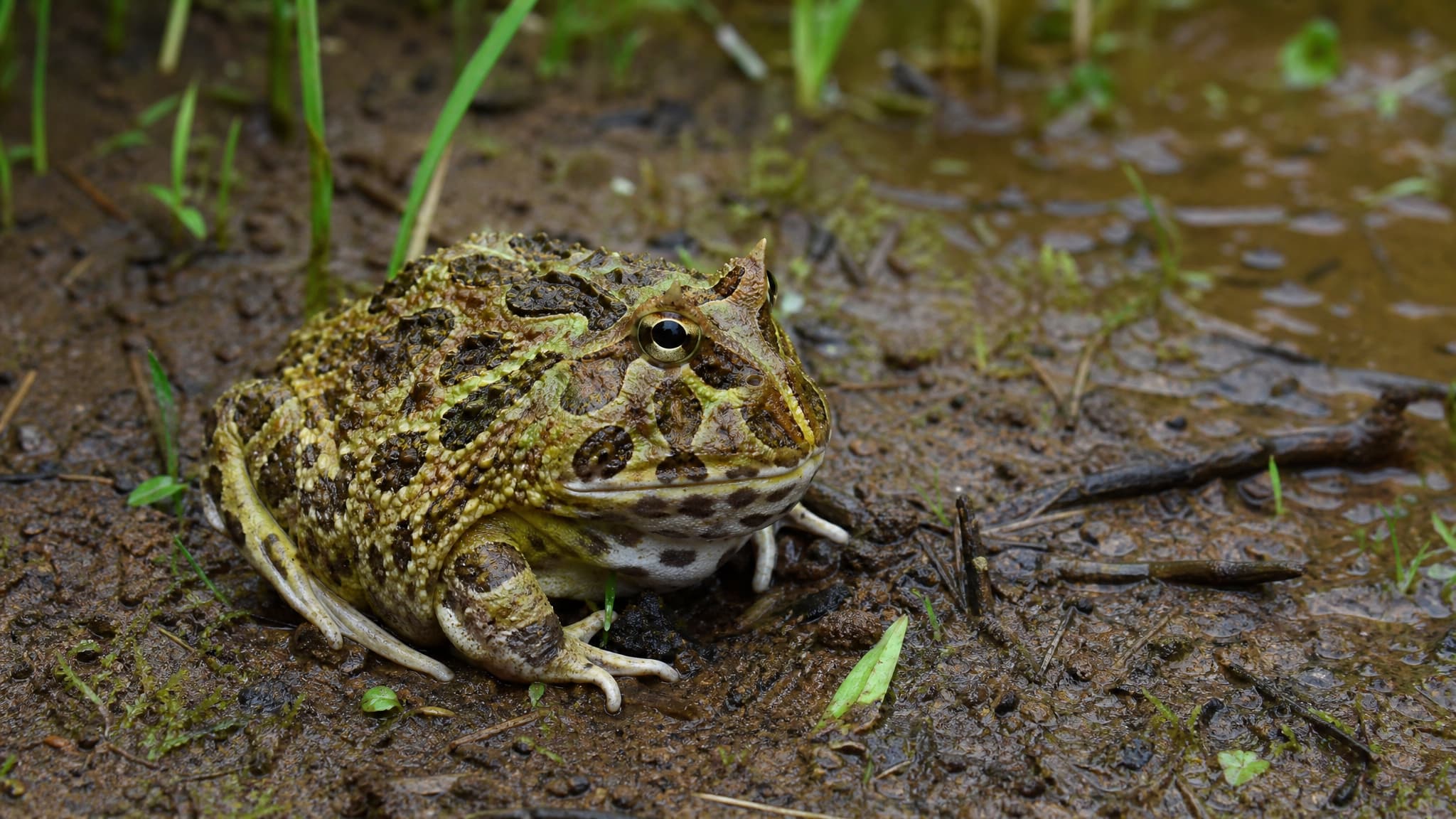
Ornate horned frog
Amphibians

Ornate horned frog

Ceratophrys ornata

The ornate horned frog is a large, powerfully built South American frog also called the Argentine horned frog. Its nearly round body, disproportionately enormous head and mouth, and pointed projections above the eyes give it the familiar “horned” appearance. The dorsal pattern is strikingly variable, commonly combining green, brown and reddish markings; the head also bears a protective bony shield beneath the skin. This species is native to the temperate grasslands of Argentina, Uruguay and southern Brazil. It is primarily terrestrial and fossorial, spending much of its time buried in loose soil or hidden among ground cover. Permanent water nearby and shallow flooded grasslands are especially important because heavy rains create the temporary breeding sites it uses. A patient ambush predator, it waits motionless and lunges at animals that approach its broad mouth. Adults consume invertebrates and small vertebrates, including other amphibians; larvae are also predatory and may cannibalize one another. By linking wetland food webs with those of the surrounding grasslands, it functions as both predator and prey. Breeding is concentrated in rainy spring and summer periods. Males call at flooded fields and wetlands, and females lay eggs individually on the bottom. Because these pools can disappear rapidly, larvae develop quickly. Reliable estimates of lifespan in the wild are limited. The species is listed globally as Vulnerable. Conversion and fragmentation of native Pampas grasslands and associated wetlands are major threats; agriculture, urbanization, drainage and exotic tree plantations have reduced suitable habitat. Recent research also indicates sharp range contraction and a lack of recent confirmed records in Brazil and Uruguay, making protection and monitoring of remaining grassland-wetland mosaics especially important.

View Details
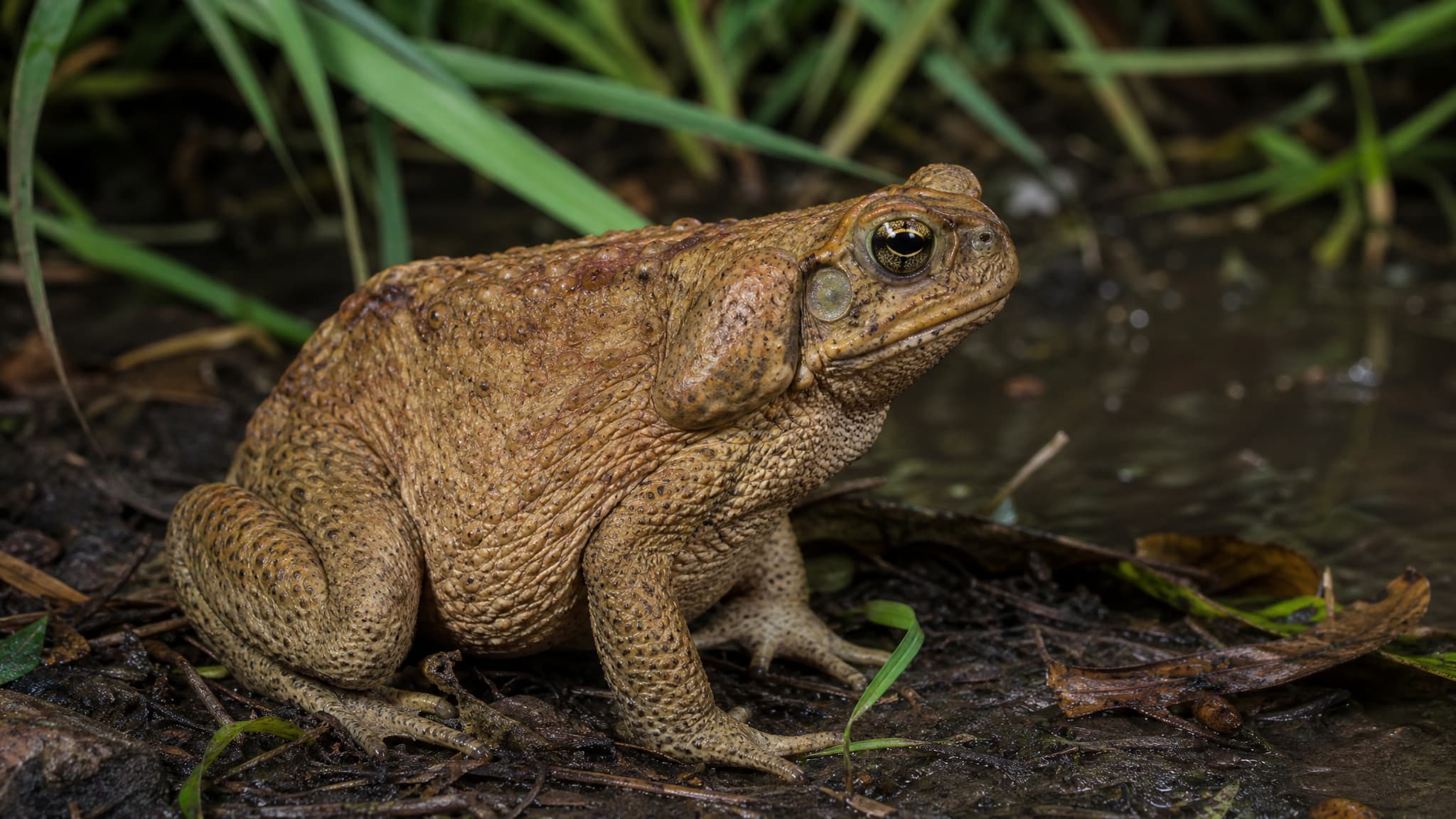
Cane Toad
Amphibians

Cane Toad

Rhinella marina

The cane toad, also called the marine toad, is a very large, terrestrial true toad with dry, warty skin. Its upper surface is usually olive-brown to yellow-brown, while the underside is pale and sometimes mottled. Broad bony ridges on the head, horizontal pupils, and a pair of conspicuous parotoid glands behind the eyes are important identifying features. Adults may reach about 24 cm in body length, with females commonly becoming larger than males. Under current treatments, Rhinella marina is native east of the Andes in the Guianas and Amazonian South America, including Brazil, as well as adjacent parts of Bolivia, Colombia, Ecuador, Peru, Venezuela, and Trinidad and Tobago. It uses tropical forests, forest edges, grassland, disturbed land, gardens, and settlements, provided freshwater breeding sites are nearby. It has also been deliberately or accidentally introduced to many islands and countries, notably parts of the Caribbean, Pacific, Australia, and southern Florida. Mostly active at night, this opportunistic predator eats ants, beetles, other arthropods, snails, and a wide range of other small animal matter; it may also scavenge or consume human-associated foods. In native ecosystems it is one predator among many and helps transfer energy from invertebrates to larger animals. Its parotoid glands release potent defensive secretions. Eggs, tadpoles, and adults can also be toxic, so dogs and other animals should not mouth or eat them. Males call at still or slow-moving water, where females lay long strings containing many thousands of eggs. The small, dark tadpoles often gather in dense schools and metamorphose quickly when conditions are warm. Individuals can live for around a decade in the wild. The IUCN lists the species as Least Concern in its native range; however, where introduced, its toxin, high reproductive output, broad diet, and competition with native fauna can produce serious ecological impacts.

View Details
Giant monkey frog
Amphibians

Giant monkey frog

Phyllomedusa bicolor

Phyllomedusa bicolor is a large, arboreal Amazonian frog often called the giant monkey frog, giant leaf frog, or giant waxy tree frog. Adults are strikingly two-toned: the back is deep green, while the underside is white, cream, or yellowish. Adult males measure roughly 91–118 mm from snout to vent and females about 106–119 mm. Broad adhesive toe pads, long limbs, and a deliberate climbing gait suit it to life among branches; the species also has conspicuous skin glands and bony deposits in the dorsal skin. Its range spans much of the Amazon Basin and Guianan region, including Brazil, Bolivia, Colombia, Peru, Venezuela, Guyana, Suriname, and French Guiana. It lives chiefly in humid, well-preserved tropical forest, using trees and shrubs near streams, temporary pools, or permanent still-water breeding sites. By day it rests in higher vegetation; males become active after dusk, calling from foliage and defending access to females. This frog is a carnivore. Direct records of its natural prey remain scarce, but related leaf frogs are generalist, ambush-oriented predators that take arthropods such as spiders, beetles, and caterpillars. Like other phyllomedusids, it spreads lipid-rich skin secretions over its body with its limbs. These secretions help limit water loss and contain bioactive peptides that are likely important in deterring predators. The secretion is associated with traditional kambô practices, but its use can be medically dangerous and should not be treated as a proven therapy. Breeding is concentrated in rainy periods, although timing differs across its extensive range. Calling males gather singly or in small groups in vegetation, sometimes several metres above ground. A paired male and female fold a leaf into a chamber above water and place a gelatinous egg mass inside. Clutches may contain roughly 241–1,722 eggs. About two weeks later, the hatchlings drop into the water below, where the tadpoles feed and grow until metamorphosis. Eggs are vulnerable to heavy predation despite the protective leaf nest. The giant monkey frog is currently listed as Least Concern globally, largely because of its broad distribution and occurrence in protected areas. It nevertheless depends on intact forest and suitable aquatic breeding habitat. Deforestation, degradation of Amazonian forests, collection for trade or extraction of skin secretions, and unresolved cryptic diversity may create localized conservation risks. Reported longevity is at least five years, though robust lifespan data from wild populations are lacking.

View Details
Dyeing poison frog
Amphibians

Dyeing poison frog

Dendrobates tinctorius

Dendrobates tinctorius, the dyeing poison frog, is a relatively large, day-active poison frog of the Guiana Shield. Adults are typically about 3.7–5.3 cm long, while females are generally larger than males. Its appearance is exceptionally variable among and within populations: blue, black, yellow, white, and irregular spots or bands can occur in many combinations. These conspicuous colors function as warning coloration, advertising skin alkaloids that make wild frogs unpalatable to many predators. The species occurs in lowland forests of Guyana, Suriname, French Guiana, and adjacent northern Brazil, chiefly from sea level to roughly 600 m. It uses humid tropical forest, especially leaf litter, fallen wood, buttress roots, and recently opened tree-fall gaps. Although sometimes seen climbing on vegetation, it is primarily a terrestrial forest-floor frog. Its moisture-dependent skin makes persistently humid microhabitats important. Adults actively hunt small arthropods, particularly ants and mites, along with termites, other insects, and spiders. Dietary compounds are associated with the alkaloids found in its skin, so captive frogs fed different prey may not possess the same chemical defenses as wild individuals. By preying on invertebrates and, as tadpoles, consuming detritus and aquatic larvae, the species links forest-floor and tiny water-pool food webs. Breeding takes place on land. Small clutches are laid in sheltered places such as leaf litter, logs, or plant structures; the male attends the eggs and later carries newly hatched tadpoles on his back to water-filled tree holes, palm bracts, or other small pools. Tadpoles develop there for about two months and may be predatory, including on other frog larvae or conspecific tadpoles. The species is assessed as Least Concern, but habitat loss, localized collecting for trade, and chytrid-fungus infection remain concerns. It is listed in CITES Appendix II. Captive individuals can live up to about 15 years.

View Details
Axolotl
Amphibians

Axolotl

Ambystoma mexicanum

Axolotl The axolotl is a fully aquatic mole salamander distinguished by its broad head, lidless eyes, finned tail, and three conspicuous, feathery external gill stalks on each side of the head. Unlike most salamanders, it normally becomes sexually mature while retaining larval features—a condition called paedomorphosis or neoteny. Wild animals are usually dark and mottled brown to olive; pale, white, golden, and other striking color forms are chiefly familiar from captive stocks. Adults commonly reach roughly 20–23 cm, although larger individuals occur. This species is endemic to the high-elevation freshwater wetlands of the Valley of Mexico. It historically inhabited Lakes Xochimilco and Chalco near Mexico City; Chalco was drained, and its surviving natural range is now centered on the canal and wetland system of Xochimilco. It depends on cool, permanent, vegetated freshwater, where submerged plants and other structure provide shelter and surfaces for eggs. Axolotls are primarily solitary carnivores. They take worms, aquatic insect larvae, small crustaceans, mollusks, fish, and other small animals, sometimes including other axolotls. They use visual, chemical, and electrical cues to locate prey. As predators in their native wetlands, they help regulate invertebrate and small-vertebrate populations and are indicators of the ecological condition of the Xochimilco aquatic system. During courtship, a male performs displays and deposits a spermatophore, which the female picks up for internal fertilization. Females lay individual, jelly-coated eggs on aquatic vegetation or other submerged surfaces; reported clutches range from about 100 to 300 eggs, and hatching may occur in 10–14 days. The young receive no parental care. Wild lifespan is often estimated at 10–15 years, while laboratory averages of 5–6 years and captive records up to about 15 years have been reported. The axolotl is Critically Endangered. Habitat loss, water extraction and pollution, urban pressure, and introduced carp and tilapia threaten the remaining wild population through predation and competition. Protecting and restoring Xochimilco’s wetland water quality and refuges is therefore central to the species’ survival. Its exceptional ability to regenerate limbs, spinal-cord tissue, and parts of internal organs also makes it an important organism in biomedical and developmental research.

View Details
Red-eyed Tree Frog
Amphibians

Red-eyed Tree Frog

Agalychnis callidryas

The red-eyed tree frog, Agalychnis callidryas (Cope, 1862), is a nocturnal, arboreal leaf frog in the family Phyllomedusidae. It is one of the best-known Neotropical frogs, recognizable by its leaf-green back, very large red eyes, orange to reddish-orange feet, pale underside, and blue flanks marked with yellow bars. Its smooth body, long limbs, webbed hands and feet, and adhesive toe pads are suited to moving and resting on vegetation. Adults are commonly about 4–7 cm long, with females generally larger than males. (amphibiansoftheworld.amnh.org) This species occurs from Mexico and Central America south to Colombia, chiefly in humid tropical lowland forests; records extend from sea level to about 1,325 m. It is closely associated with still or slow, freshwater breeding sites such as ponds and swamps, while adults spend much of their time in shrubs and trees. During the day, a resting frog commonly folds its limbs against its body and keeps its eyes shut, so its green coloration blends with foliage; it becomes active at night. (amphibiansoftheworld.amnh.org) Red-eyed tree frogs are carnivorous, taking insects and other small invertebrates, primarily during nocturnal activity. Males call in wet-season breeding periods and use acoustic and vibrational signals in interactions with other frogs. Reproduction involves external fertilization: eggs are deposited in gelatinous clutches on leaves or other vegetation overhanging water. Under ordinary conditions, embryos hatch after roughly six or seven days and the tadpoles fall into the water below, where they continue development before metamorphosing into froglets. (animaldiversity.org) The embryos are especially notable for flexible, threat-responsive hatching. When egg-eating snakes, social wasps, flooding, fungal infection, or other hazardous conditions threaten a clutch, embryos can hatch prematurely; during a snake attack, hatching can begin within seconds. This escape strategy can save embryos from egg-stage predators, but it entails a trade-off because younger tadpoles are less developed and can be more vulnerable to aquatic predators. (journals.biologists.com) Its broad range and occurrence in a variety of humid forest settings provide some resilience, but the species still depends on the persistence of forested habitat and suitable freshwater breeding sites. Habitat conversion, degradation of wetlands and forest edges, disease, and unsustainable collection can pose local pressures; conservation should therefore emphasize protection of connected tropical forest and breeding waters. The sources consulted here did not provide a directly retrievable current IUCN assessment page, so no current Red List category is asserted in this description.

View Details