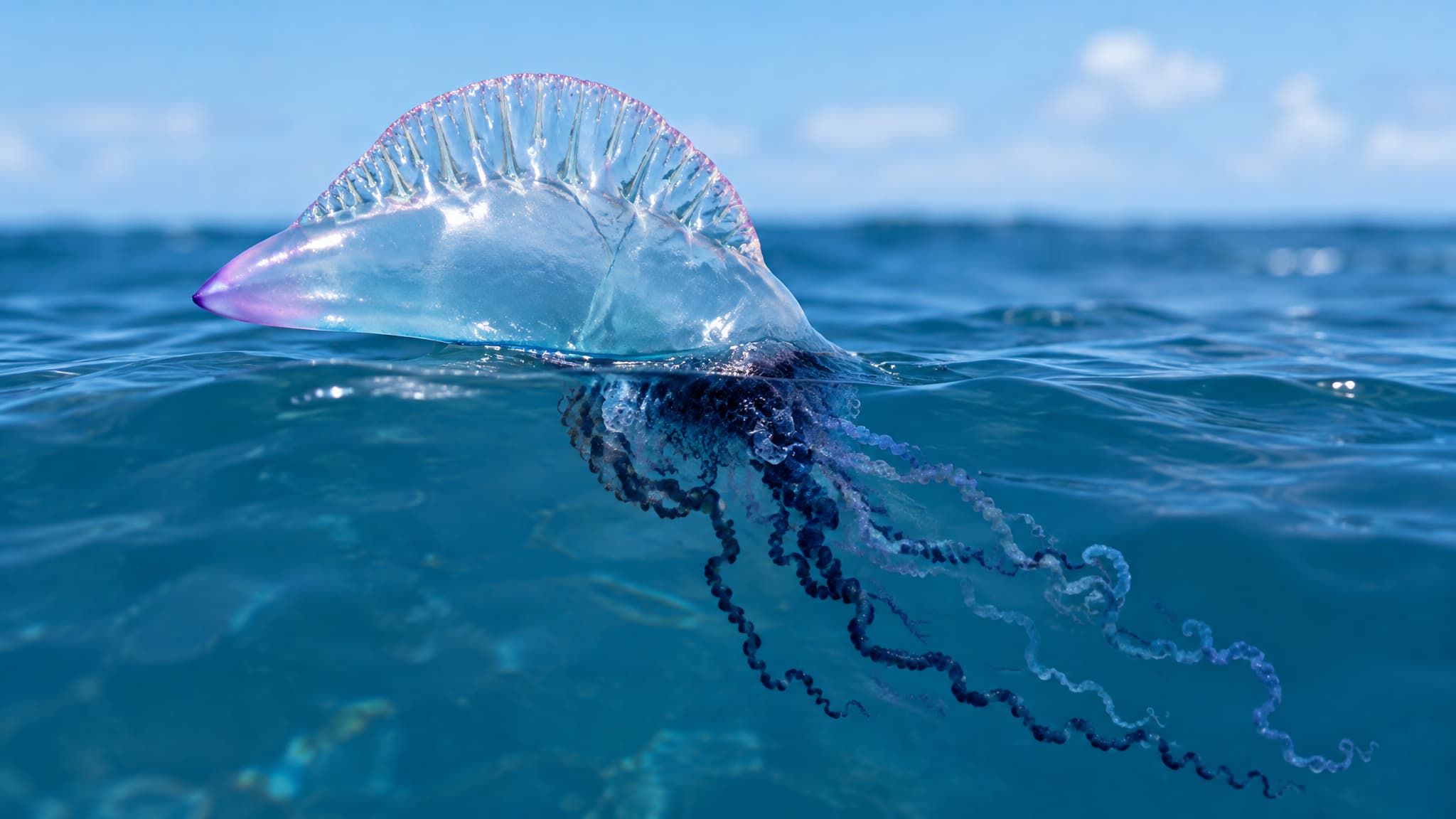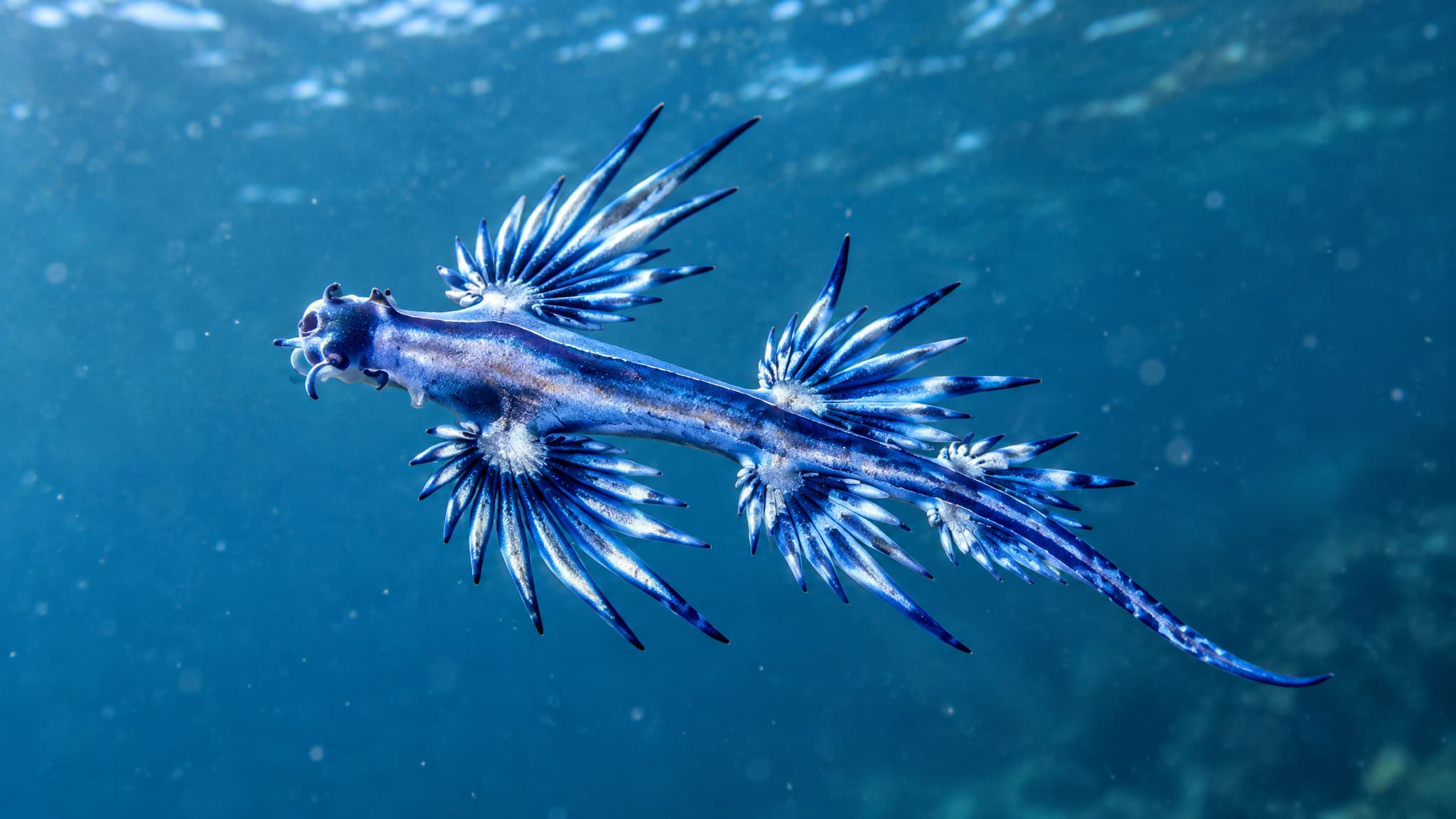
A blue sea dragon floats horizontally in open blue water, showing a slender blue body, a distinct anterior head, and numerous radiating cerata along its sides and back.
Wildlife category

Invertebrates

Animals without a backbone

Published animals

60

Category

Invertebrates

Slug

invertebrates

Animals In This Category

Browse featured species, habitat clues, and discovery paths for the Invertebrates category.

60 animals found

Blue sea dragon
Invertebrates

Blue sea dragon

Glaucus atlanticus

The blue sea dragon (Glaucus atlanticus) is a small sea slug that spends its whole life drifting at the ocean surface. Described by Georg Forster in 1777 from material collected on Captain Cook's second voyage, it is an aeolid nudibranch of the family Glaucidae. Adults usually measure about 3 to 4 cm, although some specimens reach about 7 cm. The body is elongated, widest just behind the head and tapering to a pointed tail, and it carries six groups of long, finger-like cerata. One side is a vivid mix of dark and pale blue, while the other is silvery grey. That colour pattern makes sense once you know how the animal lives. A bubble of gas held in its stomach keeps it afloat, and it hangs upside down from the surface film, its foot pressed against the water's surface. The blue side faces the sky and blends with the sea, while the silvery side faces down and matches the bright surface seen from below. Wind and currents carry it across the open ocean, and it can swim slowly with its cerata. The species lives in temperate and tropical waters of all oceans. Records span the Brazilian coast, South Africa, Mozambique, European waters, the Azores, the Canary Islands, Bermuda, Barbados, Texas, Peru, the Gulf of California, India and eastern Australia. Large numbers sometimes wash up on beaches, often linked to currents and weather events such as El Niño. The blue sea dragon is a predator of other floating animals. Its main prey are venomous siphonophores such as the Portuguese man o' war, together with by-the-wind sailors (Velella velella), blue buttons (Porpita porpita) and violet snails (Janthina). It is unharmed by the man o' war's stinging cells. Instead, it stores the most potent ones in sacs at the tips of its cerata, a habit called kleptocnidy, and uses them for its own defence. In captivity, individuals may attack one another when no other food is available. Each animal is a hermaphrodite, with both male and female organs. Unlike most nudibranchs, two partners mate with their undersides pressed together, and both then lay strings of white eggs, often on floating wood or carcasses. Under good conditions an individual can live for up to a year. The species has not been assessed by the IUCN. Its borrowed stinging cells mean that touching one, even on a beach, can cause a painful sting with pain, nausea and skin reactions similar to a man o' war sting, so stranded animals are best admired without handling.

View Details
European Stag Beetle
Invertebrates

European Stag Beetle

Lucanus cervus

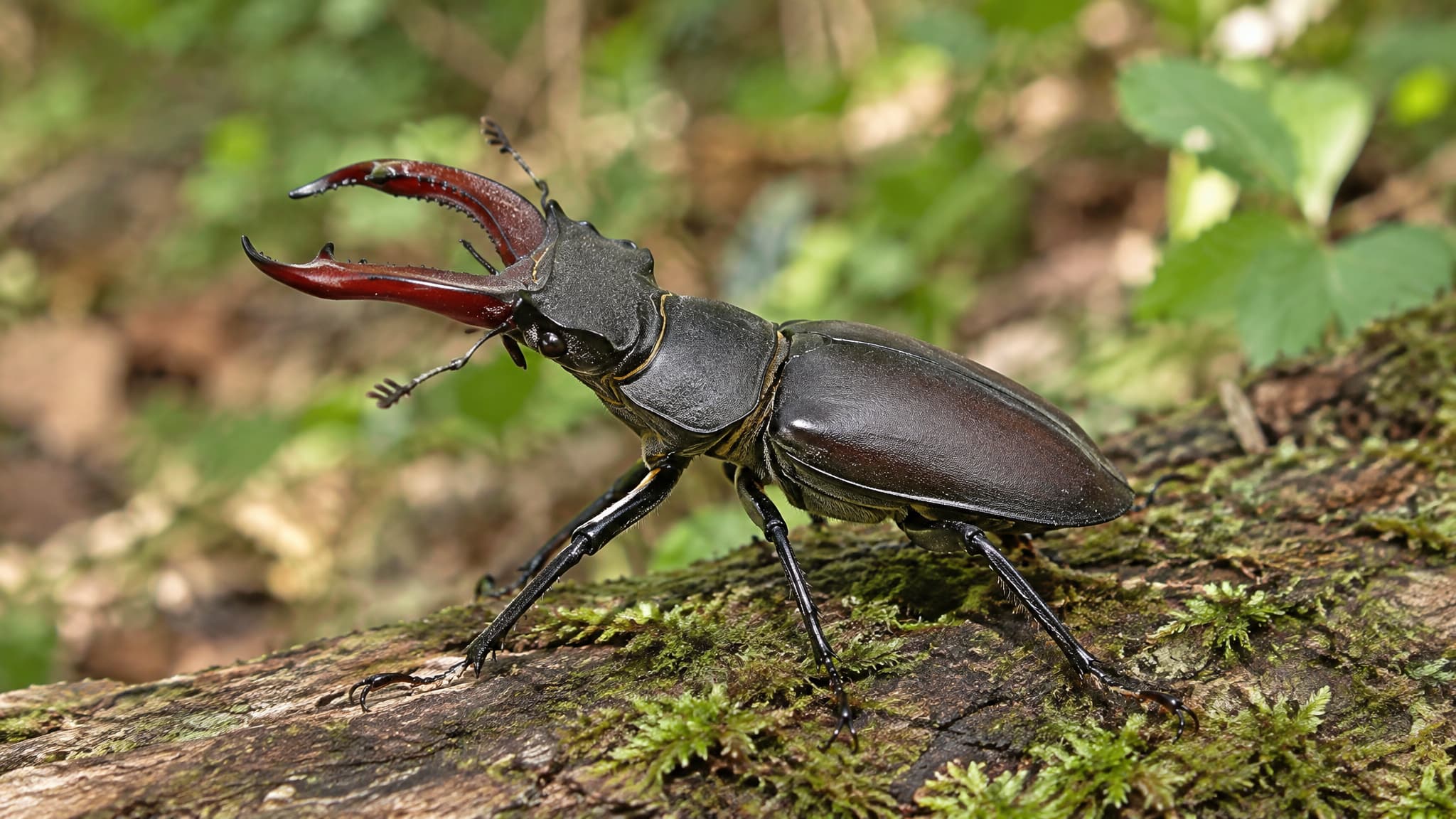
The European stag beetle (Lucanus cervus) is a large beetle of the family Lucanidae and is often described as the largest beetle in Europe. Males are known for their greatly enlarged, antler-like mandibles, which give the species its name, and measure about 35 to 75 mm including the jaws. Females are smaller, about 30 to 50 mm long, with short jaws, a smaller head and brown wing cases. Males have a reddish-brown body, and adults weigh roughly 2 to 6 g. The species is widespread across much of Europe but absent from Ireland, and it also occurs in the Caucasus, Asia Minor, Syria and western Kazakhstan. It has died out in Latvia and vanished from Denmark around 1970 before being reintroduced there in 2013. In Britain it lives mainly in southeast England, with strongholds in the Thames Valley, the New Forest and London. Its natural home is broadleaved woodland, especially oak, but it also uses hedgerows, traditional orchards, parks and gardens that keep dead wood, favoring sun-exposed timber and light, well-drained soil. Larvae feed on decaying wood of broadleaved trees, preferring oak but also using beech, willow, ash, lime, apple and others; they avoid conifers and do not harm living trees. Adults take no solid food and drink tree sap and the juice of fallen or decomposing fruit. The beetle is crepuscular: from about May to early August, males fly on warm evenings with a slow, lumbering, buzzing flight, while females fly less and stay mostly near the ground. Rival males fight with their mandibles, each trying to throw the other off a log or branch. A female lays up to about 30 eggs in dead wood or in the soil beside it, and the eggs hatch after about three weeks. The blind, C-shaped larvae communicate by stridulation, grow up to about 11 cm and spend three to seven years underground. Pupation starts in the final autumn and lasts about six weeks, but the adult stays in the soil until May or June. Above ground, adults live only a few weeks and usually die by August. By breaking down dead wood, stag beetle larvae return nutrients to the soil, and both adults and larvae are food for animals such as cats, foxes, badgers, crows, magpies, woodpeckers and kestrels. The IUCN European Red List of saproxylic beetles assesses the species as Near Threatened, with significant declines in the north and center of its range. The main threats are the removal of dead wood when woods, parks and gardens are tidied, the loss of broadleaved woodland, road deaths and predation. It is protected in the United Kingdom under the Wildlife and Countryside Act 1981, and log piles are built to give the larvae food.

View Details
Venus' flower basket
Invertebrates

Venus' flower basket

Euplectella aspergillum

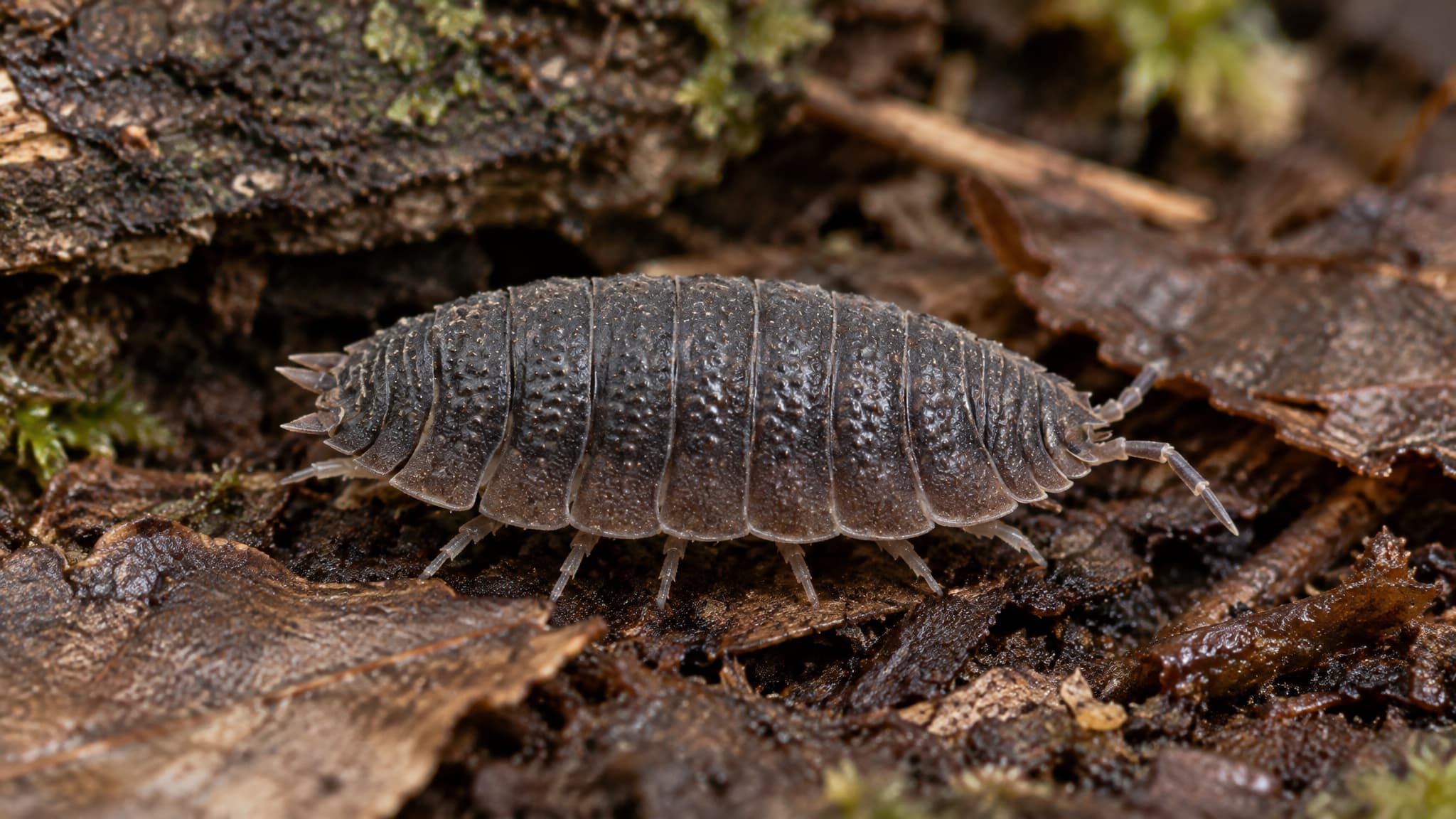
The Venus' flower basket (Euplectella aspergillum) is a deep-sea glass sponge with a curved, tube- or vase-shaped body. Its skeleton is made of silica: six-rayed spicules are fused into a delicate glass latticework that looks like woven lace. Most individuals are 10 to 30 cm tall, although the species ranges from 7.5 cm to 1.3 m. At the base, a tuft of long glass fibres, 5 to 20 cm long and about as thin as a human hair, anchors the sponge to the bottom. The species lives in the western Pacific Ocean near the Philippine Islands, and its type specimen comes from the eastern Philippines. It is found at depths of 100 to 1,000 m and is most common below 500 m; one specimen has been photographed at 2,572 m. It spends its whole life attached to rocky seafloor, and its anchoring fibres also keep it rooted in loose, muddy sediment. The World Porifera Database recognizes four subspecies. Like other sponges, it is sessile and feeds by filtering seawater. Water flows through its body, and the sponge captures plankton, other microscopic organisms, marine snow and organic debris. Flow simulations suggest that the lattice shape creates small vortices inside the sponge. Researchers have also speculated that light from bioluminescent organisms, carried along its glass fibres, may help attract prey, but this has not been confirmed. Little is known about its reproduction. It is thought to be hermaphroditic, producing male and female gametes at different times. Sperm enter with the inhalant water current and fertilize the eggs, and the embryo develops into a free-swimming larva that settles and grows into a new sponge. The vortices created by the skeleton may help mix sperm and eggs. Its lifespan in the wild has not been measured. The sponge is best known for its partnership with glass sponge shrimp. A male and a female usually enter while young, grow too large to escape the lattice and spend their whole lives inside, where they feed on particles the sponge collects and help keep its interior clean. Their tiny offspring leave to find a sponge of their own. In Japan, the dried skeleton is given as a wedding gift, and its glass fibres and strong, light structure are studied by engineers and fibre optics researchers. The species has not been evaluated by the IUCN Red List, and its population status is unknown because it lives at such great depths.

View Details
Giant African Land Snail
Invertebrates

Giant African Land Snail

Lissachatina fulica

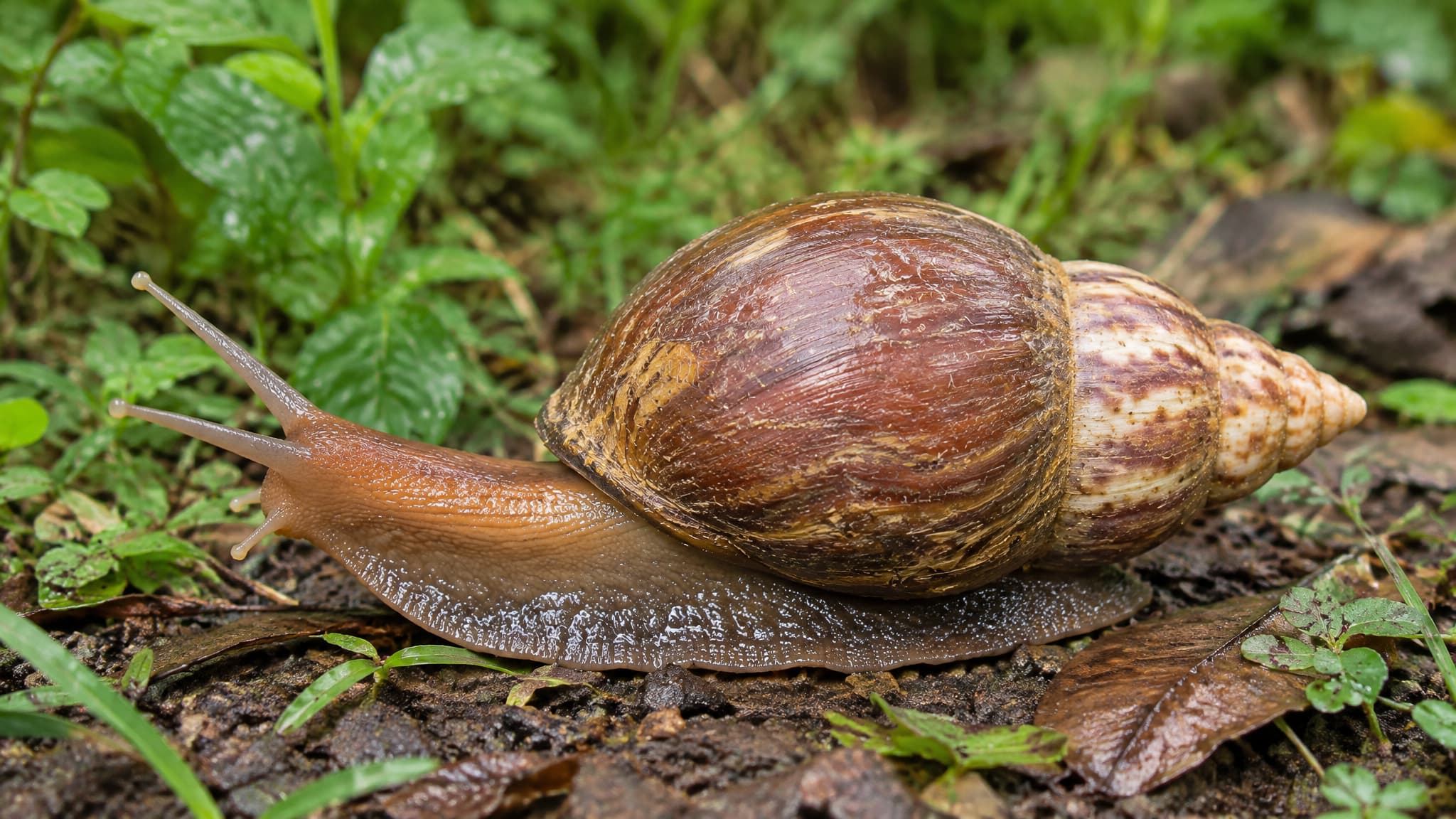
The giant African land snail (Lissachatina fulica), long known as Achatina fulica, is a large air-breathing land snail of the family Achatinidae. Its tall, cone-shaped shell is about twice as long as it is wide and has seven to nine whorls. The shell can reach 20 cm or more in length and about 7 cm in diameter, although adults found in Brazil usually measure 7 to 12 cm. The species is native to coastal East Africa and nearby islands, from Mozambique north to Kenya and Somalia, where it lives along forest margins. Carried by people through trade and deliberate releases, it is now established in many tropical and subtropical countries. In its invasive range it thrives in farmland, gardens, wasteland and towns, sheltering in leaf litter, damp soil and on walls, fences and tree trunks. In Brazil it was brought to Paraná in the 1980s as a cheap substitute for escargot; when the trade failed, breeders released the snails, and the species has since been recorded in 23 Brazilian states. The snail is mainly herbivorous and eats a very wide range of living plants, including crops, fruits, vegetables, ornamental plants and weeds, as well as lichens and fungi. Young snails eat soil, a source of calcium for the shell, and decaying matter, and near homes the species also feeds on food scraps, paper, cardboard and feces. It is solitary and nocturnal, hiding from sun and heat during the day, and it aestivates, becoming dormant, during dry or unfavourable periods. Each snail is a hermaphrodite, but it needs a partner to mate and cannot fertilize itself. Clutches average about 200 eggs, laid in soil and buried or partly buried, and the eggs hatch in 11 to 15 days. Snails mature at about six months, can lay several clutches a year and usually live 3 to 5 years, with a recorded maximum of 10 years. It helps break down dead vegetation and is eaten by predators such as rodents, land crabs and ants; in Brazilian cities, black rats have been recorded eating it. As an invader it damages crops and gardens and competes with native snails. It can carry the rat lungworm (Angiostrongylus cantonensis), which causes eosinophilic meningitis in people, and empty shells can hold water in which the dengue mosquito Aedes aegypti breeds. The species has not been evaluated by the IUCN Red List and is not threatened. Brazil declared it an invasive species in 2005, and breeding it there is illegal. People can catch the lungworm by eating raw or undercooked snails or by handling live wild snails.

View Details
Moon Jellyfish
Invertebrates

Moon Jellyfish

Aurelia aurita

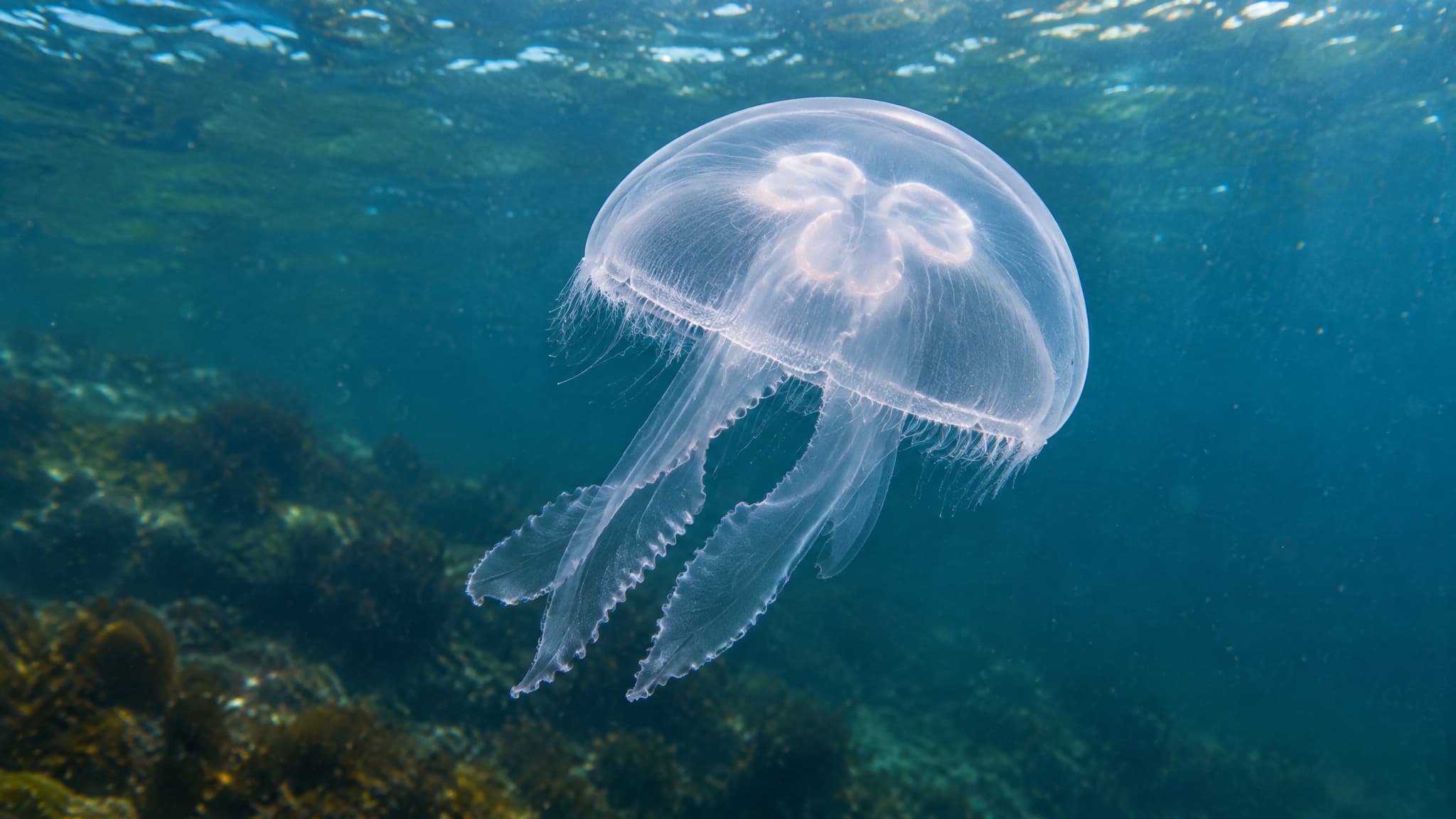
The moon jellyfish (Aurelia aurita) is a true jellyfish of the family Ulmaridae and the type species of its genus. Its smooth, saucer-shaped bell is nearly colourless and usually grows to about 25 cm across, though it can reach 40 cm. Four horseshoe-shaped gonads, often violet, pink or yellowish, show clearly through the top of the bell, and the margin carries a fringe of many short tentacles 1 to 5 cm long. Four thick oral arms hang beneath the centre. Under the current taxonomy, A. aurita is native to the Northeast Atlantic, with its type locality at Helgoland, Germany. It is recorded from the North, Baltic, Black and Caspian seas, Greenland, northeastern USA and Canada, the Northwest Pacific and South America, where introductions have spread it, including a record at Ushuaia, Argentina. It lives in coastal and upper epipelagic waters, drifts into estuaries and harbours, and is especially common in Scottish sea lochs. It is Britain's most common jellyfish, yet it appears sporadically: some years bring huge local swarms, others almost none. The moon jellyfish eats plankton. Copepods, small molluscs, fish eggs and smaller jellyfish become caught on the bell and tentacles, and the oral arms carry the food to the stomach. Medusae swim by pulsing the bell, which keeps them near the surface, and dense swarms can colour the sea red and slow small boats. Sexes are separate. Males release sperm, which females take in, and the eggs are brooded in small pits on the oral arms until they hatch as planula larvae. Planulae settle on hard surfaces and become tiny polyps that bud off young jellyfish called ephyrae. Breeding peaks in summer and autumn, and adults mature at 4 to 12 months. Medusae in the wild average about 12 months of life, with a maximum of about 2 years, while polyps in captivity have lived up to 25 years. Moon jellyfish are eaten by seabirds, other jellyfish, chum salmon, butterfish, ocean sunfish and leatherback sea turtles, and they carry amphipods such as Hyperia galba. Large blooms compete with fish for plankton, eat fish larvae and can clog power plant intakes. The species has not been evaluated by the IUCN Red List.

View Details
Giant clam
Invertebrates

Giant clam

Tridacna gigas

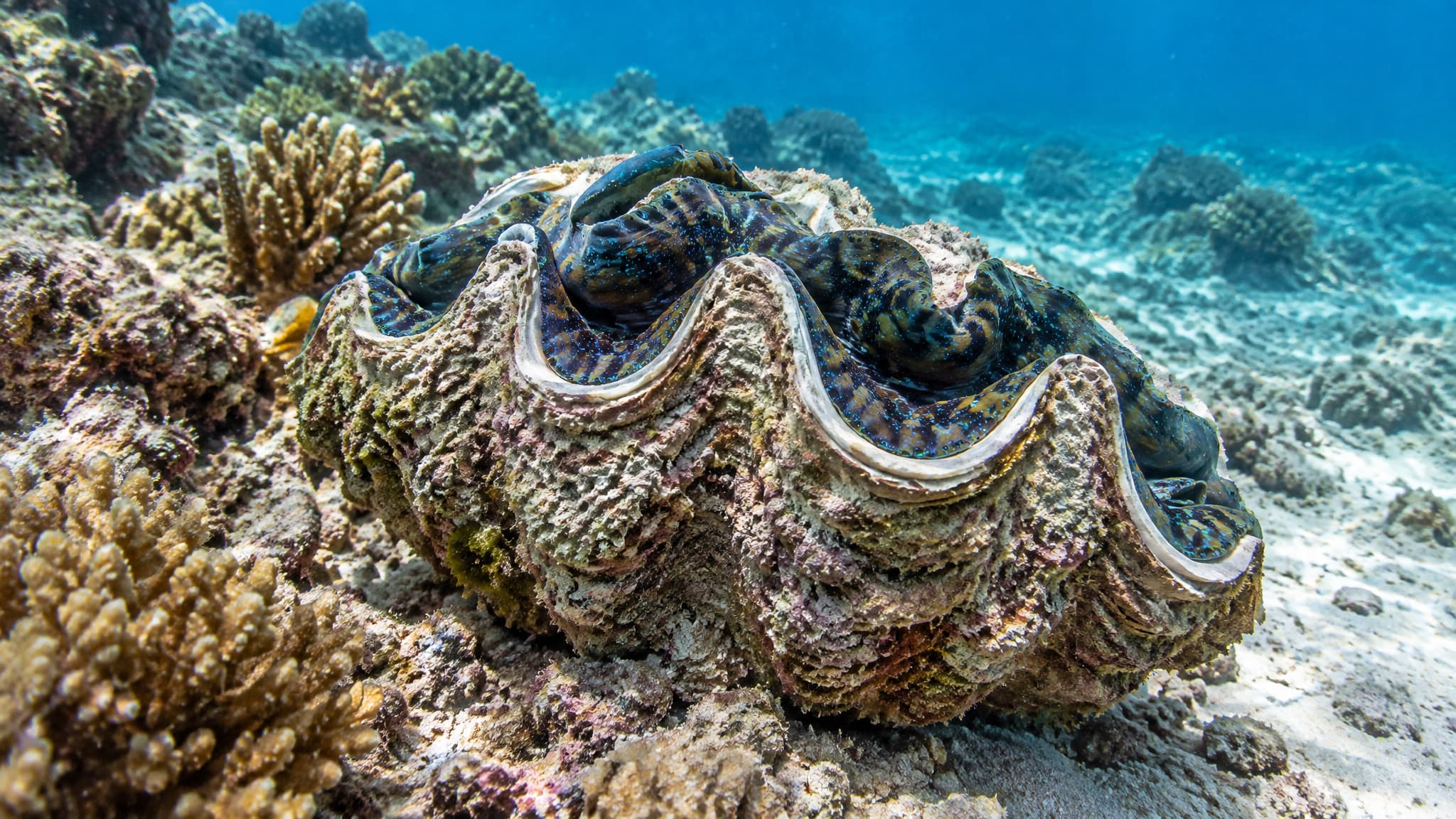
The giant clam (Tridacna gigas) is the largest living bivalve. Its heavy, deeply ribbed shell commonly reaches up to 120 cm across and more than 200 kg, and the longest specimen on record, found off Sumatra around 1817, measured 137 cm. The upper edges of the shell carry 4 to 5 large triangular projections, and a fully grown clam can no longer close its valves completely. Between them the fleshy mantle spreads out in the sun, dotted with light-sensitive eyespots that make the clam pull in its mantle and partly shut when a shadow passes. The species lives on shallow coral reefs of the Indo-Pacific, from the Nicobar Islands in the west across the South China Sea, the Philippines and northern Australia to Fiji in the east. It is usually found within 20 m of the surface, where sunlight is strong. Adults are permanently sessile and rest on the reef or the sand between corals. Much of its food is made inside its own body. Symbiotic single-celled algae called zooxanthellae live in the mantle and photosynthesize, providing about 65 to 70% of the clam's nutritional needs; translucent "windows" in the mantle may let more light reach them. The clam also filters phytoplankton and zooplankton from the water, and the smallest clams get a larger share of their carbon from this filter feeding than bigger ones. Each giant clam is a hermaphrodite that releases both sperm and eggs but cannot fertilize itself. Spawning tends to follow incoming tides in certain moon phases, and a single adult can release more than 500 million eggs, each about 100 micrometres wide. The larva hatches after about 12 hours, drifts in the plankton and settles on the reef at about one week old. Giant clams can live for more than 100 years in the wild. Heavy harvesting of large adults for meat, shells and the aquarium trade has emptied many reefs, and warming seas threaten the clams by making them expel their algae. In 2024 the IUCN moved T. gigas from Vulnerable, its 1996 status, to Critically Endangered after a decline of about 84% over the past century; it has vanished from places such as the waters near Taiwan and peninsular Malaysia. The species is listed in CITES Appendix II, and clams restocked in the Philippines now spread their larvae across the surrounding reef.

View Details
Amazonian giant centipede
Invertebrates

Amazonian giant centipede

Scolopendra gigantea

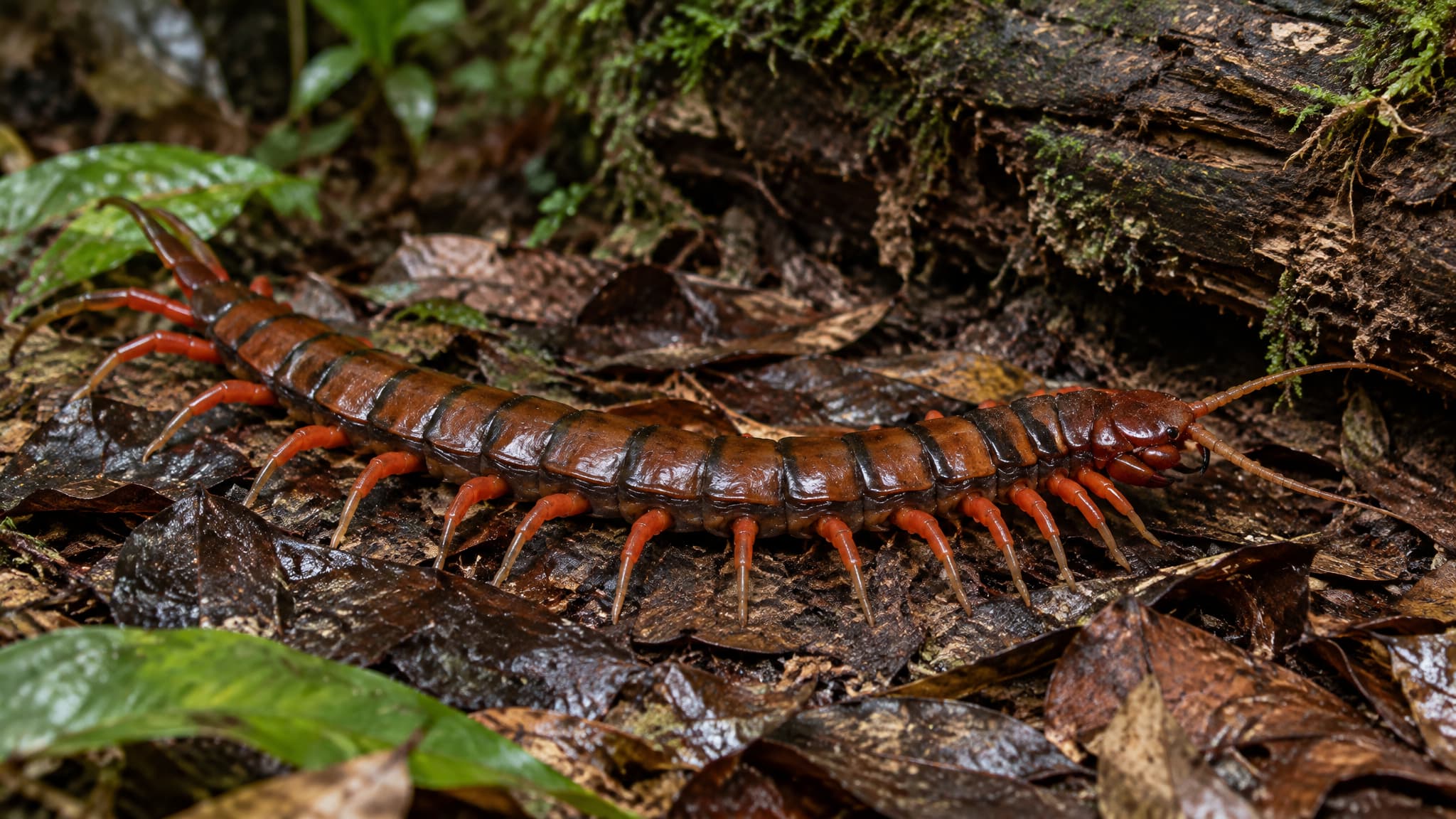
The Amazonian giant centipede (Scolopendra gigantea), also called the Peruvian giant yellow-leg centipede, is the largest centipede in the world. Described by Linnaeus in 1758, it belongs to the family Scolopendridae and can exceed 30 cm in length. Its flattened body is divided into a head and a trunk of 21 or 23 segments, each bearing one pair of legs. The head ranges from dark brown to reddish brown, and the legs are olive green with yellow claws. Under the head sits a pair of legs modified into venom-bearing forcipules, and the last pair of legs is long, spiny and used for sensing and defence. Males and females look very much alike. Despite its English name, verified museum specimens come mainly from northern South America: northern Colombia and Venezuela, including Margarita Island, and the islands of Trinidad, Curaçao and Aruba, with records from Brazil as well. Reports from Mexico, Honduras, Hispaniola, Puerto Rico and the US Virgin Islands are treated as accidental introductions or labelling errors. It lives in tropical rainforest and tropical dry forest, sheltering in leaf litter, rotten wood, under rocks and logs and beneath tree bark, and it also uses rubble, trash piles and wall crevices near houses. Its exoskeleton lacks a waxy layer, so it loses water quickly through its breathing pores and must stay in moist, dark places. It is mainly nocturnal, has poor eyesight and finds prey with its antennae and sensory hind legs. A strong climber and a fierce predator, it eats almost any animal it can overpower: large insects, worms, snails, spiders, millipedes, scorpions and tarantulas, as well as lizards, frogs up to 9.5 cm long, snakes up to 25 cm long, mice and small birds. In a cave in Venezuela, large individuals were seen hanging from the ceiling, held by only a few legs, while they caught and ate bats. Males have no copulatory organs. A male spins a silk pad and leaves sperm on it, and the female picks the sperm up and later lays her eggs. She coils over the clutch and broods it, keeping guard until the young can feed for themselves. Animal Diversity Web gives a lifespan of about 10 years. As a predator of insects and other pests, the species is valued by farmers and gardeners, while it is itself eaten by large birds, spiders and mammals such as coatis, kinkajous and opossums. Its venom can immobilize bats and mice, and the bite is very painful to people. In 2014 a four-year-old child in Venezuela died after being bitten by one of these centipedes hidden in an open soda can. The species has not been assessed by the IUCN, and no threat to its survival is known.

View Details
Giant Prickly Stick Insect
Invertebrates

Giant Prickly Stick Insect

Extatosoma tiaratum

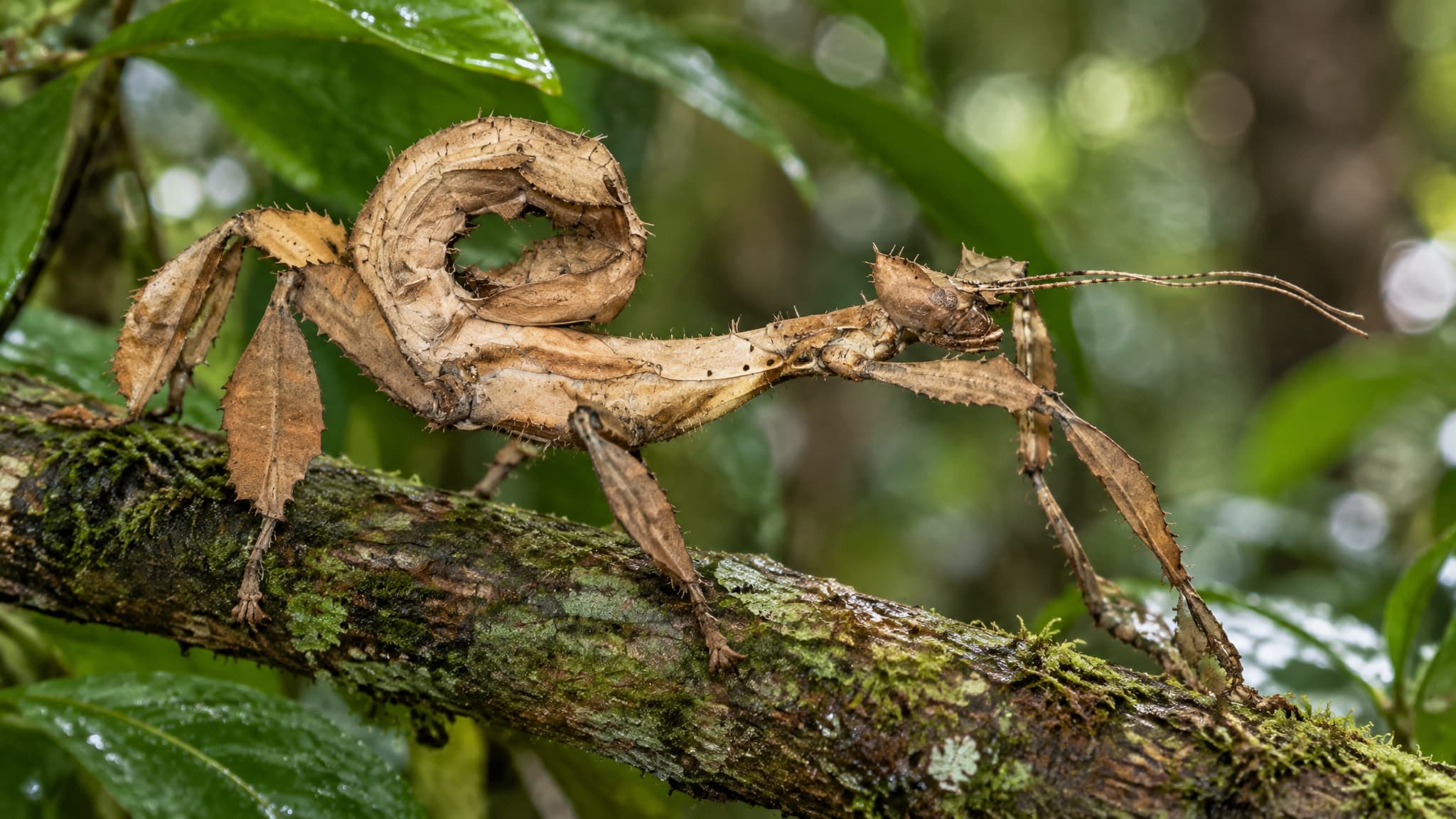
The giant prickly stick insect, also called Macleay's spectre or the spiny leaf insect, is one of Australia's best-known phasmids. The sexes look very different. Females are heavy-bodied, covered in spines and reach about 20 cm, with knobbly legs and leaf-like edges that make them resemble a dry, curled-up leaf. Males are slender, smoother and smaller, at about 11 cm. Adults weigh roughly 5 to 20 g. Colour varies from brown and mottled brown to green, reddish, cream, yellowish or even entirely white. The species is native to eastern Australia, mainly eastern Queensland and eastern New South Wales. It lives in rainforests and woodlands, where it hangs motionless among foliage and is very hard to spot. It is mainly nocturnal, feeding at night and staying still during the day, and it sways gently while perched, like a leaf moving in the breeze. It is a plant eater. Eucalyptus is its native food, and it also takes the leaves of other plants such as blackberry. Birds and reptiles are its main predators. When threatened, a female curls her abdomen over her back in a scorpion-like pose, although she has no sting, and can jab with the spines on her hind legs. Adults may also make clicking sounds and release a defensive odour likened to toffee, while males can flash their wings. Males have fully working wings and fly well; females have only tiny wings and cannot fly. Females drop their seed-like eggs one by one from the trees to the forest floor. Ants often carry the eggs to their nests, eat an edible outer part and leave the egg intact underground. Newly hatched nymphs are fast-moving and mimic ants of the genus Leptomyrmex, a disguise that deters birds. Eggs from mated females hatch after about four months. Without males, females reproduce by parthenogenesis, producing only female offspring from eggs that can take up to nine months to hatch. Males moult five times and females six times before reaching adulthood. Females live for about 18 months, while males live for about 6 to 8 months. The species is assessed as Least Concern by the IUCN. It is also raised by breeders, and in Brazil it is found only in breeding collections.

View Details
Emperor scorpion
Invertebrates

Emperor scorpion

Pandinus imperator

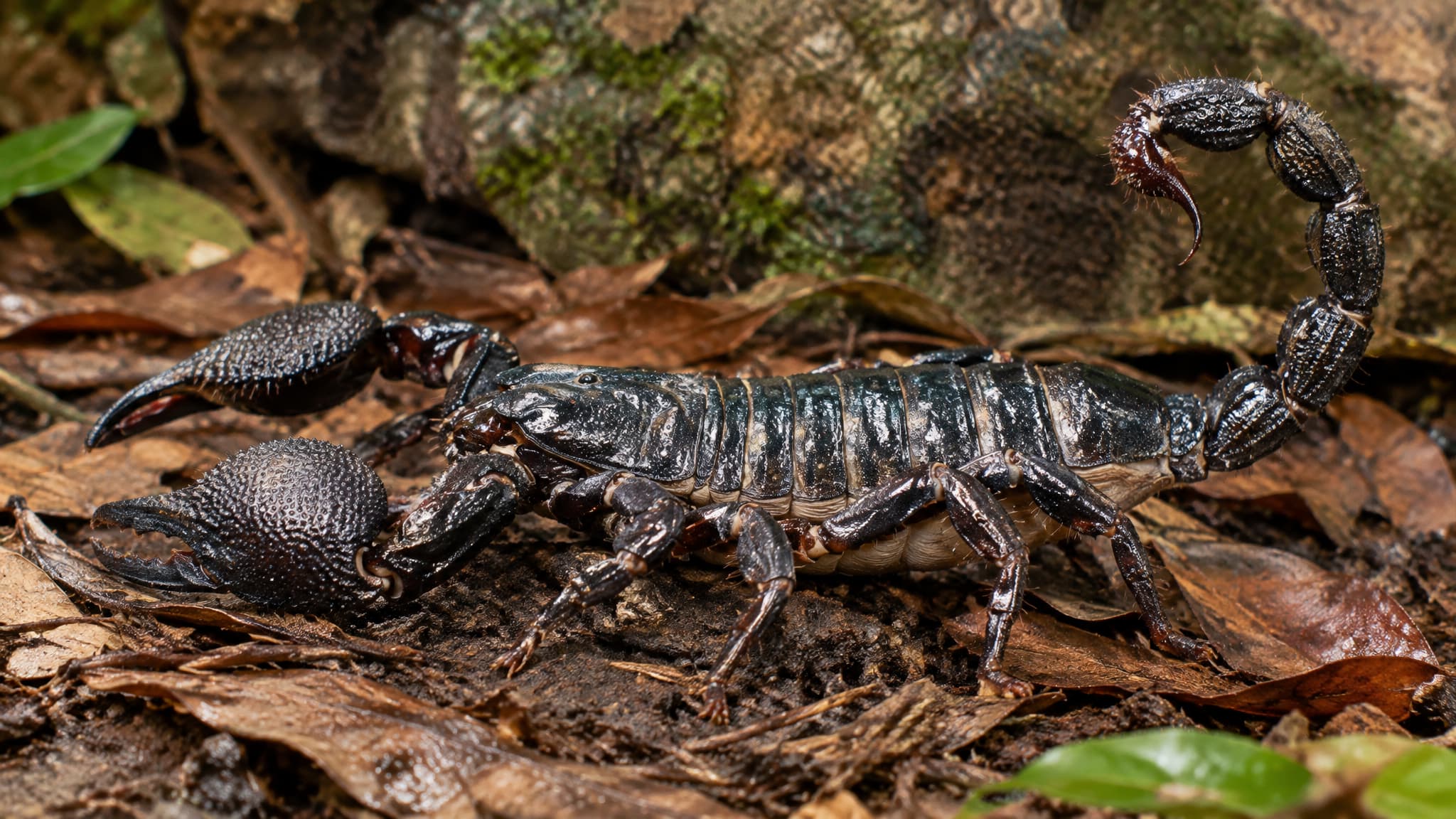
The emperor scorpion is one of the largest scorpions in the world and among the best known, largely because of its long history in the pet trade. Adults average about 20 cm in length and around 30 g, and the Scorpion Files gives a range of 15 to 20 cm and up to 32 g. The body is a glossy black, the pincers (pedipalps) are massive and granular, and females are larger than males, while males tend to have longer pectines, the comb-like sensory organs under the body. The species is native to West Africa. Records cover countries such as Senegal, Gambia, Guinea, Guinea-Bissau, Sierra Leone, Liberia, Ivory Coast, Mali, Burkina Faso, Ghana, Togo, Benin, Nigeria and Cameroon. It lives in hot, humid tropical forest and also in open savanna, sheltering in burrows dug in the soil, under rocks, leaf litter and forest debris, along stream banks and very often inside termite mounds. It can be common close to human settlements. Emperor scorpions are nocturnal and have poor eyesight, so they find prey and detect danger through touch, the pectines and fine sensory hairs on the pincers and tail that pick up vibrations in the air and ground. They feed mainly on termites, which make up a large share of the diet, and on other insects and terrestrial invertebrates, occasionally taking small vertebrates such as lizards and rodents. Adults usually crush and tear prey with the pincers rather than stinging it, while young scorpions rely more on the sting. The species is considered fairly docile and tends to flee, but it becomes defensive when cornered. Its sting is generally mild for people, and its venom has yielded several ion-channel toxins studied in research, including imperatoxin and pandinotoxin. Unusually for scorpions, this species is social: groups of up to 15 individuals have been observed living together, and cannibalism is rare. Breeding can happen year-round. After a gestation of about 9 months, the female gives birth to live young, typically 10 to 12, which climb onto her back and are carried by her for a time; mothers are more aggressive in this period. Both sexes reach sexual maturity at about 4 years, and the species lives 5 to 8 years in captivity. As a predator of termites and other invertebrates, the emperor scorpion takes part in the food web of West African forests and savannas, and it is in turn eaten by birds, bats, spiders and mammals. Heavy collection of wild animals for the international pet trade led to its listing in Appendix II of CITES, which regulates its export. The species has not been evaluated on the IUCN Red List.

View Details
Goliath birdeater
Invertebrates

Goliath birdeater

Theraphosa blondi

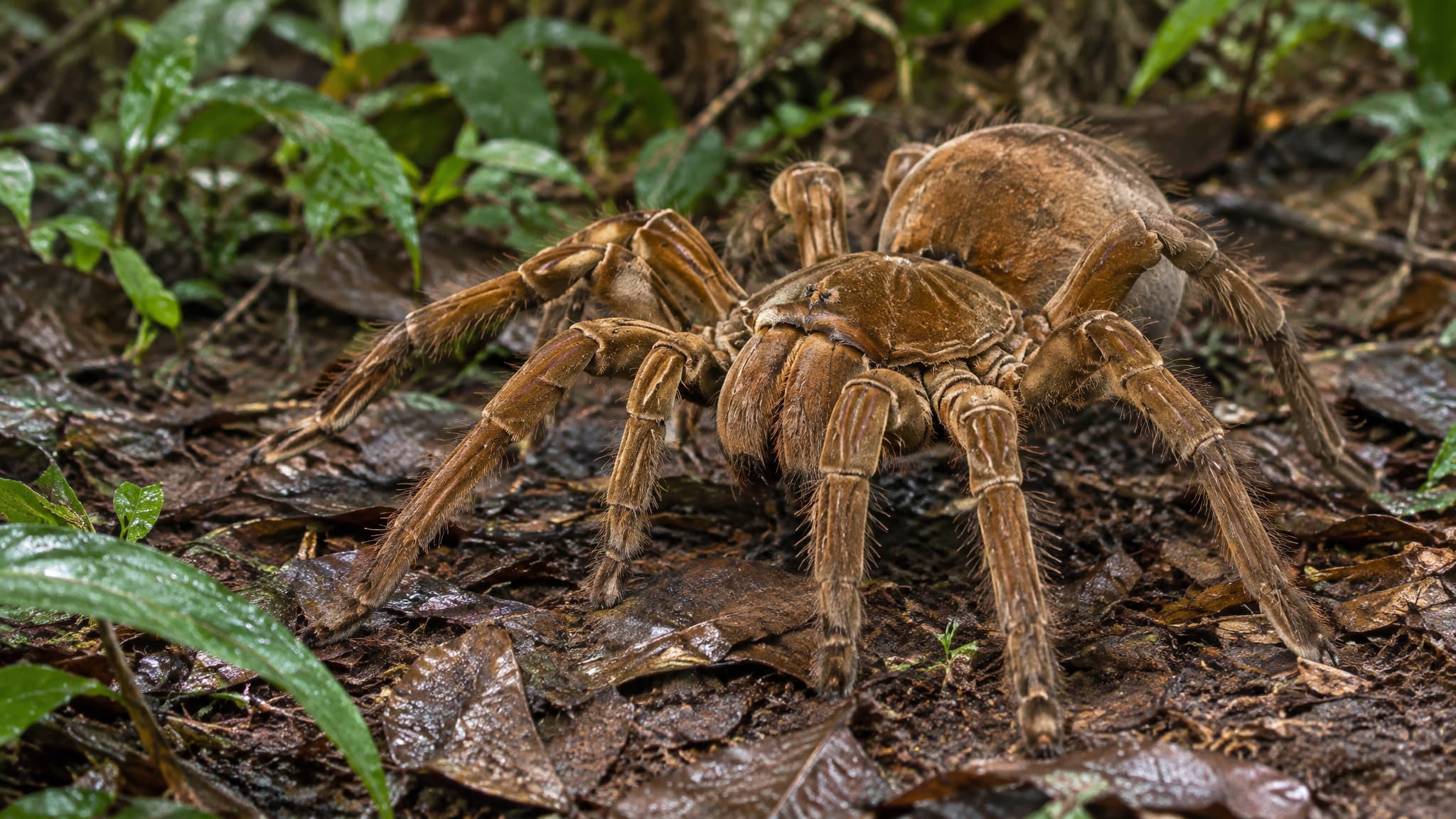
The Goliath birdeater (Theraphosa blondi) is a tarantula of the family Theraphosidae and the heaviest spider known. Its body reaches up to 13 cm long, its legs span up to 30 cm and it can weigh up to 175 g, so it is the largest spider by mass and body length, though the giant huntsman spider has a longer leg span. The body and legs are densely hairy and tan to light brown with golden tones, the legs only faintly marked. Its fangs measure 2 to 4 cm. Unlike adult males of most tarantulas, males of this species lack tibial spurs on the first pair of legs. It lives in the upland rainforests of northern South America, in Venezuela, Guyana, Suriname, French Guiana and northern Brazil, where it is known from the states of Amazonas, Pará and Roraima. It is a ground dweller that digs deep burrows, often in marshy or swampy ground, and it is active at night. Despite its name, it rarely eats birds. The name comes from an early 18th-century engraving by Maria Sibylla Merian that showed a tarantula eating a hummingbird. In the wild it feeds mainly on large arthropods, worms and amphibians, and it opportunistically takes small vertebrates such as rodents, frogs, toads, lizards and snakes. Prey is dragged back to the burrow, where the spider liquefies its insides and sucks them out. When threatened, the spider stridulates, producing sound by rubbing bristles on its pedipalps and legs, and it scrapes its abdomen with its hind legs to release urticating hairs that irritate skin and mucous membranes. It will also bite. The venom is considered relatively harmless to people, with effects comparable to a wasp sting, and some bites inject no venom at all. Females lay 100 to 200 eggs, and the spiderlings hatch within 6 to 8 weeks. Females take 3 to 6 years to mature and live about 15 to 25 years. Males also mature at 3 to 6 years of age but die soon afterwards. Females rarely eat males during mating. The species has not been evaluated for the IUCN Red List. Habitat loss, the exotic pet trade and hunting are named as its main threats. In northeastern South America it is also eaten: local people singe off the irritating hairs and roast the spider in banana leaves.

View Details
Portuguese Man o' War
Invertebrates

Portuguese Man o' War

Physalia physalis

The Portuguese man o' war (Physalia physalis) looks like a jellyfish but is a siphonophore: a colony of specialized, genetically identical zooids that work together as one animal. Its most visible part is a gas-filled float, or pneumatophore, tinted blue, violet or pink, which can be more than 30 cm long, about 13 cm wide and rise up to about 15 cm above the water. Below it hang tentacles and polyps that usually reach about 10 m and can stretch to about 30 m. It lives at the surface of the open ocean as part of the neuston, mostly in tropical and subtropical seas, and is especially common in the Sargasso Sea, the Gulf Stream, the Gulf of Mexico and the Caribbean. It cannot swim. Winds, currents and tides carry it, sometimes in groups of 1,000 or more, and can push it into bays or onto beaches. The float works as a sail: "left-handed" and "right-handed" colonies drift at about 45 degrees to opposite sides of the wind, which helps spread the species across warm oceans. The tentacles are armed with stinging cells (nematocysts) whose venom paralyzes prey. Fish, from fry to small adults, make up about 70 to 90% of what it catches; shrimp, other small crustaceans, molluscs and zooplankton make up the rest. Contracting tentacles lift the prey to the feeding polyps (gastrozooids) under the float, which digest it with enzymes. Each colony is either male or female. Reproductive zooids release eggs or sperm into the water, where fertilization takes place, and most spawning happens in autumn, so many young appear in winter and spring. A fertilized egg develops into a larva that buds off the new zooids of a colony. There is no parental care, and the consulted sources give no reliable lifespan. The man o' war is food for specialists that resist or exploit its stings, such as the loggerhead sea turtle, the blue sea slug Glaucus atlanticus and the violet sea snail Janthina janthina. For people, a sting usually causes severe pain for one to three hours and whip-like red welts that last two or three days; deaths are extremely rare. Stranded animals and loose tentacles can still sting. The species is not evaluated by the IUCN and is not considered rare.

View Details
Greater blue-ringed octopus
Invertebrates

Greater blue-ringed octopus

Hapalochlaena lunulata

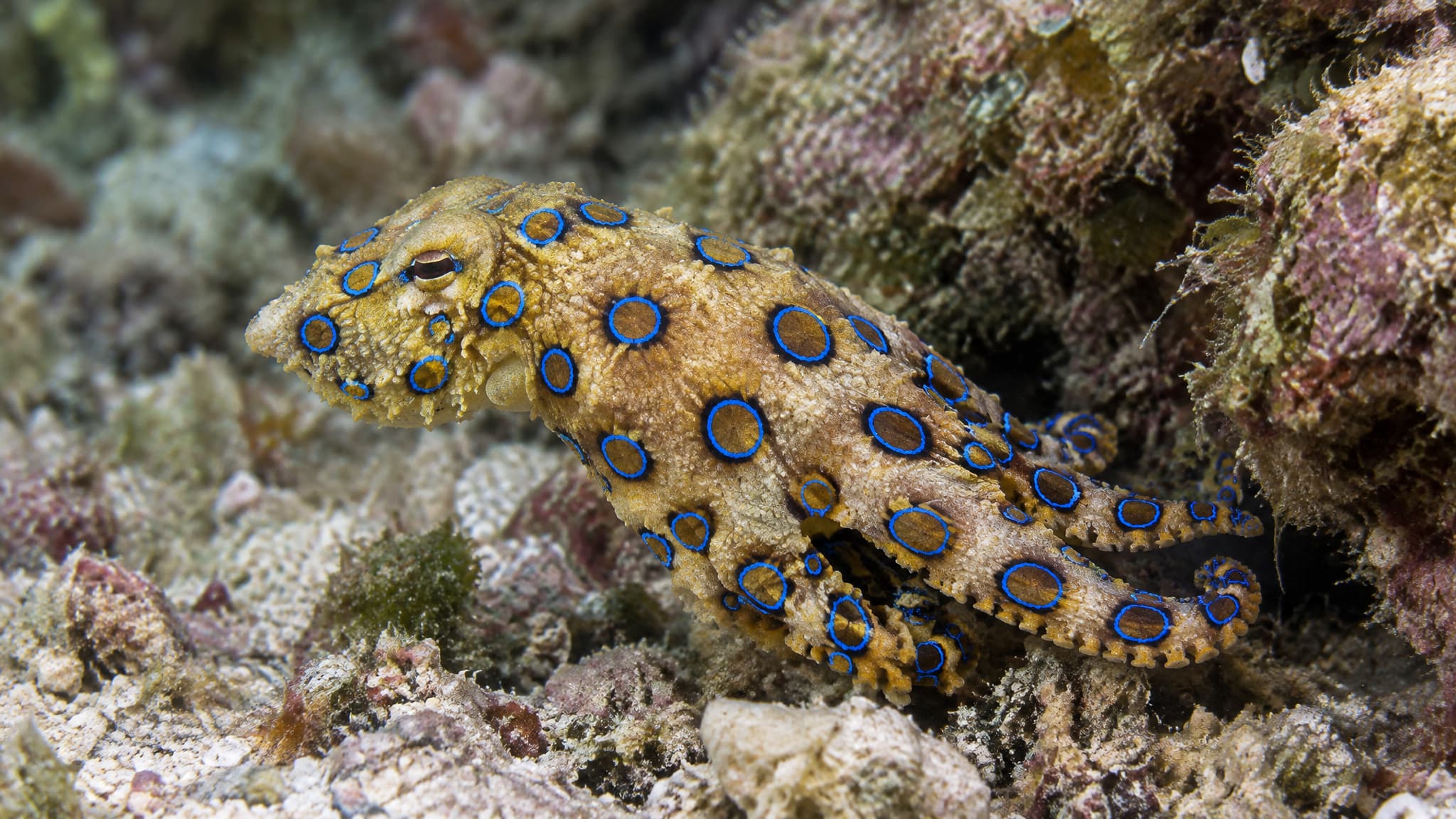
The greater blue-ringed octopus (Hapalochlaena lunulata) is a small, soft-bodied octopus famous for its vivid warning colours and its potent venom. Its skin ranges from yellow ochre to light or dark brown and carries around 60 iridescent blue rings, each 7–8 mm across and outlined in black; these rings are larger than those of its relatives, which is the easiest way to tell it apart. It weighs about 10 to 100 g depending on age, and its arms reach a maximum spread of about 20 cm, although it usually looks much smaller. The species is widespread in the tropical and subtropical Indo-West Pacific, from Sri Lanka to the Philippines and from northern Australia to Papua New Guinea, the Solomon Islands and Vanuatu. It is a bottom dweller of shallow coastal water, favouring reefs, rubble, sand and rock pools. It shelters in crevices, empty shells and even discarded bottles and cans, and the entrance of its den is often littered with crab shells and legs from earlier meals. This octopus is a carnivore that feeds mainly on small crabs and shrimp, along with molluscs and the occasional small fish. It ambushes prey, sometimes luring it by wiggling an arm tip, then bites with its beak and injects saliva containing tetrodotoxin, a nerve toxin made by bacteria in its salivary glands. When disturbed it flashes its rings, each flash lasting about a third of a second, as a warning. It is solitary, territorial and shy, and bites people mainly when handled; the bite can be painless, can paralyse breathing, and has no antivenom. In mating, the male passes sperm packets to the female with a modified arm called the hectocotylus. The female lays 60 to 100 eggs and carries them under her arms for about 50 days, eating nothing, and dies soon after they hatch. The young drift as plankton for their first weeks before settling on the seabed, and they can breed about four months after hatching. Average lifespan is about 2 years. Its tetrodotoxin is of interest to medical and neuroscience research, and live animals have even been sold as luxury items. The IUCN Red List assesses it as Least Concern.

View Details
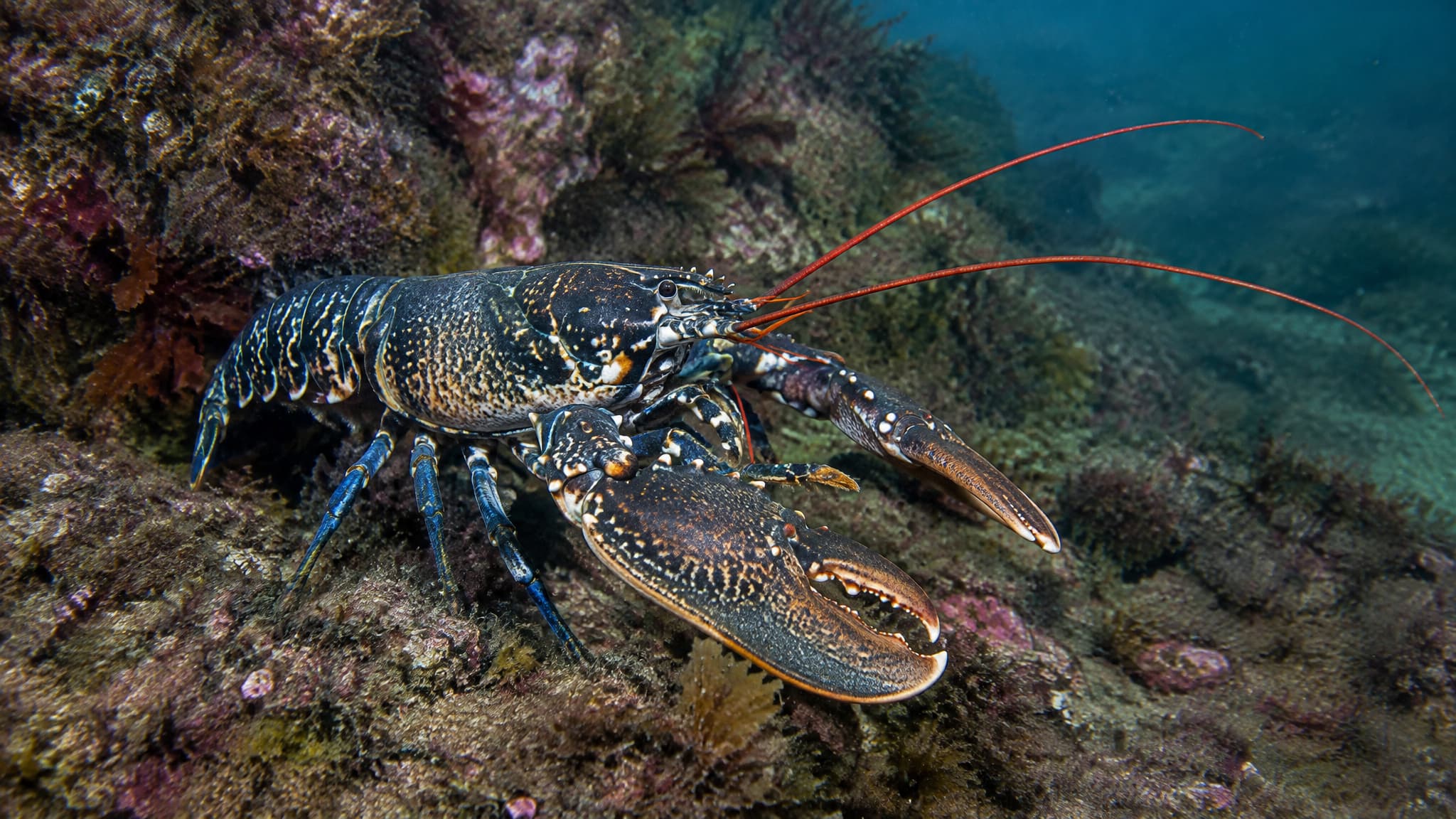
Hercules beetle
Invertebrates

Hercules beetle

Dynastes hercules

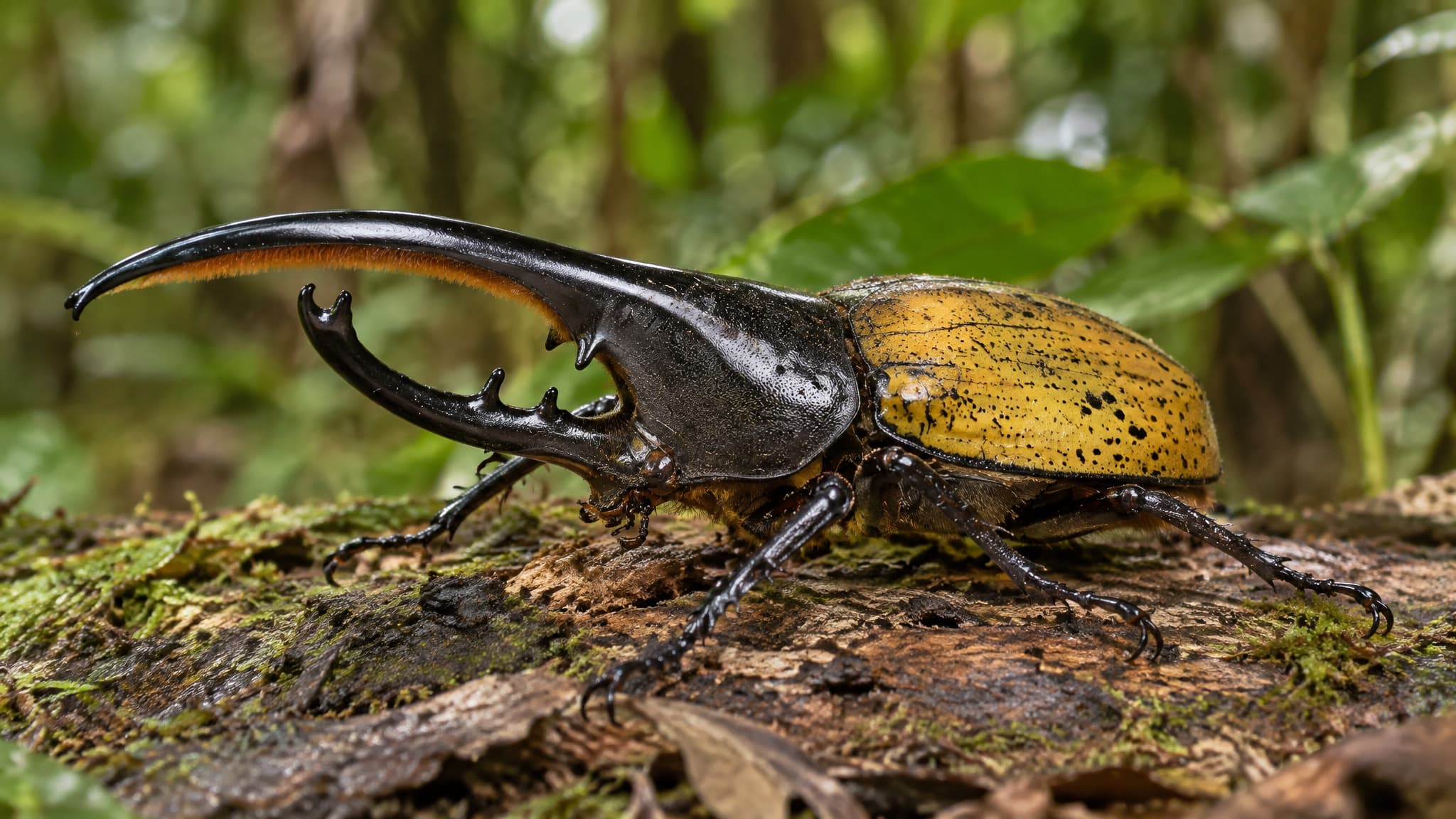
The Hercules beetle is a giant rhinoceros beetle of the American tropics and one of the longest beetles in the world when the horns are counted. Males carry two horns: a short one rising from the head and a much longer one projecting forward from the pronotum, and the largest males reach 173 mm including the horn. On average, males measure 78 mm and females 61.8 mm, and adults weigh between 11.5 and 37.5 g. Only males have horns. Males usually have olive-green to yellowish wing covers (elytra), while females have pitted elytra that are mostly black. The elytra change colour with humidity, looking yellow or olive when dry and turning black when wet. In its broad, traditional sense, the species ranges from southern Mexico through Central America to west-central Bolivia, and from the Pacific side of the continent east into the Brazilian Amazon, with island populations on Guadeloupe and Dominica in the Lesser Antilles and on Trinidad. It lives in the understory of lowland and montane rainforests, where adults stay near the forest floor in moist places with fallen fruit. A 2017 revision by Jen-Pan Huang raised ten former subspecies to full species and restricted the name Dynastes hercules to the populations of Guadeloupe and Dominica, while major checklists such as the GBIF Backbone still treat those forms as subspecies. Adults are nocturnal. They search for fallen, rotting fruit at night and hide in leaf litter during the day; they also take tree sap. When disturbed they produce a huffing sound by rubbing the abdomen against the elytra, probably as a warning to predators. Males use their horns as pincers in fights over females, grabbing a rival and slamming it to the ground. Although able to fly, the beetle is clumsy both in the air and on the ground. Reproduction is sexual, with internal fertilization, and females attract males with pheromones. Eggs are laid in decaying wood and hatch after about a month. The larvae, which need fallen trees of good girth, feed on rotting wood for 12 to 18 months and can grow to more than 15 cm and 140 g. The pupal stage lasts 2 to 3 months, and adults then live 8 to 12 months, for a total life of about 34 months under captive conditions. By feeding on dead wood and decaying fruit, the Hercules beetle likely helps break down organic matter and recycle nutrients in the forest. It is not an agricultural pest. The species has not been evaluated by the IUCN Red List, and its populations are poorly known. Deforestation and climate change threaten its rainforest habitat, and large specimens are prized in the pet beetle trade.

View Details
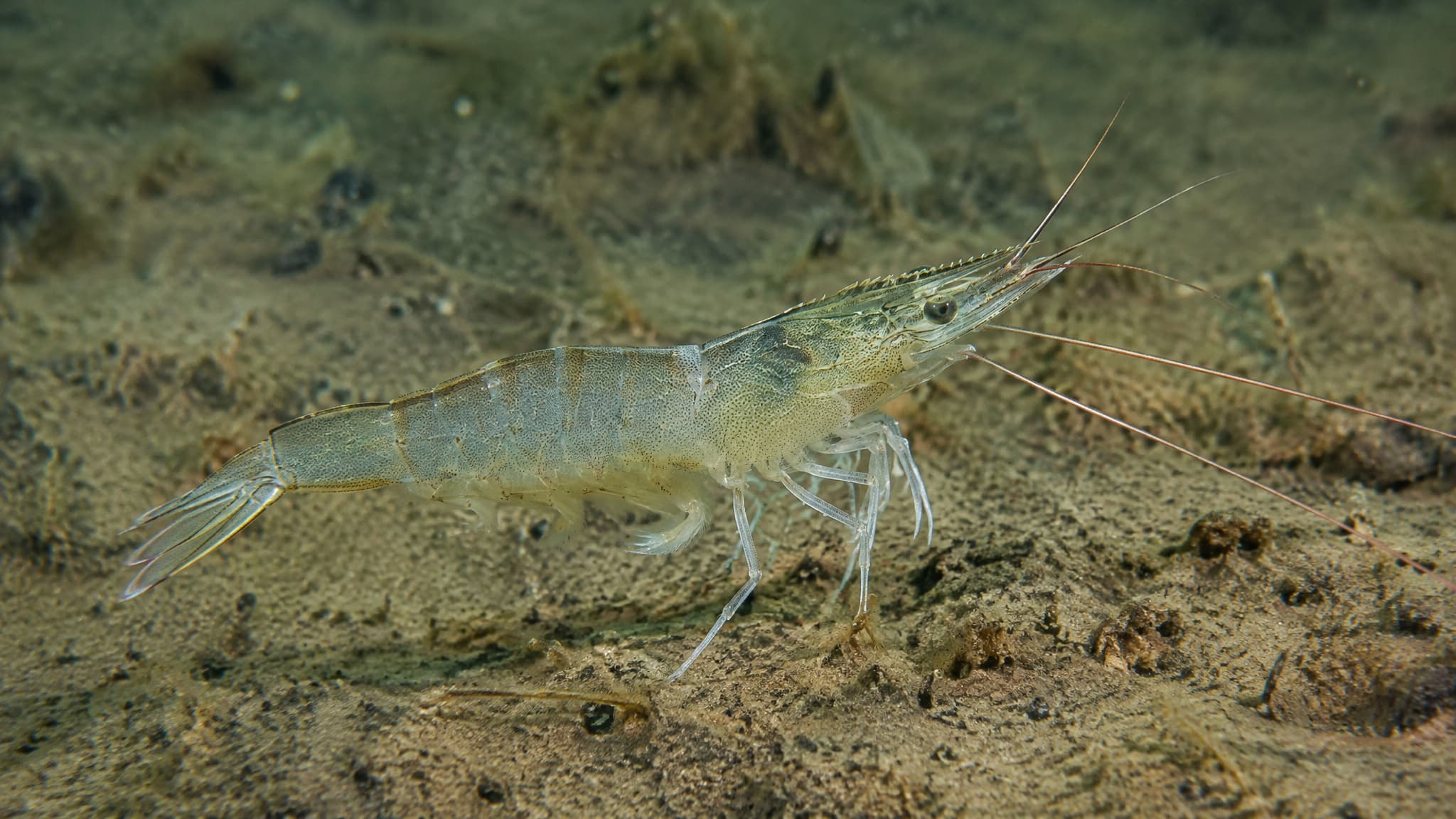
Menelaus Blue Morpho
Invertebrates

Menelaus Blue Morpho

Morpho menelaus

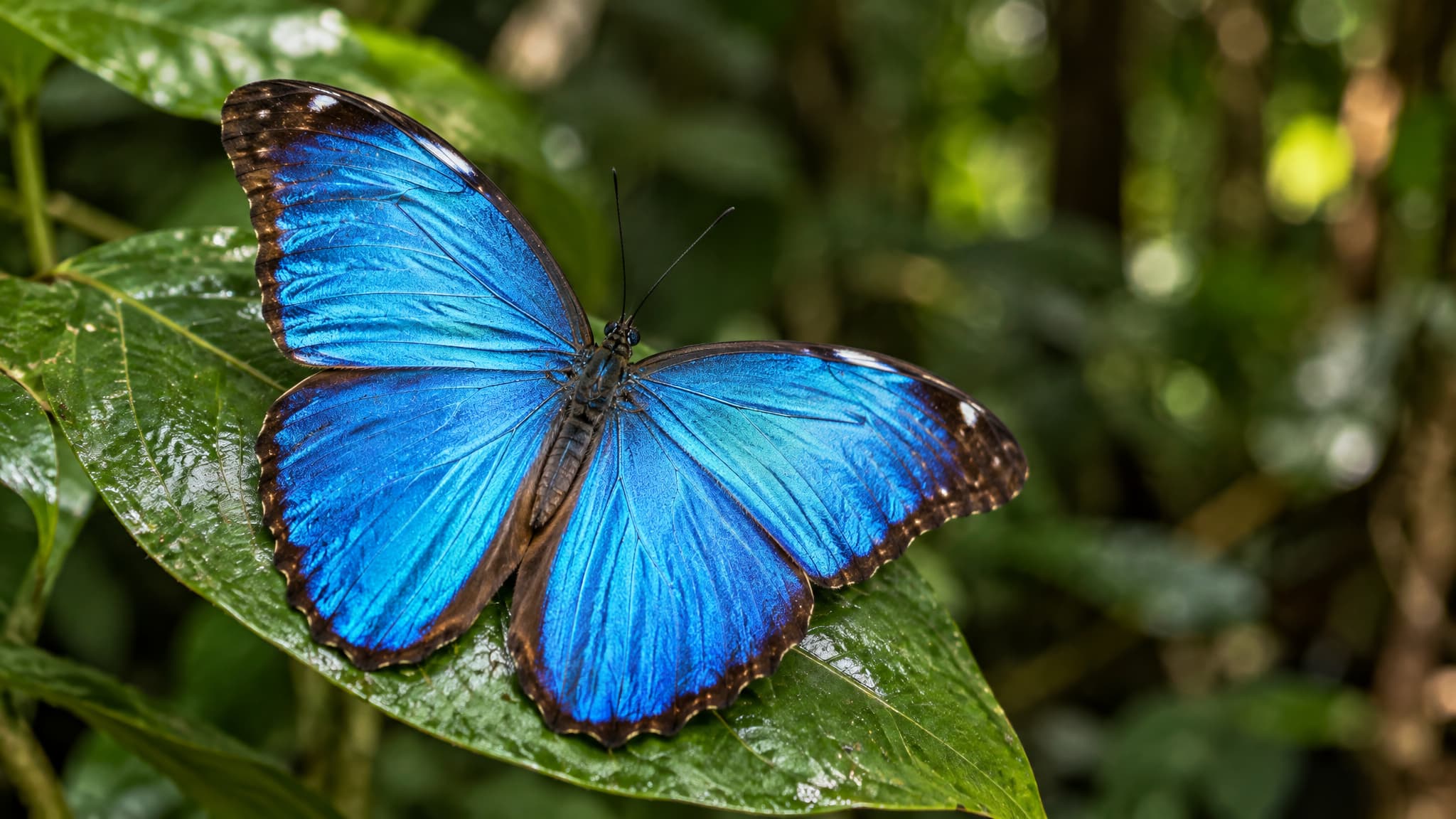
The Menelaus blue morpho (Morpho menelaus) is one of the best-known butterflies of the Neotropics, described by Linnaeus in 1758. Its wingspan is about 95 to 120 mm. The upper side of both wings is a brilliant, metallic blue edged in black or dark brown. This blue is structural rather than pigmentary: ridged scales reflect and reinforce blue light. Males are the bluer sex, with a narrow dark border, while females are larger, rarer and duller, with a broad brown border carrying pale spots. The underside is mottled brown with a row of eyespots, so a resting butterfly with closed wings is well camouflaged. The species lives mainly in South America, from the Guianas, Venezuela and Colombia through Ecuador, Peru and Bolivia to Brazil, including the Amazon basin and the Cerrado. It favours humid, closed-canopy forest, both old-growth and mature secondary forest, from sea level to about 1,400 m. Adults are most often seen along streams, rivers, trails and forest gaps. Females keep to the shady understory, while males patrol clearings and the canopy. Adults do not visit flowers. They feed on the juices of fermenting fallen fruit, tree sap and fungi, and take minerals from damp sand and mud. The flight is slow and bouncing, and the alternating flash of the blue upper side and the brown underside makes the butterfly hard to follow. Males patrol set routes and investigate anything blue. Underside eyespots can draw attacks away from the body; recorded predators of adults include jacamars, motmots and flycatchers. Females lay small, pale green, dome-shaped eggs in small clusters on the undersides of host leaves, mainly woody legumes (Fabaceae) such as Dalbergia, Machaerium and Pterocarpus, and also Erythroxylum. The eggs hatch in roughly 8 to 14 days. The red-brown caterpillars with green patches are social, pass through five instars and reach about 50 mm; their bristles are irritating and a gland behind the head releases a foul-smelling fluid. The jade-green chrysalis hangs for about 2 to 3 weeks. The whole life cycle takes about 115 days, and adults live about 3 to 4 weeks. As a fruit-feeder and leaf-eating larva, the species is part of the forest's food webs and serves as prey for birds, lizards, frogs, spiders and wasps. It is not assessed on the IUCN Red List and is not considered globally threatened, but it suffers from deforestation. During the 20th century it was heavily collected for decorative wing art, which led several countries to regulate its capture and export; today butterfly houses are mostly supplied by farms. Around 18 subspecies are recognized.
View Details
Peacock mantis shrimp
Invertebrates

Peacock mantis shrimp

Odontodactylus scyllarus

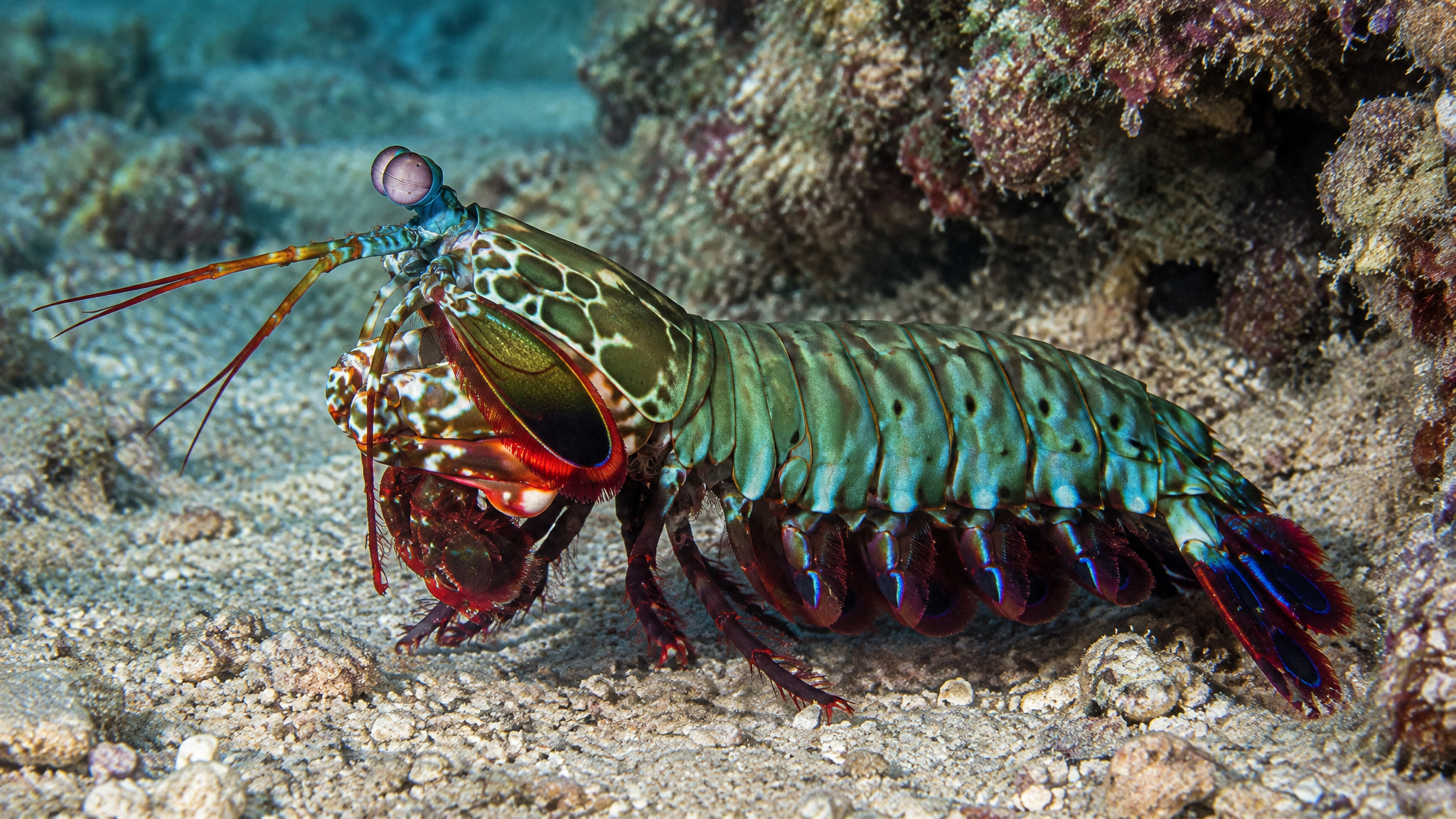
The peacock mantis shrimp is a colourful stomatopod crustacean of Indo-Pacific reefs, also called the harlequin, painted, clown or rainbow mantis shrimp. Adults measure 3 to 18 cm. The body is mostly olive to green, with orange antennal scales, red raptorial appendages, leopard-like spots on the front of the carapace and blue stalked eyes. Males are more brightly coloured than females. It lives on the sea floor from East Africa to Guam and the Marianas, south to northern KwaZulu-Natal in South Africa. It is found at depths of 3 to 40 m, most often between 10 and 30 m, in water of about 22 to 28 °C. Each animal digs a U-shaped burrow in sand or gravel near the base of coral reefs and seldom strays far from it. This species is a "smasher". Instead of spearing prey, it uses a pair of club-shaped raptorial appendages to hammer snails, clams, scallops and, above all, crabs until the shell breaks. The strike is among the fastest known in the animal world, reaching about 80 km/h. It forms cavitation bubbles whose collapse adds a second blow to the shell. The club is a mineralised structure rich in hydroxyapatite, and its composition is studied as a model for bioinspired materials. Its eyes have 12 types of photoreceptors and detect colour, ultraviolet and both linear and circular polarised light. Peacock mantis shrimp are solitary, territorial and active by day and by night. They defend their burrows and produce low vibrations, known as stomatopod rumbles, to warn intruders. Pairs are usually monogamous and breed all year, most often in warmer months. Spawning takes place at night inside the burrow. The female carries the egg mass on her front thoracic appendages and does not feed while brooding. Lifespan in the wild is 4 to 6 years. The burrows it digs and later abandons become shelter for other animals. Few predators are known, though yellowfin tuna have been found with the species in their stomachs, and larger reef fish take smaller individuals. It is popular in the marine aquarium trade, yet aquarists also fear it: it attacks tankmates, can crack aquarium glass and sometimes arrives hidden in live rock. It has not been evaluated by the IUCN and no agency lists it as threatened.

View Details
European Mantis
Invertebrates

European Mantis

Mantis religiosa

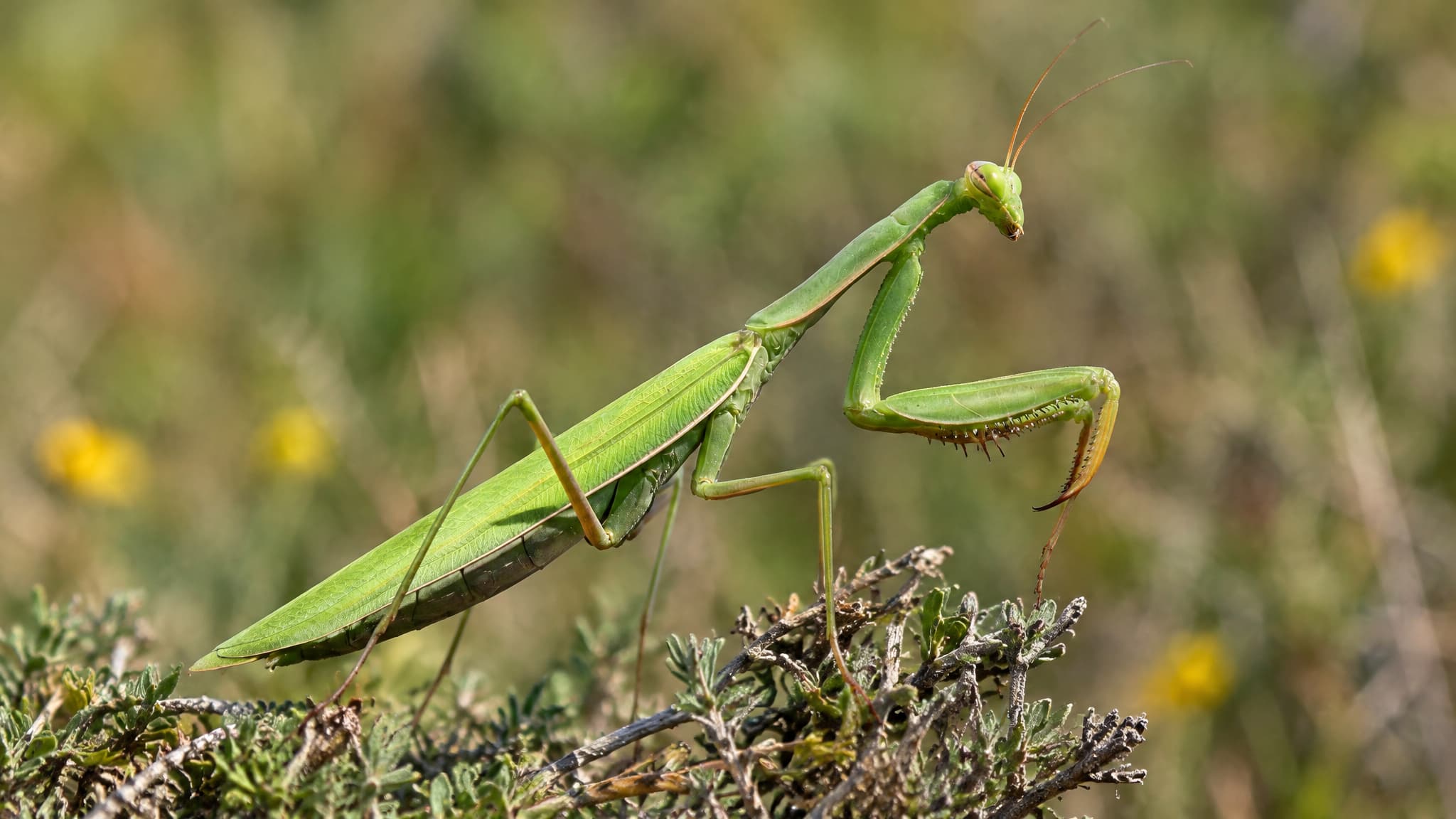
The European mantis (Mantis religiosa) is a large praying mantis of the family Mantidae. Females measure about 6–8 cm and males about 5–7 cm; males have longer antennae, bigger eyes and more prominent ocelli. Colour varies from pale brown or yellow to bright green, and occasionally black. The best field mark is a black bull's-eye spot with a pale centre on the inner base of each raptorial foreleg. Its name comes from the folded, "praying" posture of those forelegs at rest. The species is native to Europe, Asia and Africa. It was introduced to North America, where it is now established across much of the northeastern United States, southern Canada and parts of the west, and it is the state insect of Connecticut. In Europe it has been spreading northwards, with records from Germany, the Baltic states, the Channel Islands and southern England. It lives among grasses, shrubs and other vegetation, which it uses as perches for hunting. The European mantis is a sit-and-wait ambush predator. It snatches almost any insect it can overpower, especially grasshoppers, crickets and cockroaches, and also takes spiders, molluscs, myriapods and worms; it sometimes eats other mantises. Each compound eye has 8,000–10,000 ommatidia and the insect perceives depth in stereo. A single ear on the underside of the thorax detects low frequencies and ultrasound. When threatened, it spreads its wings and raises its forelegs to flash the eyespots and look larger. Mating usually takes place in September or October. The male approaches slowly and freezes whenever the female looks his way. Sexual cannibalism is real but not the rule: a field study found females ate the male in 31% of natural pairings, and hungry females attack more often. The female then builds a foamy egg case, or ootheca, holding about 100–200 eggs. The eggs overwinter and hatch in spring, usually once temperatures reach at least 17 °C, and there is one generation per year. Adults die in autumn; males live about 7–8 months and females about 11–12 months. As a generalist predator it eats many insects, some of them pests, though mantises cannot multiply fast enough to control an outbreak. The IUCN lists it as Least Concern, while Germany's national Red List treats it as endangered.

View Details
Chambered nautilus
Invertebrates

Chambered nautilus

Nautilus pompilius

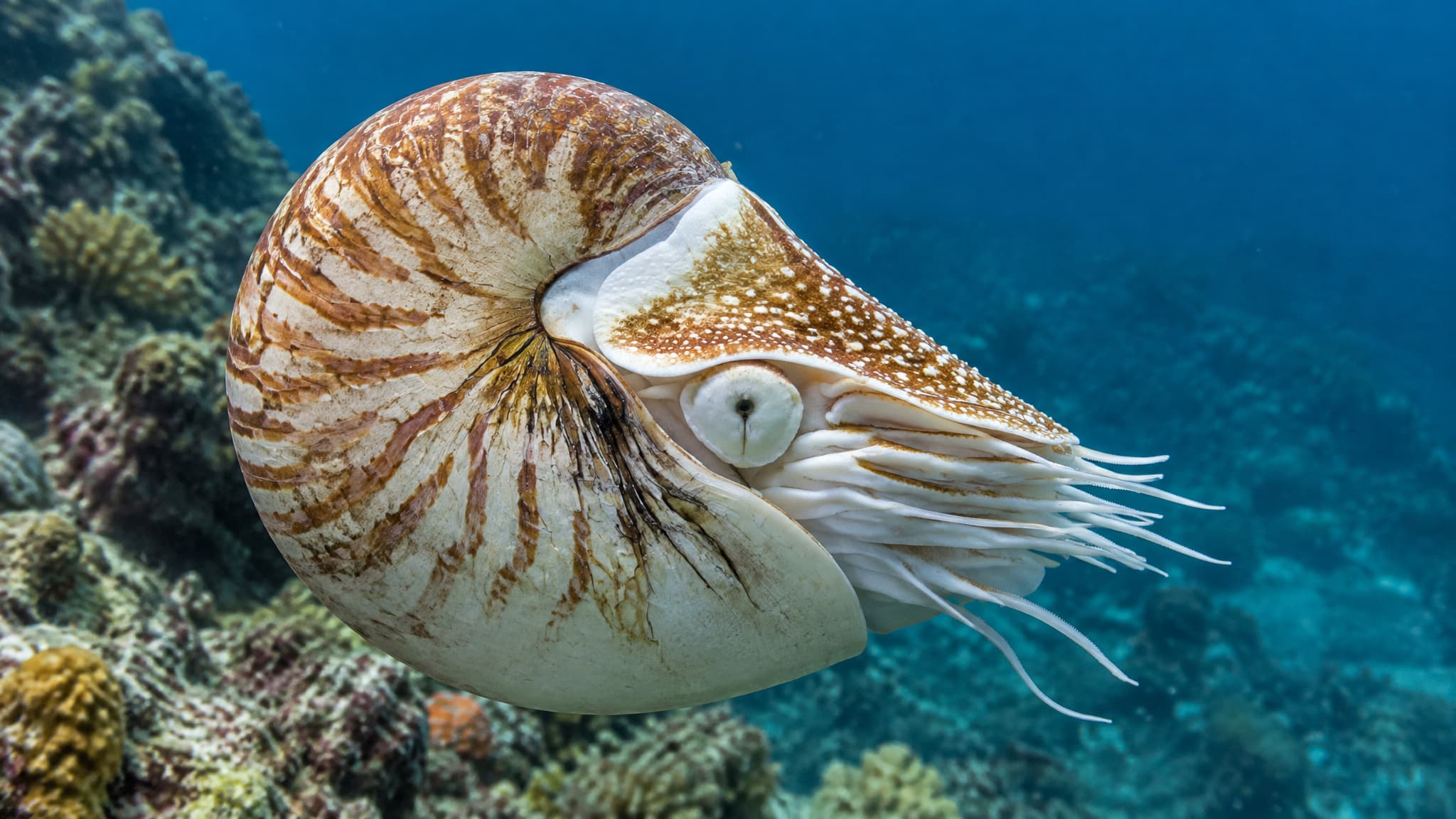
The chambered nautilus (Nautilus pompilius), also called the pearly or emperor nautilus, is a cephalopod mollusc of the family Nautilidae, described by Linnaeus in 1758. It is the best-known and most widespread nautilus and the largest in its genus: exceptional shells from Indonesia and northern Australia reach 25.4 cm across. Its coiled outer shell follows a logarithmic spiral and, in adults, is divided into about 30 chambers. The species lives in the tropical Indo-Pacific, from the Andaman Sea east to Fiji and from southern Japan south to the Great Barrier Reef. Populations tend to be small and isolated. It lives on shores and coral reefs, staying near the bottom in waters up to 500 m deep, and rises toward shallower water at night, when it is most active. Instead of the suckered arms of octopuses and squids, the nautilus has about 90 small, suckerless tentacles. Its simple eyes lack a cornea and lens, so it finds food mostly by smell, using chemical sensors on the tentacles. It is a carnivore and largely a scavenger, taking carrion, fishes, crabs, lobsters and other shellfish, which it tears with a sharp, beak-like mouth. A tube called the siphuncle runs through the chambers and adjusts the gas and liquid inside them to control buoyancy, while the animal swims by jet propulsion, pushing water out through its funnel. Fertilization is internal: in males, four tentacles form a spadix that passes a sperm packet to the female. Females lay a few oblong eggs about 3.8 cm long, attached in crevices or among corals, and eggs have never been seen in the wild. Development takes 9 to 15 months depending on water temperature, and there is no larval stage, so the young hatch as miniature adults with shells about 2.5 cm across. Growth is slow: maturity comes at around 10 to 15 years, and individuals can live 15 to 20 years or more. Sharks, bony fishes and octopuses prey on nautiluses. The IUCN Red List classifies the species as Vulnerable. The main threat is overfishing for the international shell trade, which supplies jewelry, souvenirs and home décor, and its slow growth, late maturity and few eggs make populations slow to recover. All nautiluses have been listed in CITES Appendix II since 2016, and the United States listed the chambered nautilus as threatened under the Endangered Species Act in 2018.

View Details
Sea slater
Invertebrates

Sea slater

Ligia oceanica

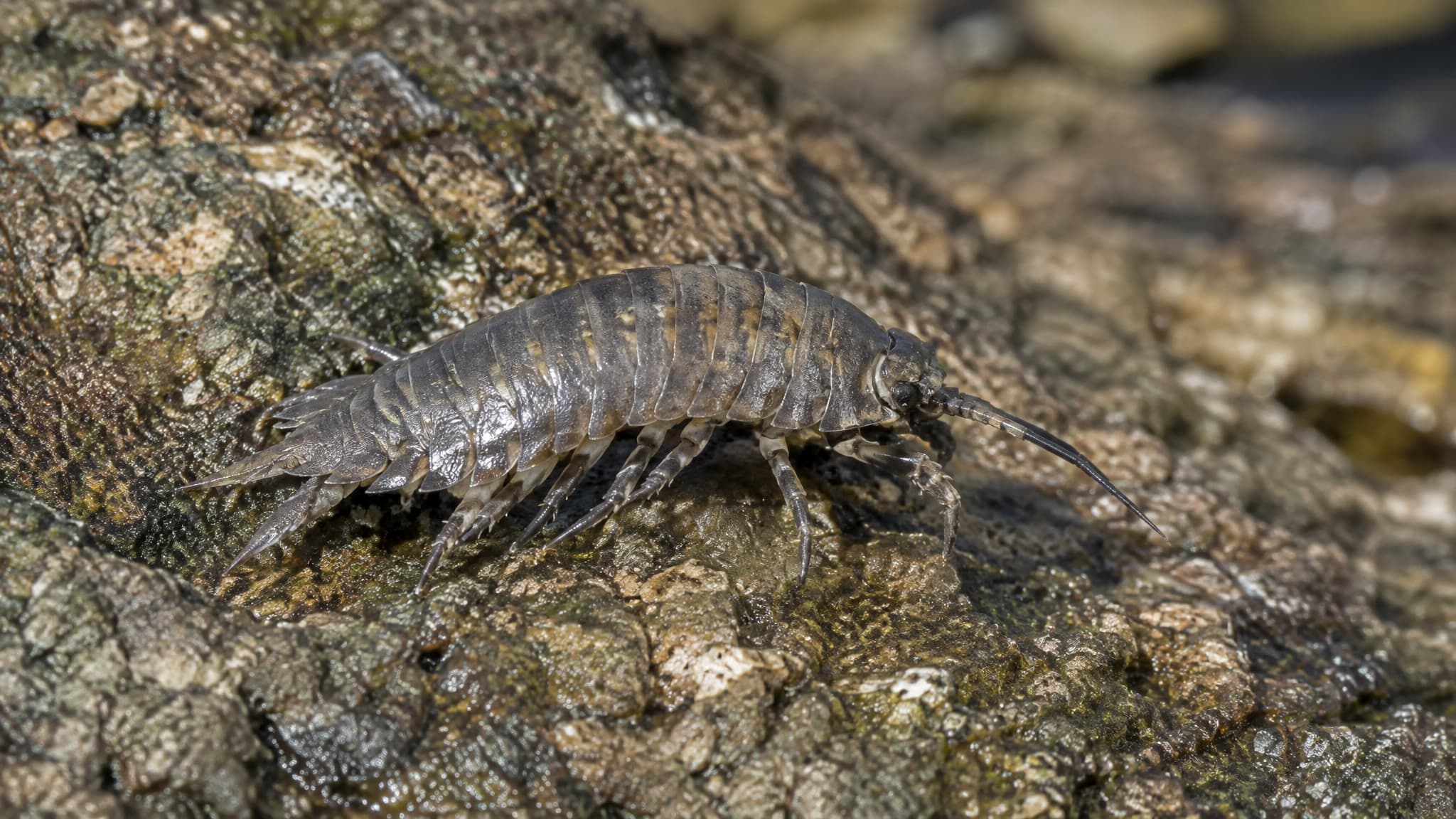
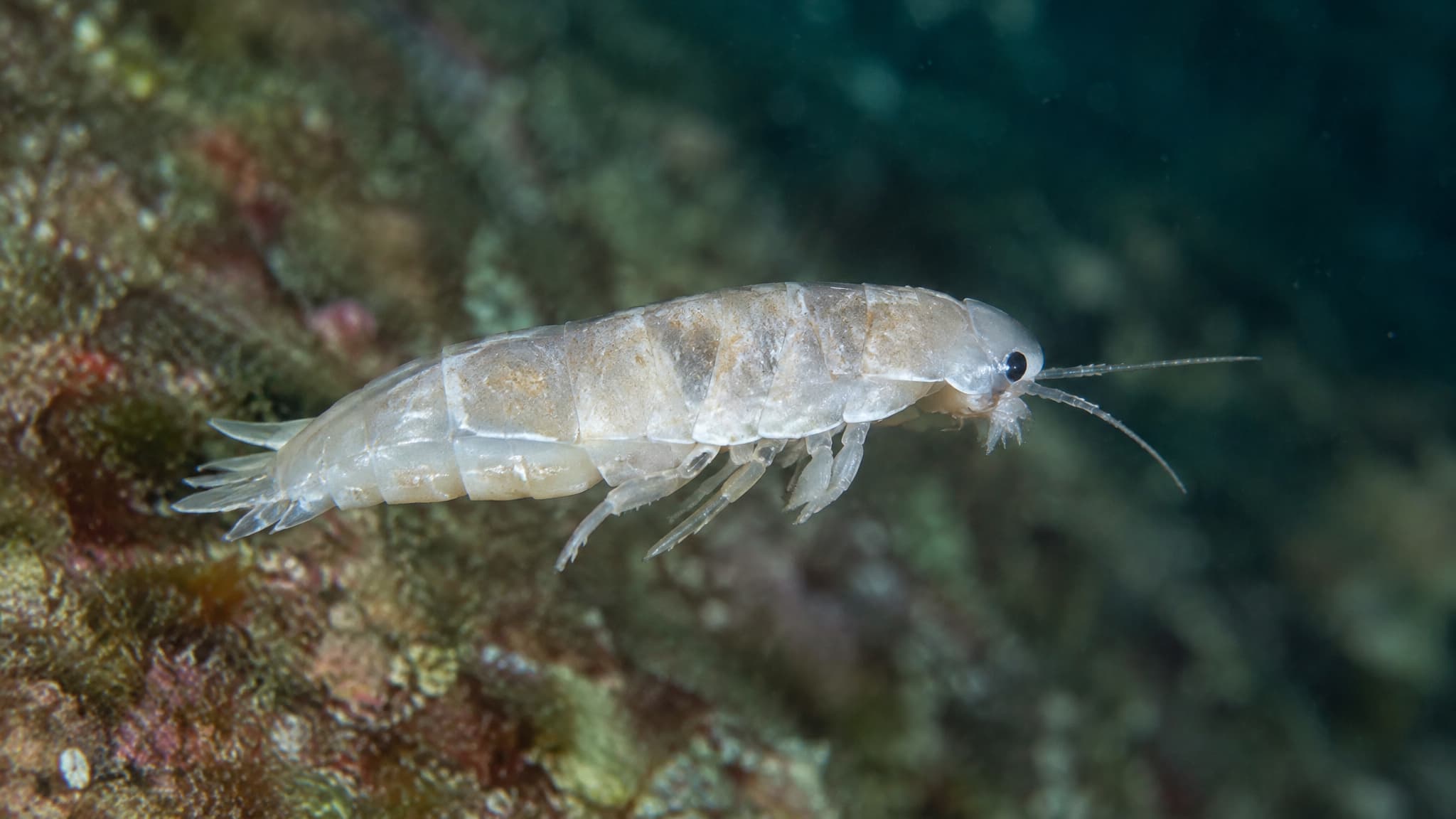
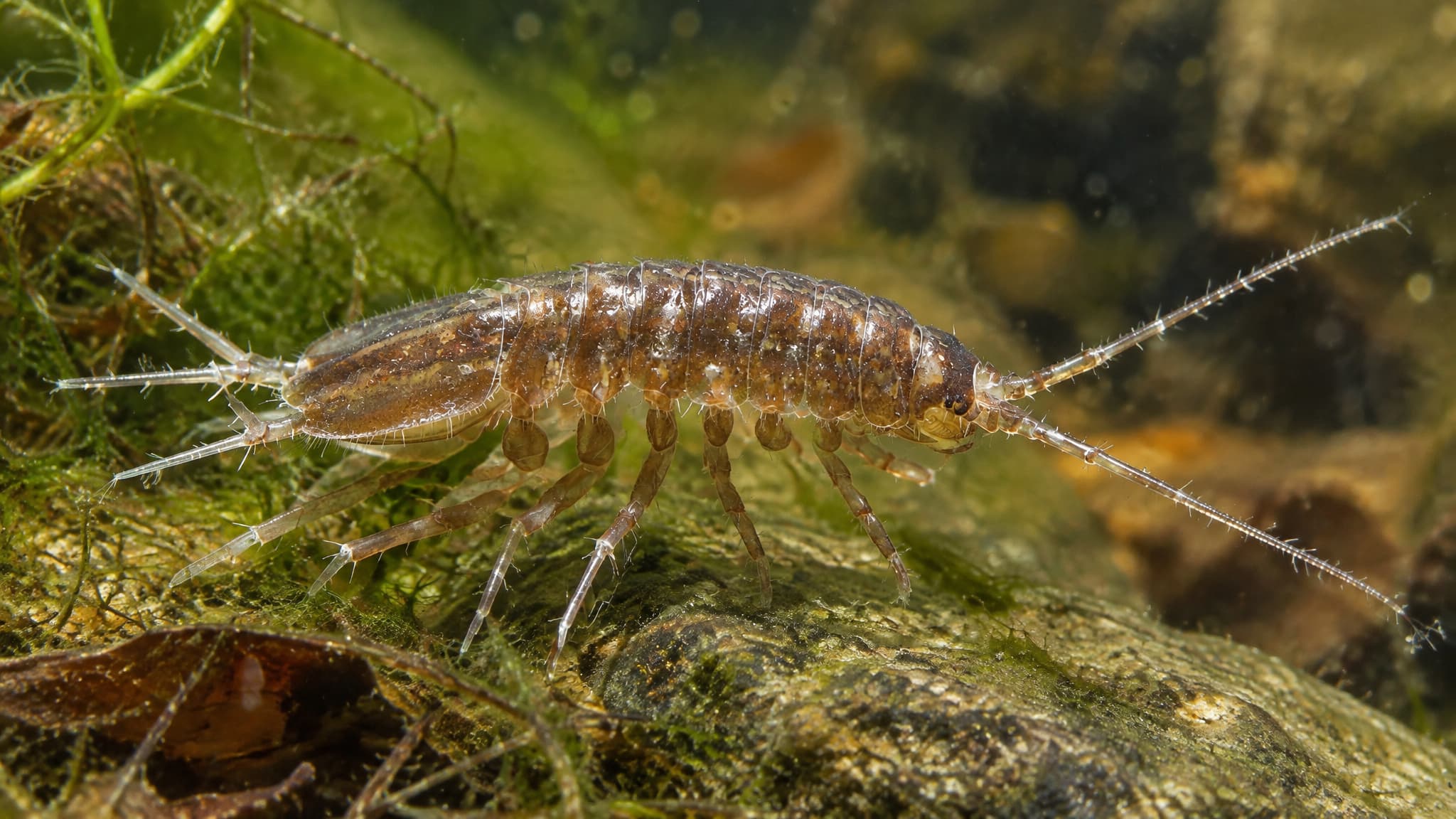
The sea slater (Ligia oceanica) is a large woodlouse-like crustacean of rocky seashores and is often described as the biggest member of the land isopods (Oniscidea), reaching about 3 cm and sometimes slightly more. Its oval body is flattened from top to bottom, roughly twice as long as it is wide, and coloured grey, brownish or olive. Large compound eyes with more than 40 facets, antennae about two-thirds the length of the body with a many-segmented flagellum, seven pairs of similar walking legs and a pair of long, forked uropods at the tail make it easy to tell apart from ordinary garden woodlice. The species is native to the northeast Atlantic, from southern Norway to Morocco and into the western Baltic, with records from the Faroe Islands and southern Iceland. Around Britain and Ireland it is common along almost the entire coast wherever there is hard substrate. It has also been introduced to parts of the North American Atlantic coast, the Azores and the Canary Islands, probably with shipping. It lives in a narrow band from the splash zone to a few metres above high tide: cliff bases, boulder beaches, harbour walls and jetties, sheltering in crevices, rock pools and under stones. Sea slaters are nocturnal and secretive. By day they hide in damp cracks, and at night they emerge to forage, moving with a speed and agility that makes them hard to catch. They breathe air yet still rely on moist rock for water and temperature balance. Their food is mostly algal: green and brown seaweeds such as bladderwrack, encrusting diatoms, and decaying seaweed and other plant debris washed onto the shore. Breeding takes place in spring and summer. Females carry their eggs in a brood pouch (marsupium); in England a brood holds roughly 50 to 120 eggs, with larger females producing more. Young leave the pouch as mancae that still lack the last pair of legs. Most females breed only once. A long-term study of English populations found two breeding waves each year: larger, fast-growing females breed late in their first season, while smaller ones wait until early in their second year. Individuals live about 2.5 to 3 years. By eating stranded seaweed and shore debris, sea slaters help break down organic matter at the boundary between land and sea, and they are likely prey for shorebirds, rats and raccoons. Molecular studies suggest the genus Ligia is closer to marine isopods than to other woodlice, making it an interesting model of the move from sea to land. The species has no global IUCN assessment, but it is widespread and listed as Least Concern in Great Britain.

View Details
Peacock-tail anemone shrimp
Invertebrates

Peacock-tail anemone shrimp

Ancylocaris brevicarpalis

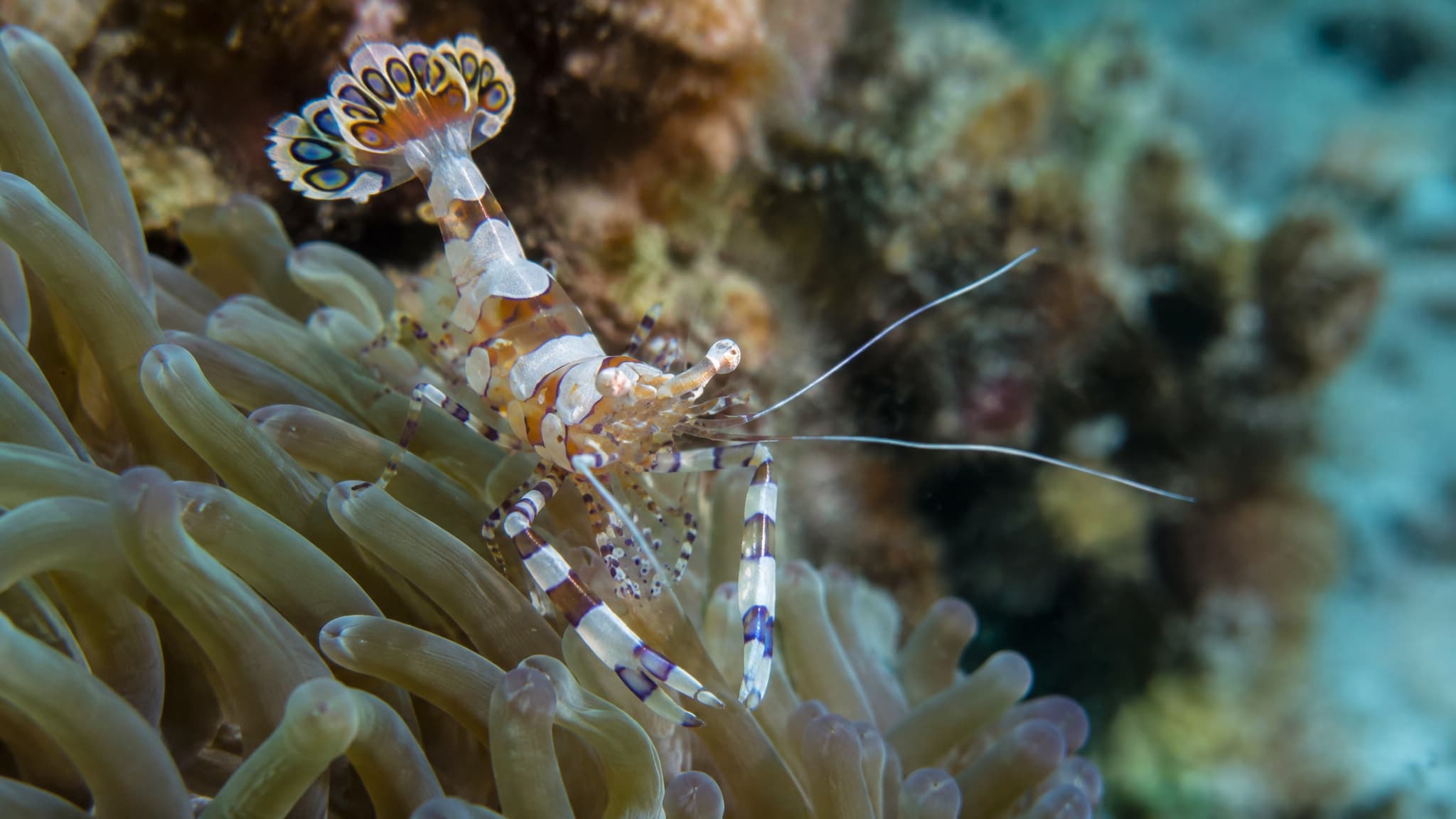
The peacock-tail anemone shrimp, Ancylocaris brevicarpalis, is a small palaemonid shrimp that lives on sea anemones in the Indo-West Pacific. It was described by Schenkel in 1902 from Sulawesi and was long known as Periclimenes brevicarpalis. In 2017 a revision of Periclimenes revived the genus Ancylocaris for it, and it is currently the only species in that genus. Divers also know it as the glass, white-spot or Pacific clown anemone shrimp. Adults measure about 2 to 4 cm. The body is largely transparent, marked with white and dark patches, and the tail fan is split into five sections, each bearing an orange spot ringed with a dark outline. Under the microscope it is recognised by a rostrum about as long as the antennular stalk with a toothed upper edge, and by stout second walking legs whose carpus is much shorter than the palm in adults. Its closest relatives are smaller and more slender. The species ranges from South Africa and the Red Sea east to Japan and Polynesia, on coral reefs at depths of about 3 to 30 m. Adults are obligate partners of sea anemones, including the bubble-tip anemone Entacmaea quadricolor, while juveniles may also be found on soft and stony corals. Shrimps are seen alone or in pairs near the base or on the column of the host, often half hidden by its extended tentacles, and they may share an anemone with anemonefish, porcelain crabs and other anemone shrimps. The relationship is not purely harmless. In 30-day aquarium experiments, the shrimps clipped and ate their host's tentacles, and many anemones kept with them lost most or all of their tentacles. The shrimps clearly gained from the partnership: 19 of 20 survived with a host, against 17 of 20 fed shrimps and only 6 of 20 unfed shrimps kept without one. Wild anemones usually keep long, numerous tentacles, so the cost to the host may be small in nature. Like other caridean shrimps, females carry their eggs under the abdomen until the larvae hatch, and egg-bearing females have been collected in Papua New Guinea. In the experiments, growth rate, the time between moults and the number of larval releases all depended on access to an anemone rather than on extra food. No lifespan figures or conservation assessment were found for this species in the consulted sources.

View Details
Peppermint Shrimp
Invertebrates

Peppermint Shrimp

Lysmata wurdemanni

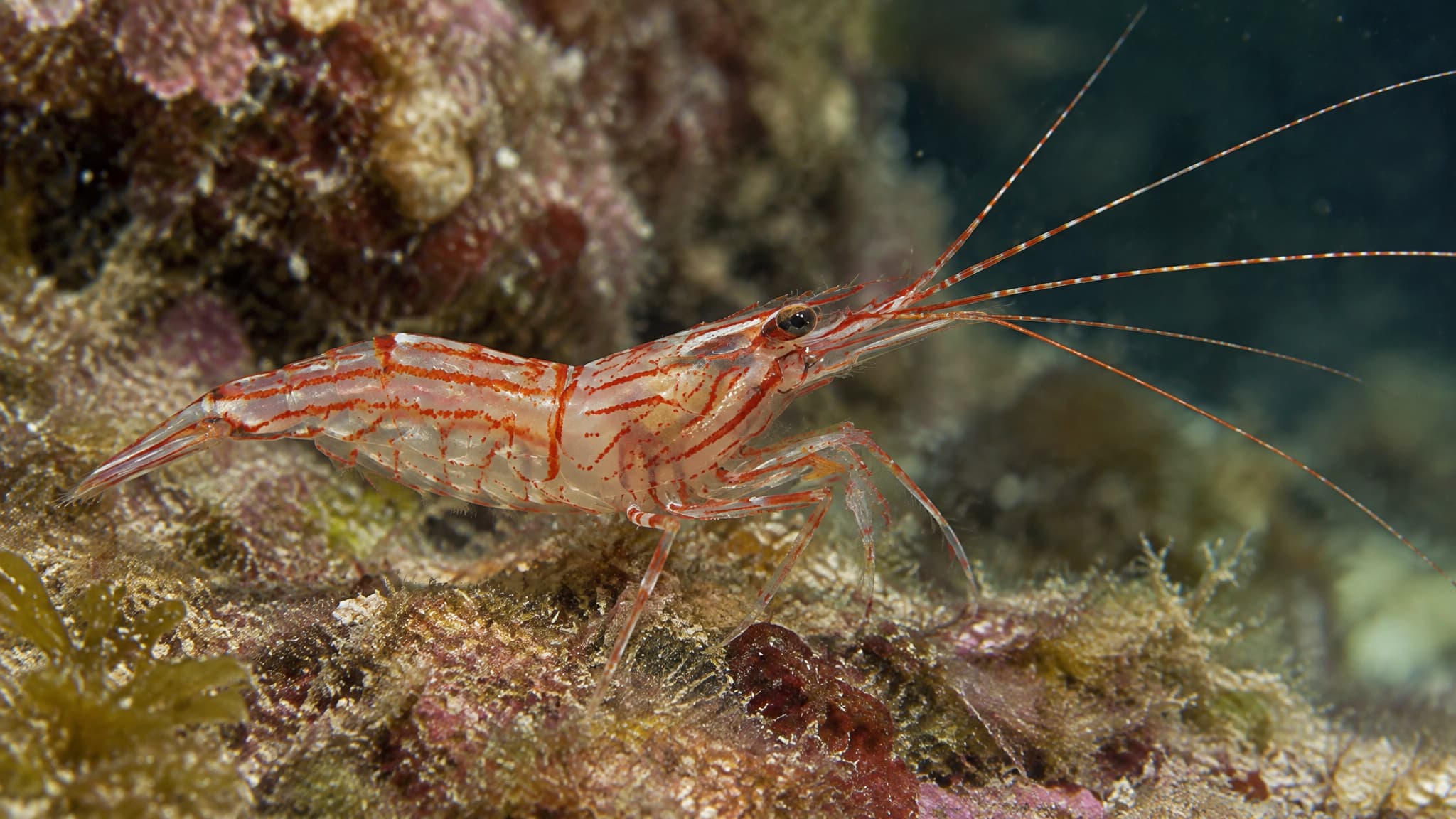
The peppermint shrimp (Lysmata wurdemanni) is a small caridean shrimp of the family Lysmatidae, first described by Gibbes in 1850 as Hippolyte wurdemanni. Most adults stay at around 5 cm, and the largest reach about 7 cm. The body is translucent and marked with bright red lines that run along its length, a candy-cane pattern that gave the species its common name. Females carry clusters of bright green eggs under the abdomen. Its range lies in the western Atlantic. Recent accounts place it along the Atlantic coast of the United States, from Long Island to Florida, and along the Gulf of Mexico from Florida to Port Aransas, Texas; records from the northern Caribbean are unconfirmed. Older accounts gave a much wider range, reaching south to Brazil, because what was called L. wurdemanni is now known to be a complex of look-alike species. It is a benthic animal that lives on or near the sea floor, from the shoreline down to about 37 m. The peppermint shrimp acts as a cleaner and scavenger, picking parasites, dead tissue and detritus from other animals and the bottom. It has been reported to eat glass anemones of the genus Aiptasia, pests that can harm corals, although in this species the habit is only occasional. It is a quiet, secretive shrimp that lives in groups and is mostly active at night. Its sexual system is unusual among decapods. Each shrimp begins life as a male and, after about four moults, many become simultaneous hermaphrodites: they act as males between moults and as females just after moulting, while the new shell is still soft. Some never change sex. Males find receptive partners by searching and sensing their pheromones with organs on the antennules, and mating is brief. Hermaphrodites can fertilize others but cannot fertilize themselves. The planktonic zoea larvae hatch from the brooded eggs, and in captivity broods can be released about once a week. Its lifespan is not documented in the consulted sources. The species has not been evaluated by the IUCN. It is collected for the marine aquarium trade, but SeaLifeBase rates its vulnerability to fishing as low, at 10 out of 100. Because several similar species share the name peppermint shrimp, many animals sold under it are actually other Lysmata, such as L. boggessi, which is the more reliable eater of Aiptasia.

View Details
Fire Shrimp
Invertebrates

Fire Shrimp

Lysmata debelius

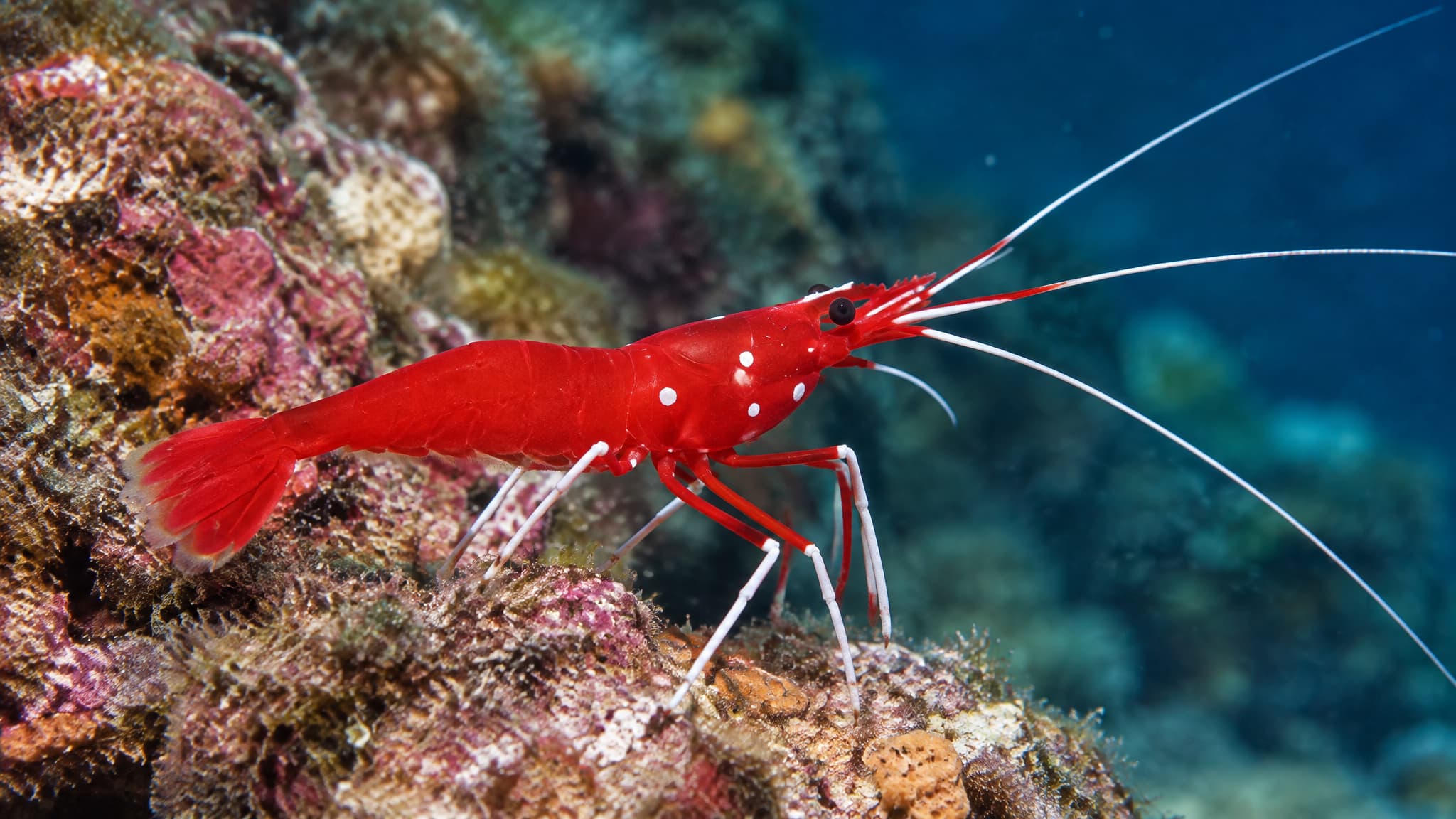
The fire shrimp (Lysmata debelius), also called the blood shrimp or scarlet cleaner shrimp, is a small caridean shrimp of the family Lysmatidae. It was described by A. J. Bruce in 1983 from specimens collected at Polillo Island in the Philippines, and its name honors Helmut Debelius, who gathered the type material. Its body is a deep, uniform red with large white spots on the cephalothorax and legs. The long antennae are white, and the third, fourth and fifth pairs of legs end in white tips. The body usually reaches about 3 cm in length, although some aquarium references give figures of up to 5 cm. It looks almost identical to Lysmata splendida, a close relative that can be told apart by white spots on the abdomen, which the fire shrimp lacks. The species lives on tropical coral reefs across the Indo-Pacific. Records span the Red Sea and the coast of East Africa, Madagascar, the Seychelles and the Maldives, through Indonesia, the Philippines, Vietnam and Japan, out to the Marshall Islands and French Polynesia. It is a bottom-dwelling animal usually reported at depths of 20 to 30 m, where it shelters among reef rock. Like other cleaner shrimp, it removes parasites and dead tissue from reef fish, forming a mutually beneficial relationship with its clients, and it also feeds on scraps and small crustaceans. It is strongly territorial: it attacks other shrimp that enter its space, recognizes members of its own species and forms long-term pair bonds. The fire shrimp is a hermaphrodite. After molting an individual can function as a female, and between molts as a male, so any two adults can mate. The parent carries the eggs under its body, and a pair can release a new batch of larvae roughly every week. The larvae drift in the plankton for a long period, which makes rearing difficult: a 2016 study in Sri Lanka reached metamorphosis in 50 to 90 days with larval survival of 12.7% to 18.35%. Its wild lifespan is not documented, but one aquarium specimen lived for more than 7 years. It is one of the most sought-after shrimp in the marine aquarium trade, and most animals exported from places such as Sri Lanka are still taken from the wild, a pressure researchers warn could threaten local populations if it is not managed sustainably. The species has not been assessed for the IUCN Red List.

View Details
Squat anemone shrimp
Invertebrates

Squat anemone shrimp

Thor amboinensis

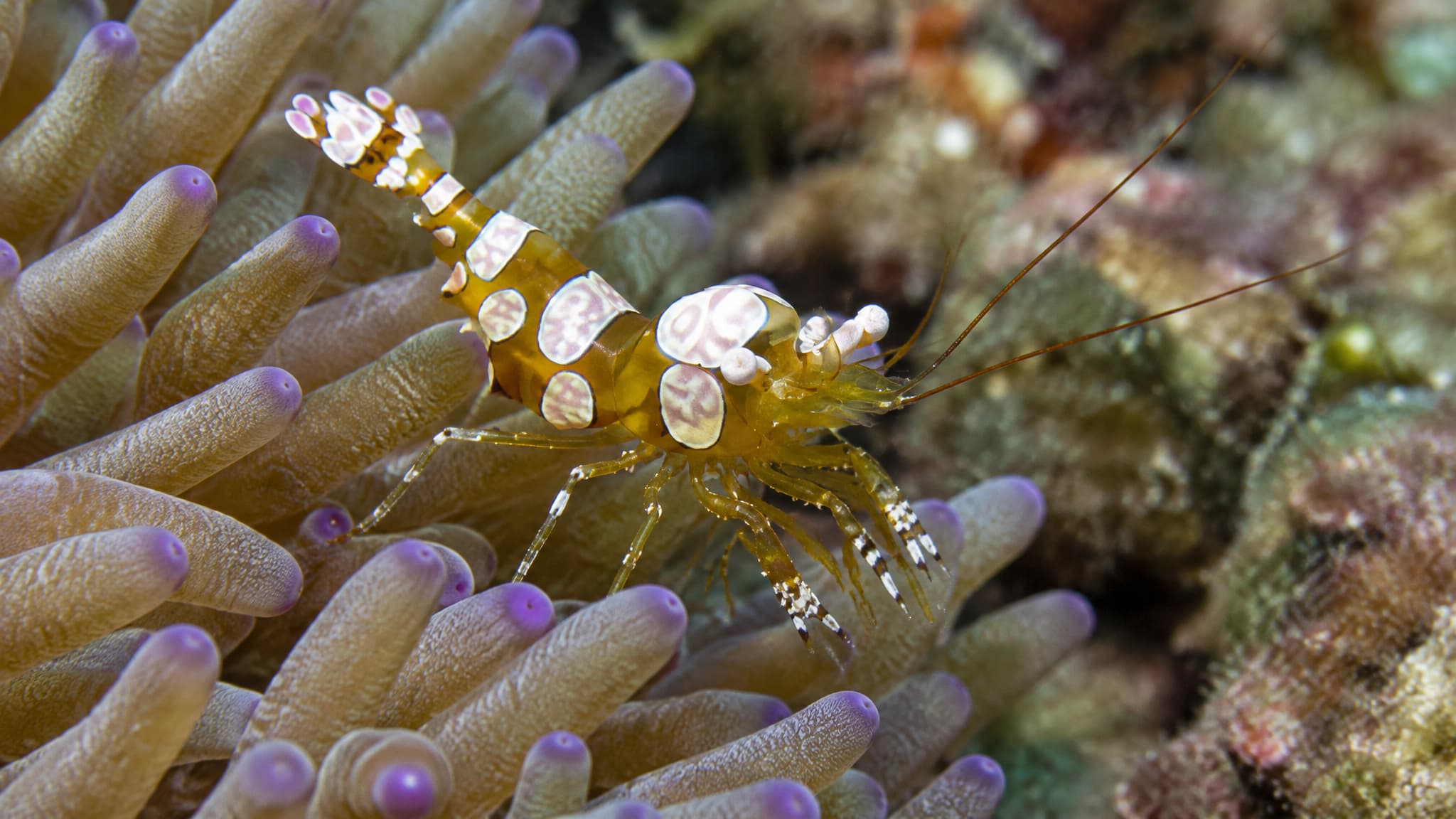
The squat anemone shrimp, better known to divers and aquarists as the sexy shrimp, is a tiny caridean shrimp of the family Thoridae. It was first described by De Man in 1888 as Hippolyte amboinensis, and Thor discosomatis is now treated as a synonym. Adults reach only about 13 mm in length. The body is brownish with bold white patches, each outlined by a thin blue line, and the shrimp habitually holds its abdomen arched upward so that the tail fan sits above its head. It waves this raised abdomen from side to side, the swaying display behind both the "sexy" and "dancing" shrimp nicknames. The species was long thought to live in warm seas worldwide. Consistent differences in colour pattern and genetic work showed that the name actually covers a complex of at least five cryptic or near-cryptic species, and in 2021 the western Atlantic populations were described as a separate species, Thor dicaprio. In its current sense, T. amboinensis is chiefly an Indo-West Pacific animal, photographed from the Red Sea and Oman to Australia, Indonesia, the Philippines, southern Japan, Hawaii and French Polynesia. Records from the eastern Pacific and the eastern Atlantic, such as Madeira and the Canary Islands, are still placed within the complex. This is a benthic shrimp of tropical reefs and shallow coastal water. It has been recorded from the surface to about 60 m, and it is usually seen at 3 to 18 m. It lives as a commensal among the tentacles of a wide range of cnidarians, above all sea anemones but also mushroom corals and soft corals, and some individuals simply shelter in rock crevices with no host at all. Sponges and crinoids are used only rarely. The shrimp feeds on its host, picking at tentacle tissue and at planktonic particles trapped in the host's mucus. Several individuals often share one host. Females carry their fertilised eggs under the abdomen until they hatch, and ovigerous females have been photographed beside large anemones in Japan and Australia. The larvae pass through several zoea stages in the plankton. Before settling they respond to chemical and visual cues that lead them to anemones, and they are generalists that accept more than one host species. The squat anemone shrimp has not been evaluated for the IUCN Red List. Its small size, striking pattern and readiness to adopt an anemone make it a popular animal in the marine aquarium trade, where it is usually kept in small groups in reef tanks.

View Details
Harlequin Shrimp
Invertebrates

Harlequin Shrimp

Hymenocera picta

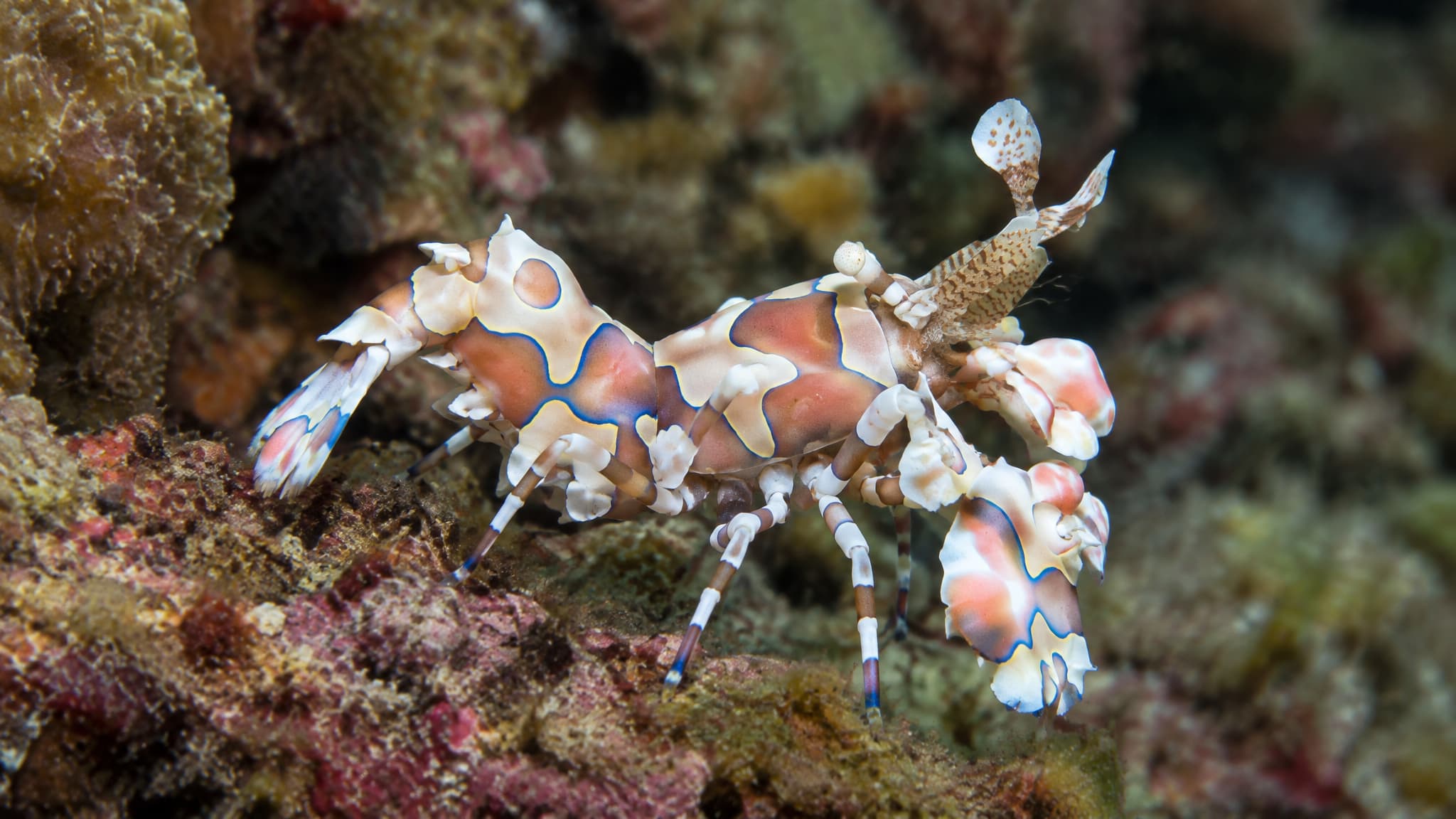
The harlequin shrimp (Hymenocera picta) is a small, strikingly patterned reef shrimp that reaches only about 5 cm in length. Its body is white or cream and covered with large spots, usually reddish or pinkish-purple in Pacific animals and brownish or bluish in Indian Ocean animals. The claws are expanded into broad, flattened plates held out in front of the head, and petal-like antennules help it detect prey by smell. Females are normally larger than males. The species lives in tropical waters of the Indian and Pacific Oceans, from the Red Sea and eastern Africa through Indonesia and northern Australia to Hawaii and the central and eastern Pacific. It occurs on coral reefs and nearby seabeds just below the intertidal zone, down to about 20 m, where it shelters in crevices and among coral. It does best in warm water of roughly 22 to 28 °C. Few crustaceans have such a narrow diet: the harlequin shrimp feeds almost entirely on live sea stars, including species of Linckia, Fromia, Nardoa and even the coral-eating crown-of-thorns starfish (Acanthaster). It usually hunts with its mate. The pair finds a star by chemical cues, works together to flip it upside down, a task that can take 30 to 60 minutes, and then pierces the skin to eat the tube feet and soft tissues, often starting at the tip of one arm. Harlequin shrimp are monogamous and territorial, living in stable pairs that forage and breed together, while males can fight one another for dominance. After courtship the female carries the fertilized eggs under her abdomen; reported clutches range from 100 to 5,000 eggs, with spawning tied to her molts. The eggs start orange-red and turn gray as the embryos develop. In captive rearing, the planktonic larvae took about 6 weeks to metamorphose into juveniles, which soon began eating small sea stars. Its natural lifespan has not been well documented. By preying on sea stars, the harlequin shrimp helps keep their numbers in check, and its taste for crown-of-thorns starfish has led to proposals to use it in biological control on reefs. It has not been evaluated by the IUCN. It is popular in the marine aquarium trade, but captive breeding remains difficult because the shrimp needs a steady supply of live sea stars.

View Details
Banded Coral Shrimp
Invertebrates

Banded Coral Shrimp

Stenopus hispidus

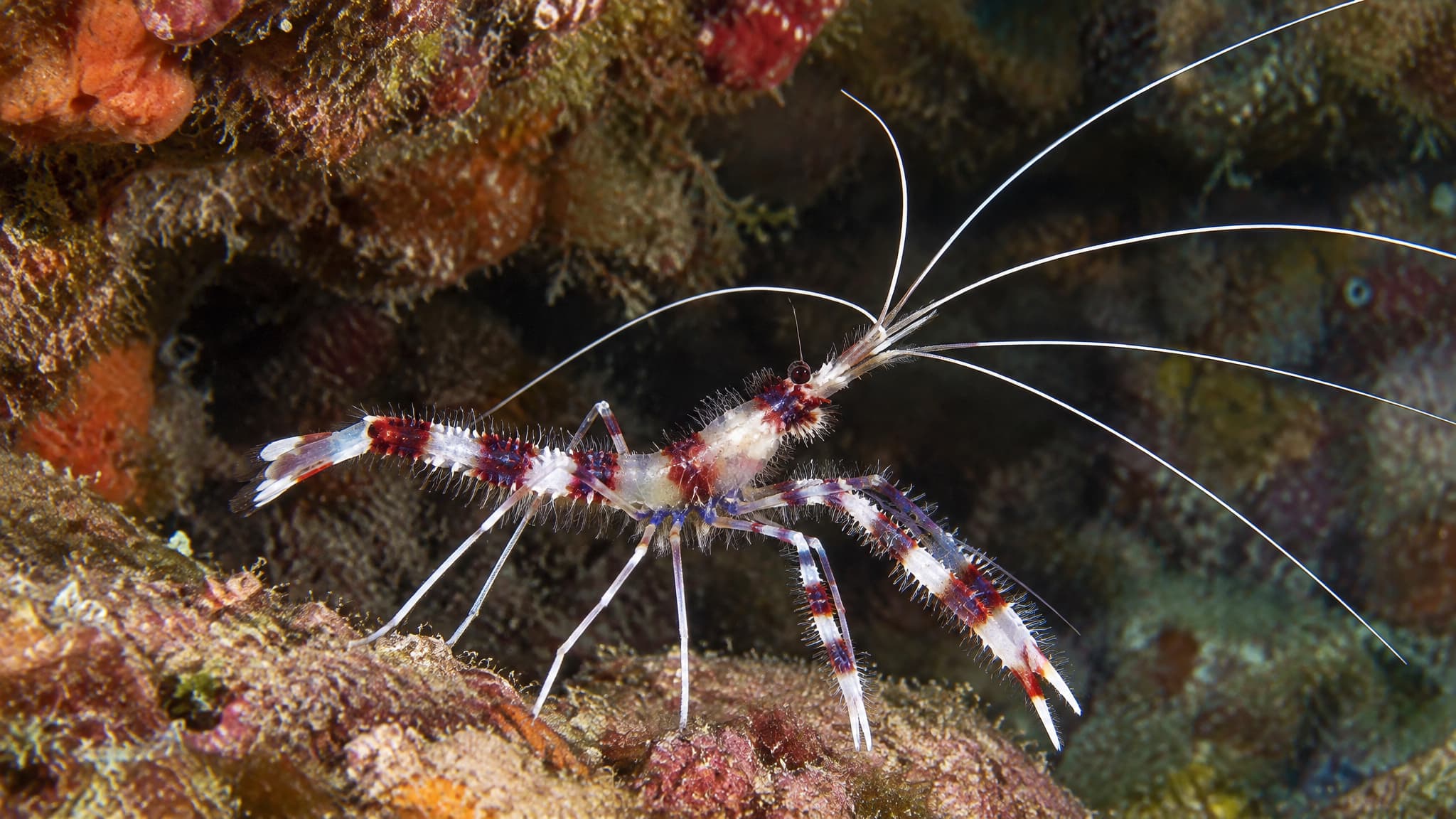
The banded coral shrimp (Stenopus hispidus) is a small decapod crustacean of the family Stenopodidae, famous for its bold red-and-white stripes. The bands run across the carapace, the abdomen and the enlarged third pair of legs, which carry its big claws, and the red bands are sometimes edged in purple. Two pairs of long, white, hair-like antennae are longer than the body, while the other walking legs look partly translucent. The body and the large claws are covered in spines. Adults reach a total length of about 6 cm, and females are usually larger than males. This shrimp has a pan-tropical distribution. In the Indo-Pacific it ranges from the Red Sea and southern Africa to Hawaii, the Tuamotu Islands and Easter Island, and in the western Atlantic from Bermuda and North Carolina through the Gulf of Mexico and the Caribbean to São Paulo in Brazil. It lives on coral reefs and rocky bottoms, sheltering in crevices, ledges and reef overhangs. It is most often seen at 2 to 4 m, but it has been recorded from 2 m down to 210 m. The banded coral shrimp is a well-known cleaner. It perches at the entrance of its cave or ledge and slowly waves its white antennae to attract fish, turning the spot into a cleaning station. With its claws it picks off parasites, damaged tissue and leftover food from clients such as moray eels, tangs, grunts and groupers, and Brazilian researchers note that it even cleans sea turtles. Besides cleaning, it eats small arthropods, marine worms and other invertebrates. It is territorial and sedentary: each shrimp holds an area about 1 to 2 m across and rarely strays far from it. The species is monogamous. Pairs often form when the shrimp are still juveniles and can stay together for years. The female mates soon after molting, and she carries her greenish eggs under her abdomen, attached to the swimmerets. At 28 °C the eggs hatch in about 16 days, usually at night, and breeding happens all year. The larvae drift in the plankton through 9 described larval stages and can delay settling until they find suitable habitat. Adults molt every 3 to 8 weeks, depending on food and temperature. Its lifespan in the wild is not well documented. The species is not evaluated on the IUCN Red List. It was one of the first tropical marine animals imported for the aquarium trade and remains one of the most popular invertebrates with reef keepers. In Brazil, most specimens sold are wild-caught sub-adults and adults collected by divers in Rio de Janeiro, Espírito Santo, Bahia and Ceará. Poor holding conditions after capture cause high mortality, and its territorial temper makes captive breeding difficult.

View Details
Pacific Cleaner Shrimp
Invertebrates

Pacific Cleaner Shrimp

Lysmata amboinensis

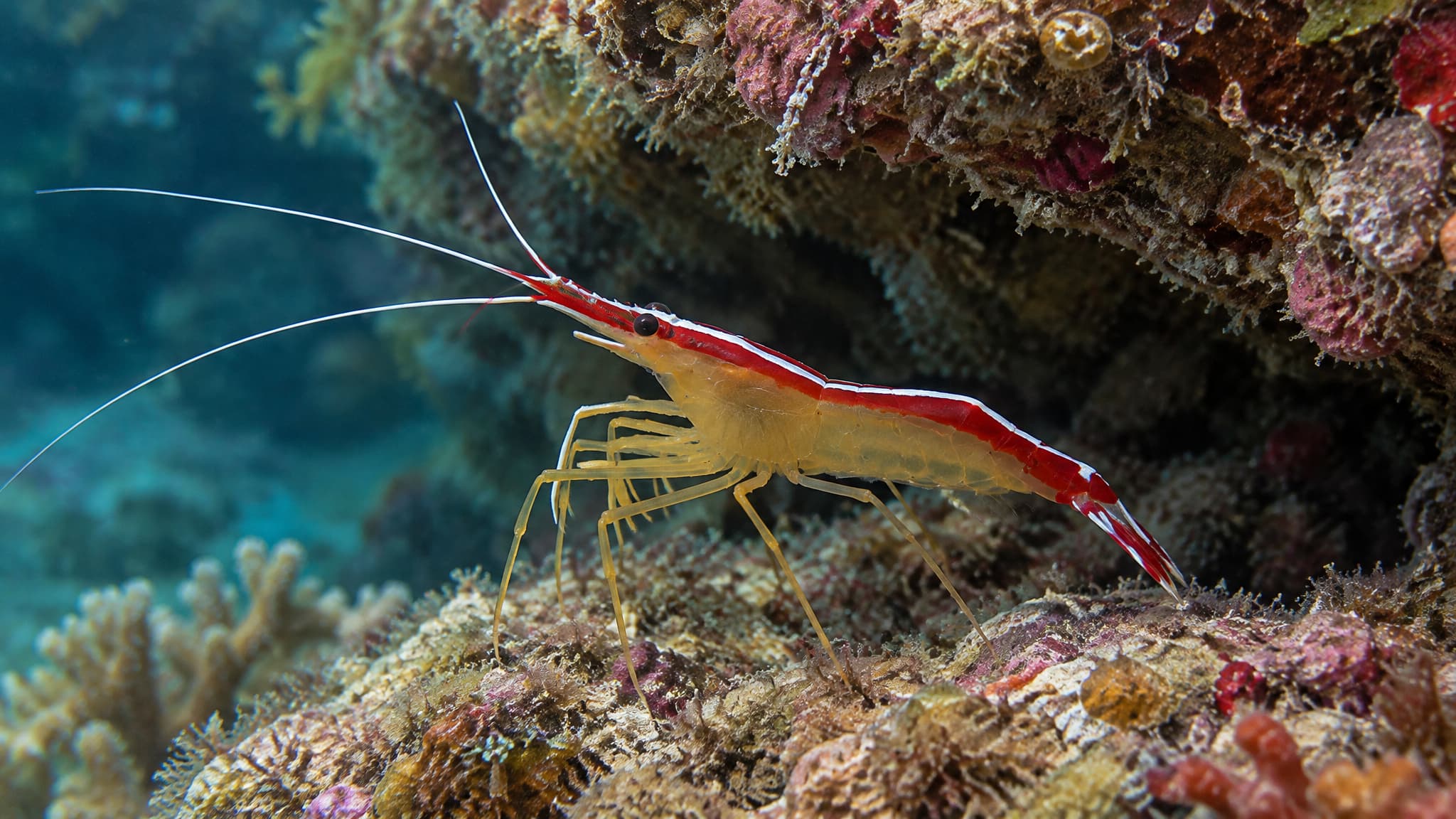
The Pacific cleaner shrimp (Lysmata amboinensis), also sold as the skunk or white-banded cleaner shrimp, is a small caridean shrimp described by de Man in 1888. Adults reach about 5 to 6 cm in body length. The slender body and legs are pale amber to light yellow, and a bright white stripe runs along the middle of the back between two broad scarlet bands. The red tail carries symmetrical white spots, and the long white antennae are forked at the front, so the shrimp seems to have three pairs. The first pair of walking legs ends in small pincers. The species lives on tropical coral reefs of the Indo-West Pacific, from Kenya to Japan, French Polynesia and Hawaii, and also in the Red Sea. It is usually found at depths of about 5 to 40 m, sheltering in caves and under rock ledges, often in pairs rather than in large groups. Its name comes from its work at reef cleaning stations. Most of its food is parasites and dead tissue picked from the bodies of visiting fish. When a fish arrives, the shrimp rocks from side to side and touches it with its antennae to signal that it is a cleaner, not prey. It often lives in caves alongside moray eels, which may give it protection. In a 2015 aquaculture study, these shrimp ate 63% of the eggs of the harmful fish parasite Neobenedenia during the day (14% at night) and 26% of its infective larvae, and they halved infection success on ornamental fish. Every individual starts life as a male and, after a few moults, becomes a functional hermaphrodite that can act as either sex. Partners mate right after a moult, and each spawning yields 200 to 500 eggs carried under the abdomen. The larvae hatch at 3 to 4 mm, drift in the plankton for 5 to 6 months through at least 14 stages, and settle at about 2 cm. Adults moult every 3 to 8 weeks and live about 3 to 5 years. The Pacific cleaner shrimp has not been evaluated by the IUCN. It is one of the most popular invertebrates in reef aquariums, and because its larvae are hard to rear, most animals in the trade are taken from the wild, a practice that some sources say could harm reefs.

View Details
Amano Shrimp
Invertebrates

Amano Shrimp

Caridina multidentata

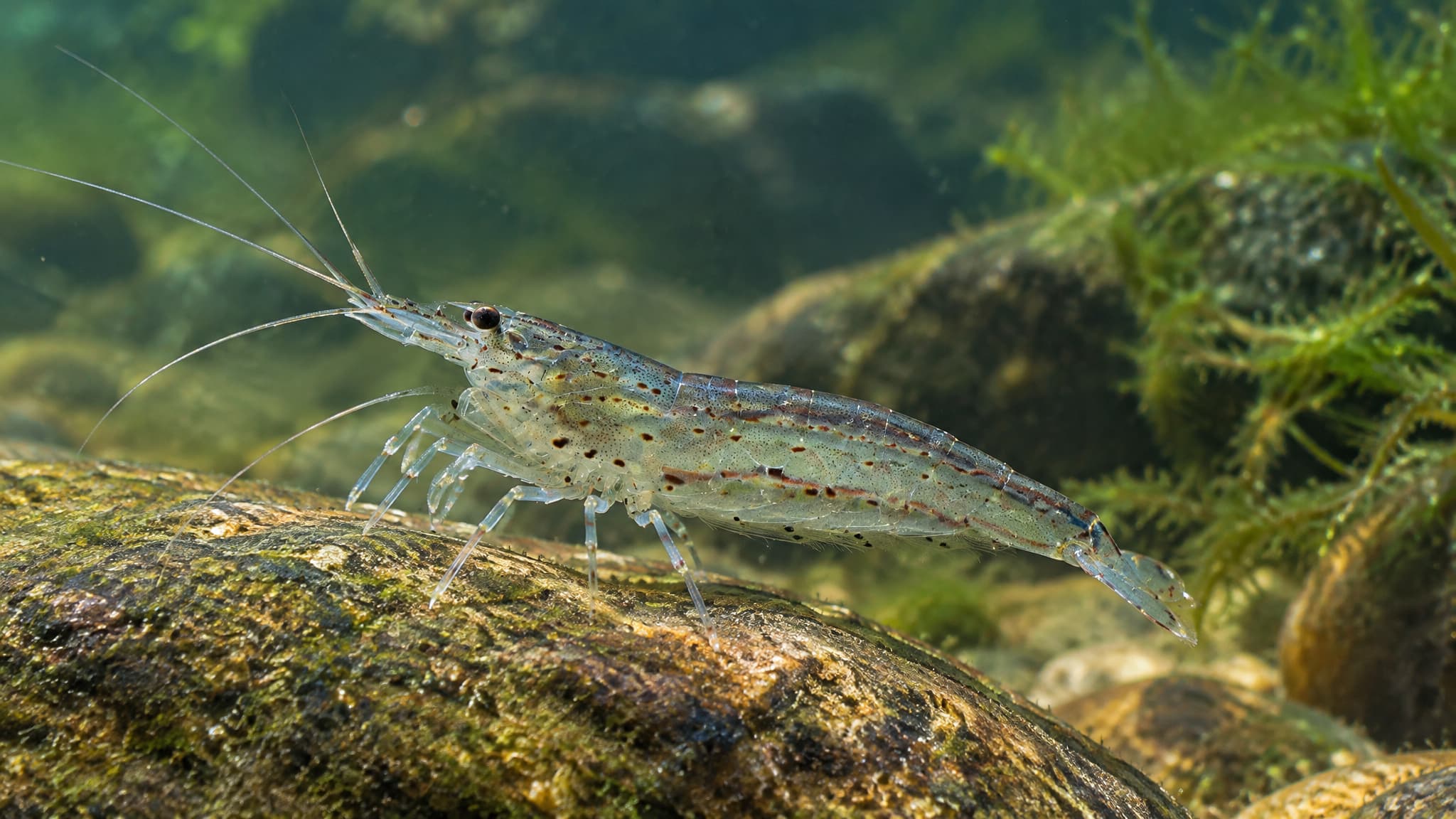
The Amano shrimp (Caridina multidentata) is a small freshwater shrimp of the family Atyidae, best known to aquarists as a tireless algae eater. Adults usually measure about 25 to 35 mm. The body is nearly translucent, often with a grey or greenish tint, and is marked by a pale stripe running along the back from head to tail and a broken row of reddish-brown to bluish dots along each side. The rostrum is short and broad, a shape linked to life in fast-flowing water. Females grow larger than males, have a deeper abdomen and show a longer lower row of dots. For decades the species was sold as Caridina japonica, until a 2006 study of the shrimps described by William Stimpson in 1860 showed that C. multidentata is the older, valid name. The species is native to Japan and Taiwan and is common in southwestern Japan; Stimpson's original material came from the Bonin (Ogasawara) Islands. Older records from Fiji and Madagascar are now regarded as misidentifications of other species. In the wild it lives in rivers, especially large rivers with boulder beds, as well as streams and marshes. Studies of Japanese populations found little genetic difference between distant rivers, consistent with larvae that travel long distances at sea. Amano shrimp are peaceful, social animals that forage almost constantly, picking algae and biofilm from rocks and plants. Algae form the bulk of their diet, supplemented by detritus, carrion and small invertebrates such as insect larvae. They are most active around dusk, hide when threatened or under bright light, and stay under cover while their new shell hardens after each moult. The life cycle is amphidromous. Mating takes place in fresh water shortly after the female moults, and she carries the eggs under her abdomen until they hatch. The tiny larvae, called zoeae, drift downstream to brackish and marine water, where they develop before the young shrimp return to rivers. In laboratory tests at 20 to 32 °C, larvae coped with a wide salinity range of 17 to 34 ppt. Because the larvae need salt water, breeding in home aquariums is very difficult. Lifespan is commonly reported as about 2 to 3 years. As grazers, Amano shrimp help recycle algae and organic debris in streams, and they are prey for fish, frogs and birds. Their sea-going larvae also link river and coastal food webs. The IUCN lists the species as Least Concern. It has been popular in the aquarium trade since the planted-tank designer Takashi Amano introduced it in the early 1980s, and most animals sold are collected from the wild. Like other crustaceans, it is very sensitive to copper in the water.

View Details
Cherry Shrimp
Invertebrates

Cherry Shrimp

Neocaridina davidi

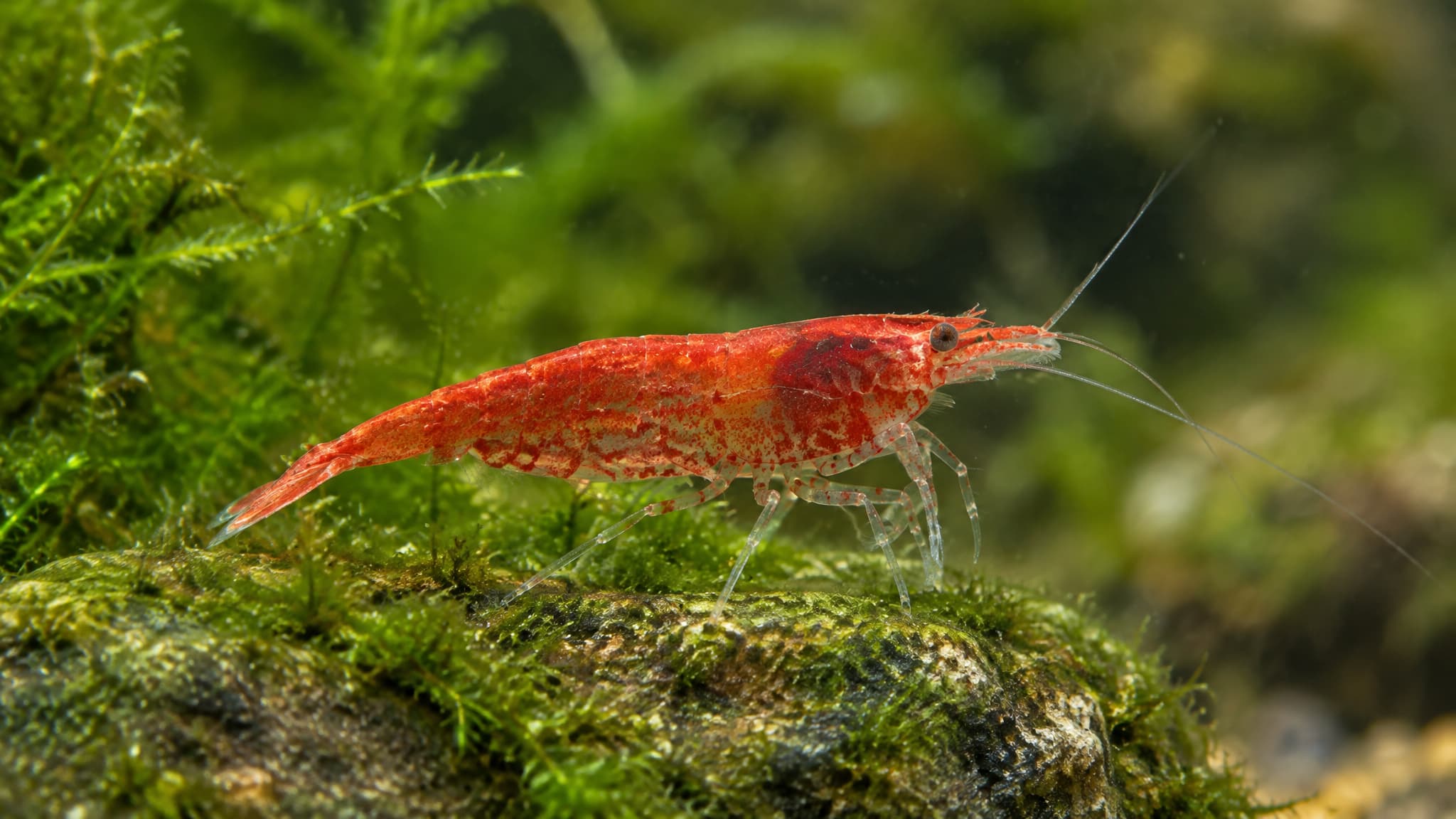
The cherry shrimp (Neocaridina davidi) is a small freshwater shrimp of the family Atyidae and one of the most popular invertebrates in the aquarium trade. Wild-type animals are semi-translucent or a mottled greenish brown, but generations of selective breeding have produced red, orange, yellow, green, blue, black, white and striped forms, each sold under its own trade name. Adults reach a maximum length of about 3 to 4 cm, and females are larger and more richly colored than males, with a broader tail used to carry eggs. Like other decapods it has five pairs of walking legs, the first two ending in small claws for picking up food, and five pairs of swimming legs under the abdomen. The species is native to the fresh waters of East Asia. Sources agree on Taiwan and mainland China, and some also list Korea and Vietnam, where it lives in streams, rivers, ponds and lakes; unresolved taxonomy within the genus makes the exact native range uncertain. Releases from aquariums have created wild populations far from home. On Oahu, Hawaii, it has been recorded since 1991 in streams, springs and reservoirs, and in Europe it is known mostly from thermally polluted waters, such as a canal of the Oder River in Poland and the Erft and Gillbach rivers in Germany. The cherry shrimp is a peaceful, timid grazer that spends most of its time picking at the bottom. It feeds on biofilm, algae, detritus and decaying plant and animal matter, and studies of introduced populations found that it eats leaf litter, preferring alder and goat willow leaves. It also eats meiofauna, tiny bottom animals such as nematodes and rotifers, and it consumes its own shed exoskeleton to recover nutrients. Females carry their eggs under the abdomen, where the swimming legs fan and clean them to prevent fungal growth. In a laboratory study, clutches held 43 to 60 eggs and incubation lasted 16 to 19 days. There is no free larval stage: the young hatch as miniature adults only 1 to 2 mm long, can reach sexual maturity in about a month, and adults may live 1 to 2 years. In its habitat the shrimp recycles nutrients by feeding on decaying vegetation and serves as food for other aquatic animals. Where it has been introduced, it can reduce the abundance and biomass of meiofauna and may compete with native shrimp; the U.S. Fish and Wildlife Service rates its overall risk to the contiguous United States as high. The species has not been evaluated by the IUCN, and it is thought to number in the billions worldwide, mostly in aquariums.

View Details
Common Rough Woodlouse
Invertebrates

Common Rough Woodlouse

Porcellio scaber

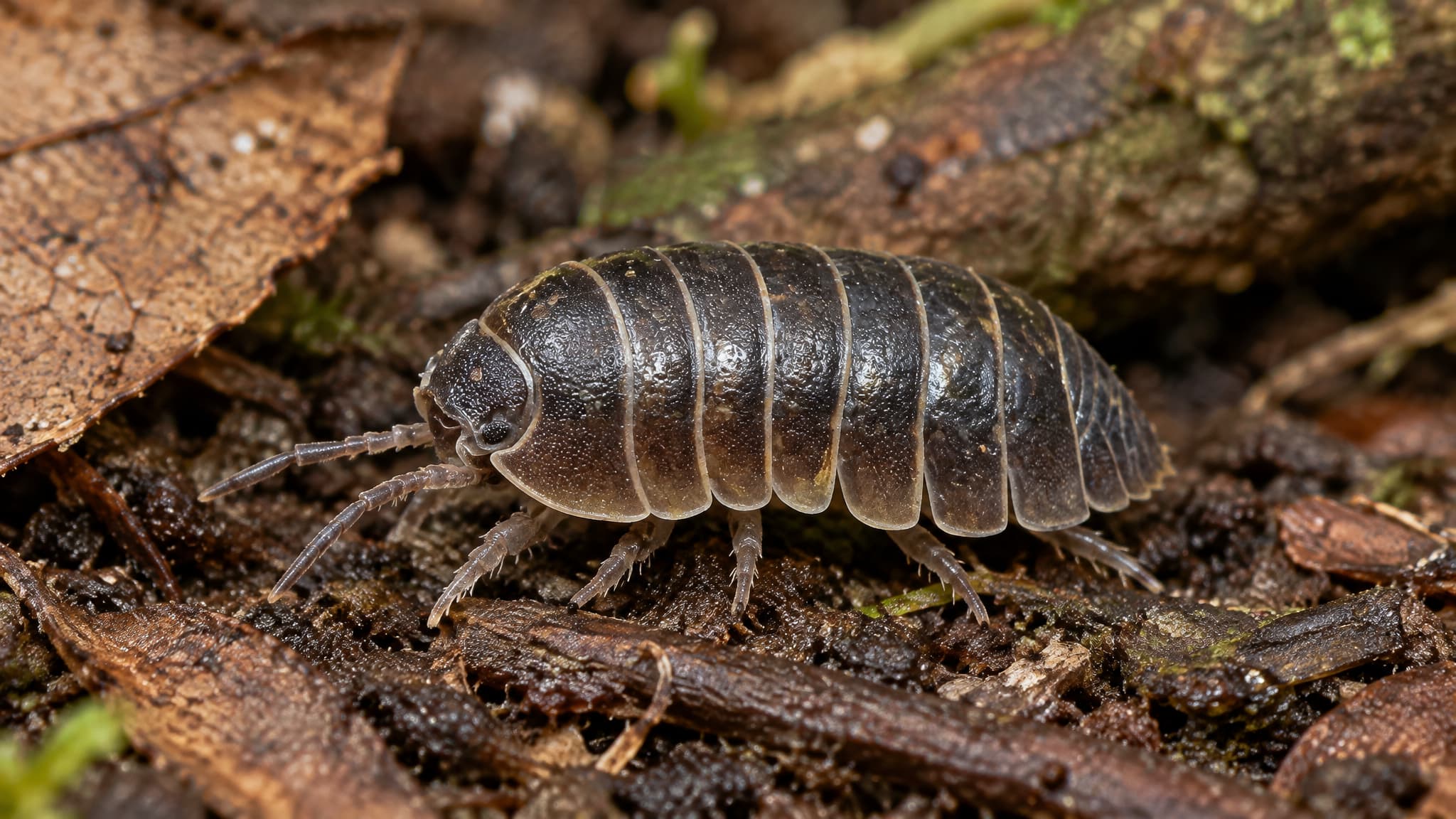
The common rough woodlouse (Porcellio scaber) is a land-dwelling crustacean of the order Isopoda, related to shrimp, crabs and lobsters. Its flattened, oval body is built from overlapping hard plates covered in tiny tubercles, which give it a dull, rough look rather than a shiny one. Adults reach up to about 17 mm. Most are grey or slate-blue, but females and juveniles tend to be lighter and mottled, and genetically determined colour forms with yellow, red or orange mottling occur. It has seven pairs of walking legs, compound eyes, antennae whose flagella have two segments, and two pointed tail-like uropods at the rear. Unlike pill bugs, it cannot roll into a ball. Native to mainland Europe, the species has been carried around the world and now lives on every continent except Antarctica, including Australia, Hawaii and sub-Antarctic Marion Island. It favours temperate climates and is probably the most common woodlouse in Britain. It shelters in moist, dark places such as leaf litter, under stones, logs, bark and mulch, and in wall crevices, and is very frequent in gardens. It also turns up on dunes, salt marshes and coastal splash zones, and copes with somewhat drier spots than many other woodlice. This woodlouse is a detritivore that feeds mainly on decaying plant matter such as dead leaves and rotting wood, along with fungi, carrion and even its own faeces. Bacteria living in its digestive gland help it break down cellulose. It is mostly nocturnal, avoids light and gathers in groups, behaviour that reduces water loss through its permeable exoskeleton and lowers the risk of predation. In large numbers it may nibble soft young plants. Instead of urinating, it releases nitrogen waste as ammonia gas. Breeding takes place in spring and summer, and females mate with several males. A female carries her eggs in a fluid-filled brood pouch, the marsupium, for about 35 days, producing one to three broods a year of roughly 12 to 36 young each. The newly hatched young, called mancae, are soft and white with only six pairs of legs, gaining the seventh pair after their first moult. They grow by moulting, without metamorphosis, and reach maturity after 14 to 22 months. Mortality is high soon after release, but survivors typically live around two to three years. As a decomposer, P. scaber returns nutrients from dead plant material to the soil and is a common subject of research and a bioindicator of heavy-metal pollution. It is eaten by spiders, including the woodlouse hunter, as well as centipedes, harvestmen, ground beetles, shrews, frogs, lizards and birds. The species has not been assessed by the IUCN and is not considered threatened; where it has been introduced, it can compete with native detritivores.

View Details
Common Shiny Woodlouse
Invertebrates

Common Shiny Woodlouse

Oniscus asellus

The common shiny woodlouse (Oniscus asellus) is one of the largest and most familiar woodlice of Western and Northern Europe, often described as the archetypal woodlouse. It is a land-living crustacean of the order Isopoda, not an insect. Adults reach about 16 to 18 mm in length and around 6 mm in width, with a broad, flattened body whose smooth, glossy surface sets them apart from rougher relatives. They are usually grey or brownish grey with irregular pale patches and paler edges to the body plates; these pale patches store calcium used to harden the new exoskeleton after a moult. The tip of each antenna has three segments, the animal lacks the white pleopodal "lungs" seen in Porcellio scaber, and it cannot roll into a ball. Juveniles look rather different from adults: they are rough and bumpy with orange markings, and small ones are often mistaken for the common rough woodlouse. Young woodlice also hatch with only six pairs of legs and gain the seventh pair as they grow. The species is native from Portugal to Sweden and east to Ukraine, is less common around the Mediterranean, and also lives in the Azores and Madeira. It has been widely introduced to the Americas, mainly Mexico and the United States. In south-west Britain and western France it is partly replaced by the genetically distinct subspecies O. a. occidentalis, which hybridises with the common form where they meet. It is found in almost every habitat as long as conditions are damp, including woodlands, hedge banks, meadows, coastal cliffs, waste ground, parks, gardens and even damp houses and outbuildings. It stays near ground level under logs, stones and bark, in leaf litter and compost heaps, and is especially at home in rotting wood. It avoids dry places but tolerates acid soils. Mostly nocturnal and active all year, it finds dead organic matter, chiefly decaying plants and wood, by taste and smell. When disturbed it tends to cling tightly to the surface instead of running away. Mating usually happens at night: the male climbs onto a receptive female's back, drums her with his front legs and licks her head with his mouthparts. Females carry their eggs in a fluid-filled brood pouch formed by overlapping plates under the body, and the young leave it once fully developed. As an efficient decomposer the woodlouse helps recycle nutrients, and it is food for toads and newts. It also accumulates heavy metals such as lead, cadmium, copper and zinc in its digestive gland, which has made it useful as an indicator of pollution. It remains abundant and is listed as Least Concern in Great Britain.

View Details
Giant Antarctic Isopod
Invertebrates

Giant Antarctic Isopod

Glyptonotus antarcticus

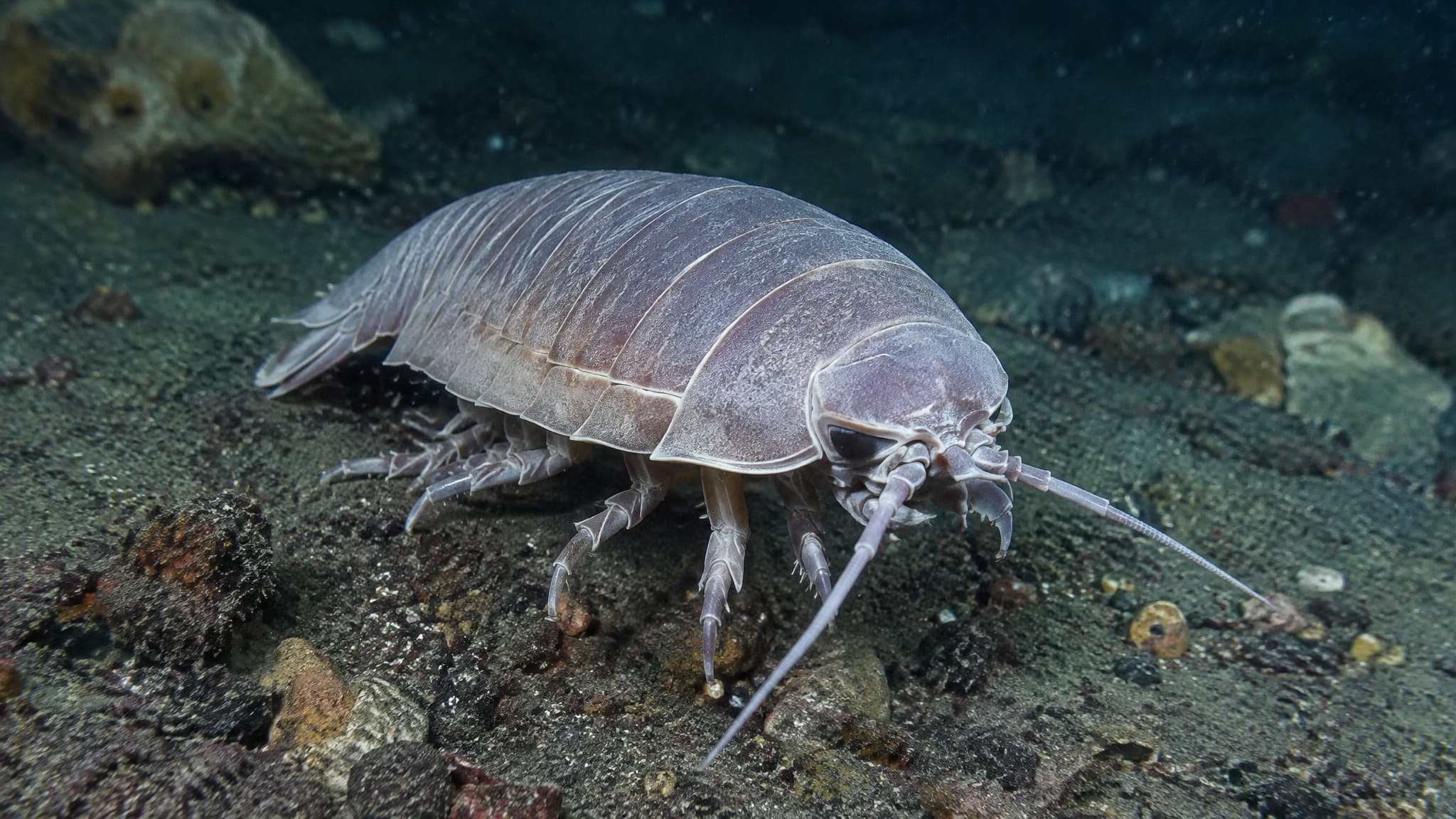
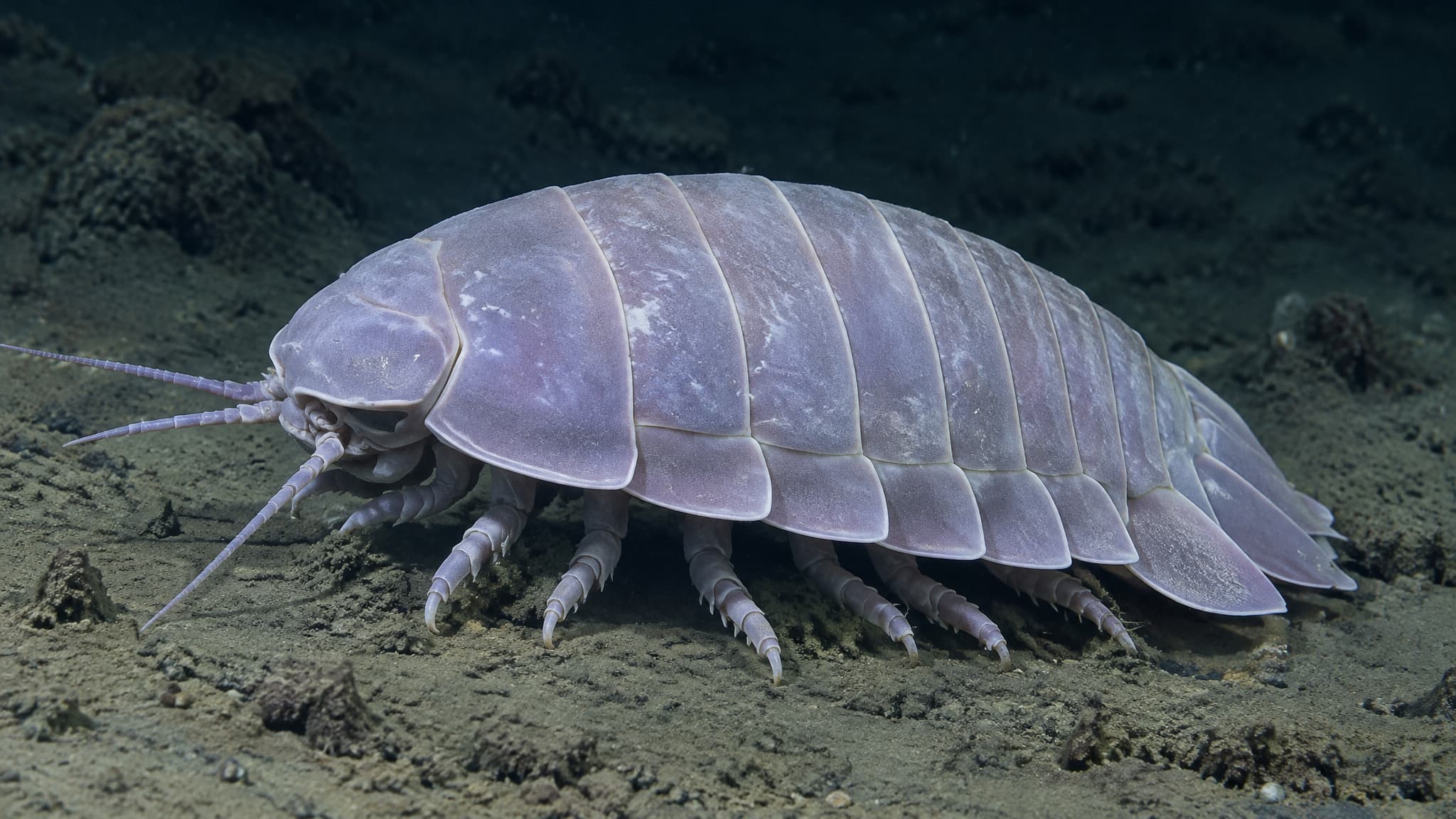
The giant Antarctic isopod (Glyptonotus antarcticus) is a large bottom-dwelling crustacean of the suborder Valvifera, family Chaetiliidae. Adults usually reach about 9 cm, and rare individuals approach 20 cm, which is very big for an isopod: most species measure only 0.5 to 1.5 cm. Its body surface is covered in feathery hairs and knobbly scales, except on the eyes, some mouthparts and the feet, a texture thought to help keep foraminifera, larvae and other settlers from attaching. An unusual feature is its eyes. It has two pairs of compound eyes, a larger pair on the upper surface and a smaller pair underneath. The lower pair is thought to help when the animal swims upside down. The species lives on the seabed of the Southern Ocean around Antarctica, where it can be very abundant. It occurs from the intertidal zone down to roughly 600 m and is common in shallow intertidal and subtidal waters. It was described by James Eights from the South Shetland Islands. Bryozoan colonies often grow on its shell, and larger individuals carry more and more varied colonies. It is a carnivore and scavenger that is often caught in baited traps. Studies describe it as an opportunistic predator with a mixed diet rich in echinoderms, and it also eats members of its own species. It is in turn eaten by predators such as the sea star Diplasterias brucei. At Admiralty Bay, King George Island, its resting metabolism was lowest in September and fell sharply during weeks without food. Breeding goes on all year. Females carry eggs once they are about 7.5 cm long, and the eggs and young stay in the mother's brood pouch for more than a year and a half, nourished by a maternal secretion. The young hatch as mancas, juveniles that already resemble small adults, since there is no free-swimming larval stage. Its lifespan in the wild has not been reliably measured. Because it is abundant and easy to keep in aquaria, it is an important model organism in ecological, biochemical and physiological research. A 2005 genetic study suggested that the name may cover several distinct, similar-looking species. The species has not been assessed by the IUCN.

View Details
Baltic isopod
Invertebrates

Baltic isopod

Idotea balthica

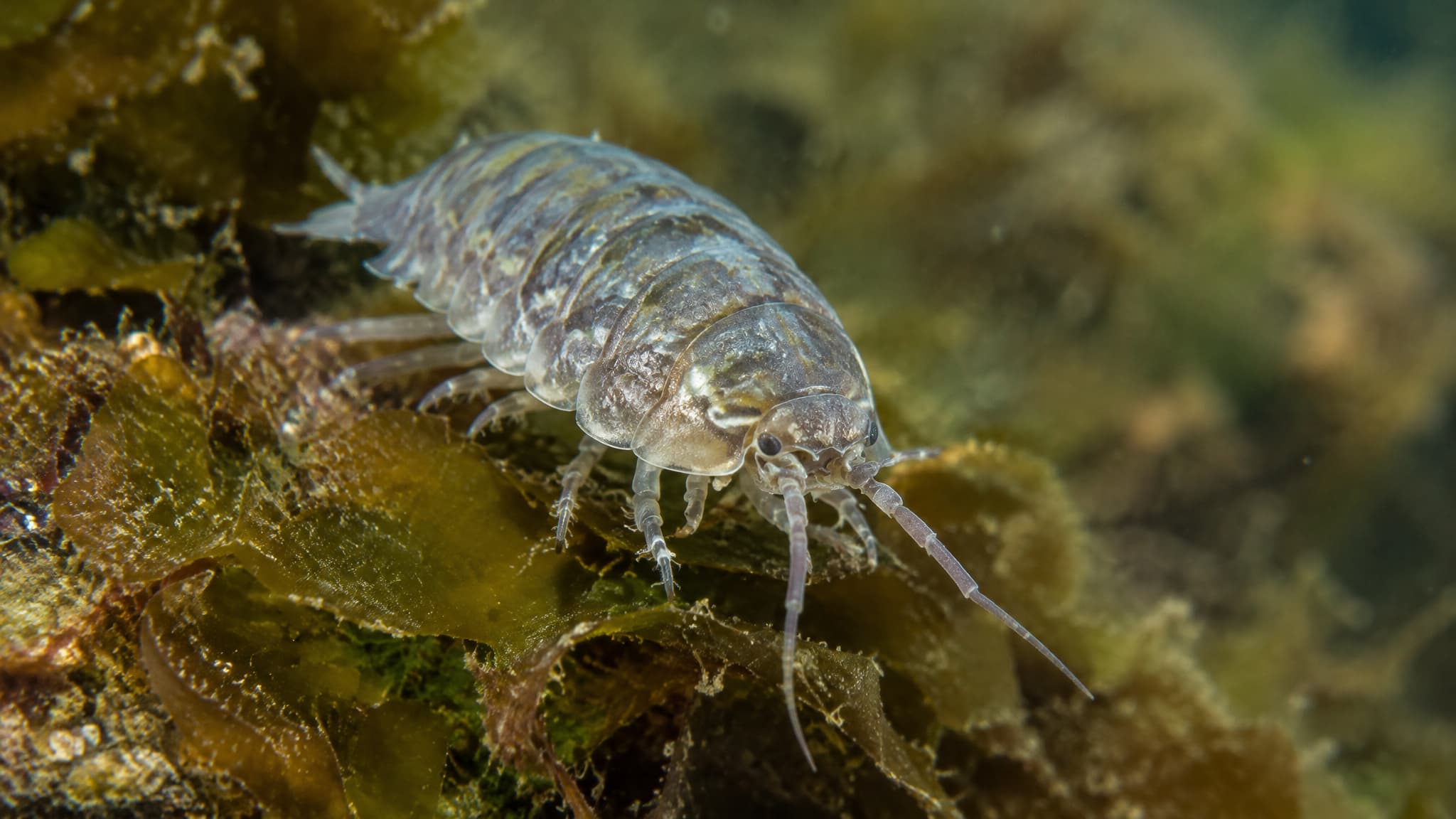
The Baltic isopod (Idotea balthica) is a small marine crustacean of the family Idoteidae, also known as the smooth seaweed isopod. Its body is flattened and oblong-oval, with two eyes, short antennules and a pair of antennae. Adults are recognized by the tail-piece (pleotelson), which ends in three points with the middle one longest; these points appear only as the animal grows. Males are usually 1 to 3 cm long and can reach about 4 cm, while females stay under about 1.8 cm. Colour is famously variable. Individuals range from plain green or brown to patterns with white spots, stripes or black and silver markings, and females are often darker than males. The isopod can also lighten or darken by expanding or contracting its pigment cells. Predation by fish and crabs is thought to help maintain this colour polymorphism, which keeps the animals hidden against seaweed. The species lives along temperate coasts of the North Atlantic, from northern Norway and the inner Baltic Sea south to the Mediterranean and Black Sea, and it is also recorded on the North American side of the Atlantic. It is mainly subtidal but also occurs on the lower shore, down to about 60 m, clinging to seaweeds and seagrasses on rocky shores and in lagoons. In the brackish Baltic it is most common in thick belts of bladder wrack (Fucus vesiculosus) and in eelgrass beds. The Baltic isopod is a grazer that feeds mostly on brown and green algae and seagrass, and it can live on bladder wrack alone. It tends to stay hidden by day and move between patches of algae at night to find food or mates, balancing food intake against the risk of being eaten. Males move around more and take greater risks than females. Males compete for females, and larger males usually win. A male guards a female by carrying her for several days before her moult, when she becomes ready to mate, although females often resist and influence the outcome. Eggs are brooded in a pouch under the female's body and hatch as small juveniles, with no free-swimming larval stage. In the Baltic, breeding takes place in the warmer months. In the species-poor Baltic Sea it is one of the most important herbivores, and dense populations can graze bladder wrack heavily, while it is also key food for fish such as herring and perch. It has not been assessed by the IUCN, but warming and falling salinity in the Baltic, along with the loss of seagrass beds, may threaten local populations.

View Details
Desert Woodlouse
Invertebrates

Desert Woodlouse

Hemilepistus reaumurii

The desert woodlouse (Hemilepistus reaumurii) is a terrestrial isopod of North Africa and the Middle East, often cited as the crustacean that has conquered the driest habitat of any in its group. Adults reach about 22 mm in length and 9 to 12 mm in width, with seven pairs of legs and conspicuous antennae. Tubercles are confined to the head and the front of the thorax, and the animal walks with its body held unusually high above the hot ground. It ranges across steppes, semideserts and deserts from eastern Algeria to western Syria, and is most strongly associated with loess soils in the Sahara and the Negev; it also turns up at the edges of salt lakes. Survival depends on vertical burrows 40 to 50 cm deep with a single narrow entrance, often dug beneath shrubs, where the air stays humid enough while the surface dries out. In good areas there can be around 20 burrows per square metre. It feeds mainly on plant material, especially the leaves of the shrubs Artemisia herba-alba and Haloxylon scoparium, and studies in the Negev also describe it eating dead organic matter, microbes and soil particles. Most of its water comes from humid air and damp sand, and its gut reabsorbs water so that its droppings are drier than its food. Unlike many desert woodlice, it is active at dawn and dusk rather than at night. Its social life is exceptional among isopods. Monogamous pairs share one burrow: one partner guards the entrance while the other forages, since digging a new burrow is slow and costly. Families recognise each other by chemical signals and mark their territory with banks of droppings. After a courtship that can last hours, the female gives birth to 50 to 100 live young, usually in May, and both parents feed them in the burrow for 10 to 20 days. Each pair raises a single brood, and adults typically live about 15 months. Its ecological weight is large. Densities of up to 480,000 individuals per hectare have been recorded, and in the Negev its biomass exceeds that of other herbivores. By swallowing and excreting organic matter and soil, it moves tens of grams of soil per square metre each year and is thought to speed decomposition. It is the main prey of the scorpion Scorpio maurus, but is vulnerable mainly on the surface. No conservation assessment has been published for the species.

View Details
Tongue-eating Louse
Invertebrates

Tongue-eating Louse

Cymothoa exigua

The tongue-eating louse (Cymothoa exigua) is a parasitic isopod, a crustacean in the family Cymothoidae, described by Schiødte and Meinert in 1884. It has a flattened, segmented body with seven pairs of sharp, hooked legs used to grip its host. Females are the larger sex, measuring about 8 to 29 mm long and 4 to 14 mm wide, while males reach roughly 7.5 to 15 mm long. Fully grown, it is often compared to the size of a cockroach. The species lives in the coastal eastern Pacific, with records from the Gulf of California and Mexico's Pacific coast south to Ecuador, including the Galápagos Islands, where its type locality lies. It favors shallow seas, from about 2 to 60 m deep. Snappers of the genus Lutjanus are its most frequent hosts, and Costa Rican records added the Colorado snapper and Jordan's snapper; in all it is known from several fish species in a few families, including grunts and drums. Its life history is famous for one unusual step. Free-swimming juveniles find a fish and enter through the gills, where they feed on blood. A female then moves into the mouth, clamps onto the tongue and feeds on its blood until the organ withers away. The parasite attaches to the remaining stub and works in place of the tongue, feeding on the host's blood and mucus. It is regarded as the only known parasite to functionally replace a host organ. Individuals are protandrous hermaphrodites: all start as males, and a male can turn into a female, apparently when another male is present in the same host. Mating takes place inside the fish's mouth. The female carries her eggs, sometimes more than 400, in a brood pouch under her body, and the young stay there until they are ready to leave and find their own hosts. Reported lifespan is up to about three years, growing along with the host. A host fish usually keeps eating and can use the parasite much like a tongue, although fish carrying two or more lice tend to be underweight. Because infested snappers reach markets, the louse can lower the value of the catch, and in 2005 one turned up in a snapper sold in a UK supermarket, identified by the Horniman Museum. It is not harmful to people, though it may bite if handled. It has not been evaluated by the IUCN.

View Details
Water Louse
Invertebrates

Water Louse

Asellus aquaticus

The water louse (Asellus aquaticus), also called the pond slater, water hoglouse or aquatic sowbug, is a freshwater isopod crustacean and a close relative of the land-dwelling woodlice. Its flattened body is roughly three times longer than wide and reaches up to about 2 cm, although many adults are half that size or less. It has two pairs of antennae, the longer pair nearly as long as the body, seven pairs of walking legs and a forked pair of tail appendages. Two pale spots on the back of the head usually separate it from the similar Proasellus meridianus, which has a single bar-shaped mark. The species is widespread across Europe, from Britain, Ireland and the Iberian Peninsula east into western Russia and north to Scandinavia, and also occurs in parts of Asia. It lives in lakes, ponds, canals, ditches, rivers and streams, including small garden ponds, hiding under stones, among water plants, in leaf litter and under submerged wood. Some populations live in karst caves, where they have independently evolved reduced eyes, pale bodies and longer appendages. The water louse is a detritivore that feeds on decaying leaves, biofilm, fungi, algae and soft plant shoots, preferring litter already colonised by microbes. It swims poorly and mostly crawls over weed and mud. It tolerates low oxygen and organic pollution better than many freshwater invertebrates, which is why it is used as an indicator of water quality. Before mating, a male carries and guards a female for several days until she moults, because she can be fertilised only during a window of about 24 hours. Eggs develop in a brood pouch under the female's body; larger females carry more eggs, from a few dozen to over a hundred. Young leave the pouch at about 1 mm long. Populations often produce two generations a year, and lifespan ranges from about 9 months in southern Europe to about 20 months in northern Europe. By breaking down dead plant material, the water louse recycles nutrients in freshwater ecosystems and is an important prey for fish, insects and waterfowl. The species has no global IUCN assessment and is considered common and of Least Concern in Britain, but several cave-dwelling subspecies from Slovenia and Italy have been listed as endangered.

View Details
Common Pill Bug
Invertebrates

Common Pill Bug

Armadillidium vulgare

The common pill bug (Armadillidium vulgare), also called the pillbug, roly-poly or common pill woodlouse, is not an insect but a land-dwelling crustacean in the isopod order. Adults are oval, about twice as long as wide and usually around 10 mm long, reaching up to 18 mm. Most are dull dark gray, though some are brown or carry yellowish or reddish spots. The body has a seven-segmented thorax with one pair of legs per segment, and when disturbed the animal rolls into a tight ball, a habit that sets it apart from sowbugs, which cannot roll up. Native to the Mediterranean edge of Europe, the species has been carried by people to nearly every landmass and is now considered cosmopolitan, with dense populations in temperate regions such as the United States, as well as records from South Africa, Australia, India and Madagascar. It lives in damp soil and on the ground surface, sheltering under stones, logs, mulch and fallen leaves in forests, fields, gardens, hedgerows, farmland and cities. It favors soil rich in organic matter with a neutral to alkaline pH and avoids tilled, waterlogged or acidic ground. The pill bug is mainly a detritivore that feeds on decaying leaf litter and other dead plant material. It also eats roots, fruit, dung and occasionally seeds, and it may re-ingest its own feces or eat weak or molting companions. It is mostly nocturnal, avoids bright light and gathers in groups guided by pheromones, which helps it conserve moisture. Rolling up protects its soft underside and reduces water loss, although this defense does little against larger predators such as birds. Mating is seasonal, typically from late spring to early summer, and females can store sperm from several males. Eggs develop in a fluid-filled brood pouch, the marsupium, on the female's underside; broods usually contain about 100 eggs, though counts from 6 to 300 have been recorded. The young hatch as miniature adults called mancas, lacking the last pair of legs, which they gain through successive molts. Sexual maturity comes at about one year. Sources differ on lifespan: Animal Diversity Web reports about 1.5 to 2 years in the wild, while a University of Florida fact sheet states that adults can live two to five years. By shredding leaf litter, pill bugs speed up decomposition and return nitrogen, phosphorus and potassium to the soil. They are prey for ground spiders of the genus Dysdera, birds such as the common starling, and certain ants, and they host parasites including a worm that makes infected individuals wander into the open. Large populations can nibble seedlings and garden crops, but the species is generally regarded as beneficial and only an occasional minor pest. It has not been assessed by the IUCN and faces no known conservation concern.

View Details
Giant isopod
Invertebrates

Giant isopod

Bathynomus giganteus

The giant isopod (Bathynomus giganteus) is a deep-sea crustacean in the order Isopoda and the family Cirolanidae, making it a distant relative of shrimps and crabs and a much larger cousin of the familiar woodlouse. Described by Alphonse Milne-Edwards in 1879 from specimens hauled up off the Dry Tortugas, it was the first Bathynomus species ever documented. Adults usually measure 19 to 36 cm, and the largest confirmed specimens approach 50 cm, a striking example of deep-sea gigantism. Its flattened body is covered by a thick, calcified exoskeleton of overlapping plates in brown or pale lilac tones. Two large, widely spaced compound eyes, each with more than 4,000 facets, sit on the head, and a reflective layer behind them makes them seem to glow in light. It has two pairs of antennae, seven pairs of walking legs and a tail fan, and when threatened it can roll its armored body up much like a pill bug. The species lives in the western Atlantic, from the southeastern United States through the Gulf of Mexico and the Caribbean to Brazil. It is a benthic animal of cold, dark water, recorded from roughly 170 to 2,140 m deep, and favors soft mud or clay bottoms where it can dig into the sediment. The giant isopod is above all a scavenger that finds food mainly by chemical cues. Gut studies off the Yucatán Peninsula found fish, squid and decapod crustaceans as the most common items, but also echinoderms and tunicates, suggesting it takes slow-moving prey too. Whale carcasses and fish discarded by trawlers are welcome meals. Food is scarce at depth, so it gorges whenever it can and then endures long fasts; one specimen at Toba Aquarium in Japan went years without eating. Reproduction is seasonal. Mature females form a brood pouch, the marsupium, from overlapping plates on their legs and carry roughly 20 to 30 large eggs there, apparently without feeding. The young hatch as mancae, miniature adults up to about 6 cm long that lack only the last pair of legs, with no free-swimming larval stage. Its lifespan in the wild is not well established. By recycling the dead animals that sink to the seafloor, the giant isopod helps return nutrients to the deep-sea food web, and it is in turn eaten by sharks. It has not been assessed for the IUCN Red List. Deep-sea trawling can catch brooding females, and isopods from the southern Gulf of Mexico have been found with plastic in their stomachs.

View Details
Red king crab
Invertebrates

Red king crab

Paralithodes camtschaticus

The red king crab is a very large, cold-water anomuran crustacean, also called the Alaska king crab or Kamchatka crab. Its armor is dark red to burgundy and conspicuously spiny, with a broad, fan-shaped abdomen folded beneath the body. It has five pairs of legs: the first bears powerful claws, usually with the right claw larger; three pairs serve chiefly for walking; and the small final pair is held beneath the carapace. Males are generally larger than females and can approach a 1.5 m leg span. This species is native to the northern Pacific and adjoining seas, from waters near Japan and the Russian Far East through the Bering Sea to northwestern North America. Adults live on the seabed, especially over sand and mud, from shallow coastal water to depths exceeding 200 m. It has also been introduced to the Barents Sea, where it is not native. Adults undertake seasonal movements: they generally approach shallower water in late winter and spring for hatching, molting, and mating, then shift offshore to feeding areas. Red king crabs are opportunistic benthic predators and scavengers. Adults eat a broad range of animals, including mollusks, worms, crustaceans, echinoderms, and fish remains, while larvae feed in the plankton on microscopic plant and animal food. Juveniles may form dense aggregations, or pods, which can reduce the danger of predation and vulnerability during molts. In turn, the species is eaten by fishes, octopuses, sea otters, and other crabs; egg masses may be attacked by specialized ribbon worms. Females carry thousands of fertilized eggs on abdominal appendages for about a year. The eggs hatch into free-swimming larvae that pass through several molts before settling to the seafloor as young benthic crabs. Sexual maturity is commonly reached after roughly four to six years, and large individuals may live about 20–30 years. The species is an important predator and prey item in northern marine food webs and supports valuable fisheries. It is not globally assessed on the IUCN Red List, but regional populations are closely managed because abundance, recruitment, fishing pressure, and fishery openings differ among stocks.

View Details
European lobster
Invertebrates

European lobster

Homarus gammarus

The European lobster is a large, heavy-bodied clawed lobster with a hard external skeleton, ten walking legs, long antennae, and a broad tail fan used for rapid backward escapes. It is usually deep blue above, marked with paler spots, and paler yellowish below. Its first pair of legs bears massive, unequal claws: one is adapted mainly for crushing and the other for cutting or gripping. Adults commonly reach about 23–50 cm in total length, while exceptional animals can approach 60 cm and weigh several kilograms. Homarus gammarus occurs in the eastern Atlantic, from northern Norway south to Morocco and the Azores, and also inhabits much of the Mediterranean and the northwestern Black Sea; it is absent from the Baltic Sea. A bottom-dwelling marine crustacean, it occupies continental-shelf waters, especially rocky bottoms, hard mud, crevices, caves, and self-excavated shelters. It is often found in relatively shallow water but has been recorded to roughly 150 m. Mostly solitary, territorial, and nocturnal, the European lobster spends daylight hours concealed and emerges to forage. It is an opportunistic predator and scavenger that eats molluscs, crabs and other crustaceans, worms, and carrion. By consuming both live benthic prey and animal remains, it helps transfer energy through seabed food webs; juveniles and soft-shelled individuals can in turn be prey for fishes and larger crustaceans. Growth occurs through moulting, when the lobster sheds its rigid shell and is temporarily vulnerable. Females carry fertilized eggs externally beneath the abdomen for many months; the hatchlings pass through planktonic larval stages before settling to the seabed. Longevity is difficult to measure because moulting removes many physical age clues, but the species can live for several decades and may exceed 70 years. It is heavily valued by fisheries and is caught mainly in pots. The global IUCN assessment categorizes it as Least Concern, although local populations can be affected by fishing pressure and management measures such as size limits and protection of egg-bearing females are important.

View Details
Whiteleg shrimp
Invertebrates

Whiteleg shrimp

Penaeus vannamei

Whiteleg shrimp The whiteleg shrimp is a penaeid shrimp of the eastern Pacific, also called the Pacific white shrimp. Its body is usually translucent whitish, though its tone can vary with the bottom, food, and water conditions. It has a moderately long, toothed rostrum—the forward-pointing projection of the carapace—and may reach about 23 cm in total length. Females commonly grow faster and become larger than males. Its native range runs from Sonora, Mexico, south to northern Peru. Adults live on soft, muddy marine bottoms, while young shrimp use estuaries and other brackish coastal habitats; documented depth ranges extend from the shoreline to about 72 m. It is adapted to tropical and subtropical waters. Aquaculture and accidental or deliberate releases have extended its occurrence beyond that native eastern-Pacific range. This is a bottom-associated, opportunistic feeder. Like other penaeid shrimps, it gathers organic material and small bottom-dwelling prey, linking detritus, benthic invertebrates, and higher consumers in coastal food webs. Juveniles in estuaries are important prey for fishes and other predators, while the shrimp itself helps process material on soft sediments. Sexes are separate. After mating and spawning, development passes through six nauplius stages, three protozoeal stages, and three mysis stages before the post-larval phase. Wild animals may live about one to two years, whereas farmed shrimp are generally harvested much sooner. It is among the world’s most heavily cultivated shrimp species; disease management and the environmental effects of farming and escapes are therefore significant concerns. The species is currently listed as Not Evaluated on the IUCN Red List.

View Details
Mangrove root crab
Invertebrates

Mangrove root crab

Goniopsis cruentata

Mangrove root crab Goniopsis cruentata is a grapsid crab of Atlantic American mangroves, also called the red mangrove crab. It has a broad, squarish carapace and stout, spiny claws. Adults can approach 50 mm in carapace length. Its living coloration is notably variable but vivid: the carapace is often tan or golden with purple marbling and pale spots, while the legs may show strong red, purple, or orange tones. This camouflage-breaking pattern is especially conspicuous on mangrove roots. The species occurs in the western Atlantic, from Bermuda and Florida through the Gulf of Mexico, Caribbean, and Guianas to Brazil; Brazilian records extend from Pará to Santa Catarina, including offshore islands. It is closely associated with estuaries and mangrove forests. At low tide, it may walk over muddy ground, shelter beneath debris or in available burrows and crevices, and climb trunks, branches, and prop roots. It is therefore semi-terrestrial rather than a crab confined to open water. An opportunistic omnivore, the mangrove root crab eats mangrove propagules and leaf litter, scavenges animal material, and can act as a predator. It moves quickly into cover when disturbed. By feeding on propagules, it can influence which mangrove seedlings establish; through detritus consumption and scavenging, it also helps transfer organic matter through the mangrove food web. Females carry eggs externally beneath the abdomen. Research in northeastern Brazil found seasonal-continuous breeding, with a stronger reproductive peak during the dry period, whereas another southeastern Brazilian population showed continuous reproduction with spring–summer peaks. A growth study estimated short longevity—about 1.3 years for males and 1.2 years for females—in that particular population, so these figures should not be treated as a universal lifespan. The species supports artisanal fisheries and is an important food and income resource in parts of northeastern Brazil. It is not globally assessed on the IUCN Red List, but its dependence on mangroves makes it vulnerable to habitat conversion, degradation, and pollution. Intensive harvesting may also reduce crab abundance, body size, and reproductive potential locally; conserving mangrove habitat and managing harvest are therefore important safeguards.

View Details
Brazilian fiddler crab
Invertebrates

Brazilian fiddler crab

Uca maracoani

Uca maracoani, the Brazilian fiddler crab, is a large, narrow-fronted fiddler crab of tropical and subtropical western Atlantic shores. Its granular carapace can approach 46 mm in width. As in other fiddler crabs, the sexes are conspicuously different: males have one extremely enlarged, broad, flattened claw, while females have two small feeding claws. The outsized male claw is used in visual displays and contests rather than routine feeding. The species occurs in estuaries and mangrove-associated coastal wetlands from the Caribbean and northern South America south along Brazil. It is especially associated with sheltered, unvegetated or sparsely vegetated mudflats near river mouths, where soft silt, clay, or sandy mud retains abundant organic matter. It can also occur in estuaries lacking mangroves and generally favors moderately to highly saline sections of estuarine systems. A deposit feeder, it processes surface sediment with its small feeding claw, extracting organic particles, microscopic algae, bacteria, and other microbial material. It lives in burrows in the intertidal mud, emerging chiefly at low tide to feed, interact, and reproduce. By digging and reworking sediment, it contributes to nutrient cycling and to the physical structure of mangrove and mudflat soils, while also forming part of estuarine food webs. Females carry eggs beneath the abdomen; larvae are released on high spring tides and develop in the water column through zoeal stages before returning as megalopae to estuarine adult habitat. Recruitment can occur throughout the year, although timing varies among local populations. Its exact lifespan in the wild is not well established, but Brazilian assessments describe a short life cycle. Habitat conversion, dredging, marina construction, pollution, and contaminated sediments can cause local pressure. It is assessed as Least Concern in Brazil because of its broad distribution and continued occurrence in suitable habitat.

View Details
Blue land crab
Invertebrates

Blue land crab

Cardisoma guanhumi

The blue land crab is a large, mostly terrestrial crab of the western Atlantic coastlands. Adults have a broad, smooth carapace and stout walking legs; their colors range from grayish or pale tones to blue and violet, while younger crabs are commonly brownish with orange legs. Males generally grow larger than females, and large individuals may have a carapace roughly 12–13 cm wide. It occurs from the southeastern United States and Bermuda through the Gulf of Mexico, Caribbean, Central America, and northern South America, including Brazil. Although it is a land crab, it remains closely tied to coastal waters. It occupies estuaries, mangrove margins, riverbanks, coastal forest, and sandy or muddy ground above the tide line. Each crab excavates and defends a deep burrow, often containing water at its base; the burrow provides shelter from heat, dryness, and predators. Cardisoma guanhumi is chiefly an omnivorous scavenger and browser. Leaves, fruit, grasses, and other plant material make up much of its food, but it also eats insects, carrion, detritus, and other available animal matter. Usually solitary, it spends much of the day sheltered underground and commonly forages around dawn, dusk, or at night. By moving leaf litter and consuming decaying material, it contributes to nutrient cycling between terrestrial coastal habitats and nearby wetlands. Reproduction depends on the sea despite the adults' land-based lives. Mating is seasonal, and females carry a mass of fertilized eggs beneath the abdomen for about two weeks before migrating to coastal water to release hatching larvae. Larvae develop in saline water before later returning to land as juvenile crabs. Wild lifespan has been reported at about 11 years. In Brazil, ICMBio assesses the species as Vulnerable, citing habitat loss and deterioration—especially of mangrove-associated coastal environments—as important pressures; harvesting can add further local pressure.

View Details
Coconut Crab
Invertebrates

Coconut Crab

Birgus latro

Coconut Crab The coconut crab, Birgus latro, is an exceptionally large land hermit crab and the largest terrestrial arthropod known. Adults can weigh up to about 4 kilograms and span roughly 80 centimeters from leg tip to leg tip. Their coloration varies among islands and individuals, from blue-violet and purple to brown, orange-red, or red. The oversized left claw is especially formidable, while pointed walking legs help the crab grip rough ground and climb. This species occurs on tropical islands across the Indian and western Pacific oceans, from the east African region to islands of Japan and French Polynesia. Adults live on land in coastal forest, scrub, coconut groves, and shore habitats, sometimes several kilometers inland where humidity and shelter are sufficient. They retreat to burrows, crevices, logs, or other protected spaces, particularly while resting or molting. Although adults are terrestrial and breathe with specialized air-breathing organs, reproduction still depends on the sea. Coconut crabs are mostly solitary and often nocturnal, particularly where people are common. Their acute sense of smell helps them locate fruit, seeds, carrion, mollusks, and other available foods. They are omnivorous scavengers, not animals that live exclusively on coconuts; nevertheless, their powerful claws can pierce or split coconut husks. By carrying, consuming, and sometimes abandoning fruits, they can contribute to seed dispersal and nutrient recycling on island ecosystems. Mating occurs on land. Females carry a large mass of fertilized eggs beneath the abdomen, then travel to the shore and release the hatchlings into seawater. The young pass through planktonic larval stages, later use gastropod shells as juvenile hermit crabs, and eventually develop the hardened abdomen of a shell-free adult. Growth is very slow, and wild individuals may live around 40–60 years. The species is listed as Vulnerable: heavy harvesting, habitat loss and degradation, and introduced animals threaten many island populations, although protected and lightly inhabited islands may retain strong populations.

View Details
Caribbean spiny lobster
Invertebrates

Caribbean spiny lobster

Panulirus argus

Caribbean spiny lobster The Caribbean spiny lobster is a large, clawless marine lobster distinguished by its cylindrical, heavily spined shell, long whip-like antennae, and two conspicuous horns above the eyes. Adults are often reddish-brown, greenish-brown, or darker on the back, with pale sides and diagnostic pale yellow or white eyespots edged in dark pigment on the abdomen. Unlike the American lobster, it does not have oversized front pincers. It may reach about 45 cm in total length, though much smaller adults are more typical. Panulirus argus occurs in the western Atlantic, from the southeastern United States and Bermuda through the Gulf, Caribbean, and tropical Atlantic coast of South America to Brazil. Its habitat changes dramatically through its life cycle: transparent, leaf-like phyllosoma larvae drift offshore in the plankton, while settling juveniles occupy algae-rich coastal nurseries. Larger juveniles shelter in crevices, sponges, octocorals, and holes; adults use reefs, rocky bottom, bays, estuaries, and seagrass habitats, generally in shallow water but down to roughly 90 m. This is chiefly a nocturnal bottom-dweller. During daylight it remains concealed in dens, emerging at night to feed on snails, clams, crabs, and other benthic invertebrates. It is itself important prey for reef predators including groupers, snappers, sharks, turtles, and octopuses. Individuals can be social and conduct notable seasonal migrations, sometimes travelling in antenna-to-tail single-file lines toward deeper water when cold or turbid conditions develop. Reproduction involves a male attaching sperm packets beneath a female; she releases eggs and carries the fertilized mass under her abdomen. Larger females can produce hundreds of thousands to more than two million eggs per spawning event, and the eggs hatch after about three weeks. The species passes through oceanic larval, swimming postlarval, juvenile, and adult stages. A lifespan of at least 15 years has been reported. The Caribbean spiny lobster supports valuable commercial and recreational fisheries across much of its range. Fishing pressure, harvest of undersized or egg-bearing females, habitat degradation, and lost traps can pose risks locally. Its global IUCN category is Data Deficient, meaning the available information was insufficient for a full global extinction-risk assessment; however, size limits, seasonal closures, catch controls, and protections for egg-bearing females are used in parts of its range.

View Details
Giant river prawn
Invertebrates

Giant river prawn

Macrobrachium rosenbergii

Macrobrachium rosenbergii, the giant river prawn or giant freshwater prawn, is a large decapod crustacean in the family Palaemonidae. It has a smooth, greenish- to brownish-gray carapace that may appear bluish in larger animals, stalked eyes, long antennae, and an elongated, slightly upcurved rostrum. The rostrum usually bears 11–14 teeth above and 8–10 below. Adult males are especially conspicuous for their extremely long, often blue or orange second claws; males can reach about 32 cm in total length and are generally larger than females. Adults chiefly occupy tropical fresh waters—rivers, lakes, canals, swamps, and associated lowland waters—particularly systems connected to estuaries. Despite its common name, its life cycle is not wholly freshwater: egg-bearing females move downstream to brackish estuaries, where the free-swimming larvae develop. After metamorphosis, postlarvae become bottom-oriented and migrate or disperse back into fresh water. The species is native to South and Southeast Asia and has been widely translocated and farmed in tropical and subtropical regions. Larvae feed largely on zooplankton, tiny worms, and other small aquatic invertebrates. Postlarvae and adults are omnivores, consuming algae, aquatic plants, detrital material, mollusks, insects, worms, and crustaceans. Usually more active at night, they forage on or near the bottom and may shelter among vegetation or sediment during the day. Their broad diet makes them both consumers of small animals and recyclers of organic material in freshwater food webs. Mating occurs when a female has recently molted and has a soft shell. Fertilized eggs are carried beneath her abdomen until hatching; larvae pass through a series of molts in brackish water before becoming postlarvae. Reported longevity is about three years, though survival varies strongly with habitat, predation, disease, and farming conditions. The species is not globally evaluated on the IUCN Red List in this record; key concerns include habitat alteration, water pollution, disease in aquaculture, and ecological effects where introduced populations establish.

View Details
Atlantic mangrove ghost crab
Invertebrates

Atlantic mangrove ghost crab

Ucides cordatus

Ucides cordatus, the Atlantic mangrove ghost crab, is a large, robust true crab of tropical and subtropical western Atlantic mangroves. In Brazil it is widely known as the caranguejo-uçá. Its broad, strongly convex carapace is commonly bluish to grayish, often with yellow tones; the walking legs are long and hairy, and the claws are unequal, especially in adult males. Males can reach about 100 mm in carapace width. It occurs from southern Florida through the Caribbean and northern South America to Santa Catarina, Brazil. This crab lives high in the intertidal zone of estuaries and mangrove forests, occupying deep mud burrows that can reach roughly 70 cm and connect with the water table. Burrows shelter it from drying, temperature extremes, and predators. It feeds chiefly on fallen mangrove leaves, flowers, propagules, and detritus, while also ingesting sediment and occasionally small animal material. By carrying, eating, and storing leaf litter, and by digging extensive galleries, it helps recycle nutrients, oxygenate mangrove sediment, and influence the habitat available to other organisms. Reproduction is seasonal. During mass reproductive movements known in Brazil as the andada, adults leave their burrows to mate; females later release larvae that develop in coastal waters before young crabs return toward estuaries. Individuals may live up to about 11 years and mature at roughly two to three years. It is an important fishery resource, but overharvest, mangrove loss, pollution, and disease threaten local stocks. The species is globally Not Evaluated by IUCN, while Brazil assesses it as Near Threatened.

View Details
Atlantic horseshoe crab
Invertebrates

Atlantic horseshoe crab

Limulus polyphemus

The Atlantic horseshoe crab is a large marine chelicerate, not a true crab. It is more closely related to spiders and scorpions than to crustaceans. Its body has a broad, horseshoe-shaped front shell, a smaller abdomen edged with movable spines, and a rigid tail spine called a telson. The telson is chiefly used for steering and for righting the animal if waves overturn it; it is not a stinger. Females are generally larger than males. This species occurs along the Atlantic and Gulf coasts of North America, from Maine southward to Mexico, including an important population around the Yucatán Peninsula. It uses different habitats as it grows: eggs develop on protected sandy beaches, young animals occupy shallow tidal flats and estuaries, and older individuals range into deeper coastal waters, reaching the continental shelf. Atlantic horseshoe crabs usually move over the seafloor, where their bristly leg bases crush and pass food to the mouth. Juveniles consume small organic particles from plant and animal sources; larger animals feed on bottom-dwelling invertebrates such as marine worms, mollusks, and other small prey. Their book gills allow both gas exchange and swimming, and their digging and feeding continually disturb and rework coastal sediments. In late spring and early summer, adults gather on sheltered beaches, often near high tides associated with new and full moons. A male clasps a female while she deposits eggs in nests beneath the sand, where they are fertilized. Larvae hatch in roughly two to four weeks under suitable conditions, then settle and molt repeatedly as they grow. Sexual maturity takes about 9–12 years, and some individuals live for more than 20 years. The species is a major link between coastal food webs and people. Its eggs are important seasonal food for migratory shorebirds, fish, and sea turtles, while its copper-based blue blood has long been used in tests for bacterial contamination in medicines and medical devices. Despite its ancient lineage, it is classified as Vulnerable globally. Coastal habitat loss, harvest for bait and biomedical use, and climate-related changes to nesting beaches remain significant concerns.

View Details
Roman Snail
Invertebrates

Roman Snail

Helix pomatia

Helix pomatia, commonly known as the Roman snail, Burgundy snail, or escargot (specifically Escargot de Bourgogne in France), is a large, air-breathing terrestrial gastropod mollusk belonging to the family Helicidae. It is one of Europe's largest terrestrial land snails, best identified by its robust, globular shell that typically measures 30 to 50 millimeters in both height and width. The shell exhibits a creamy white to yellowish-brown or light brown coloration, generally accented with three to five pale or darker spiral bands. Upon reaching adulthood, the shell features four and a half to five whorls. The snails possess a muscular foot that secretes mucus to facilitate low-friction movement, as well as two pairs of tentacles on their heads—the upper pair is equipped with simple eyes for light detection, and the lower pair utilizes chemoreceptors to sense taste and smell. Native to the temperate regions of Central, Western, and Southeastern Europe, the Roman snail thrives in a variety of environments, including deciduous forests, vineyards, hedgerows, scrublands, and overgrown gardens. A fundamental ecological requirement for their habitat is the presence of friable, limestone-based (calcareous) soils, as calcium carbonate is essential for the healthy development and maintenance of their large shells. Although indigenous to mainland Europe, the species was historically introduced to other regions, notably parts of North America and the United Kingdom, where they were purportedly brought by the Romans. As nocturnal and crepuscular herbivores, Roman snails forage predominantly from sunset to midnight, fulfilling a role as primary consumers. Their diet consists of leaves, fruits, flowers, and decaying plant matter. To survive the freezing winter months, H. pomatia undergoes hibernation. The snails burrow into loose soil, position their shell opening upwards, and secrete a thick, calcareous mucus plug called an epiphragm to seal themselves safely inside until spring. Like many land snails, H. pomatia are simultaneous hermaphrodites, meaning each individual possesses both male and female reproductive organs. Mating takes place in the spring and involves an elaborate courtship process that can last several hours, famously culminating in the exchange of a calcareous "love dart" that stimulates reproduction. Following copulation, a snail will dig a shallow underground chamber to lay a clutch of 30 to 65 eggs, which hatch into miniature snails after three to four weeks, eventually growing and surviving multiple winters into adulthood. Globally, the International Union for Conservation of Nature (IUCN) assesses Helix pomatia as a species of "Least Concern" due to its widespread distribution. However, localized populations have faced steep declines due to intensive agricultural practices, habitat destruction, and historical over-harvesting for the food industry. Consequently, the species is legally protected in various European nations; France strictly prohibits commercial collection during the spring breeding season, and the UK fully protects it under Schedule 5 of the Wildlife and Countryside Act 1981. Highly revered as a gourmet delicacy, the modern escargot industry balances culinary demand with conservation by relying on highly regulated seasonal wild harvesting and sustainable snail farming known as heliciculture.

View Details
Atlantic blue crab
Invertebrates

Atlantic blue crab

Callinectes sapidus

The Atlantic blue crab (Callinectes sapidus), whose scientific name translates to "beautiful savory swimmer," is a widely recognized decapod crustacean belonging to the swimming crab family, Portunidae. It exhibits prominent sexual dimorphism. Males, often called "jimmies," feature a T-shaped abdomen and bright blue highlights on their legs and claws. Females, known as "sooks" when mature, have a broad, circular abdomen and claws distinctively tipped with vibrant orange and purple. The average carapace width is 5.5 to 6 inches, though exceptionally large individuals can span up to 10 inches across. Native to the western Atlantic Ocean, the blue crab's range extends from Cape Cod, Massachusetts, down to northern Argentina, encompassing the Gulf of Mexico, Bermuda, and the West Indies. They require dynamic estuarine habitats to complete their complex life cycle. Juveniles and adults thrive in shallow, soft-bottom environments, frequently utilizing seagrass beds and oyster reefs for foraging and protection from predators. As opportunistic, benthic omnivores, blue crabs play a vital role in coastal food webs. They feed on a wide variety of prey, including bivalves, snails, small fish, aquatic vegetation, annelids, and other crustaceans. Concurrently, they are a primary food source for major predators such as the red drum, Atlantic croaker, various herons, and sea turtles. Their high agility allows them to be both effective predators and elusive prey in their native ecosystems. Mating occurs in low-salinity upper estuaries, typically between February and November. Females mate only once in their lifetime, immediately following their terminal molt. After mating, they migrate to higher-salinity waters at the mouths of estuaries or into the coastal ocean to spawn. The early larval stages (zoeae) develop in oceanic waters before being guided by tidal currents back into estuarine nurseries as post-larval megalopae. Within its native range, the blue crab holds monumental economic and cultural significance, supporting highly valuable fisheries. Currently, C. sapidus is not evaluated by the IUCN Red List. While populations are resilient, they are subject to fluctuations due to overfishing and habitat degradation. Interestingly, warming coastal waters may expand their habitable range. Conversely, outside the Americas—particularly in the Mediterranean Sea—the blue crab has become a destructive invasive species, severely disrupting local ecosystems and artisanal fishing economies.

View Details
Tobacco hornworm
Invertebrates

Tobacco hornworm

Manduca sexta

Introduction and Identification Manduca sexta, commonly known as the tobacco hornworm in its larval stage and the Carolina sphinx moth or tobacco hawk moth as an adult, is a prominent species of moth in the family Sphingidae. The larvae are large, green caterpillars easily recognized by a pointed, reddish "horn" at their posterior end and seven diagonal white lines with black borders, which distinguish them from the closely related tomato hornworm. Upon reaching adulthood, they transform into heavy-bodied moths that mimic hummingbirds in flight, showcasing mottled gray-brown forewings and abdomens vividly marked with alternating yellow and black bands. Distribution and Habitat This highly adaptable species enjoys a vast geographic distribution across the Americas. Its range extends from the United States—spanning from the East Coast to the Great Plains and southwestern borders—down through the Caribbean and into South America as far south as Chile. Manduca sexta thrives in a variety of environments, particularly favoring disturbed areas, agricultural fields, and any region where its primary host plants are naturally abundant. Diet and Ecological Interactions The diet of Manduca sexta is highly specialized. The larvae feed almost exclusively on plants within the nightshade family (Solanaceae), including tobacco, tomatoes, potatoes, eggplants, and peppers. Notably, these caterpillars possess the unique ability to safely consume and selectively sequester toxic nicotine from tobacco plants, using it as a chemical defense against predators. Their relationship with host plants is complex; wild tobacco plants (Nicotiana attenuata) emit the chemical (E)-α-bergamotene at night to attract the adult moths for pollination, but release the same compound during the day to summon natural predators when the caterpillars are actively feeding on their leaves. Reproduction and Lifespan The life cycle of the tobacco hornworm is remarkably rapid, typically lasting between 30 and 50 days, allowing for up to four generations per year in warmer climates. The cycle begins with the egg stage, followed by five developmental larval stages (instars) that span 15 to 20 days. The larvae then drop to the soil to pupate for two to five weeks. Finally, they emerge as adults, though this final stage is short-lived, with the moths surviving for only five to ten days to mate and lay eggs. During their development, larvae are heavily targeted by parasitoid braconid wasps, whose emerging larvae spin highly visible white cocoons on the host's back. Scientific Significance Beyond its ecological role and status as an agricultural pest, Manduca sexta serves as a premier model organism in biological and preclinical research. Because of its large size, manageable life cycle, and fully mapped genome, it is extensively used in entomology, neurobiology, and flight mechanics. Recently, it has emerged as an important invertebrate model for studying human conditions, including muscle aging (sarcopenia), immunology, and fungal pathogenesis, as well as serving as a novel subject for advanced in vivo preclinical imaging like MRI and PET scans.

View Details
Fruit fly
Invertebrates

Fruit fly

Drosophila melanogaster

Drosophila melanogaster, widely known as the fruit fly or vinegar fly, is a small insect characterized by its distinct red compound eyes. Its body is anatomically divided into a head, a thorax equipped with wings and halteres for flight balance, and an abdomen that exhibits varying coloration between males and females. Although it appears simple, it shares approximately 60% to 75% of known human disease-causing genes, making its genetic manipulation straightforward and profoundly important in scientific research. Originating from tropical regions, this highly adaptable insect is now found globally. In everyday environments, it is commonly observed hovering around rotting fruit, fermenting beverages, and other organic matter. However, its most significant habitat is the modern laboratory, where it is bred in captivity around the world as one of the most critical model organisms in the biological sciences. The fruit fly feeds primarily on the microorganisms that cause decay, particularly yeast found on fermenting fruit. Recent breakthrough research mapping the complete brain-to-body connectome—spanning approximately 160,000 neurons—revealed that many of its complex behaviors are controlled directly by local neural circuits within its body parts, rather than being strictly dictated by a central hub in the brain. D. melanogaster possesses a highly efficient and rapid life cycle consisting of four distinct stages: egg, larva, pupa, and adult. Females are capable of laying hundreds of eggs at a time. At optimal temperatures of 20 to 25 °C, the insect completes its entire developmental cycle in roughly 10 to 12 days. This incredibly short generation time allows for rapid experimental turnover and large-scale genetic transmission studies. Beyond its natural role in breaking down organic matter, its true legacy lies in science. Since American entomologist Charles W. Woodworth first bred the insect in captivity around 1900, it has shaped our understanding of genetics, embryology, and human disease. It was the first animal launched into space in 1946 and has been utilized in research awarded at least six Nobel Prizes. Today, it remains vital for modeling complex human conditions, including various cancers and neurodegenerative disorders like Parkinson's and ALS.

View Details
Common Earthworm
Invertebrates

Common Earthworm

Lumbricus terrestris

Lumbricus terrestris, widely known as the common earthworm, lob worm, or nightcrawler, is a globally recognized species belonging to the family Lumbricidae. Adults typically reach 20 to 25 centimeters in length and feature a cylindrical body comprising approximately 150 segments. They display a brownish-red or reddish-gray coloration. Lacking eyes, limbs, and lungs, they respire directly through their moist cuticle, making a consistently damp environment vital for their survival. They possess photoreceptors at their anterior end that make them highly sensitive to light; prolonged sunlight exposure can paralyze or kill them. Sexually mature individuals are distinguished by a clitellum, a swollen, glandular band near the head crucial for reproduction. Originally native to Western Europe, this species has become cosmopolitan. Human agricultural expansion has unintentionally introduced L. terrestris to temperate regions across the globe. As an anecic earthworm, it constructs semi-permanent, deep vertical burrows that can extend over 2 meters into the soil profile. They rely on these deep burrows to maintain humidity and facilitate gas exchange when surface conditions are dry. Nightcrawlers are predominantly nocturnal surface foragers, a behavior that earned them their common name. They emerge at night to drag decaying organic matter—such as dead leaves, grasses, and soil humus—down into their burrows. Lacking teeth, they process these organic particles using a muscular crop and gizzard, aided by powerful digestive enzymes and symbiotic bacteria. The end product of this digestion is nutrient-rich fecal casts deposited on the soil surface. Lumbricus terrestris is a simultaneous hermaphrodite, meaning each individual possesses both male and female reproductive organs. However, they cannot self-fertilize and must mate. Pairs align and use their clitella to secrete a mucous tube for sperm exchange. After mating, each worm produces a lemon-shaped egg capsule, or cocoon, which is deposited in the soil. These cocoons protect the developing embryos until environmental conditions trigger them to hatch as fully formed miniature juveniles. In native and agricultural ecosystems, the common earthworm is a highly beneficial ecosystem engineer. Its bioturbation enhances soil macroporosity, aeration, water infiltration, and structural stability, while its vermicast boosts nutrient availability and microbial diversity. However, in historically earthworm-free habitats like the northern hardwood forests of North America, introduced nightcrawlers are considered an invasive threat. They rapidly consume the natural leaf litter layer, altering soil chemistry and impairing the regeneration of native plant species and microarthropod communities.

View Details
Common starfish
Invertebrates

Common starfish

Asterias rubens

Asterias rubens, commonly known as the common starfish, common sea star, or sugar starfish, is a widely recognized marine invertebrate. It is the most abundant starfish species found in the north-east Atlantic Ocean. Taxonomically classified by Carl Linnaeus in 1758, it plays a critical ecological role as a benthic marine predator in various coastal and deep-water ecosystems. This species is easily identified by its radially symmetrical body, which typically features five arms that are broad at the base and taper to slightly upturned points. The underside of these arms is equipped with a highly specialized water vascular system containing numerous fluid-filled tube feet. These structures are essential for locomotion, respiration, and securing prey. While most individuals measure between 10 and 30 centimeters in diameter, exceptional specimens can reach up to 52 centimeters. Their coloration varies with habitat depth; shallow-water starfish are typically orange, pale brown, or occasionally violet, while those in deeper waters display significantly paler hues. The common starfish is an Arctic-boreal species renowned for its wide thermal tolerance, capable of surviving in waters up to 22°C. Its geographic range is extensive, stretching from the frigid waters of Arctic Norway and the White Sea down the Atlantic coast to Senegal. It inhabits a broad spectrum of depths, from exposed intertidal zones to roughly 650 meters below sea level. Ecologically versatile, it thrives on diverse substrates such as rocky seabeds, shelly gravel, sand, mud flats, and algal carpets, often forming massive aggregations over nutrient-rich mussel and barnacle beds. As a highly effective carnivorous benthic predator, Asterias rubens primarily feeds on bivalve mollusks like mussels and clams, as well as other small benthic invertebrates, fish eggs, and carrion. To consume hard-shelled prey, the starfish employs a fascinating two-stage feeding mechanism. It uses the sustained hydraulic suction of its numerous tube feet to pry apart the shells of bivalves. Once a tiny gap is created in the prey's shell, the starfish everts its cardiac stomach out through its mouth and inserts it directly into the shell. This stomach secretes potent digestive enzymes that liquefy the prey's soft tissues externally. The resulting nutrient-rich fluid is then drawn back into the starfish's internal pyloric stomach, where digestion is finalized with the help of pyloric caeca located within each arm.

View Details
American lobster
Invertebrates

American lobster

Homarus americanus

The American lobster (Homarus americanus) is a large marine crustacean belonging to the family Nephropidae. It holds the record for being the heaviest of all living arthropods, capable of reaching lengths up to 64 centimeters (25 inches) and weighing over 20 kilograms (44 pounds), though most harvested individuals average 25 centimeters in length and 0.5 kilograms in weight. In the wild, its exoskeleton is typically greenish-brown or blackish-green, turning bright red only when cooked due to the breakdown of shell pigments. Its most defining feature is its pair of large, asymmetrical claws: a bulkier "crusher" claw and a slender "pincher" claw utilized for feeding and defense. Native to the cold, well-oxygenated waters of the Northwest Atlantic Ocean, this benthic species ranges primarily from Labrador, Canada, southward to North Carolina in the United States. As bottom-dwellers, they favor rocky and cobble-laden substrates in shallow coastal areas, which provide ample crevices and burrows for shelter from predators. While they are most abundant in these coastal zones, they can also be found at ocean depths reaching up to 400 meters. American lobsters are opportunistic, primarily nocturnal foragers. During their early larval stages, they rely heavily on zooplankton for sustenance. As adults, they transition into largely carnivorous and omnivorous scavengers. Their regionally variable diet consists of crabs, mollusks like clams and snails, sea urchins, starfish, marine worms, small fish, and marine plants such as macroalgae and eelgrass. While they may occasionally forage during the day, active feeding bouts are typically brief, making up only a small percentage of their overall daily activity. These long-lived crustaceans are an integral part of the Atlantic benthic ecosystem, serving both as predators of bottom-dwelling invertebrates and as prey for larger marine animals when they are young or molting. Under ideal conditions, American lobsters can live well over 50 years, with some estimates suggesting they may even reach lifespans exceeding 100 years. Their feeding habits help regulate populations of various benthic organisms, contributing to the balance of their marine habitats. The American lobster supports the most lucrative single-species commercial fishery in North America. To protect populations, the fishery is strictly managed through size limits, trap reductions, and the release of V-notched egg-bearing females. Although the International Union for Conservation of Nature (IUCN) lists the species as Least Concern due to robust populations in colder regions like the Gulf of Maine, they face significant environmental pressures. Ocean warming is shifting their distribution northward, causing declines in southern populations. Furthermore, climate change, ocean acidification, and environmental contaminants are increasing their susceptibility to epizootic shell disease, posing a critical challenge to their long-term health and survival.

View Details
Domestic Silk Moth
Invertebrates

Domestic Silk Moth

Bombyx mori

Bombyx mori, commonly known as the domestic silk moth, is an economically vital insect belonging to the order Lepidoptera and the family Bombycidae. As the world's primary producer of silk, this species has been intimately intertwined with human civilization for millennia. Due to intensive selective breeding by humans, B. mori is now a fully domesticated organism. It no longer exists in its natural wild state and is entirely dependent on human intervention and agricultural care for its survival and reproduction. The domestication of Bombyx mori began approximately 5,000 years ago in China, bred from its wild ancestor, the wild silk moth (Bombyx mandarina). Over thousands of years, humans selectively bred the insect for highly specific economic traits, fundamentally altering its physiology and genome. Genomic research reveals that the insertion of a specific transposable element into the regulatory region of a key gene played a direct role in increasing the larva's body size and maximizing silk cocoon weight. However, these agricultural enhancements came at a biological cost: the adult domestic silk moth has lost the ability to fly, cannot evade predators, and is completely blind. The lifecycle of Bombyx mori is tightly regulated and typically spans 45 to 55 days. It undergoes complete metamorphosis through four distinct stages: egg, larva, pupa, and adult. The cycle begins when a female moth lays between 300 and 500 tiny eggs. Upon hatching, the larvae (silkworms) undergo rapid growth separated by five distinct developmental phases (instars). During this stage, the silkworms feed voraciously and almost exclusively on the leaves of the white mulberry tree (Morus alba). Fed around the clock, silkworms can multiply their initial body weight by 10,000 times within a single month. Once fully grown, the larva secretes a continuous filament of silk from its specialized salivary glands to spin a protective cocoon. Astoundingly, a single cocoon is constructed from a continuous thread of silk that can measure around 1,000 meters in length. Inside, the larva pupates and transforms into a mature moth, which secretes a chemical enzyme to dissolve the silk barrier and emerge. Lacking functional mouthparts, adult moths do not eat. Their sole purpose is reproduction; they mate, lay eggs, and naturally die within three to five days. Sericulture—the commercial rearing of silkworms for silk—has shaped global economics and trade networks since antiquity, notably giving rise to the historic Silk Road. Today, sericulture remains a labor-intensive industry that supports the livelihoods of millions, including approximately 10 million people in India alone. Beyond luxury textiles, B. mori silk is widely utilized in medical applications, including surgical sutures and dressings, as well as industrial components. By-products of sericulture, such as mulberry leaves, excreta, and pupae, are efficiently repurposed into animal feed, biodiesel, organic fertilizers, and pharmaceutical sericin.

View Details
Western Honey Bee
Invertebrates

Western Honey Bee

Apis mellifera

Apis mellifera, commonly known as the Western honey bee or European honey bee, is a highly eusocial insect recognized globally for its role in pollination and honey production. This species features a distinct red-to-brown body adorned with prominent black bands and orange-yellow rings on the abdomen. The thorax is noticeably hairy, while the abdomen is relatively smooth. Within a colony, there are three distinct castes: sterile female workers measuring 10–15 mm with specialized pollen baskets and a barbed stinger; fertile female queens which are the largest at 18–20 mm; and male drones measuring 15–17 mm whose sole purpose is mating. Historically native to Europe, Africa, and parts of western Asia, the Western honey bee was introduced globally by humans starting in the 17th century. Today, it inhabits every continent except Antarctica. These highly adaptable insects thrive in a variety of habitats, including meadows, open woodlands, agricultural areas, and gardens. To survive and establish colonies, they require a reliable source of water, abundant flowering plants for foraging, and natural or artificial cavities such as hollow trees or beekeeper hives for nesting. The behavior and social structure of the Western honey bee are remarkably complex. A single colony operates as a superorganism where tens of thousands of individuals work cooperatively. One of their most famous behaviors is the "waggle dance," a specialized form of communication in which worker bees transmit precise spatial information to their nestmates regarding the location, distance, and quality of floral resources. As generalist foragers, their diet consists primarily of nectar, which provides carbohydrates, and pollen, which supplies essential proteins and lipids. Reproduction is centralized, with the queen being the sole reproductive female in the colony. She mates early in life with multiple drones during mating flights and subsequently lays thousands of eggs daily. The lifespan of a honey bee varies significantly by caste and season: worker bees may live only a few weeks during the busy summer foraging season, but can survive for several months over winter to keep the cluster warm. Queens typically live for two to five years, while drones die shortly after mating or are expelled from the hive before winter. As a keystone species, Apis mellifera plays an indispensable ecological and economic role. It is arguably the most critical agricultural pollinator, significantly enhancing global crop yields and ensuring food security. In natural ecosystems, it is the most frequent floral visitor worldwide. However, despite their ubiquity, honey bee populations face numerous threats including habitat loss, the widespread use of agrochemicals like neonicotinoids, and severe biotic pressures from parasites such as the Varroa destructor mite and various viral pathogens. Conversely, in regions where they are introduced, feral populations can outcompete native fauna for resources, highlighting the need for comprehensive habitat conservation that supports both managed and native pollinators.

View Details
Monarch Butterfly
Invertebrates

Monarch Butterfly

Danaus plexippus

The monarch is a large brush-footed butterfly (family Nymphalidae) recognized by its orange wings, bold black veins, broad black margins, and rows of white spots. Its wingspan is about 8.6–12.4 cm. Females usually show darker, broader-looking veins; males have a conspicuous scent-scale patch on each hindwing. The black-and-orange pattern is aposematic—a warning signal associated with the defensive chemicals many monarchs retain from their larval host plants. (butterfliesandmoths.org) Danaus plexippus occurs across the Americas and the Caribbean, with additional populations established on various oceanic islands and in other regions. Breeding habitat is chiefly open, sunny country where milkweeds occur: meadows, fields, marsh edges, roadsides, gardens, and weedy ground. In North America, the best-known migratory populations breed across Canada and the United States. Autumn migrants east of the Rocky Mountains generally overwinter in high-elevation forests of central Mexico, while many western migrants use sheltered coastal groves in California. (animaldiversity.org) Females place single eggs on milkweed leaves. The striped black, white, and yellow caterpillars feed on milkweed foliage and sometimes flowers, sequestering cardiac glycosides that can make them unpalatable to vertebrate predators. Adults drink nectar from many flowering plants and may transfer pollen while foraging. Development proceeds through egg, larva, chrysalis, and winged adult; the timing varies with temperature. Summer adults commonly live only three to five weeks, whereas the late-summer migratory generation can survive roughly eight to nine months. (butterfliesandmoths.org) Migration makes the monarch ecologically distinctive: successive spring and summer generations recolonize northern breeding areas, while a specialized autumn generation delays reproduction, stores energy, and travels south. Dense winter roosts depend on protective forest microclimates and nearby resources. Monarchs contribute to flower visitation and milkweed herbivory, but their migration is vulnerable to loss of breeding plants and nectar sources, degradation of overwintering habitat, pesticides and herbicides, drought, extreme weather, and climate change. Conservation assessments and legal treatment vary by taxon and jurisdiction: the North American migratory subspecies has been assessed separately by IUCN, while the U.S. Fish and Wildlife Service currently describes the species as proposed for listing as threatened in the United States rather than finally listed. (iucn.org)

View Details
Japanese spider crab
Invertebrates

Japanese spider crab

Macrocheira kaempferi

The Japanese spider crab is an enormous marine spider crab distinguished by a relatively small, strongly calcified carapace and exceptionally long, slender walking legs. Adults can approach a leg span of about 4 m (13 ft), making it the largest living crab by leg span and often described as the largest living arthropod by overall span; it is not, however, the heaviest crab. Its orange to orange-brown body and pale-spotted legs are conspicuous. Younger individuals may attach algae and other materials to their shells, providing camouflage. The species molts to grow, and its long legs are vulnerable to loss or injury.

View Details
Carpenter Ant
Invertebrates

Carpenter Ant

Camponotus pennsylvanicus

The carpenter ant is a common name for ants in the genus Camponotus, a large and diverse group of more than 1,000 species found on every continent except Antarctica. These are among the largest and most familiar ants in North America, recognized by their sturdy bodies, elbowed antennae, and a single-segmented waist (petiole). Colonies are eusocial, with a long-lived queen, wingless workers that are often polymorphic (minor and major castes), and seasonal winged reproductives that fly in nuptial swarms to found new nests. Carpenter ants nest by excavating smooth galleries in dead or damp wood, decaying logs, tree cavities, soil, and sometimes human structures — but they do not eat wood. They are omnivorous predators and scavengers that also feed heavily on sugary resources such as nectar, tree sap, and honeydew from aphids and scale insects, which many species actively tend and protect. Foraging is often nocturnal or crepuscular, and large colonies may maintain a parent nest plus several satellite nests connected by trails. Ecologically, carpenter ants accelerate wood decomposition and help regulate insect populations in forests and other habitats. Some species, including the black carpenter ant (Camponotus pennsylvanicus) — the most common Camponotus in the central and eastern United States — can become structural pests when they colonize moisture-damaged timber. Most Camponotus species have not been individually assessed by the IUCN Red List and are generally considered secure.

View Details
Leafcutter Ant
Invertebrates

Leafcutter Ant

Atta sexdens

The leafcutter ant (Atta sexdens) is one of the most remarkable fungus-farming insects in the Americas. Workers use powerful, serrated mandibles to slice leaves and flower petals, then carry the fragments in long columns along pheromone-marked trails back to underground nests that can reach several meters deep. Despite their name, the ants do not eat the vegetation directly — they use it as compost to cultivate a symbiotic fungus that provides their primary nutrition. Colonies are eusocial superorganisms divided into specialized castes, from tiny gardener-nurses that tend fungal gardens and brood to large defender soldiers that guard nest entrances and foraging routes. A founding queen stores sperm from multiple males, sheds her wings, burrows underground, and starts a new fungus garden from a fragment carried from her birth colony. Mature colonies may contain millions of individuals organized across thousands of chambers, aerating and turning over tens of thousands of kilograms of soil over their lifetime. Leafcutter ants are dominant herbivores and ecosystem engineers across Neotropical forests, but they are also major agricultural pests capable of defoliating crops rapidly. In parts of Latin America, winged queens are collected seasonally as food. Atta sexdens has not been assessed on the IUCN Red List, though related species such as Atta cephalotes are listed as Least Concern due to broad distribution and large populations.

View Details