
Asian Elephant
Elephas maximus
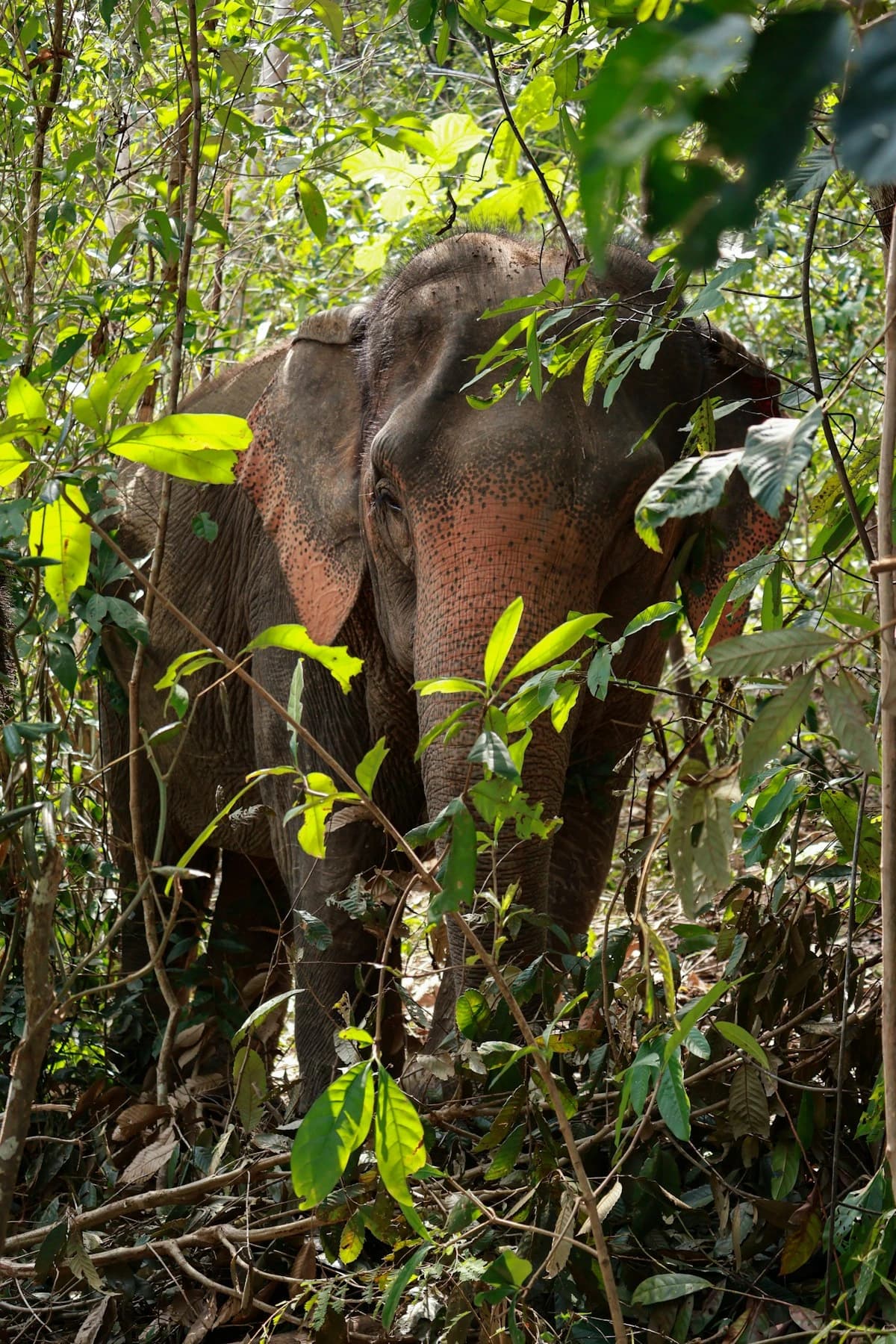
Asian elephant standing in a forest sanctuary in Chiang Mai, Thailand
The Asian elephant (Elephas maximus) is one of the largest land mammals alive today and the only surviving species in genus Elephas. Compared with African elephants, it has smaller, more rounded ears, a generally level or convex back, a single prehensile “finger” at the trunk tip, and tusks that are usually large only in males—many females are tuskless or bear small tushes. Adults typically stand about 2–3 meters at the shoulder, with males reaching roughly 3,500–6,000 kg and females about 2,000–3,500 kg.
Asian elephants live in matriarchal family groups of related females and their young, while adult males are often solitary or form loose bachelor groups. They spend much of each day feeding on grasses, leaves, bark, fruit, roots, and sometimes cultivated crops, using their trunk for grasping, drinking, and communication. They also produce low-frequency rumbles—including infrasound—that can carry over long distances, and males in musth compete aggressively for access to estrous females.
Historically widespread from West Asia through the Indian subcontinent and Southeast Asia to China, the species now survives in fragmented pockets across roughly 13 countries. The IUCN lists it as Endangered, with habitat loss, human–elephant conflict, and poaching for ivory and other products driving ongoing population decline.



