Asian forest tortoise
Manouria emys
 AI-generated
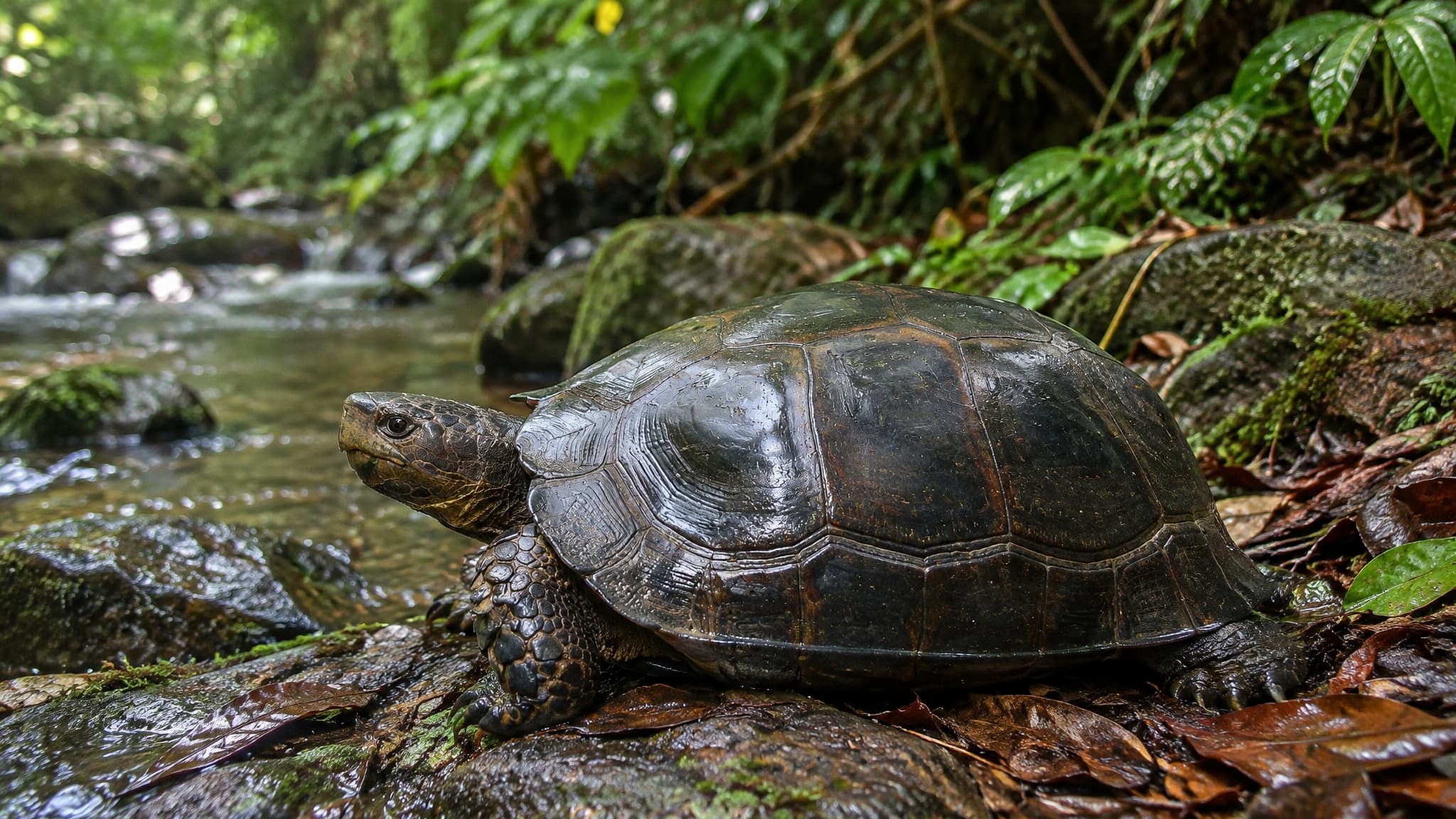
A large dark-shelled tortoise faces left while standing on wet rocks beside a shallow forest stream, with a broad domed carapace, scaly forelimbs, and an extended head visible.
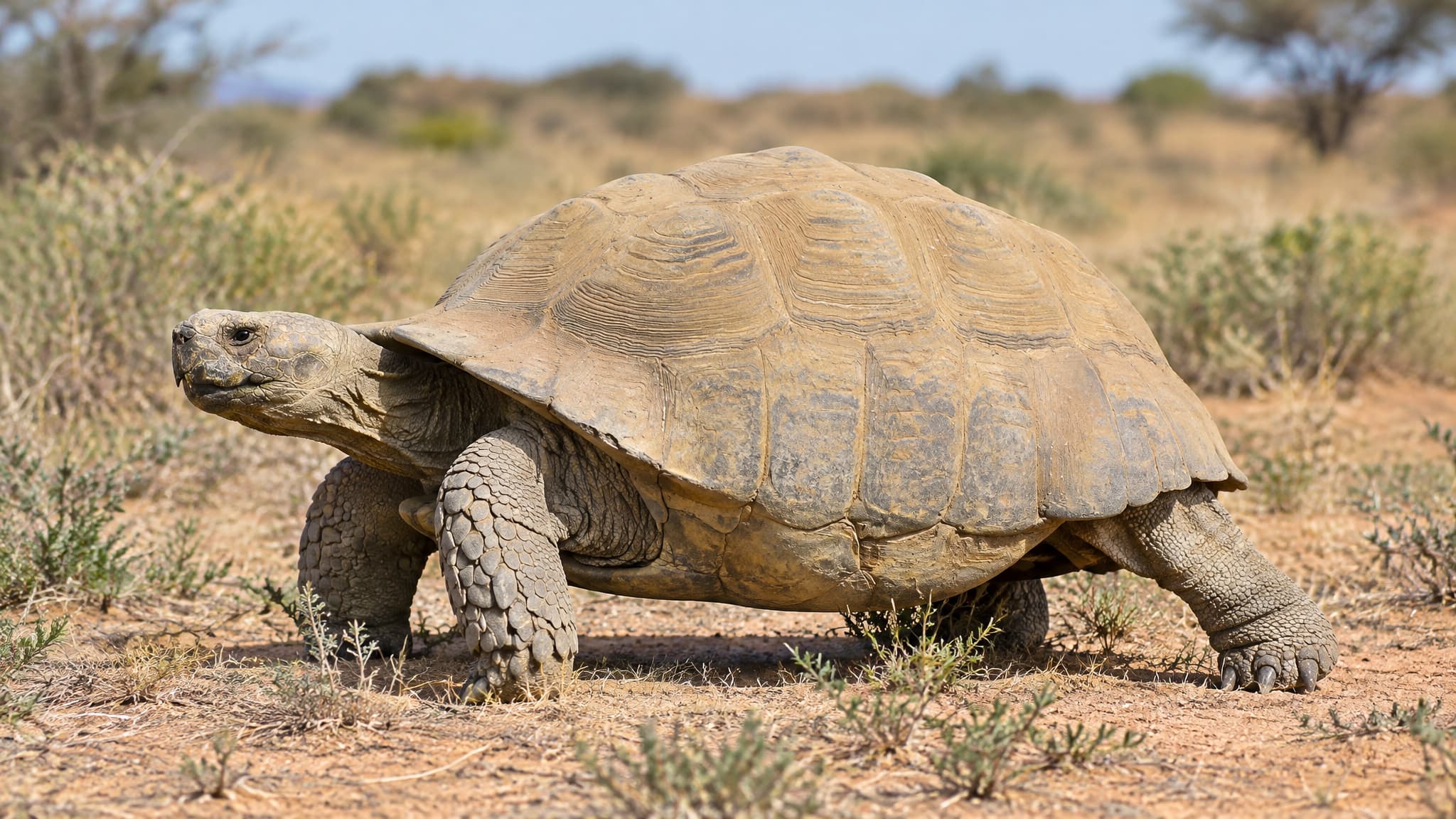
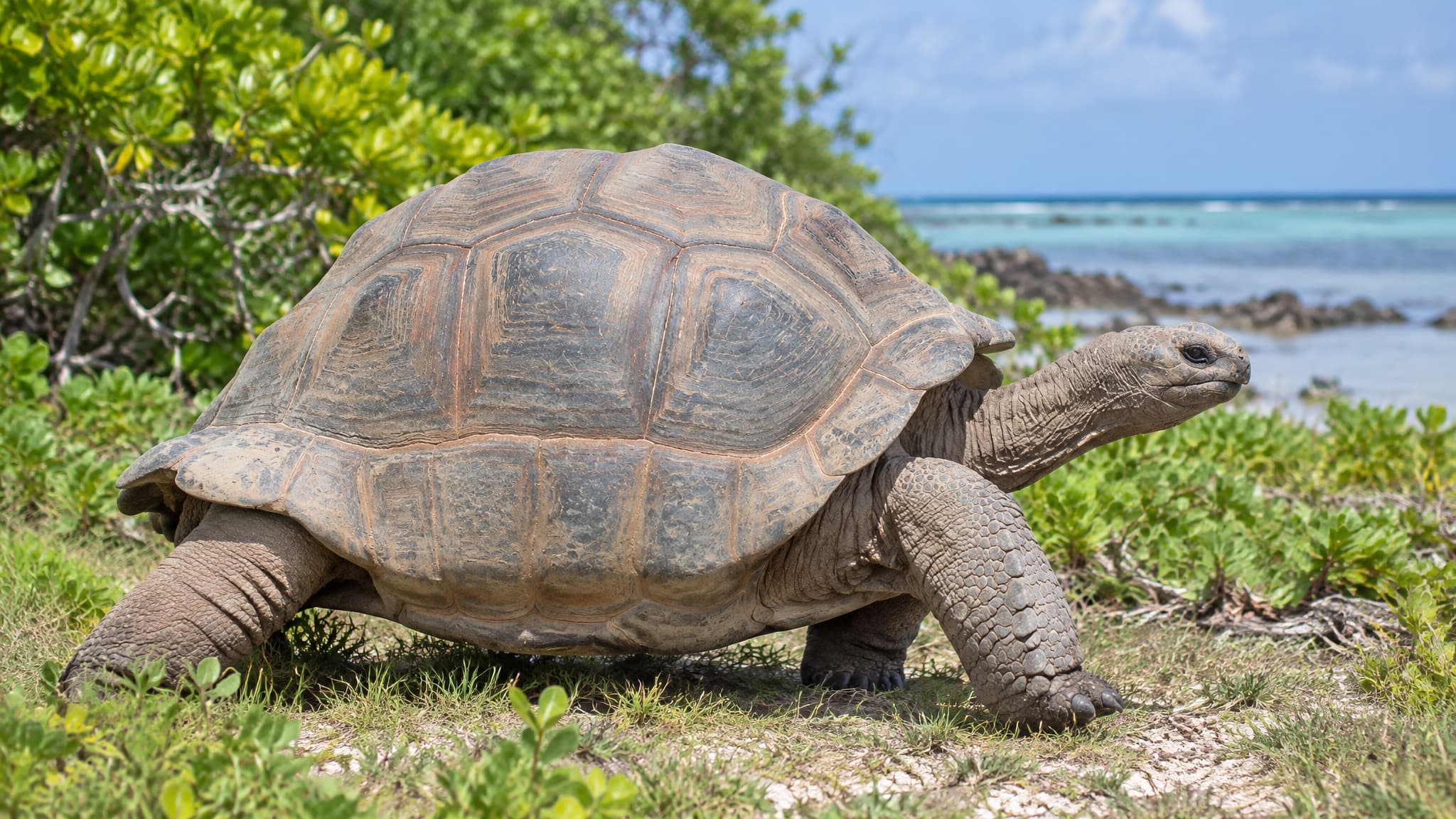
The Asian forest tortoise (Manouria emys) is the largest tortoise of mainland Asia. Adults reach a carapace length of about 50 to 60 cm, and the largest exceed 60 cm, with a body mass of 20 to 37 kg. The domed shell is mostly brown, and males have longer, thicker tails and a concave plastron. Two subspecies are recognized: the Asian brown giant tortoise (M. e. emys) and the larger, darker Burmese black giant tortoise (M. e. phayrei), which can weigh about 25 kg in the wild. They differ in the pectoral scutes, which are separated in emys and joined in phayrei.
The species ranges from northeastern India (Assam, Nagaland, Mizoram), Bangladesh and Myanmar through Thailand and Malaysia to Sumatra and Borneo; phayrei occupies the northern part of this range and emys the southern part, and the tortoise has been extirpated from Singapore. It lives in hilly, wet tropical forest, usually close to cool flowing streams, where it often sits or forages in water and mud. It favors temperatures of about 13 to 29 °C and humidity of 60 to 100 percent, and in hot weather it burrows into damp soil and leaf litter.
The tortoise is mainly herbivorous. In the wild it eats fungi and the shoots, leaves and stalks of forest plants such as Alocasia, its most frequent food, along with begonias, ferns, bamboo shoots, fallen fruit and wild ginger flowers. It occasionally takes small invertebrates, amphibians or carrion. It is slow-moving and mostly active at twilight, or by day when it is not too hot. It stays active through most of the year, although some individuals rest for up to two months in the cool dry season. Rival males settle disputes by vocalizing and shoving.
Reproduction is unusual among tortoises. Instead of digging a hole, the female rakes leaf litter and forest debris into a mound with her front and hind legs, lays her eggs inside, and then stays near the nest, chasing off predators and intruders during the early part of incubation. Clutches of 21 to 53 eggs have been recorded from captive females, and the TFTSG reports up to 60 eggs per annual clutch. Incubation takes about 60 to 90 days, and nest temperature sets the sex of the hatchlings: warmer nests produce mostly females. Longevity is poorly documented. Animal Diversity Web cites a recorded captive longevity of 19.9 years and an unverified estimate of about 150 years in the wild.
By eating leaves, fungi and fallen fruit and passing seeds in its droppings, the tortoise helps clear the forest floor and disperse plants. Its eggs are eaten by foxes and monitor lizards, and birds take juveniles. The species is assessed as Critically Endangered. It is hunted for food and traditional medicine and collected for the international pet trade, and its forests are being degraded and cleared. It is listed in CITES Appendix II.