
Atlantic humpback dolphin
Sousa teuszii
 AI-generated
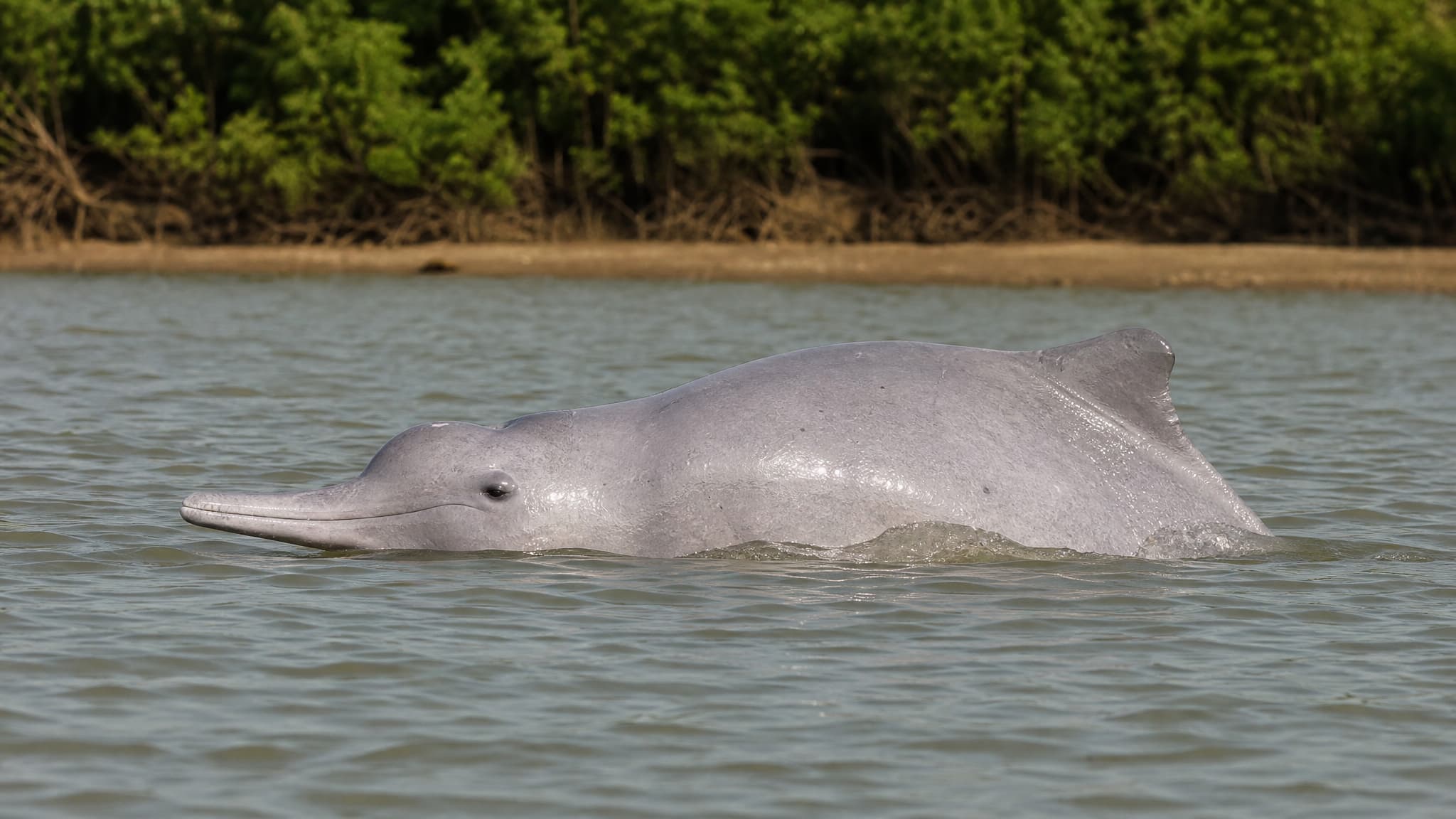
A gray dolphin swims leftward at the water’s surface, showing a long, narrow beak and a prominent dorsal hump against a wooded shoreline.
The Atlantic humpback dolphin is a small, robust coastal dolphin distinguished by a conspicuous low hump of connective tissue beneath its small, rounded dorsal fin. Its beak is long and slender, the flippers are broad and rounded, and its colour is generally grey, often with a paler lower jaw and variable light mottling. It belongs to the oceanic-dolphin family, Delphinidae, but spends much of its life exceptionally close to shore.
This species is endemic to the eastern Atlantic coast of western Africa. Its discontinuous range extends from Western Sahara south to Angola, although confirmed occurrence is patchy and many local groups are small. It uses shallow, tide-influenced coastal waters, estuaries, mangrove channels, river mouths, bays, and reefs—habitats that also place it in frequent contact with fisheries, ports, and coastal development.
Atlantic humpback dolphins feed mainly on coastal and estuarine fishes, with cephalopods and crustaceans also recorded or considered likely prey. They use echolocation clicks and whistles, and their nearshore predation may help shape local food webs. Knowledge of their social behaviour, movements, abundance, and diet remains limited because dedicated studies are difficult and unevenly distributed across their range.
Reproductive data are especially scarce. Available observations suggest that females have a single calf and that births may occur throughout the year, possibly with regional seasonal peaks. Like other humpback dolphins, the species is expected to reproduce slowly; an estimated generation length of 18.4 years has been used in conservation assessment. No well-supported maximum lifespan is available.
The species is Critically Endangered. Entanglement and bycatch in gillnets are major threats, compounded in some places by deliberate hunting or retention for meat and bait. Habitat degradation from coastal construction, vessel traffic, pollution, and declining prey adds pressure to already fragmented populations. Protecting shallow coastal habitat, reducing unsafe fishing gear interactions, and maintaining local monitoring are central conservation needs.



