
Atlantic spotted dolphin
Stenella frontalis
 AI-generated
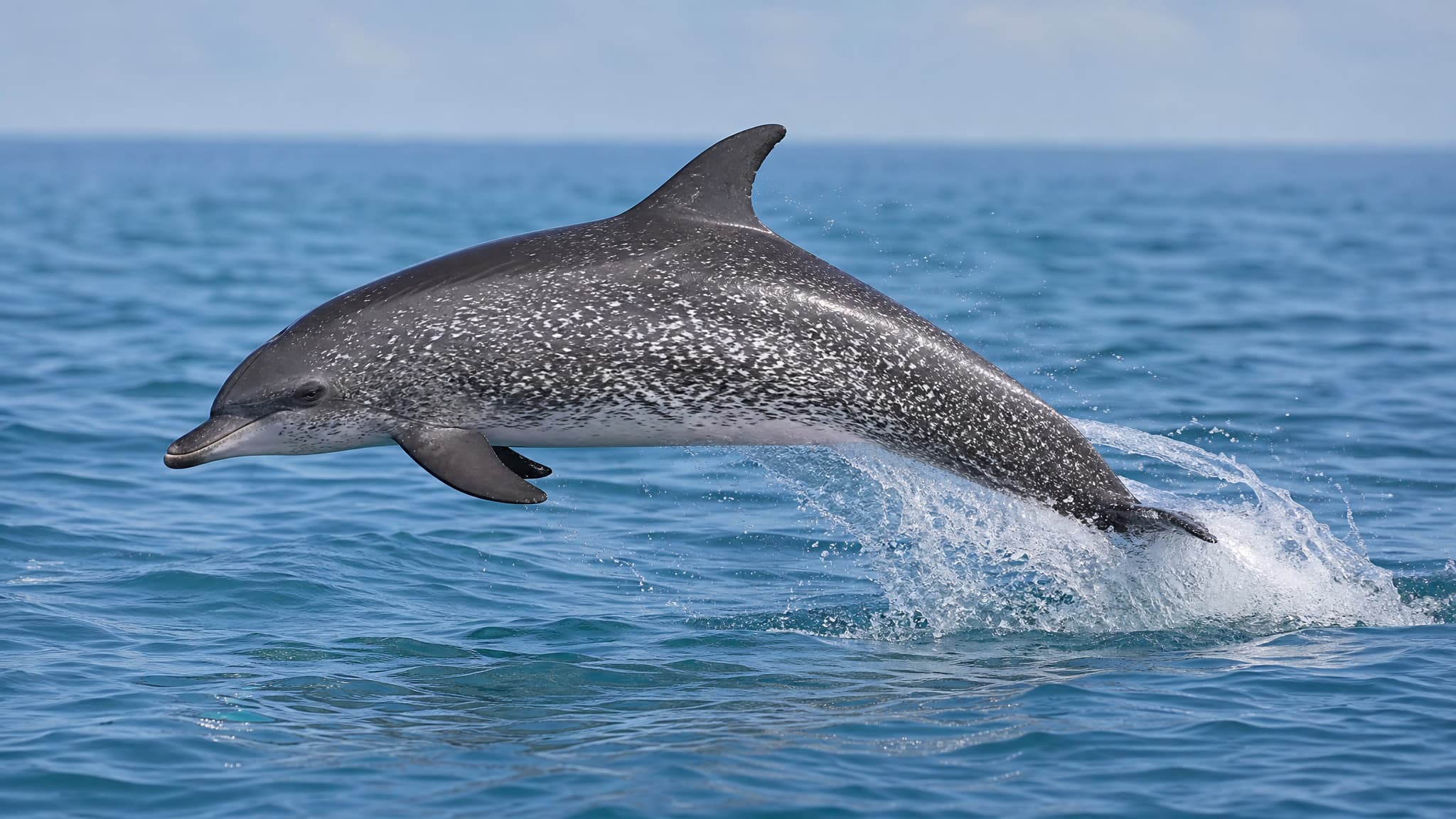
An Atlantic spotted dolphin leaps horizontally above the open ocean, with its long beak, pectoral fin, dorsal fin, and densely mottled gray-and-white body visible amid splashing water.
The Atlantic spotted dolphin is a medium-sized oceanic dolphin distinguished by a stout, streamlined gray body, a moderately long pale-tipped beak, a rounded melon, and a tall, curved dorsal fin. Adults typically reach about 1.9–2.3 m in length and may weigh roughly 110–143 kg. Its most recognizable feature is a changing pattern of spots: calves are born largely unspotted, while pale spots develop on the darker back and darker spots appear over the pale underside as the animal matures.
This species occurs only in the Atlantic Ocean, from warm-temperate to tropical waters. It is found along the eastern coast of North America, through the Gulf of Mexico and Caribbean, south toward Brazil and Uruguay, and also off western Africa and Atlantic islands such as the Azores and Canaries. It often uses continental-shelf and coastal waters, though some populations range farther offshore; around the Bahamas it may occur over very shallow sand flats.
Atlantic spotted dolphins are highly social, fast-moving toothed whales. Groups commonly contain 5–50 animals, though larger gatherings can form. They communicate with whistles, clicks, bubble displays, and body movements, and they use echolocation to orient themselves and locate food. Their diet includes small fish, squid and other cephalopods, as well as invertebrates; dolphins may coordinate their movements while pursuing prey. They are conspicuous swimmers that leap, ride bow waves, and sometimes associate with bottlenose dolphins.
Females bear one calf at a time. Sexual maturity is reached at approximately 8–15 years, and calves can nurse for several years while learning to forage and socialize within their group. A reliable maximum lifespan has not been established. The species is globally assessed as Least Concern, but that category does not remove local risks: entanglement in fishing gear, vessel and industrial noise, disturbance or illegal feeding, chemical contamination, marine debris, and occasional direct hunting can injure or kill dolphins. As an active predator of small marine animals, it is part of Atlantic food webs and can reflect the condition of coastal and shelf ecosystems.



