Australian snubfin dolphin
Orcaella heinsohni
 AI-generated
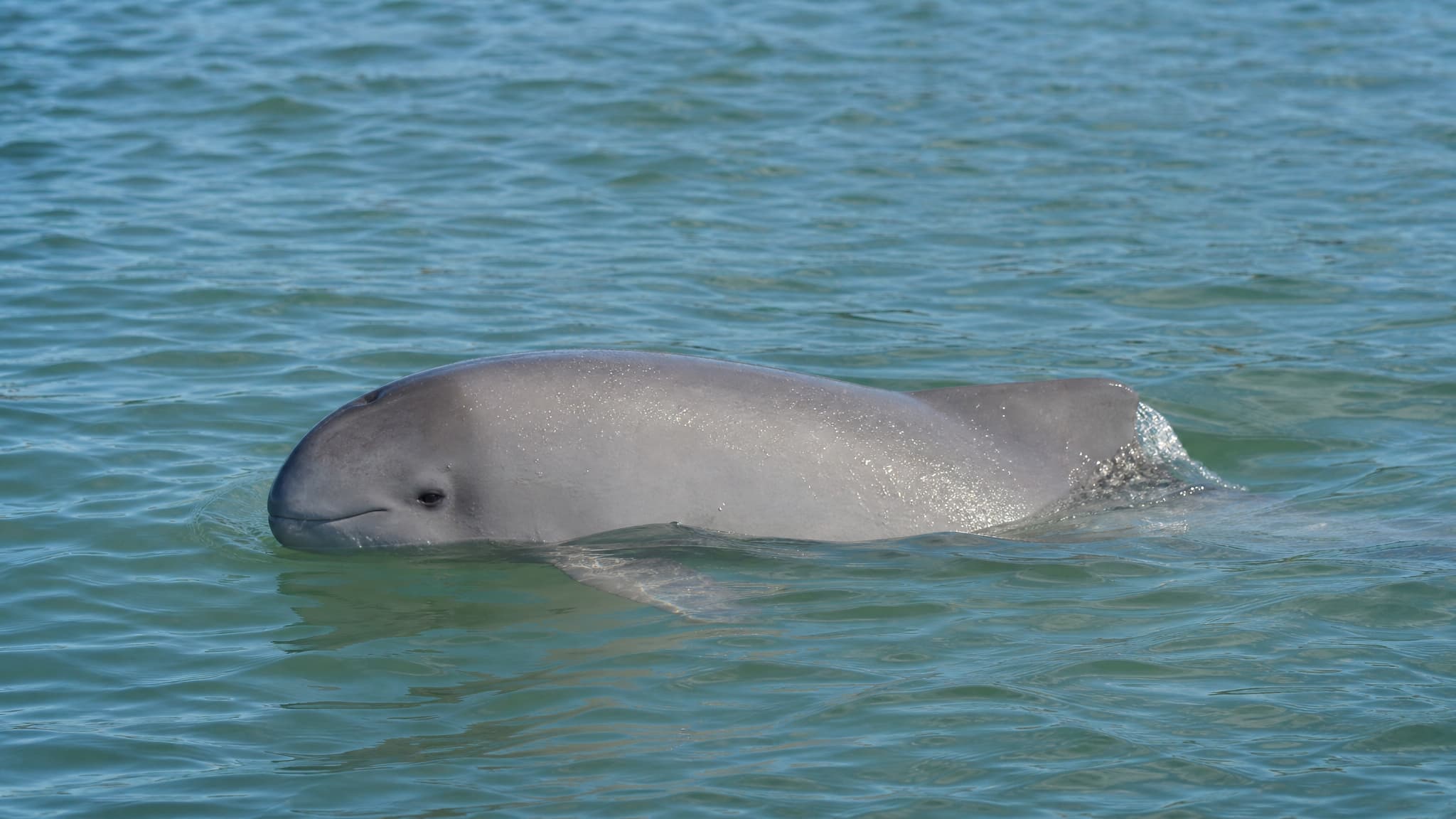
An Australian snubfin dolphin surfaces side-on in clear blue-green water, showing a rounded forehead, very short indistinct snout, small eye, smooth gray body, and one visible pectoral fin.
Australian snubfin dolphin
The Australian snubfin dolphin, Orcaella heinsohni, is a small, coastal toothed whale distinguished by its rounded forehead, very short beak, flexible-looking neck, and small, curved dorsal fin. Adults are usually about 2.1–2.4 m long and weigh roughly 114–133 kg. Their blue-grey to grey body has a conspicuous pale belly, creating a three-part colour pattern that helps distinguish them externally from the closely related Irrawaddy dolphin.
It occurs in tropical, nearshore waters of northern Australia and southern New Guinea, with records also extending to Indonesian waters. Rather than ranging far offshore, it favors sheltered, shallow bays, estuaries, tidal creeks, river mouths, seagrass areas, and reef-associated coastal waters—usually in water less than 30 m deep. This close association with the coast makes local groups especially exposed to human activity.
Australian snubfin dolphins are social but are often seen in small groups, commonly while travelling or feeding. They use clicks and whistles for communication and echolocation. They are adaptable carnivores that take coastal fishes as well as squid, cuttlefish, other cephalopods, and crustaceans. As predators in estuarine and coastal food webs, they help link populations of smaller marine animals with the wider ecosystem.
Knowledge of their breeding biology is still limited. A single calf is generally born after an estimated gestation of about 14 months, and calves remain dependent on their mothers for milk and protection. Individuals reach adult size at approximately four to six years; recorded longevity exceeds 20 years and may approach 28 years. Their slow life history and low reproductive output mean that deaths of adults can have lasting effects on small local populations.
The species is assessed globally as Vulnerable. Entanglement and bycatch in fishing gear, especially gillnets, are major threats. Coastal construction, pollution, vessel disturbance or strikes, underwater noise, reduced prey, disease, and climate-driven degradation of seagrass, mangrove, and reef habitats add cumulative pressure. Protecting high-use shallow-water habitat and reducing fishery interactions are central conservation needs.