
Baiji
Lipotes vexillifer
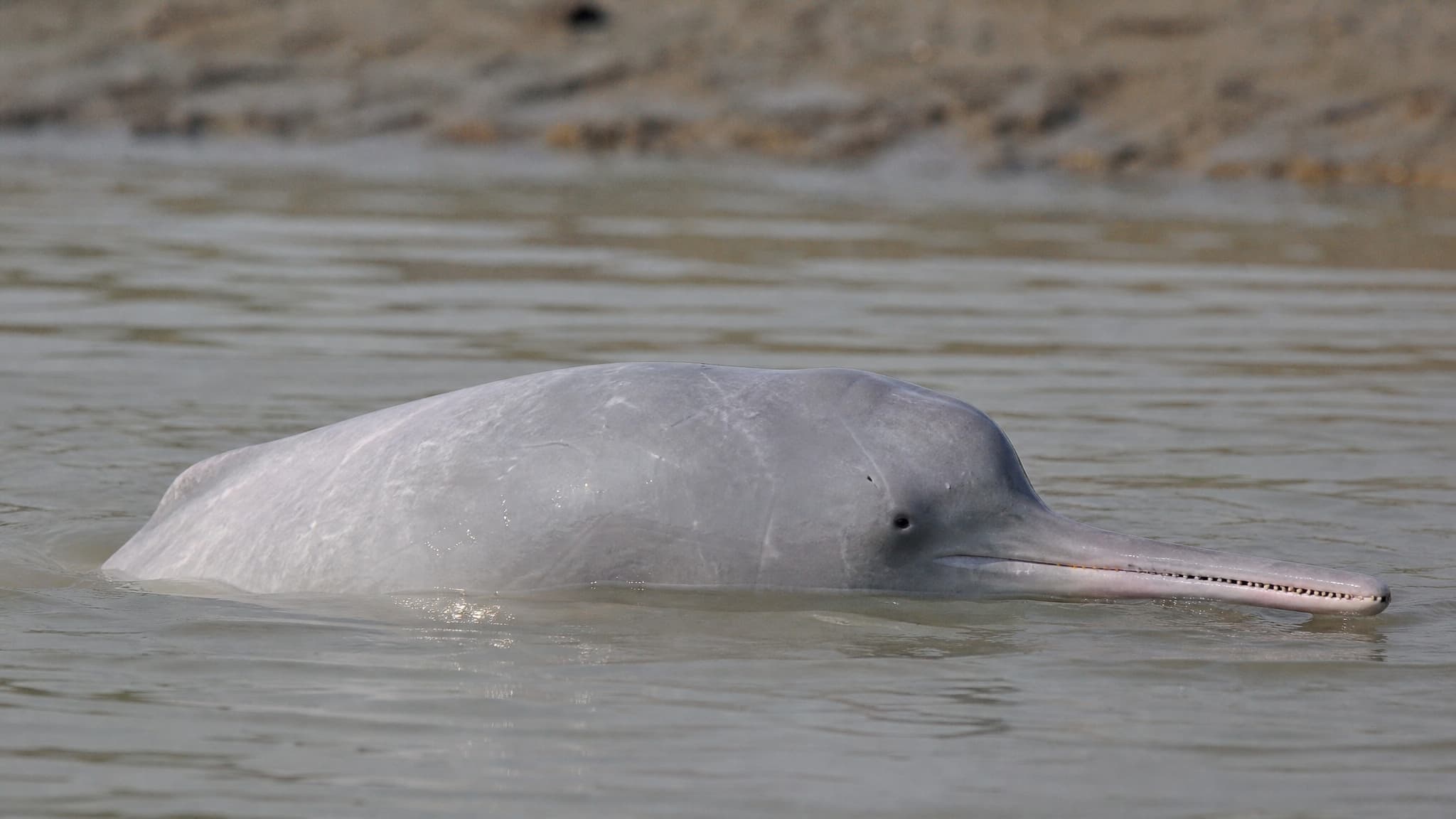 AI-generated
A pale gray baiji is shown in side profile at the surface of calm river water, with its long, narrow rostrum, small eye, and visible teeth above the waterline.
The baiji, also called the Yangtze River dolphin or Chinese river dolphin, was a distinctive freshwater cetacean of eastern China. It had a streamlined, pale blue-gray body with a whitish underside, rounded flippers, and a notably long, narrow beak that curved slightly upward. Females were generally larger than males; recorded adults measured roughly 1.4–2.5 m long and weighed about 42–167 kg.
It was endemic to the middle and lower Yangtze (Changjiang) drainage, with historical records from the main river, connected lakes, and the neighboring Qiantang River. Baijis favored broad river reaches, especially eddies near sandbars, tributary mouths, and shallow water. Their small eyes were of limited use in the Yangtze’s turbid water, so they relied strongly on echolocation and acoustic signals.
A fish-eating predator, the baiji searched muddy bottoms with its long beak and commonly foraged near sandbanks. It was usually encountered in pairs, though small groups could gather. Short dives, daytime feeding around eddies, and resting in slower water at night were reported. As a top-level consumer, it formed part of the Yangtze food web and was an important cultural symbol in China.
Knowledge of reproduction remains incomplete. Females apparently produced one calf, about 80 cm long, at intervals near two years; estimates place gestation at 6–12 months and sexual maturity at 3–8 years. A documented animal reached at least 24 years old. The species crashed under fisheries bycatch, vessel strikes, river engineering, pollution, noise, and habitat degradation. No baiji was detected during a six-week survey of its historical Yangtze range in 2006, and no subsequent sighting has been verified; it is therefore regarded as Critically Endangered (Possibly Extinct).



