
Bengal Tiger
Panthera tigris tigris
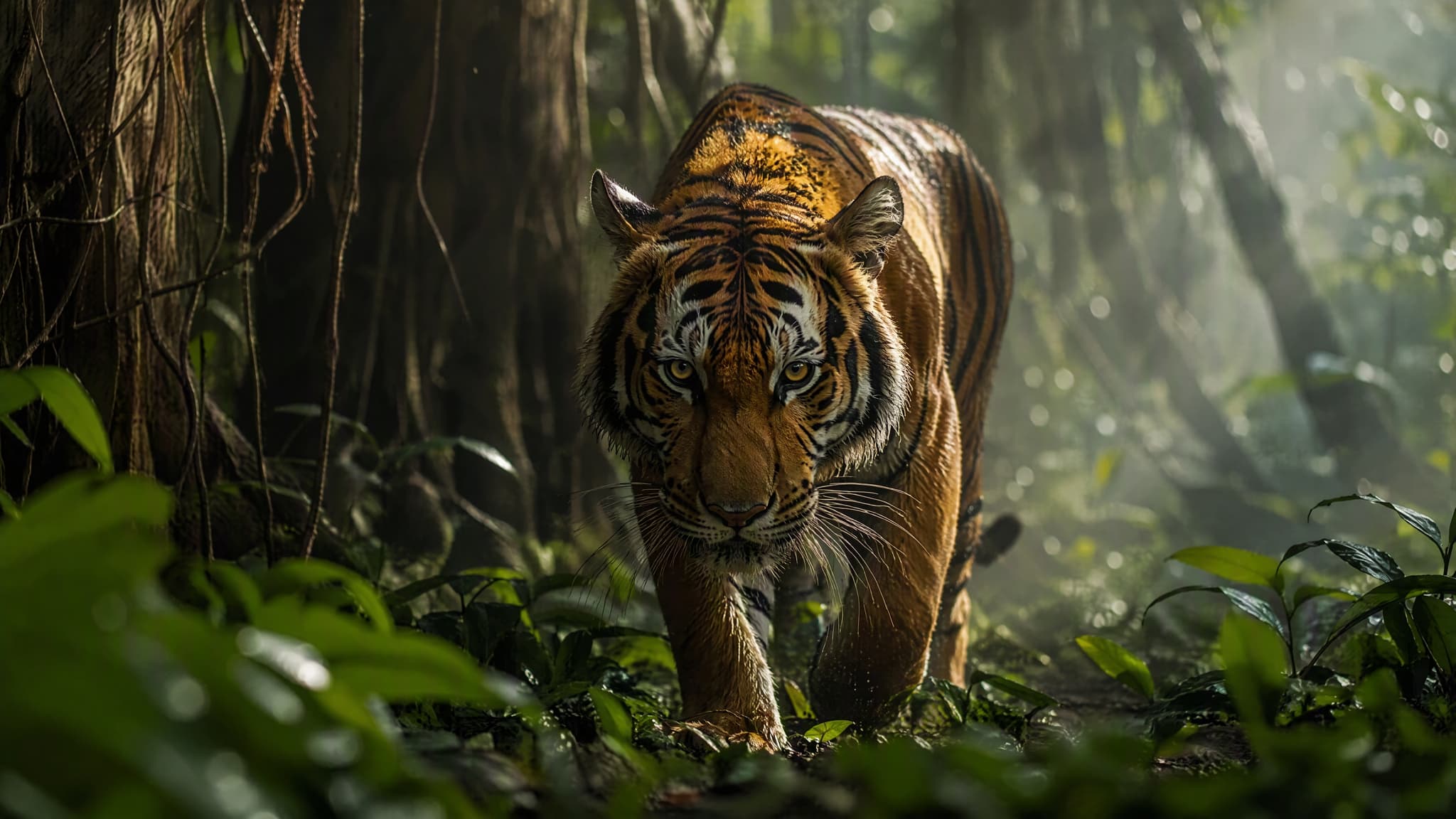
Bengal tiger (Panthera tigris tigris) Bengal tiger (Panthera tigris tigris)

The Bengal tiger (Panthera tigris tigris) is the most numerous living tiger subspecies and the nominate form of Panthera tigris. It is a large solitary cat of the Indian subcontinent, recognized by an orange coat, unique black vertical stripes, a white underside, and white spots on the backs of the ears. Males are much larger than females (typically about 180–260 kg versus 100–160 kg). It lives mainly in India, Bangladesh, Nepal, and Bhutan, with some records in China; the Sundarbans mangroves hold a well-known, often smaller-bodied population.
Bengal tigers use tropical and subtropical forests, grasslands, and mangroves wherever there is cover, water, and enough prey. They hunt mostly at dusk and at night, ambushing chital, sambar, wild boar, and sometimes gaur. Unlike most cats, they swim readily and cross rivers between mangrove islands. Adults are territorial and solitary except when mating; females raise cubs alone after a gestation of about 103 days, usually 2–4 young, which stay with the mother for roughly 18 months to two years. Wild lifespan is typically 8–10 years (sometimes to about 15).
The tiger species is Endangered on the IUCN Red List. Bengal tigers are the global stronghold (India’s 2022 estimate was about 3,167 wild tigers, mostly this subspecies) but remain threatened by habitat loss and fragmentation, prey depletion, and poaching for skins and body parts. They are India’s and Bangladesh’s national animal; Project Tiger and CITES Appendix I protections support remaining populations.



