
Pig-nosed turtle
Carettochelys insculpta
 AI-generated
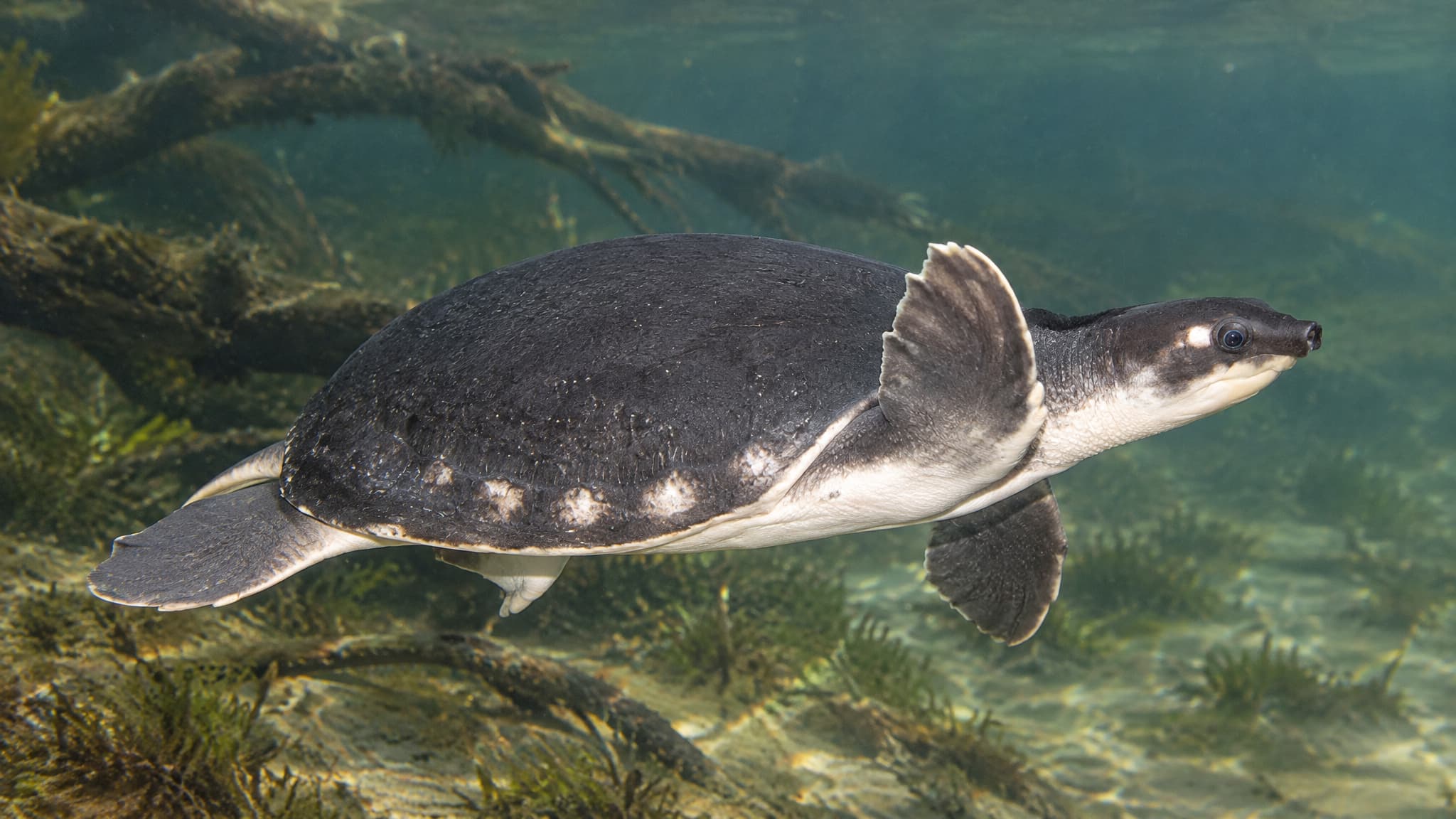
A pig-nosed turtle swims in profile through clear water above rocky substrate and aquatic vegetation, showing its dark, streamlined shell, broad paddle-like limbs, and distinctive fleshy snout.
The pig-nosed turtle (Carettochelys insculpta), also called the Fly River turtle, is the only living member of the family Carettochelyidae. Adults reach a carapace length of about 70 cm and weigh more than 20 kg, with the heaviest animals recorded at up to 30 kg. Its domed, keeled shell is grey or olive above and cream below, and instead of horny scutes it is covered by a leathery, pitted skin. The fleshy snout ends in nostrils that let it breathe while keeping almost all of its body underwater, and its forelimbs are shaped like the flippers of a sea turtle.
The species lives in freshwater rivers, lagoons, billabongs and lakes of southern New Guinea, in Papua New Guinea and Indonesian Papua, and in the northernmost river systems of Australia's Northern Territory, such as the Alligator, Daly and Victoria rivers. It favours soft-bottomed channels 1 to 3 m deep and also enters estuaries and brackish water. In the cool dry season turtles gather near warm thermal springs in the riverbed.
It is an omnivore that eats mainly plant food, especially fallen figs and other fruit, flowers and leaves, and also takes molluscs, crustaceans and insects. Highly aquatic and clumsy on land, it rarely leaves the water except to nest. Groups form in the wild during the dry season, yet captive animals are notably aggressive and territorial toward one another.
Nesting takes place late in the dry season on sandy riverbanks, where a female lays a clutch of 7 to 39 eggs. On the Daly River, females breed every second year and lay two clutches about 40 days apart in each breeding year. Nest temperature sets the sex of the young, with warmer nests producing females. After about 69 days the embryos are fully formed, but they can wait in the egg for up to 50 more days until wet-season floods lower the oxygen in the nest, which triggers a synchronized hatching. Males mature at 14 to 16 years and females at 20 to 22 years. Captive animals have lived up to 38.4 years.
Pig-nosed turtles feed on aquatic invertebrates and riverside plants, loosen and aerate the soil when they dig their nests, and their eggs feed monitor lizards. The species is listed as Endangered by the IUCN and appears in CITES Appendix II. Numbers fell by more than half between 1981 and 2011, driven by the collection of eggs and adults for food and by a large illegal pet trade: more than 80,000 animals were confiscated in Papua New Guinea and Indonesia between 2003 and 2013. In Australia, feral water buffalo trample nests and damage river vegetation.



