Common snapping turtle
Chelydra serpentina
 AI-generated
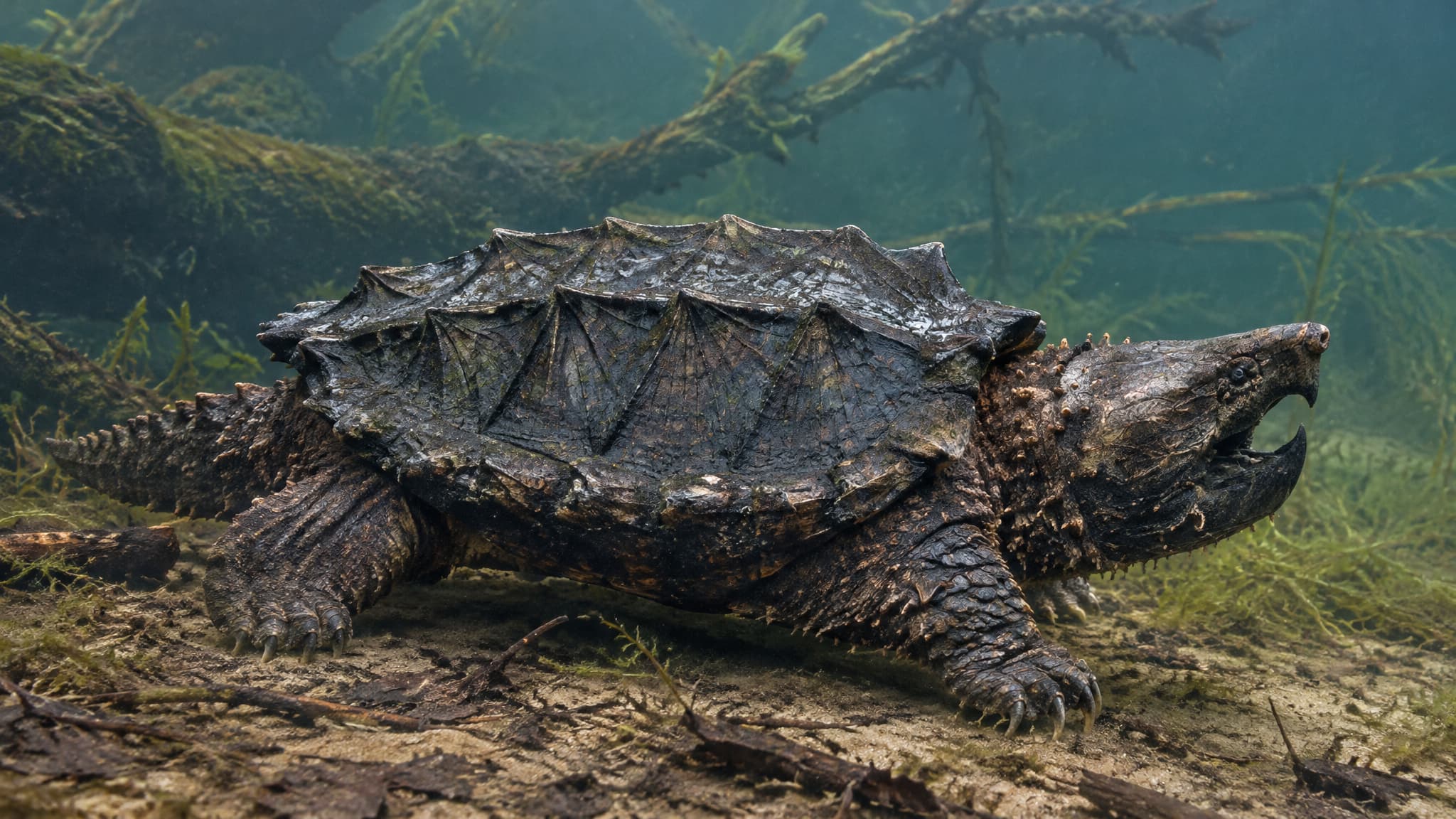
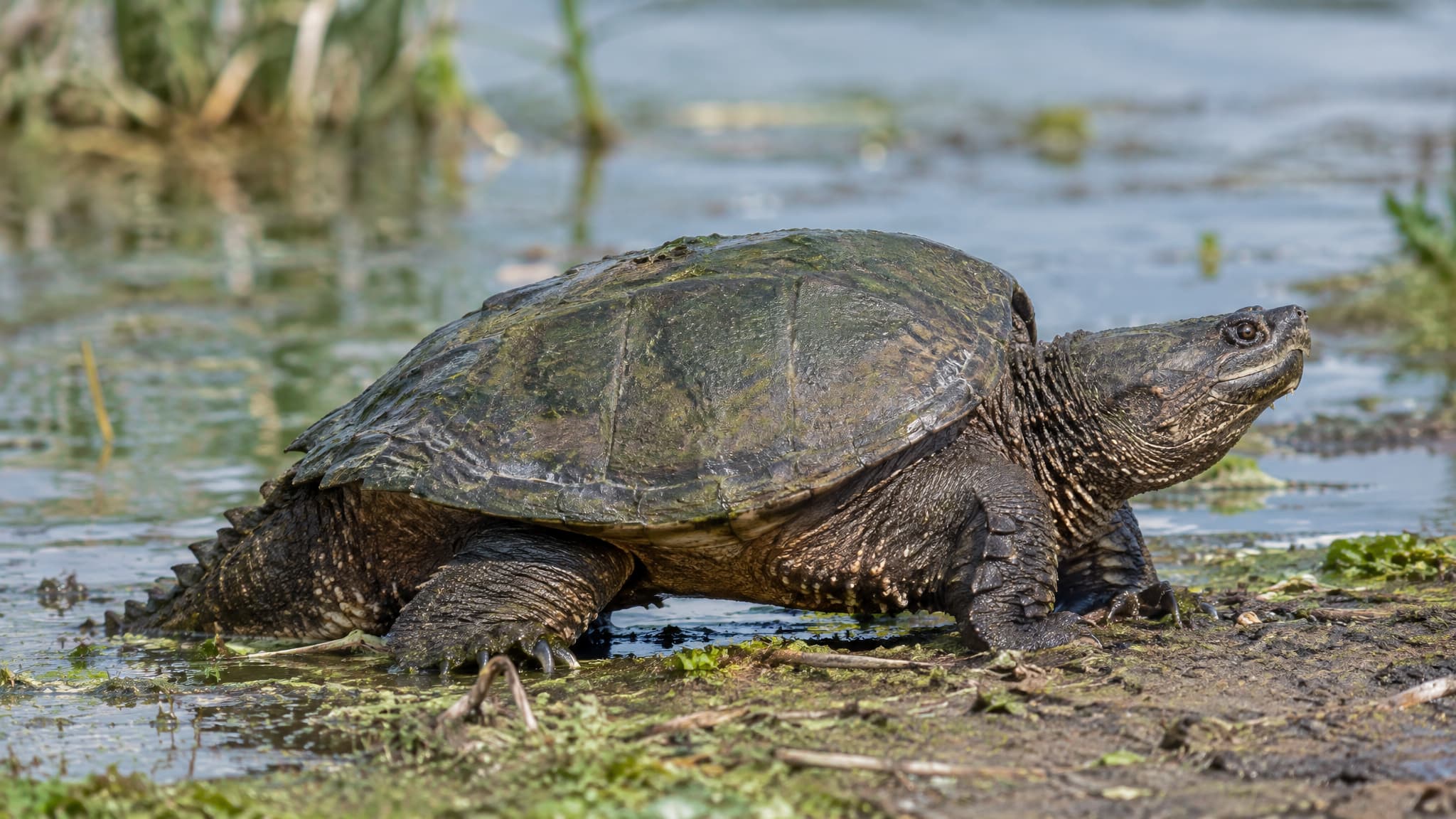
A common snapping turtle rests partly in shallow water at the muddy shoreline, shown in side profile with a broad rugged shell, long neck, hooked beak, and sturdy clawed limbs.
The common snapping turtle is a large freshwater turtle with a big head, a sharp hooked upper jaw and a powerful bite. Its carapace is dark, from tan or olive to brown or black, often coated in algae or moss, with a deeply serrated rear edge and three low keels that fade with age. The plastron is small and leaves much of the body exposed, and the tail is about as long as the shell and topped with saw-toothed, bony ridges. Adults usually have a carapace of 25 to 47 cm and weigh 4.5 to 16 kg; the heaviest wild animal on record weighed 34 kg, and males grow larger than females.
The species is native to southern Canada, from Nova Scotia west to southeastern Alberta, and to the United States east of the Rocky Mountains, south to Florida and the Texas coast. Released pets have founded populations in the western United States, Japan, China, Taiwan and parts of Europe. It is a habitat generalist that lives in almost any permanent water body, preferring slow, shallow water with a soft muddy bottom and dense vegetation: ponds, lakes, marshes, swamps, streams and rivers. It also tolerates brackish estuaries and polluted urban wetlands.
Snapping turtles are omnivores. They eat aquatic plants, which can make up about a third of the diet, along with insects, worms, crayfish, fish, frogs, snakes, smaller turtles, birds, small mammals and carrion. Many hunt by ambush, lying buried in mud with only the eyes and nostrils showing and lunging at passing prey. They are solitary, rarely bask out of the water and spend winter buried in mud or debris in shallow water. In water they tend to avoid people, but on land they defend themselves by striking hard.
Mating takes place from April to November, and females can store sperm for several years. Most nests are dug in sandy or loose soil in late spring and early summer, with one clutch a year of roughly 25 to 80 eggs. Incubation lasts 9 to 18 weeks depending on temperature, and the nest temperature sets the sex: cool and very warm nests produce females, intermediate temperatures produce males. Maturity comes at about 7 to 20 years, later in the north than in the south. Wild adults commonly live about 30 to 40 years, and long-term studies in Ontario suggest some may pass 100.
As omnivores and scavengers, snapping turtles help clean up carrion and keep fish, crayfish and insect numbers in check. Eggs and hatchlings feed raccoons, skunks, foxes, crows, herons, snakes and large fish, and predators can destroy up to 90% of nests in a year. Grown adults have few natural enemies.
The IUCN lists the species as Least Concern, but it is protected as a species of special concern in Canada. Its main threats are road deaths of nesting females, habitat loss and pollution, harvest for meat and the pet trade, and nest predation. Because the turtles mature late and few eggs survive, the loss of adults can make local populations decline quickly.