
Chilean dolphin
Cephalorhynchus eutropia
 AI-generated
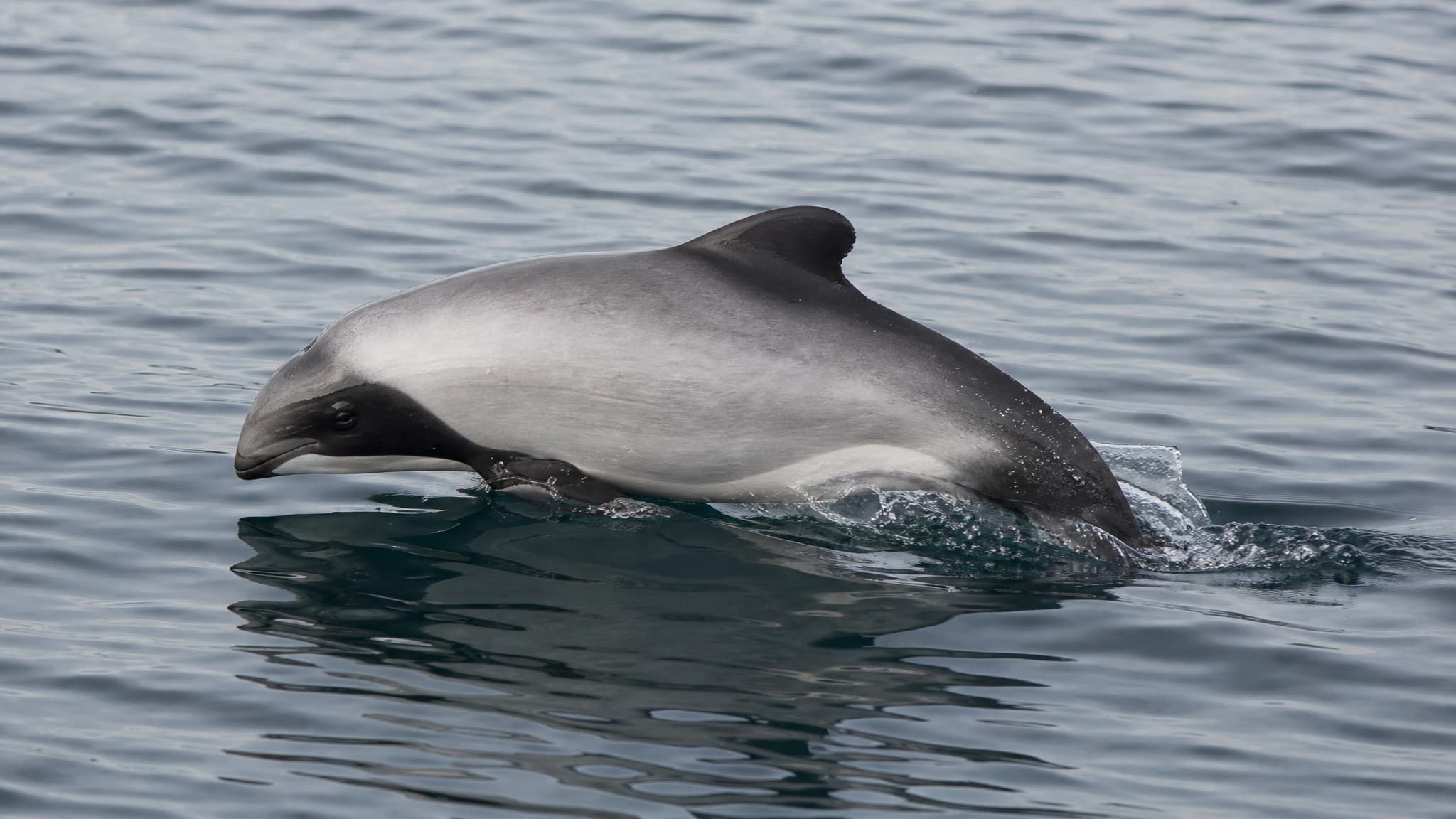
A Chilean dolphin surfaces side-on in calm seawater, with its rounded dorsal fin, dark facial markings, and pale gray flanks visible amid splashing water.
The Chilean dolphin, also known as the black dolphin, is a small, stocky coastal dolphin with a blunt, nearly beakless head, rounded flippers, and a low triangular dorsal fin. Adults are generally about 1.6 m long. Despite its alternate name, its body is not uniformly black: dark gray fins, back, and flukes contrast with paler gray sides and head, plus conspicuous whitish areas on the throat, behind the flippers, and around the belly.
It occurs principally along the cold temperate coast of Chile, from the central coast south through the intricate channels and fjords of Patagonia and Tierra del Fuego. This is an inshore specialist, favoring shallow bays, channels, estuaries, river mouths, tidal rips, and waters near steep coastal drop-offs. It may enter brackish estuaries and travel a short distance up rivers.
Chilean dolphins usually travel in small groups of a few animals, although larger gatherings are occasionally recorded. Often shy around boats, they use acoustic communication and echolocation to orient and find prey. Their diet includes small schooling fishes, squid, and crustaceans; as a coastal predator, they help transfer energy from these prey populations through nearshore marine food webs.
Knowledge of its breeding biology remains limited. Mating is reported in early winter, with calves born in spring; females generally produce one calf at intervals of roughly two years and reach sexual maturity at about five to nine years. Maternal care includes nursing and prolonged association while young learn movement and foraging skills. Its own longevity is not well documented.
The Chilean dolphin is assessed as Near Threatened. Entanglement in coastal gillnets is a major concern, while intentional killing, disturbance, habitat alteration, and the expansion of aquaculture may add pressure in parts of its restricted coastal range. Its close association with estuaries, fjords, and shallow shorelines makes local protection and bycatch reduction especially important.



