Clymene dolphin
Stenella clymene
 AI-generated
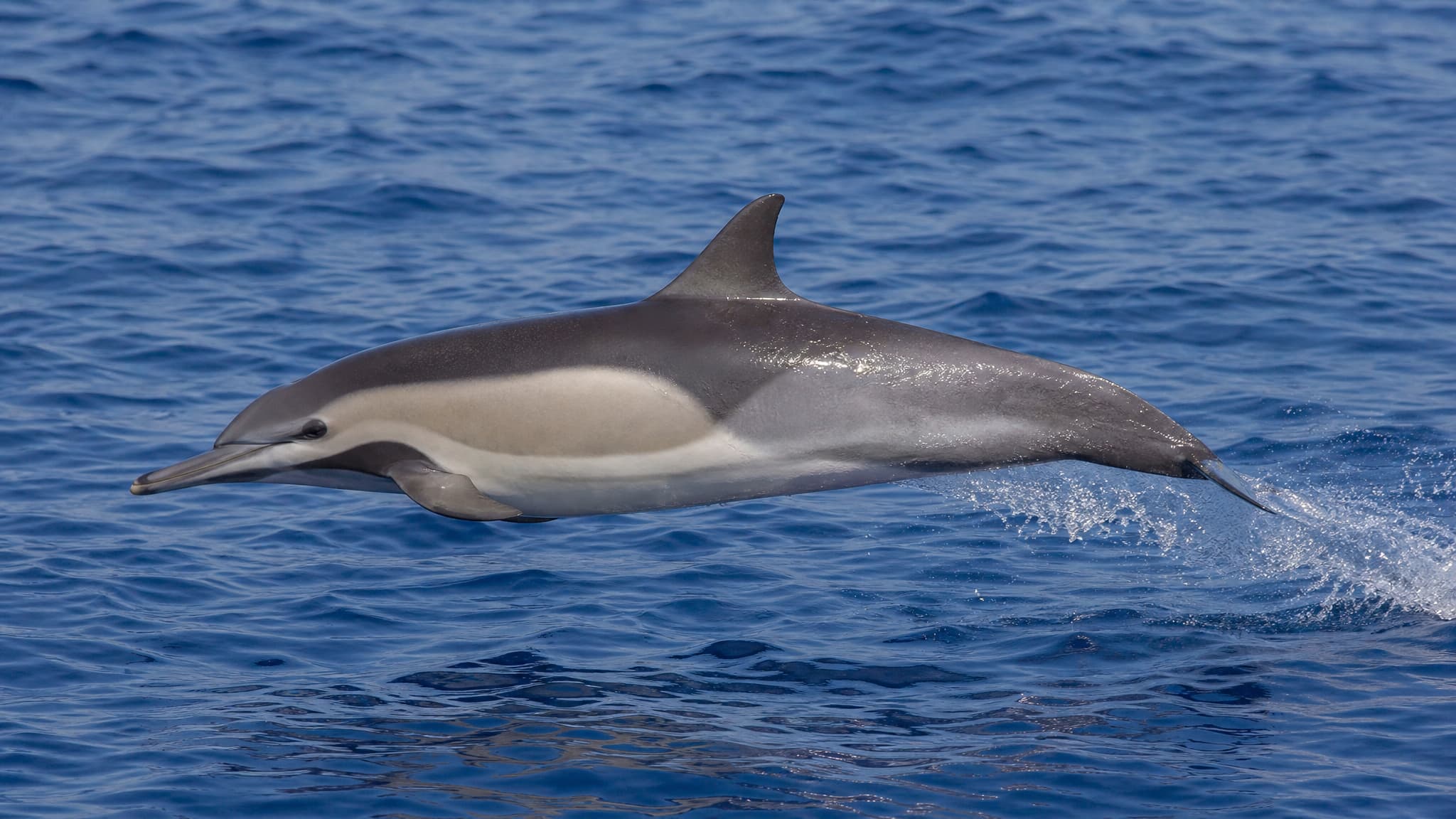
A Clymene dolphin is captured in profile leaping above open ocean water, with a long slender beak, tall curved dorsal fin, dark back, and pale underside visible.
The Clymene dolphin is a small, sleek oceanic dolphin of the Atlantic. Adults are generally about 1.8–2 m long and weigh roughly 75–90 kg. Its pattern is distinctive: a pale belly, light-gray flanks, a dark gray back or “cape,” and a short, dark-tipped beak. Dark eye rings and a narrow line from the beak toward the melon can give the face a masked appearance. It is sometimes called the short-snouted spinner dolphin because it performs spinning leaps, although these are usually less dramatic than those of true spinner dolphins.
This species is confined to tropical and subtropical Atlantic waters, from the western Atlantic and Caribbean through the Gulf of Mexico to West Africa, with records extending from the northeastern United States to southern Brazil. It is primarily an offshore cetacean, favoring deep water beyond the continental shelf rather than shallow coastal habitats.
Clymene dolphins are social and travel in schools, sometimes in sex-segregated groups. They may associate with spinner dolphins and other small delphinids while remaining clustered with their own kind. Like other toothed whales, they use sound for communication, orientation, and echolocation. Their prey includes squid and deep-water fishes, making them mid-level predators that help transfer energy from mesopelagic prey into the wider marine food web.
Females produce one calf, but the timing of breeding, gestation, weaning, and maximum lifespan remain incompletely known. Genetic and anatomical research indicates that the species probably arose through ancient natural hybridization involving striped and spinner dolphins, yet it is now a genetically distinct species. It is globally assessed as Least Concern, although entanglement in fishing gear, occasional hunting in parts of the Caribbean, and underwater noise remain documented threats. In U.S. waters it receives protection under the Marine Mammal Protection Act.