
Collared peccary
Pecari tajacu
 AI-generated
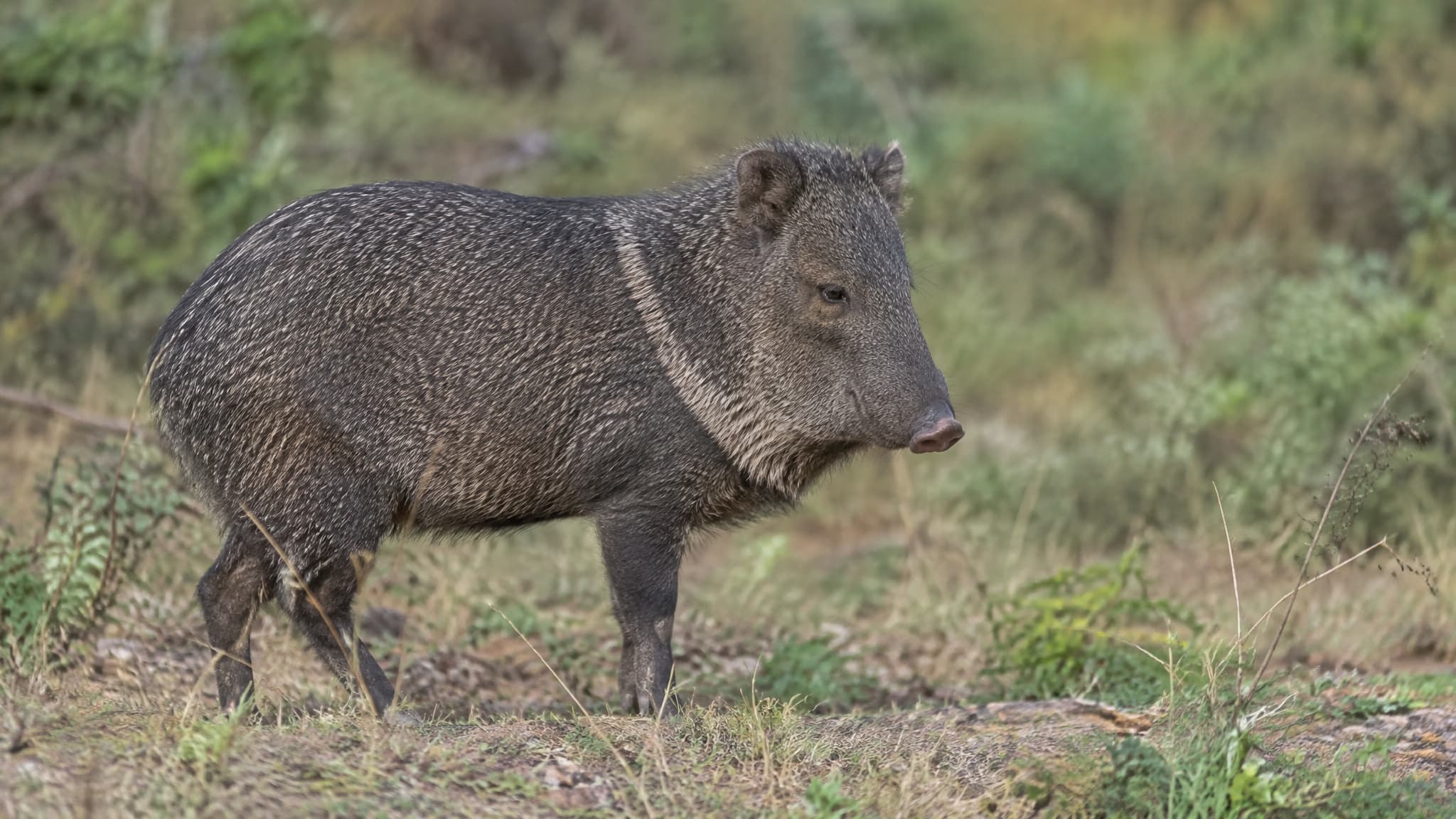
A collared peccary stands in side profile in low scrub and grassland, with its coarse dark coat, pale neck band, rounded ears, short legs, and blunt snout clearly visible.
The collared peccary is a compact, pig-like hoofed mammal of the Americas, but it belongs to the distinct peccary family rather than the pig family. Adults usually have a coarse gray to blackish coat and a pale, often incomplete band around the neck and shoulders—the “collar” that gives the species its name. It has a broad snout, short legs, a very small tail, and lower canine teeth that form visible tusks.
Its range extends from the southwestern United States through Mexico and Central America into much of South America, reaching northern Argentina. Collared peccaries occupy remarkably varied habitats: desert scrub, grassland, thorn forest, tropical forest, woodland, farmland edges, and rocky shelter sites. In Brazil it occurs across multiple biomes and is often called caititu or cateto.
This social species generally lives in small herds, commonly using scent from a dorsal gland to recognize companions and mark shared areas. It is mainly active in cooler hours where temperatures are high. Its diet is flexible and largely plant-based, including fruits, seeds, roots, shoots, cacti, and other vegetation, supplemented with insects and other small animal matter. By eating fruits it can disperse seeds, while its wallows may create damp sites used by other animals.
Females can breed throughout the year, although breeding peaks differ by region. After a gestation of roughly 142–151 days, they most often give birth to two young, which are weaned at about six weeks. Longevity is reported at up to about 24 years in captivity; survival in the wild is more variable. The species is globally assessed as Least Concern, but habitat loss, hunting, fragmentation, and pressures from invasive feral pigs can threaten populations locally.



