Common Blue-tongued Skink
Tiliqua scincoides
 AI-generated
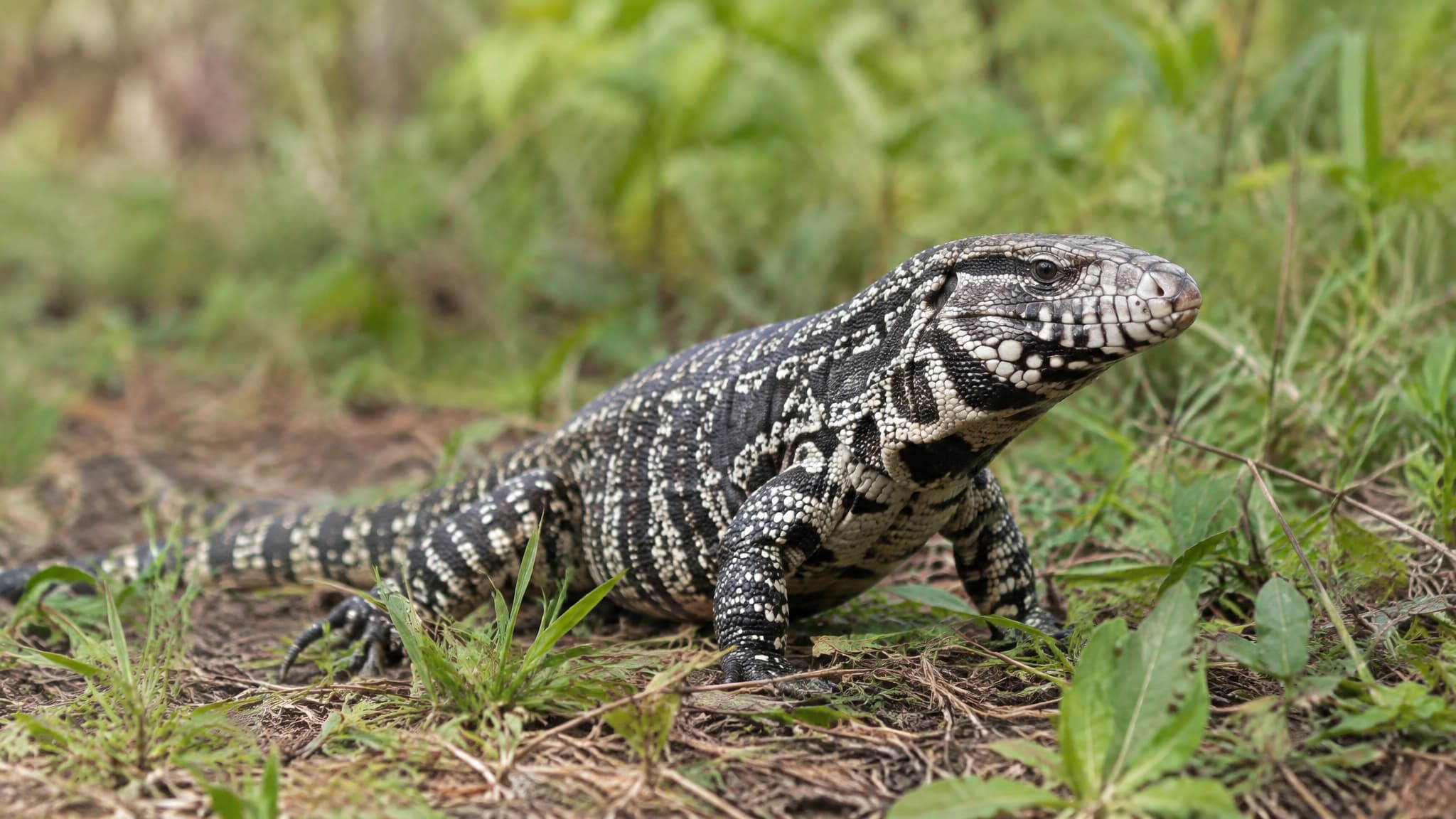
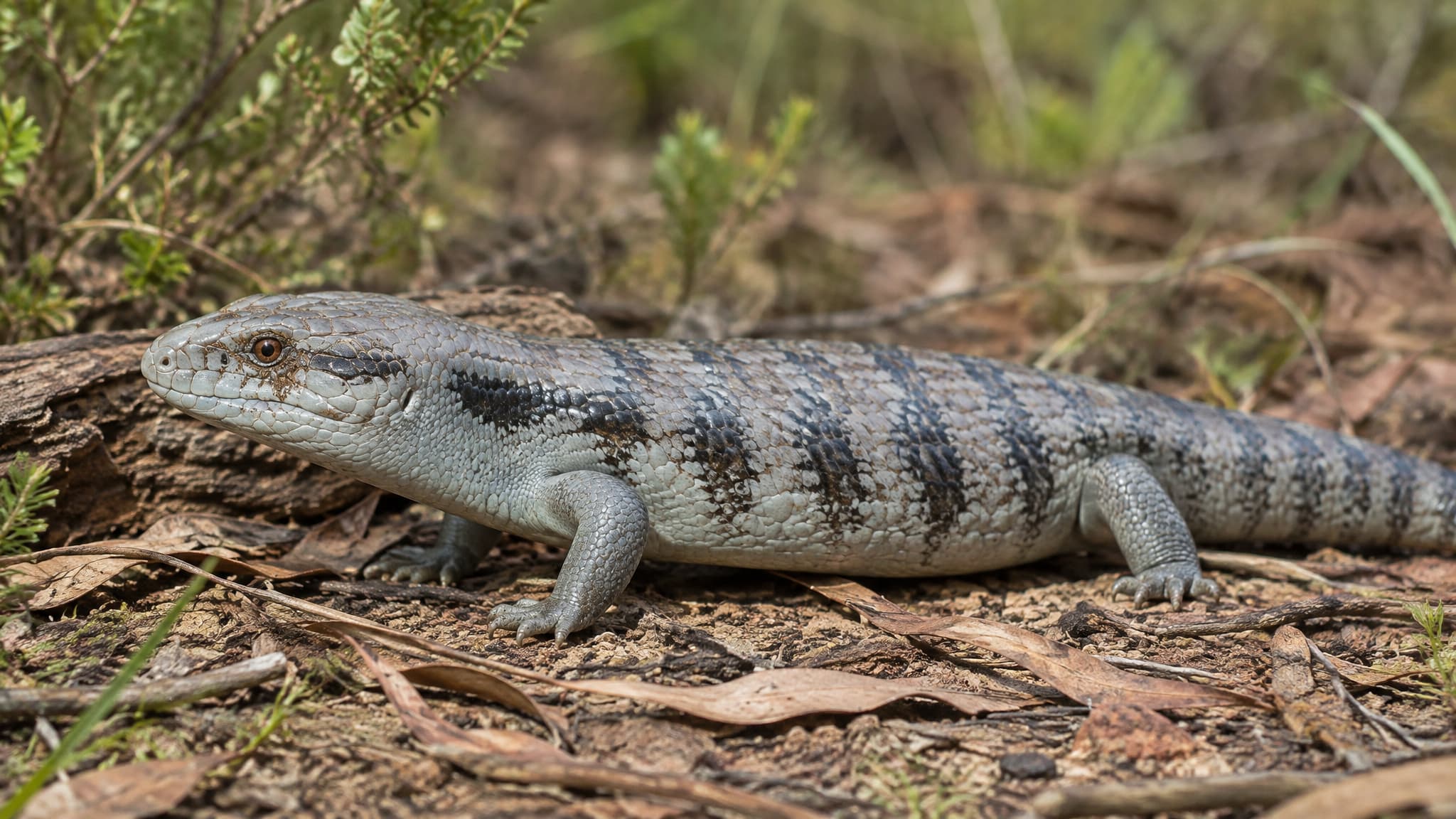
A Common Blue-tongued Skink rests low on the leaf-littered ground beside a fallen log, with its broad head facing left. Its stocky, scaled body, robust limbs, and clawed toes are clearly visible.
The common blue-tongued skink (Tiliqua scincoides) is a large, heavy-bodied lizard of the family Scincidae, named for its broad cobalt- to violet-blue tongue. It has a long, stout body, a broad head, short legs and smooth, overlapping scales reinforced by small bony plates. The back is usually grey to brown crossed by darker bands, and adults can exceed 60 cm in total length and 1 kg in mass. Three subspecies are recognized: scincoides, intermedia and chimaerea.
The species is native to eastern and northern Australia, with the subspecies chimaerea found on islands to the north of the continent. It lives in a wide range of habitats, including semi-arid areas, woodland, scrubland, grassland, forest edges and suburban parks and gardens, sheltering under logs, leaf litter and debris.
Blue-tongued skinks are ground-dwelling and move with a slow, waddling gait. They are omnivores that forage for snails, slugs, beetles, caterpillars and other slow-moving invertebrates, and also eat flowers, berries and fallen fruit. Strong jaws allow them to crush snail shells. When threatened, a skink puffs up its body, hisses and flashes its blue tongue, a display that makes it look larger and warns predators.
Mating takes place in spring, and the species is viviparous: females give birth to fully formed live young in late summer, usually from about 5 to 25 per litter. The young are independent and begin feeding soon after birth. Blue-tongued skinks are long-lived, often surviving more than 20 years, and a captive individual reached about 26.6 years.
As predators of garden invertebrates, these lizards help control snails, slugs and insects and are in turn eaten by larger animals such as brown snakes. The IUCN lists the species as Least Concern. Local threats include snail baits that poison their prey, predation by pets, road traffic and habitat loss, while export of native wildlife from Australia is restricted by law.