Eastern long-necked turtle
Chelodina longicollis
 AI-generated
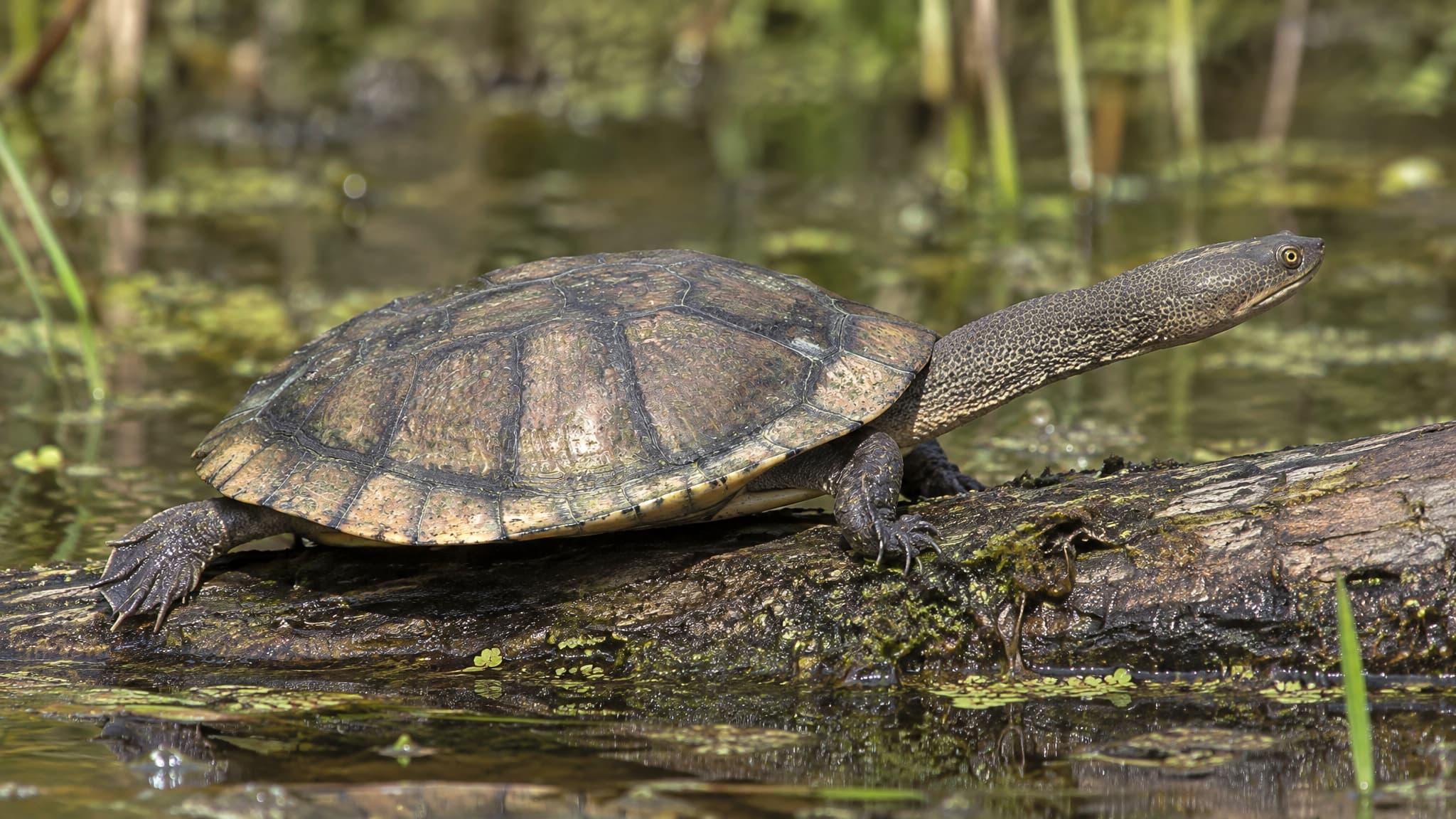
An Eastern long-necked turtle rests on a mossy log at the edge of shallow, plant-filled water, with its long neck extended and webbed, clawed feet visible. Its domed, patterned shell and speckled head are clearly shown.
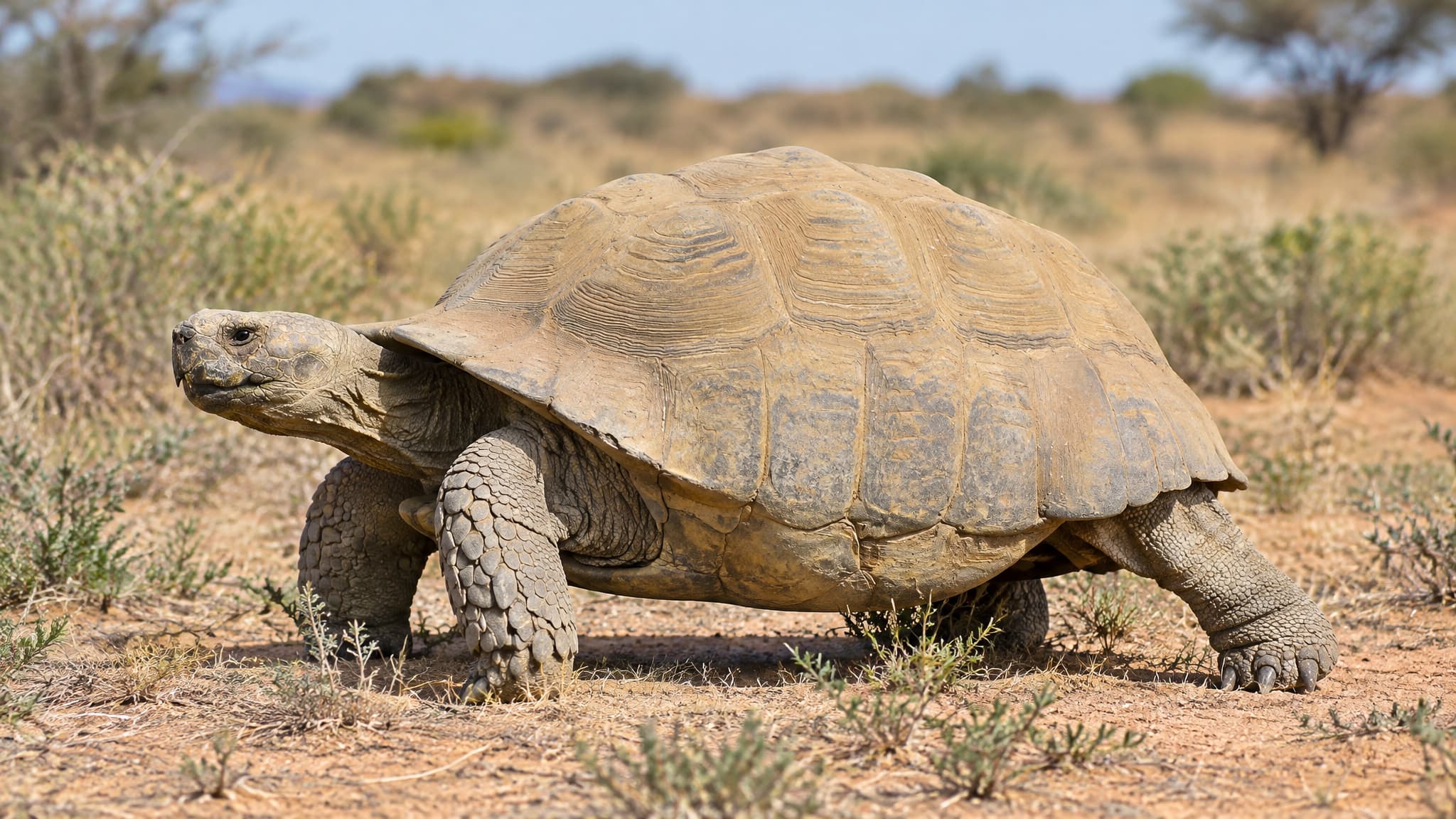
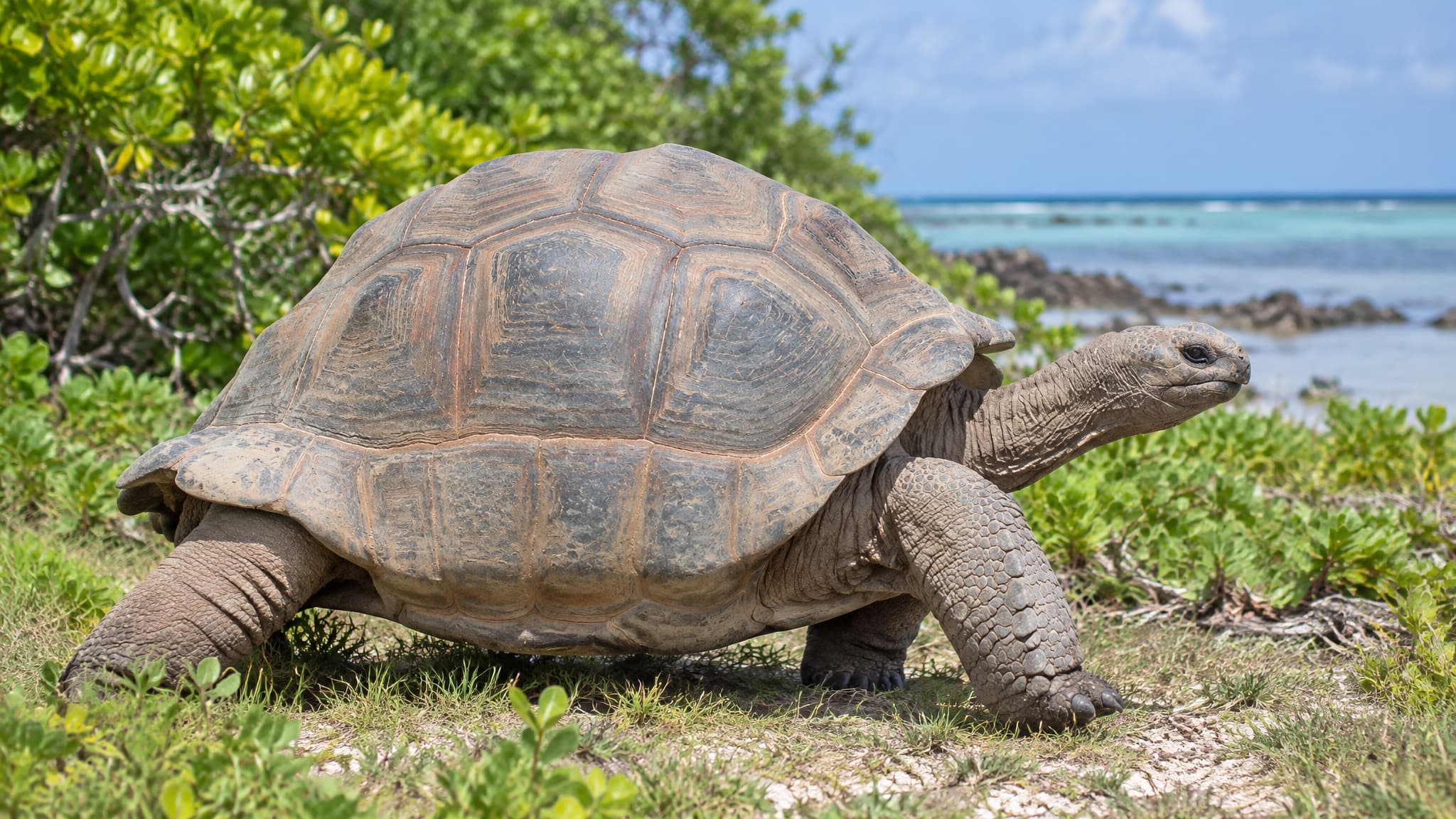
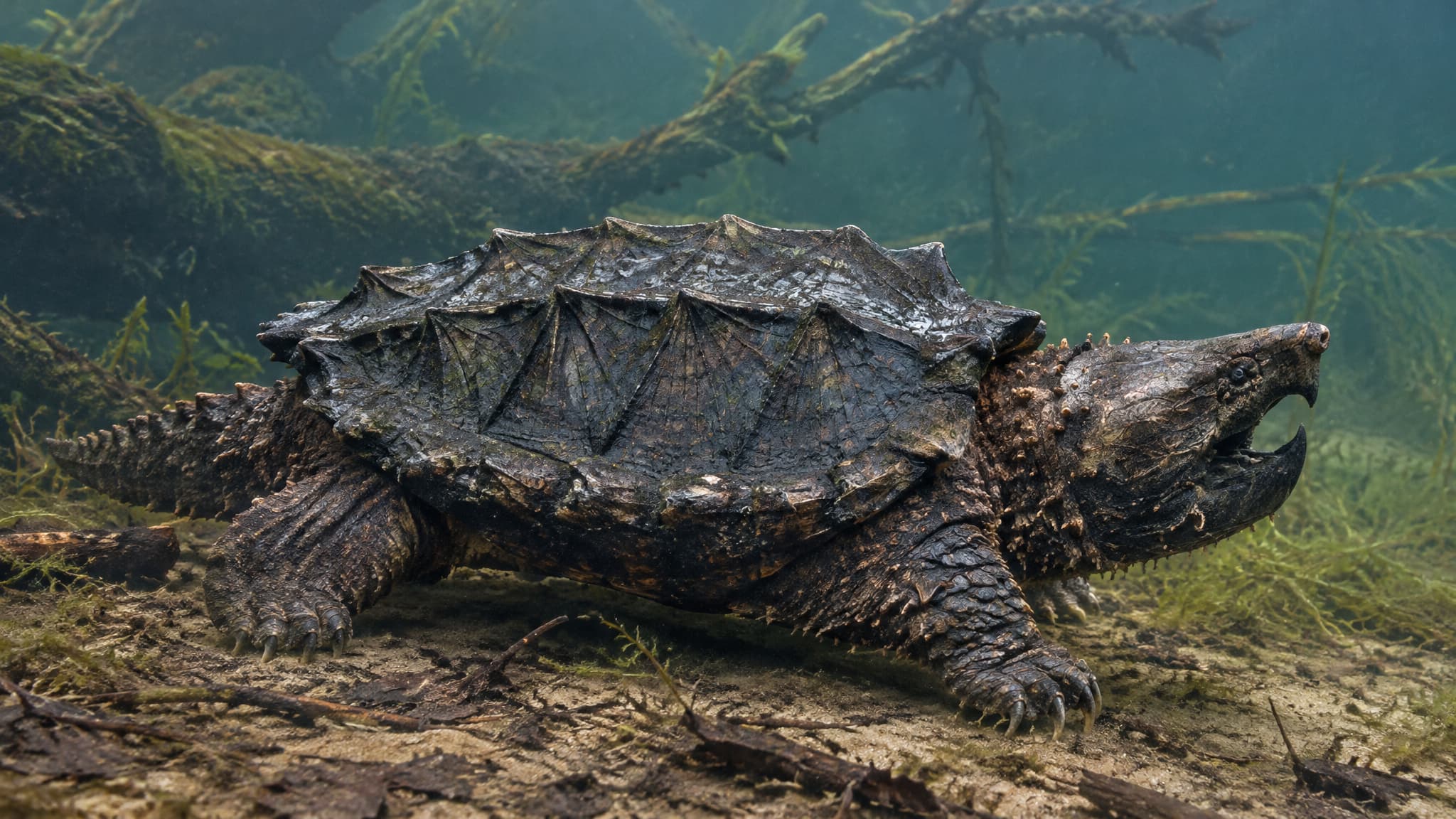
The eastern long-necked turtle (Chelodina longicollis), also called the common long-necked or snake-necked turtle, is a side-necked freshwater turtle of the family Chelidae. It was the first Australian freshwater turtle to be described, and it is the type species of the genus Chelodina. The neck is about 60% of the carapace length and is covered in small pointed tubercles; it folds sideways under the edge of the shell. The broad, flattened carapace is black to light brown with a deep groove down the middle, and the large plastron is cream with its seams broadly edged in black. Females grow larger and deeper-shelled than males: in the Murray Valley the largest recorded carapace lengths are 28.2 cm for females and 24.9 cm for males. When disturbed it releases a pungent yellow fluid from scent glands, which has earned it the nickname "stinker".
The species ranges across southeastern Australia, from the Eyre Peninsula in South Australia through Victoria, New South Wales and the Murray-Darling basin north to the Fitzroy River drainage in Queensland. Introduced populations live in Tasmania and on islands in the Bass Strait. It uses rivers, lakes, farm dams, swamps and brackish wetlands, but is most abundant in shallow, temporary waterholes away from permanent rivers, often where no other turtles or fish compete with it.
Mostly a bottom dweller, it is an opportunistic carnivore that eats insects, worms, crustaceans, molluscs, plankton, tadpoles, frogs, small fish and carrion, as well as land animals that fall into the water. It catches prey with a "strike and gape", sucking it into the mouth. It is famous for travelling overland when wetlands dry or after rain: treks of several kilometres and more than 40 days on land are known, and distances of 8 km have been reported. It can also bury itself in leaf litter and estivate on land, once for up to 480 days without returning to water.
Mating usually happens in September, and nesting runs from October to January. Females may walk 500 m or more from water to nest and lay up to 3 clutches a year of 6 to 23 hard-shelled eggs, 14 on average. Incubation takes 110 to 150 days, and hatchlings of about 30 mm and 4 to 5 g emerge in autumn, black with bright orange markings. Sex is set by genetics, not by nest temperature. Males mature at about 7 to 8 years and females at 10 to 12. Captive turtles have lived 36 and more than 37 years, and wild adults have been recaptured at minimum ages of 31 to 34 years.
The species is common and is listed as Least Concern. Its main threat is the introduced red fox, which destroys more than 90% of nests in some places and also kills adults, so some populations hold old adults but few juveniles. Road traffic, pest-proof fencing, water extraction in the Murray-Darling basin, salinisation and long droughts cause local losses, while new farm dams and urban ponds have given it extra habitat.