Giant otter
Pteronura brasiliensis
 AI-generated
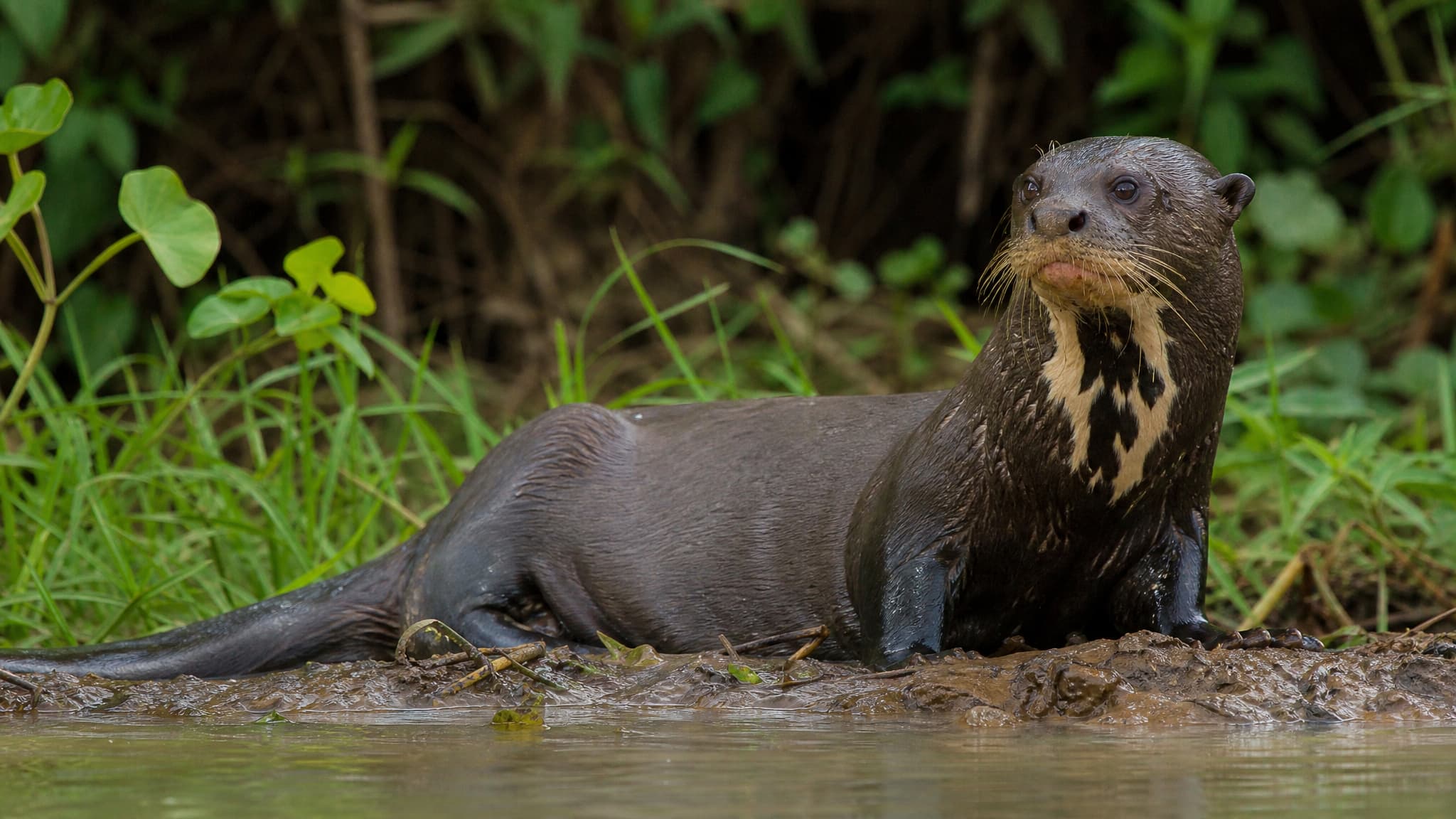
A giant otter (Pteronura brasiliensis) sits alert on a muddy riverbank beside calm water, showing its sleek dark coat, webbed forefeet, long tail, rounded ears, and cream-colored throat markings.
The giant otter is the largest otter species and a powerful, semi-aquatic carnivore of South America. Its long, streamlined body is clothed in dense dark-brown fur, with a broad, flattened tail and strongly webbed feet that make it an agile swimmer. Cream to pale-yellow markings on the throat and upper chest vary among individuals, functioning as natural visual identifiers.
This species inhabits freshwater rivers, oxbow lakes, streams, swamps, and seasonally flooded wetlands, especially where quiet banks, dense cover, and clear or moderately clear water are available. Its range includes much of the Amazon, Orinoco, and La Plata drainage systems, though populations are fragmented and the animal has disappeared from parts of its former southern and eastern range.
Giant otters are highly social and usually live in family groups centered on a breeding pair and their offspring. They maintain territories with scent marks and communal latrines, communicate with a rich repertoire of calls, and cooperate while traveling, guarding young, and sometimes hunting. Fish make up most of their diet; crustaceans, small reptiles, and other aquatic prey may be taken when available. As an upper-level freshwater predator, the species helps shape aquatic food webs.
Breeding pairs use dens dug into riverbanks or sheltered beneath roots and fallen vegetation. After a gestation of roughly 65–70 days, females commonly produce one to several dependent pups. Young are cared for by the family and become capable hunters as they mature; sexual maturity is reached at about two years. Reported lifespan is around 10–13 years.
The giant otter is globally classified as Endangered. Historic commercial hunting for pelts caused severe declines, while continuing threats include wetland and riverbank destruction, dams and other infrastructure, mercury and other pollution associated with mining, depleted fish stocks, persecution linked to fishing conflicts, and diseases transmitted by domestic animals. Protecting connected, clean river systems and minimizing human disturbance are central to its conservation.