
Giant Panda
Ailuropoda melanoleuca
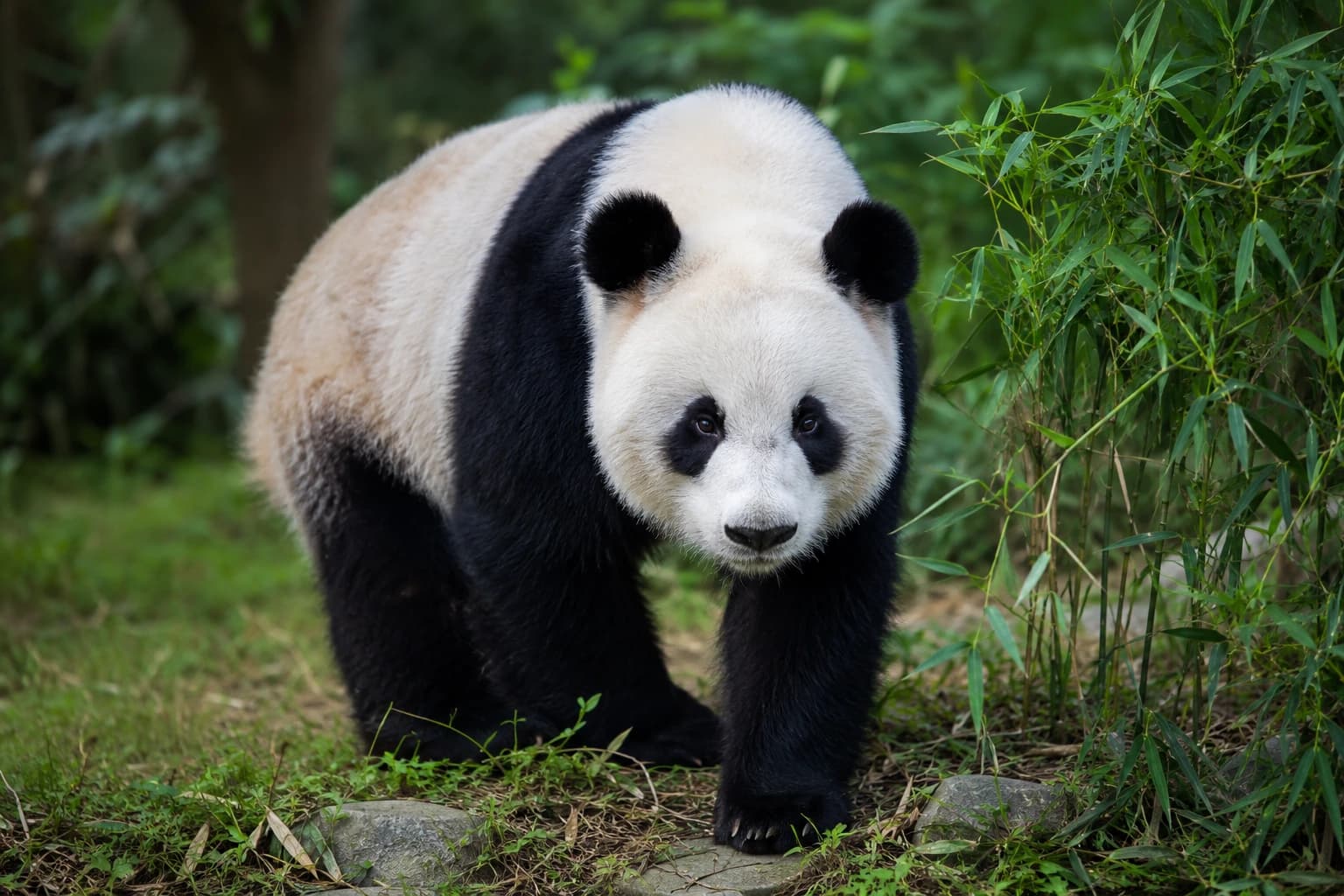
A giant panda peacefully exploring its natural habitat, surrounded by lush bamboo and the tranquil beauty of the mountain forest 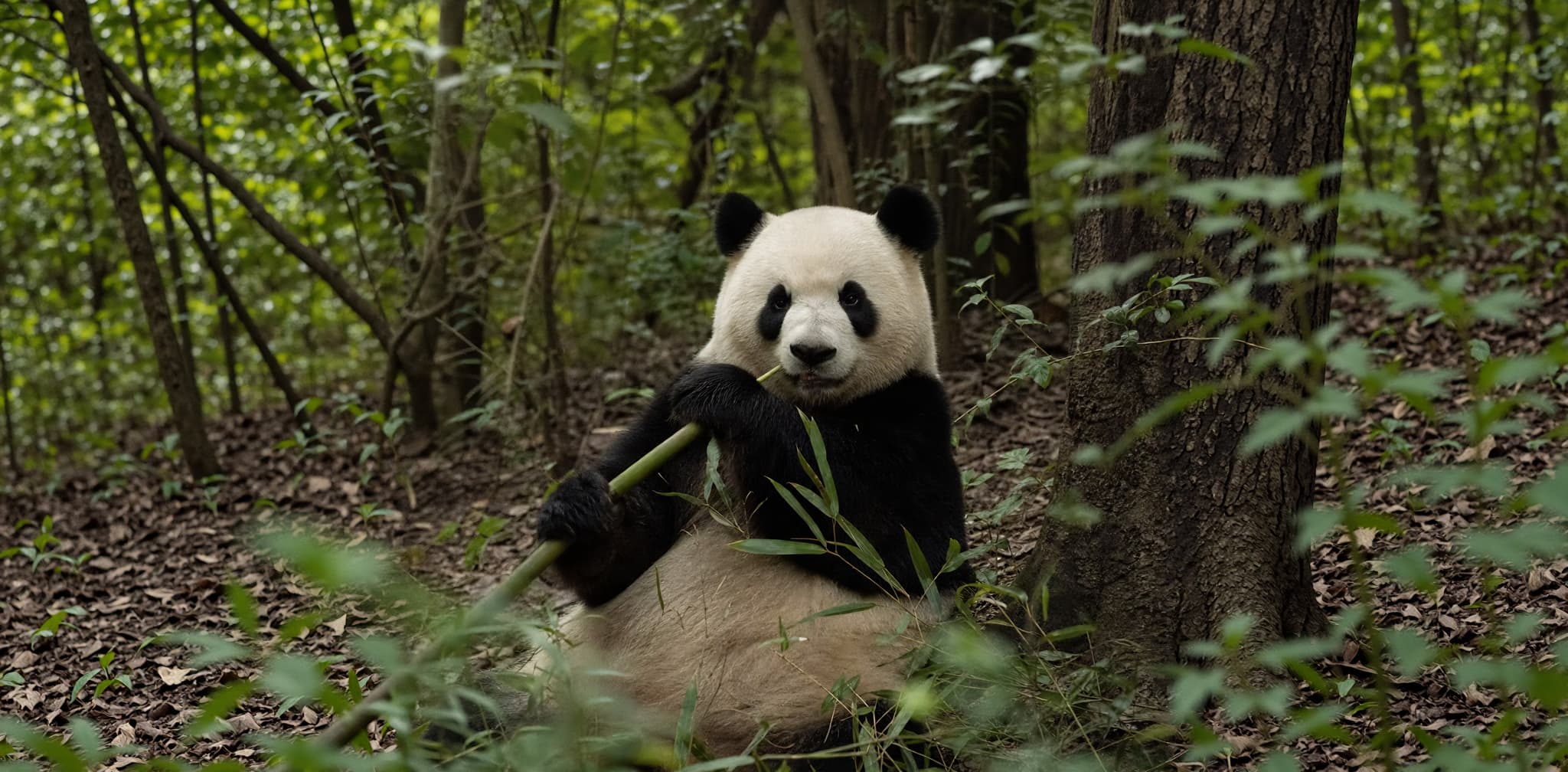
A giant panda peacefully enjoys a fresh bamboo shoot in the heart of a lush forest, its distinctive black-and-white fur contrasting beautifully with the vibrant greenery surrounding it.
The giant panda is a bear native to the mountain forests of central China. It is highly specialized for a diet dominated by bamboo and has strong jaws, large molars, and an enlarged wrist bone that functions as a “pseudo-thumb” for grasping food. Giant pandas are generally solitary and spend much of their day feeding and resting.
Habitat
Giant pandas inhabit high-altitude temperate mountain forests with dense bamboo understory, primarily in the Chinese provinces of Sichuan, Gansu, and Shaanxi. Their remaining habitat is fragmented into several mountain ranges.
Diet
Giant pandas feed primarily on bamboo, including leaves, stems, and shoots. Because their digestive system is relatively inefficient at processing plant material, they consume large quantities of bamboo and may spend approximately 10–16 hours per day feeding. They may occasionally consume other plant material and, rarely, animal matter.
Average Lifespan
Giant pandas generally live about 15–20 years in the wild. Individuals under human care can live around 30 years, with some reaching more than 30 years.
Conservation Status
Vulnerable (VU) — IUCN Red List.



