Gopher tortoise
Gopherus polyphemus
 AI-generated
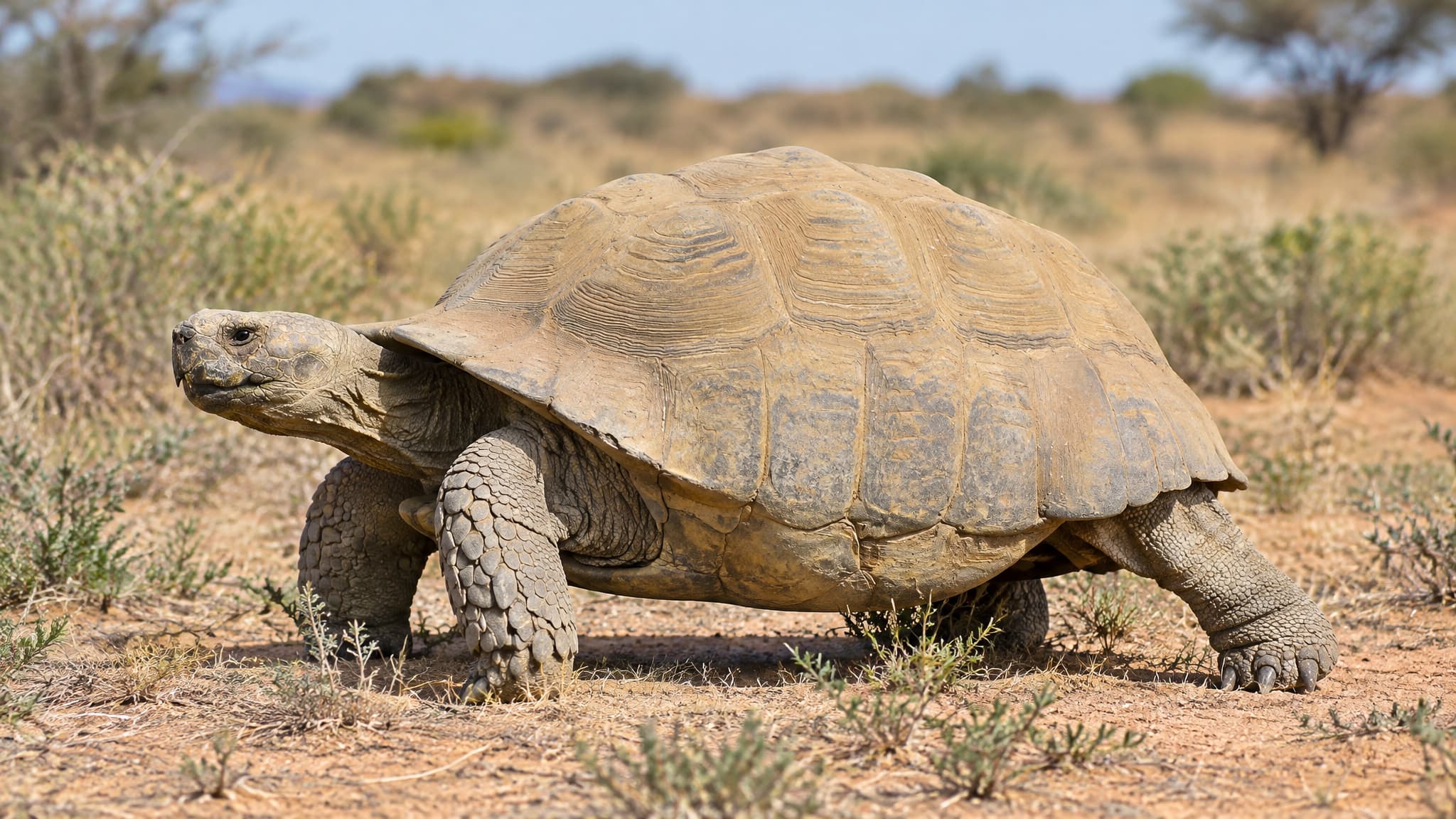
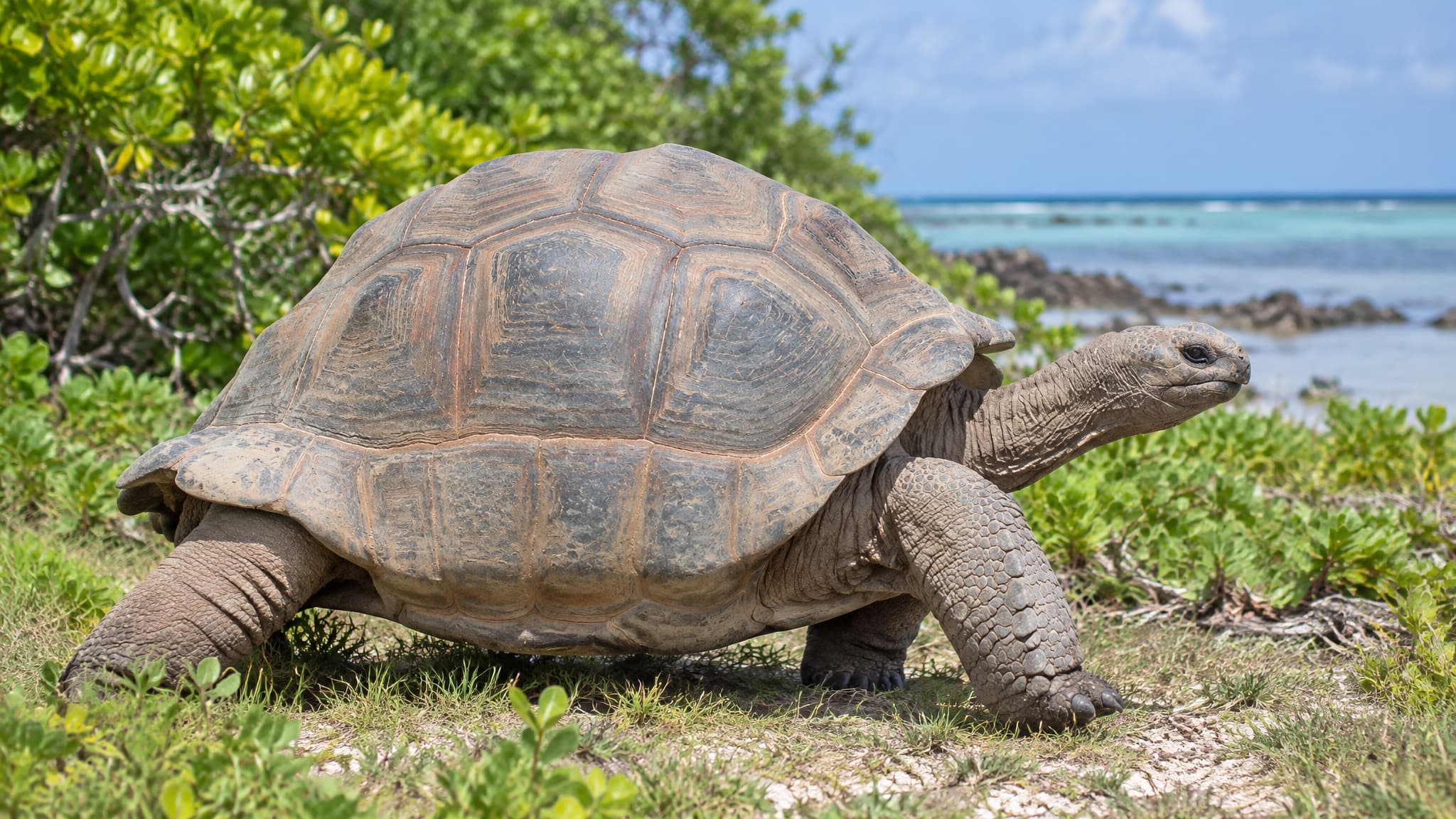
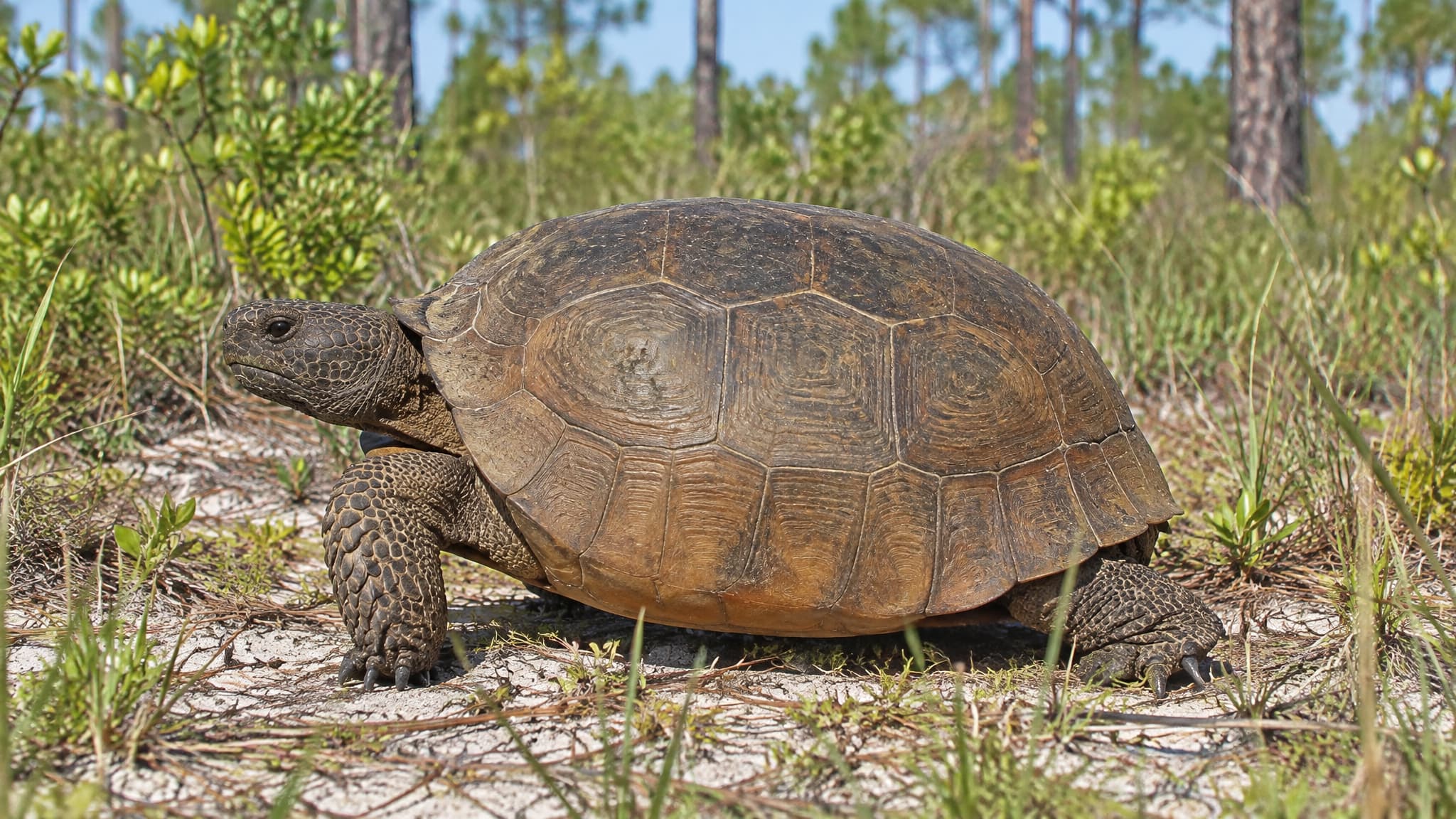
A gopher tortoise is shown in side profile, walking across sandy ground with sparse grasses and pine woodland behind it. Its domed, scuffed shell, scaled head, and stout, clawed forelegs are clearly visible.
The gopher tortoise (Gopherus polyphemus) is a burrowing tortoise of the southeastern United States and the only member of its genus found east of the Mississippi River. Adults have an oblong, fairly flat carapace in brown, tan or grayish tones, usually 23 to 28 cm long and up to about 38.7 cm, and typically weigh 2 to 6 kg. The plastron is yellowish and has no hinge. Shovel-like front legs and stumpy, elephant-like hind feet are built for digging. Males have a more concave plastron and a longer gular projection under the chin.
The species lives on the Coastal Plain from southern South Carolina through Georgia, Florida, southern Alabama and Mississippi to the eastern tip of Louisiana, with most of its range in Florida. It needs deep, dry, well-drained sand with an open canopy and plenty of low plants: longleaf pine savannas, sandhills, scrub, pine flatwoods, xeric hammocks and coastal dunes. Regular fires keep these habitats open.
Each tortoise digs burrows that average about 4.5 m long and 2 m deep and can reach 15 m long and 3 m deep, and it may spend up to 80% of its time inside. The stable temperature and humidity of a burrow shelter about 360 other animal species, among them the gopher frog, the Florida mouse and the eastern indigo snake, which makes the gopher tortoise a keystone species. It is a grazing herbivore that eats more than 300 plant species, mostly grasses, wiregrass and legumes, along with fruits such as gopher apple, pawpaw, blackberries and saw palmetto berries; females occasionally take fungi, insects or carrion around the nesting period.
Gopher tortoises mature late, at about 9 to 21 years of age. Females lay one clutch a year, usually 5 to 9 eggs and on average about 6, often in the sandy apron at a burrow's mouth. The eggs hatch after 80 to 100 days, and nest temperature decides the sex of the young. Raccoons, coyotes, skunks, snakes and fire ants take many eggs and hatchlings, and nest losses can reach 87%. Survivors can live 40 to 70 years in the wild and up to 86 years in captivity.
Habitat loss to urban growth, farming, forestry and mining is the main threat, compounded by fragmentation, road deaths, upper respiratory tract disease and past hunting for meat. In July 2026 the IUCN Red List moved the species from Vulnerable to Critically Endangered. In the United States it is federally listed as threatened only west of the Mobile and Tombigbee Rivers, in Alabama, Mississippi and Louisiana, and it is listed on CITES Appendix II.