Green Iguana
Iguana iguana
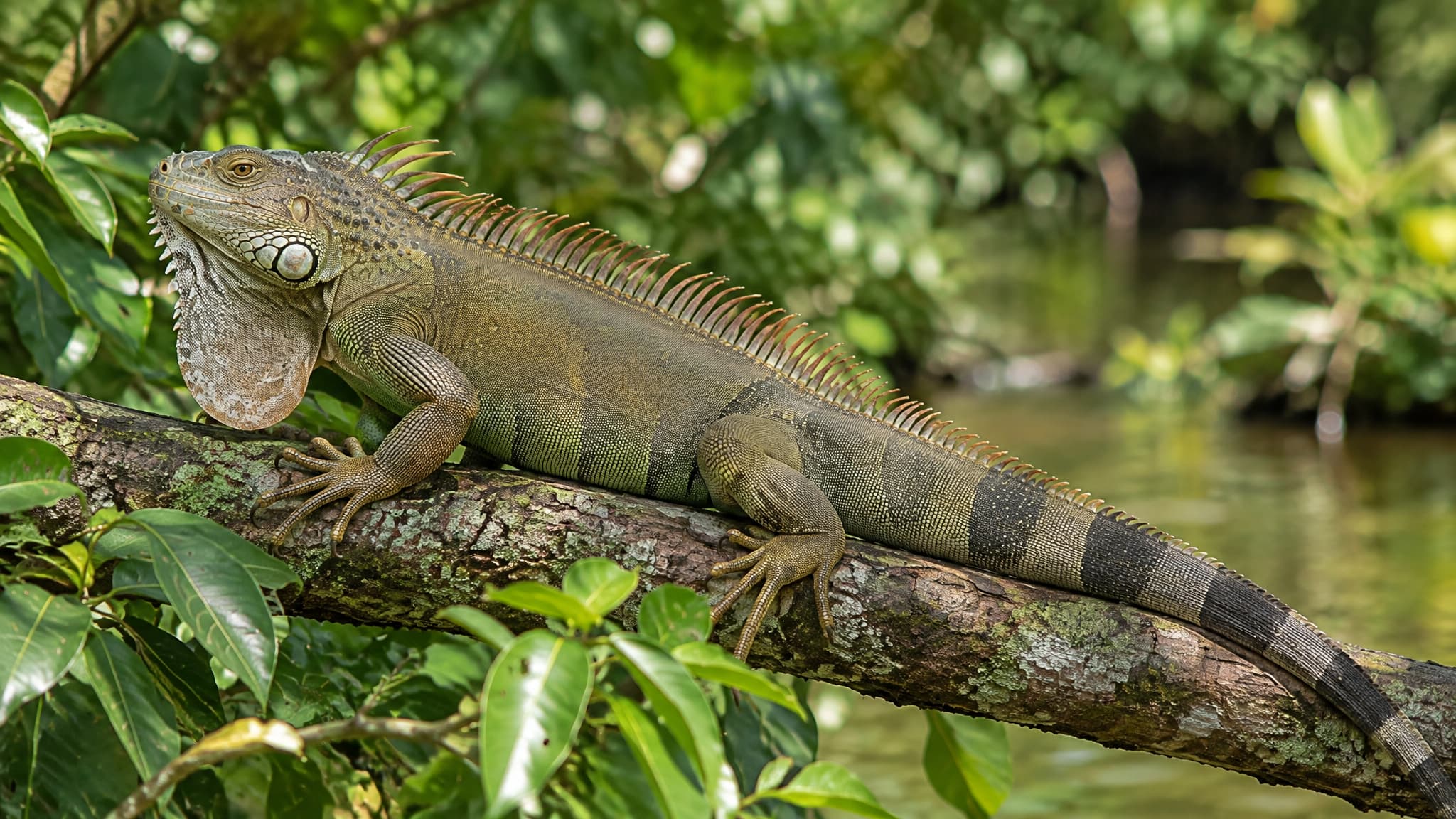 AI-generated
A Green Iguana (Iguana iguana) rests lengthwise on a lichen-covered branch above lush tropical vegetation and water. Its long dorsal crest, large round tympanum, dewlap, stout limbs, and extended toes are clearly visible.
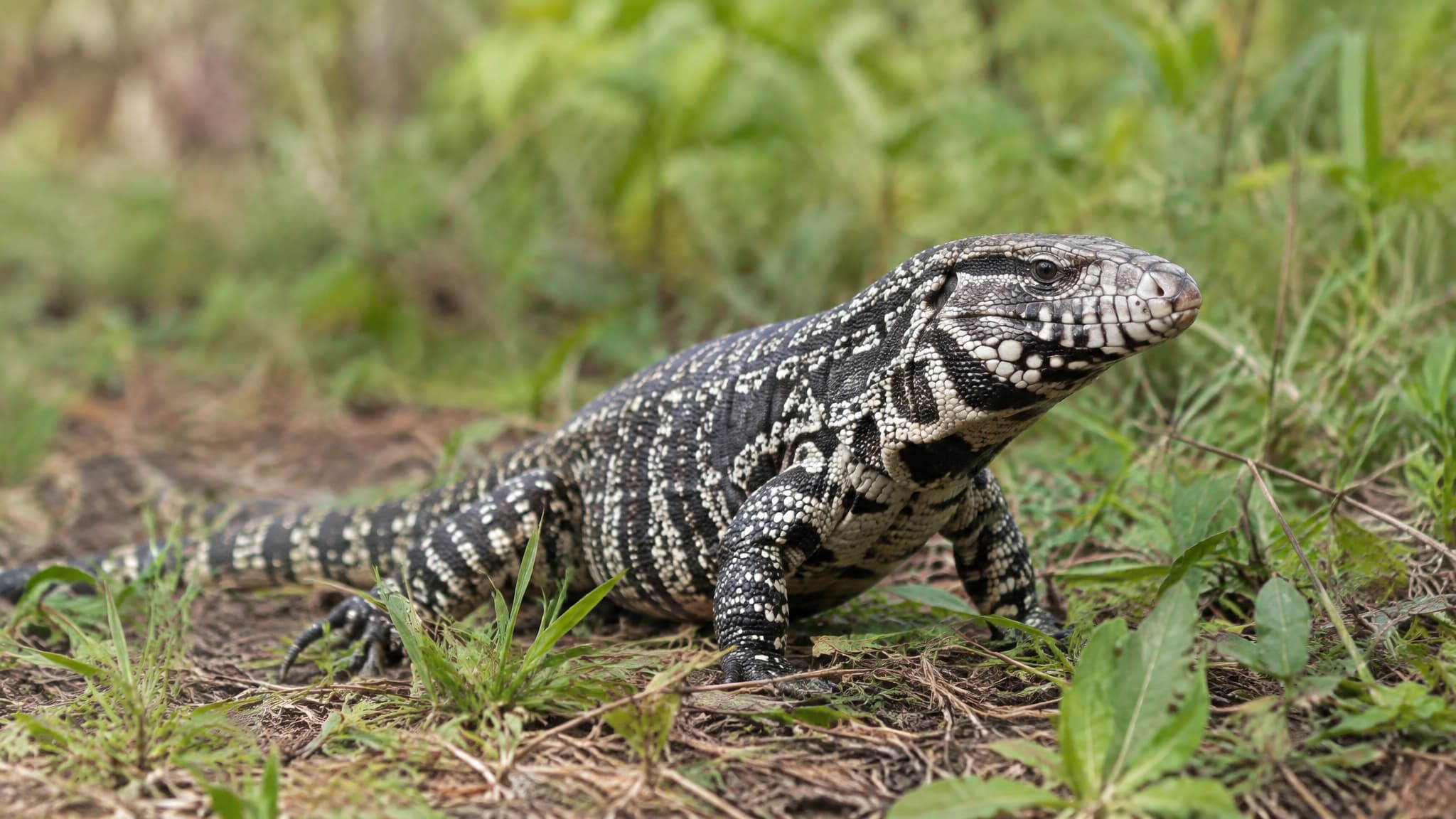
The green iguana (Iguana iguana), also called the common green iguana, is one of the largest lizards in the Americas. Males can be more than 2 m long including the tail. They have a large dewlap (a flap of skin under the throat) and a crest of soft spines running from the neck down the back. The tail is long and strong and has dark bands. Despite the name, colour varies a lot by age, sex and region. Adult females tend to stay greenish, while males are often more brightly coloured.
The species is native from Sinaloa and Veracruz in Mexico, through Central America, to Paraguay and southeastern Brazil. It lives mainly in the canopy of tropical forests, usually near rivers and other water. It can also adapt to more open areas. People have introduced it to Florida, Puerto Rico, the Dominican Republic, Hawaii and several Caribbean islands, where it is considered invasive.
Adults are almost entirely herbivorous. They eat leaves, buds, flowers and ripe fruit, especially figs. Juveniles eat more insects and other small animals, and their diet shifts to mostly plants as they grow. Green iguanas are active by day and spend much of it basking to warm up, because low temperatures reduce both their appetite and their digestion. They climb well and swim well, using the tail to push through the water. When frightened, they usually freeze, hide or drop into water. If grabbed by the tail, they can shed it.
The green iguana lays eggs, and males mate with several females. Females dig burrows in the soil, lay their eggs there and leave the nest. Hatchlings are about 17 to 25 cm long and get no care from their parents. Lifespan is often given as about 15 years. In captivity, poor housing and diet can shorten it considerably.
As large plant-eaters, green iguanas help shape the vegetation and spread seeds. Juveniles in particular are food for many birds of prey, snakes and mammals.
The IUCN classifies the species as Least Concern, and the whole genus is listed in CITES Appendix II. Local populations still face hunting for meat and eggs, collection for the pet trade and habitat loss. Some genetic studies suggest splitting the species into several, but the Reptile Database still treats it as a single species.