
Guiana dolphin
Sotalia guianensis
 AI-generated
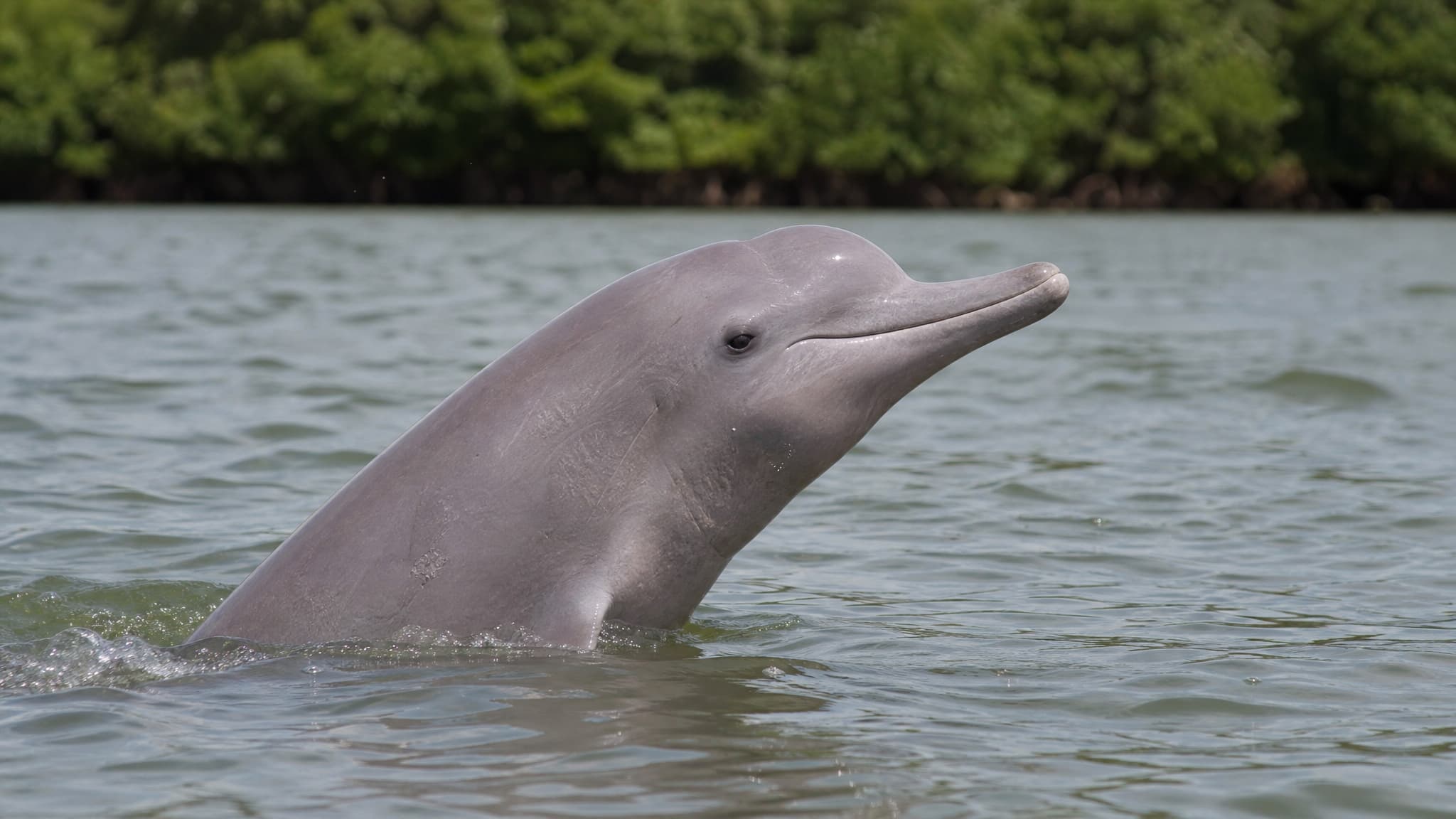
A gray dolphin rises diagonally from rippling coastal water, with its long slender rostrum and eye clearly visible; a green, wooded shoreline forms the background. The rest of the body, including the dorsal fin, is submerged.
The Guiana dolphin is a small coastal member of the dolphin family, distinguished by its moderately long beak, compact body, and gray upperparts. Its flanks are gray and the underside is usually pale; the belly may flush pink when the animal is excited. Adults can reach roughly 2 m in length, while calves are born at about 75–98 cm. Males and females are not readily distinguishable in the field.
It occurs in the western Atlantic from Honduras southward along the coasts of Central and South America to southern Brazil. Rather than inhabiting the open ocean, it favors shallow, productive nearshore waters: sheltered bays, estuaries, lagoons, river mouths, and mangrove-associated coastlines. Many local populations show strong site fidelity and may remain in the same coastal area year-round.
Guiana dolphins usually travel in small, fluid groups, although larger gatherings occur in some places. They forage actively for fish and also take squid and shrimp. As a mid-level marine predator, they help transfer energy from fish and invertebrate prey through coastal food webs. Mothers remain closely associated with calves, nursing them and helping them acquire the skills needed to capture prey; maximum lifespan has been estimated at about 30–35 years, though longevity remains incompletely known.
The species is globally listed as Near Threatened. Its close association with densely used coasts makes it vulnerable to accidental capture in fishing gear, vessel strikes and disturbance, underwater noise, chemical contamination, disease, and the loss or degradation of estuarine habitat. Brazil assesses it as Vulnerable nationally, reflecting documented declines and severe local pressures in parts of its range. Protecting mangroves, estuaries, and fishing practices that reduce bycatch is therefore central to its conservation.



