Hector's dolphin
Cephalorhynchus hectori
 AI-generated
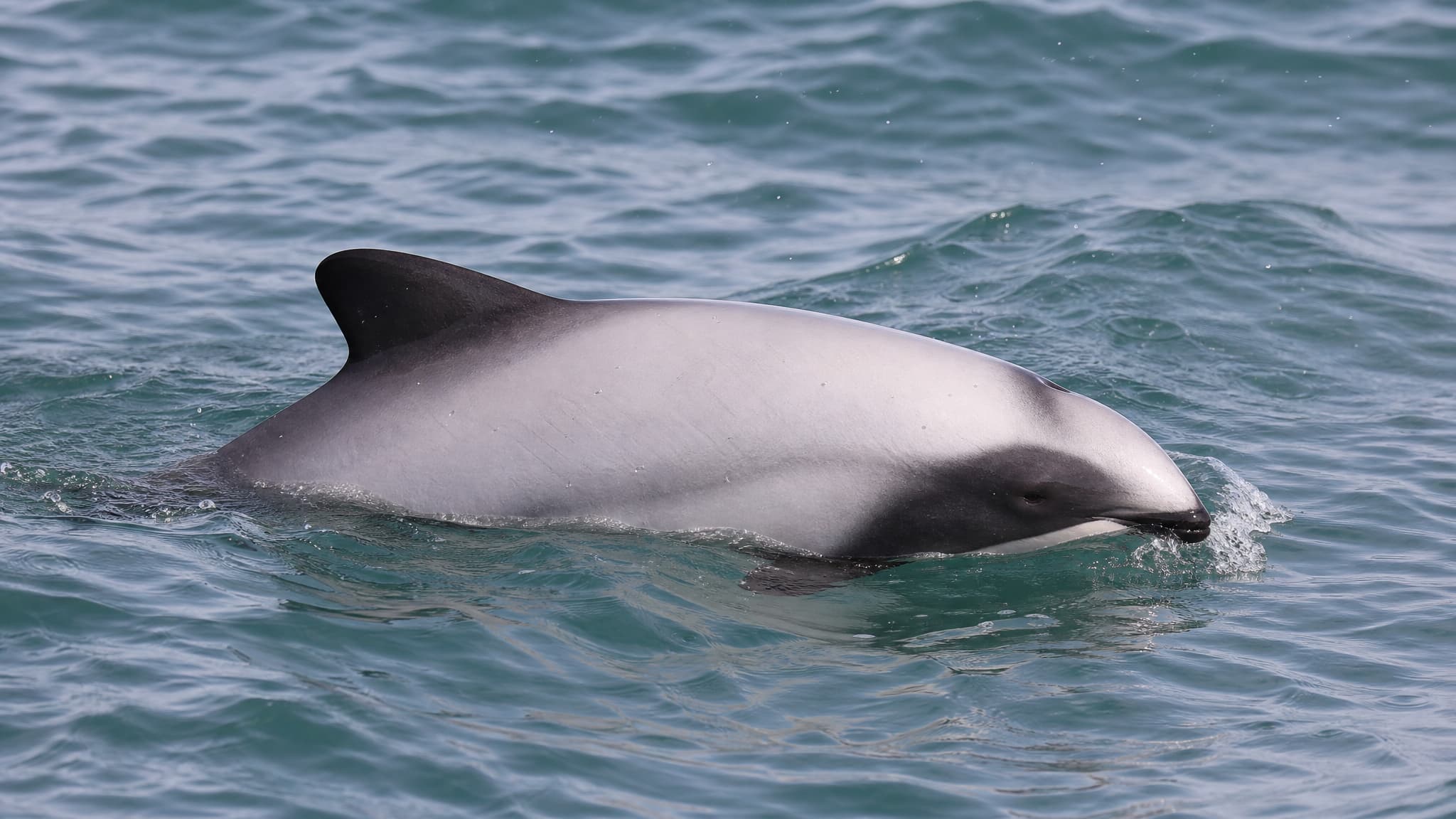
A Hector's dolphin swims at the surface of the sea in side profile, showing a rounded dorsal fin, blunt snout, and dark facial markings.
Hector’s dolphin is a compact coastal dolphin endemic to New Zealand and among the smallest living cetaceans. Adults are usually about 1.5 m long and weigh roughly 50–60 kg. Its most recognizable feature is the rounded dorsal fin, often compared with a Mickey Mouse ear. The body is pale grey, marked with black on the face, flippers, fin, and tail, plus a white underside and contrasting side stripes.
The species lives in temperate, shallow coastal seas, generally close to shore and commonly in water under 90 m deep. Most animals occur around New Zealand’s South Island, while the very small Māui population occurs off the west coast of the North Island. Groups show strong fidelity to local areas, so neighboring coastal populations can remain relatively separated.
Hector’s dolphins feed on small fishes, squid and other cephalopods, and crustaceans. They use echolocation to locate prey and navigate, make short dives, and usually travel in small social groups. As agile nearshore predators, they help link fish and invertebrate prey with larger marine predators and are indicators of the condition of New Zealand’s coastal ecosystems.
Females mature at roughly 6–9 years of age and normally bear one calf at intervals of about two to four years. A calf can remain dependent on its mother for as long as two years, and the documented lifespan is at least 22 years. The species is listed as Endangered globally. Entanglement in commercial and recreational gillnets and trawls is the leading threat; disease, vessel strikes, underwater noise, pollution, habitat change, and its slow reproductive rate add to its vulnerability.