
Hourglass Dolphin
Cephalorhynchus cruciger
 AI-generated
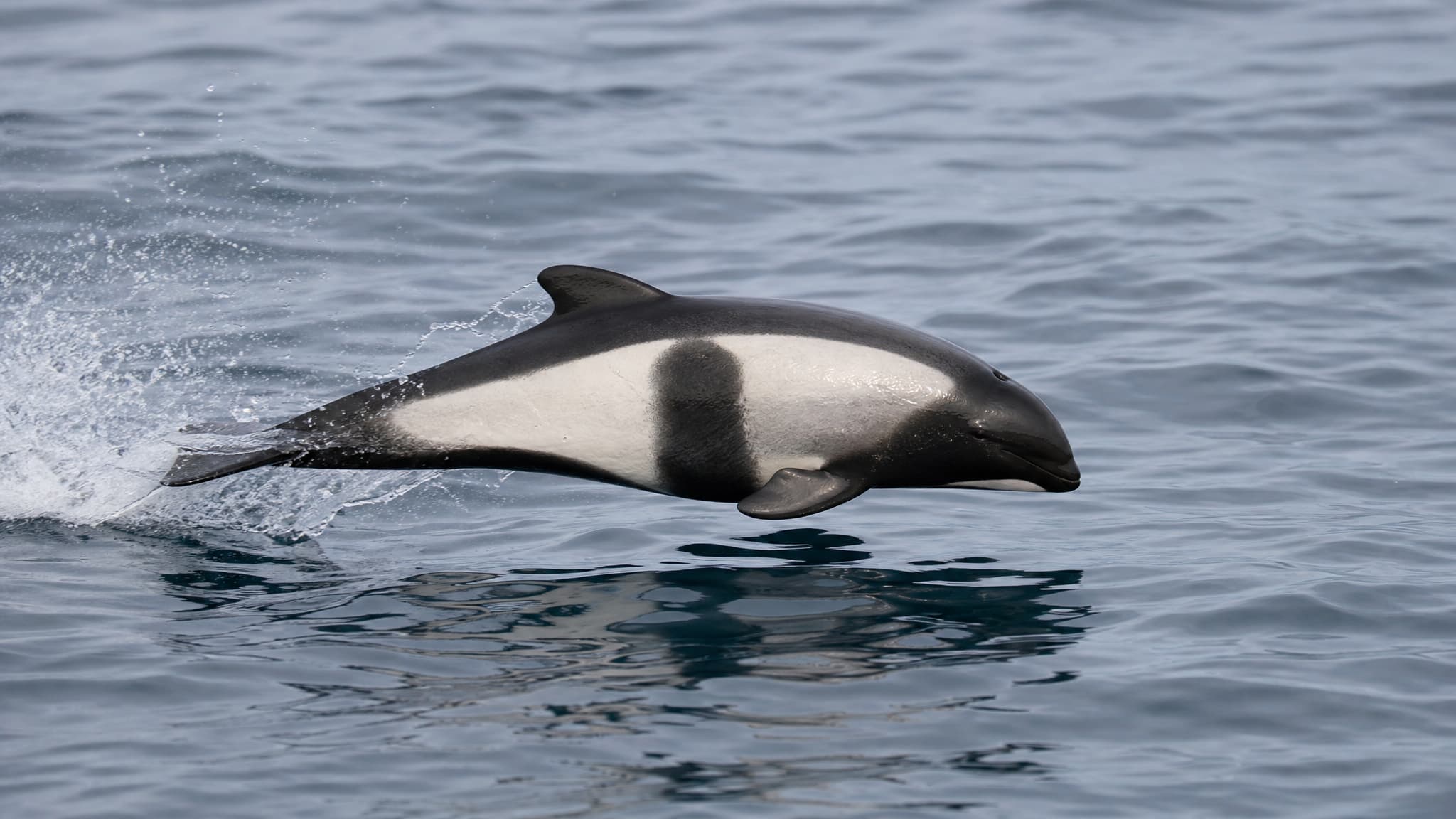
A black-and-white dolphin is captured in side profile, surging just above the surface of calm seawater with spray behind it. Its contrasting hourglass-like body pattern, rounded dorsal fin, visible pectoral flipper, and tail flukes are clearly shown.
The hourglass dolphin is a small, stocky oceanic dolphin named for the striking pale markings on each side of its otherwise dark body. A white patch runs from behind the beak toward the flank, and another extends from behind the dorsal fin toward the tailstock; together they can resemble an hourglass. Its belly is largely white, while the back, beak outline, flippers, flukes, and strongly curved dorsal fin are black. Adults documented from the small available sample measured roughly 1.6–1.8 m long and weighed about 74–94 kg.
It has a circumpolar Southern Ocean distribution, occurring in Antarctic and sub-Antarctic waters of the Atlantic, Indian, and Pacific oceans. This is chiefly a pelagic species, seldom encountered near land, and it is especially associated with cold water around the Antarctic Convergence. Recorded sightings span a broad latitudinal range, but most occur in remote waters between about 45°S and 65°S.
Hourglass dolphins eat small fishes, squid, and probably some crustaceans. Stomach records include mesopelagic lanternfish and squid remains. They are social and may gather in feeding groups at the surface, sometimes alongside other cetaceans; seabirds such as albatrosses and petrels can congregate over these events. As active mid-level to upper-level predators, they link Southern Ocean forage species with larger marine predators.
Very little is known directly about their courtship, calving season, calf development, or longevity. Like other dolphins, they are live-bearing and mothers nurse their young, but species-specific reproductive estimates should not be inferred from relatives. The IUCN currently lists the species as Least Concern under its former name, Lagenorhynchus cruciger. Its vast, inaccessible range may reduce some direct pressures, although incidental capture in fishing gear has been recorded and changes to Southern Ocean ecosystems remain relevant uncertainties.



