False water cobra
Hydrodynastes gigas
 AI-generated
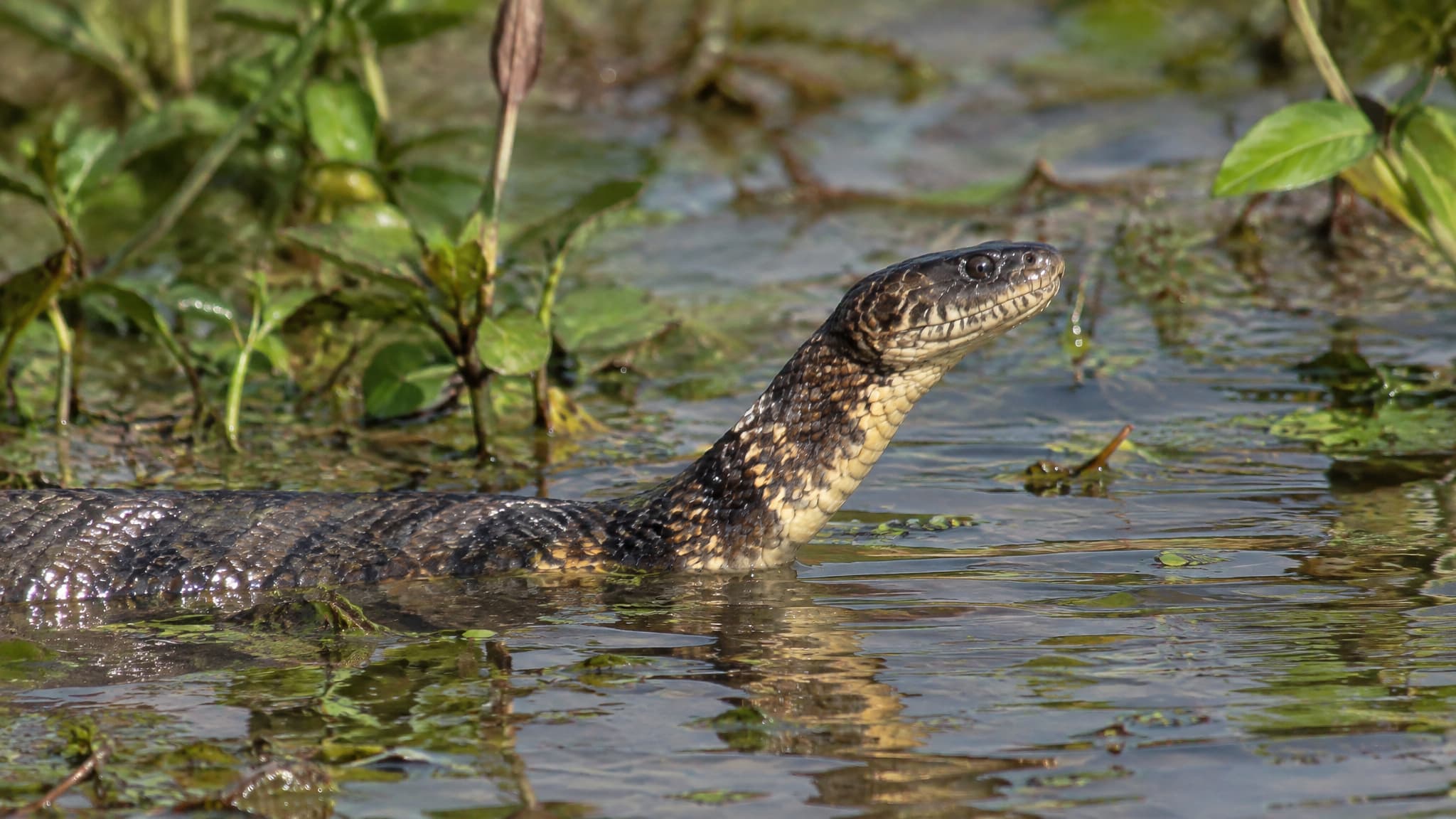
A robust, dark-patterned snake is partially submerged in shallow, plant-covered water, with its head and neck raised above the surface. Its broad head, large eye, and pale, strongly patterned throat are clearly visible.
Hydrodynastes gigas, the false water cobra, is a large South American snake named for its dramatic defensive display rather than for a close relationship to true cobras. When alarmed, it can broaden and flatten its neck and anterior body into a hood-like shape, held horizontally. It is a rear-fanged snake with Duvernoy’s-gland secretions; it should not be handled, as bites can be medically significant. (nationalzoo.si.edu)
This primarily terrestrial but strongly semi-aquatic species occurs across a broad portion of South America, with records from the Guianas and Brazil through eastern Bolivia, Paraguay, and northern Argentina. It uses humid tropical and subtropical landscapes, particularly river floodplains, streams, marshy areas, and other wetlands. Active chiefly by day, it is an adaptable mover that swims, climbs, and burrows. (nationalzoo.si.edu)
False water cobras are generalist predators. Tadpoles, fishes, frogs, and other amphibians are important prey, but reptiles, birds, and mammals may also be eaten. By taking a variety of wetland animals, this snake is an important mid-to-large predator in floodplain food webs and may help regulate populations of smaller vertebrates. (nationalzoo.si.edu)
The species is oviparous. Females may lay more than one clutch in a year; reported clutches commonly contain about 14–24 eggs, and hatchlings are darker than adults. A dependable wild lifespan has not been established in the consulted references. The IUCN lists H. gigas as Least Concern, citing its broad range, probable large population, apparently stable trend, and no major threats identified at the global assessment scale; nevertheless, its wetland ecology and still-incomplete natural-history record make habitat research valuable. Molecular and morphological work also supports treating the formerly named Hydrodynastes melanogigas as a synonym of this species. (doi.org)