
Indian cobra
Naja naja
 AI-generated
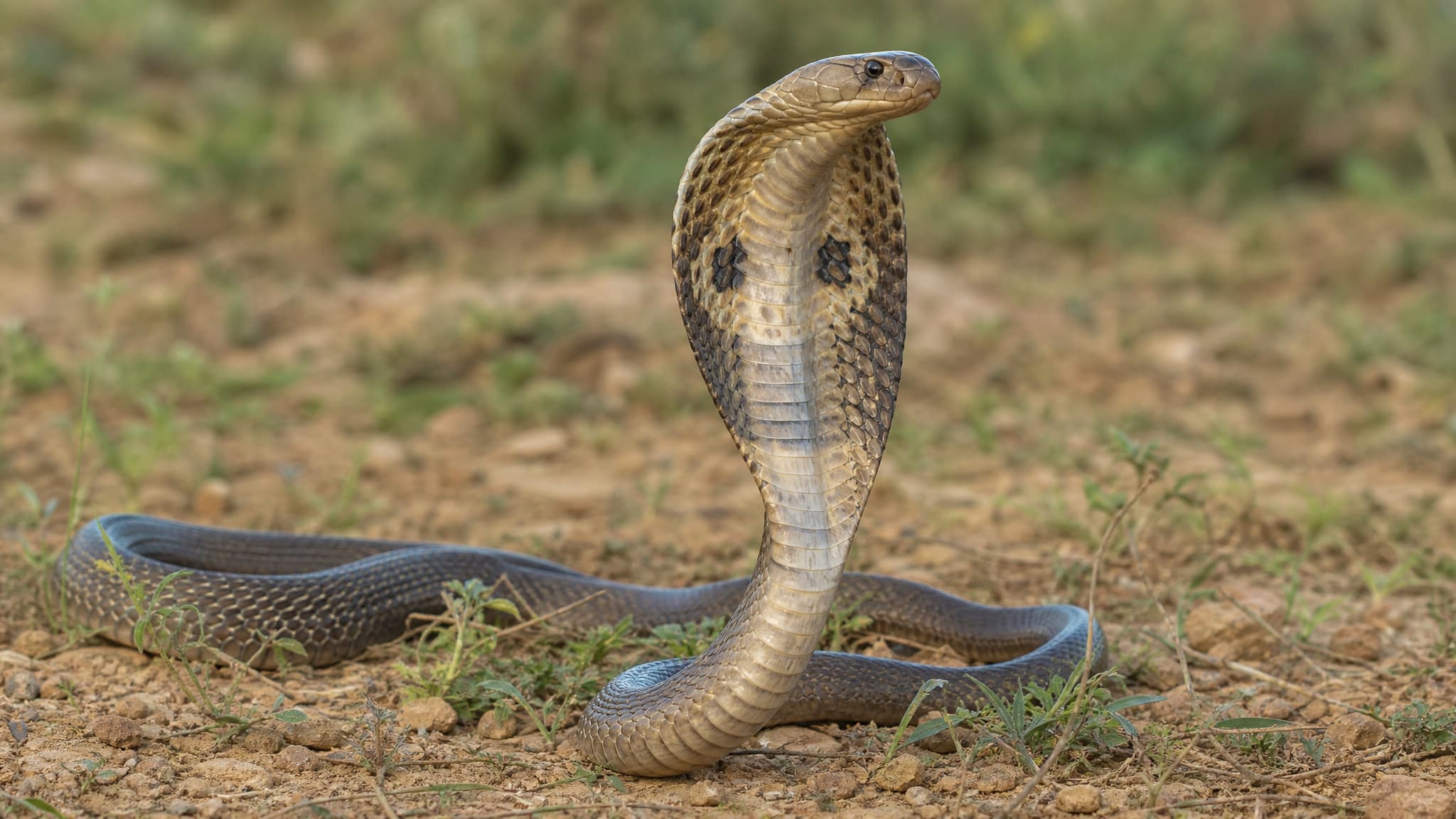
An Indian cobra raises and expands its hood while its body lies coiled on dry, sparsely vegetated ground; pale throat scales and dark hood markings are visible.
The Indian cobra, also called the spectacled cobra, is a highly venomous elapid snake. It is a medium-to-large, smooth-scaled cobra, commonly about 1.8–2.2 m long. Its color is variable—black, brown, gray, yellowish, or pale cream—and many individuals have a conspicuous spectacle-like pattern of linked pale markings on the expanded hood. Pattern and color alone can vary considerably across its range.
When alarmed, it raises the forebody, spreads the long neck ribs into a hood, and faces the threat. This is principally a defensive display, but the species can strike and deliver medically dangerous venom if threatened or handled. It should never be approached, captured, or identified at close range.
Naja naja occurs across much of the Indian subcontinent: Pakistan, India, Nepal, Bhutan, Bangladesh, Sri Lanka, and possibly eastern Afghanistan. It uses a broad range of terrestrial settings, including grassland, scrub, forest, cultivated land, and areas close to settlements. Rodent-rich agricultural landscapes and buildings can bring it into frequent contact with people.
It is a carnivorous predator that takes rodents, frogs, lizards, and other suitably sized vertebrates. Prey is subdued with venom and swallowed whole. By consuming rats and mice, the cobra is an important predator in food webs and may help limit rodent populations around farms and homes.
The species is oviparous. Females lay clutches reported at roughly 6–22 eggs, often in protected cavities or underground sites, and may remain with the eggs during incubation. Young are independent and venomous upon hatching. A documented average captive lifespan for females is about 23.9 years; longevity in the wild is less certain. It is assessed as Least Concern, although local animals can be harmed by persecution, road mortality, habitat change, and collection.



