Indian Ocean humpback dolphin
Sousa plumbea
 AI-generated
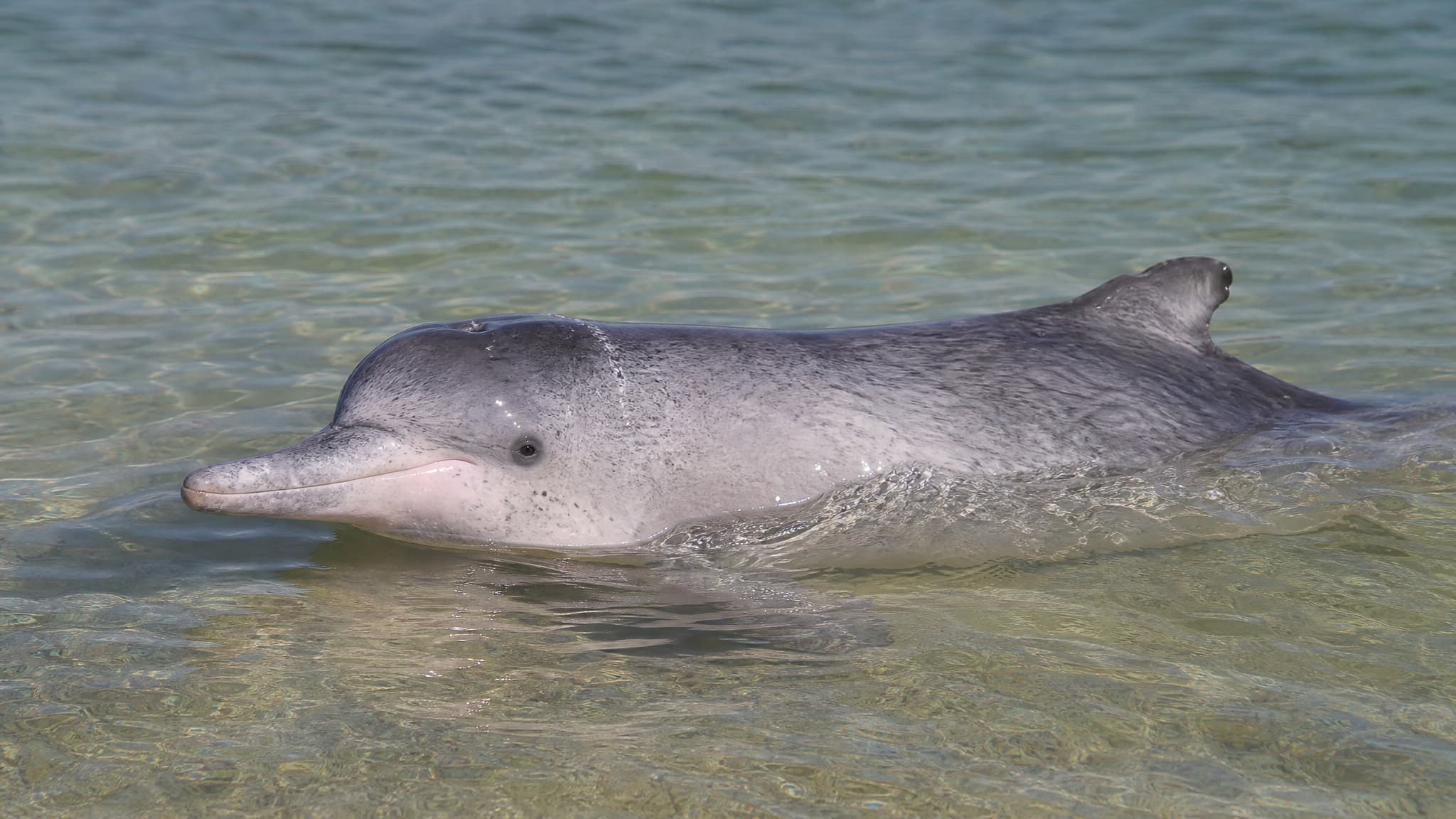
A gray Indian Ocean humpback dolphin is shown in side profile, swimming at the surface of shallow, clear water; its long slender beak and raised rounded dorsal hump are visible.
Indian Ocean humpback dolphin (Sousa plumbea) is a coastal dolphin distinguished by the low, broad hump that supports its dorsal fin. It has a long, narrow beak and a robust body, usually brownish gray to darker gray above with a paler underside; coloration and spotting vary with age and region. Adults are commonly about 2–2.8 m long, and males can be larger than females.
This species lives extremely close to shore in the tropical and subtropical Indian Ocean. Its range extends from southern Africa along East Africa and through the Red Sea, Gulf of Aden, Arabian Sea, and Arabian/Persian Gulf to India and Sri Lanka. It favors shallow water, generally under about 20–25 m deep, including estuaries, river mouths, mangroves, lagoons, sheltered bays, rocky coasts, and shallow reefs.
Indian Ocean humpback dolphins feed mainly on coastal and estuarine fishes, with cephalopods and crustaceans also documented in their diet. Their movements and feeding activity can follow tides, especially in mangrove deltas and near reefs, where rising water may make prey more accessible. As nearshore predators, they help link fish populations and food webs across estuarine, reef, and other coastal habitats.
Females normally give birth to one calf after a gestation estimated at roughly 10–12 months. Newborns are about 1 m long. Research from South Africa indicates sexual maturity at about 7.5 years in males and 8 years in females, and suggests calving intervals near five years. Recorded maximum ages in that study were about 24 years for males and 17.7 years for females.
The species is listed globally as Endangered. Its reliance on busy, shallow coastlines makes it particularly vulnerable to entanglement and capture in fishing gear, direct killing in some areas, prey depletion, coastal development, habitat degradation, chemical pollution, and vessel or construction noise. Many local populations are small, fragmented, and declining, so protecting coastal habitat and reducing fisheries interactions are central conservation needs.