
Indo-Pacific bottlenose dolphin
Tursiops aduncus
 AI-generated
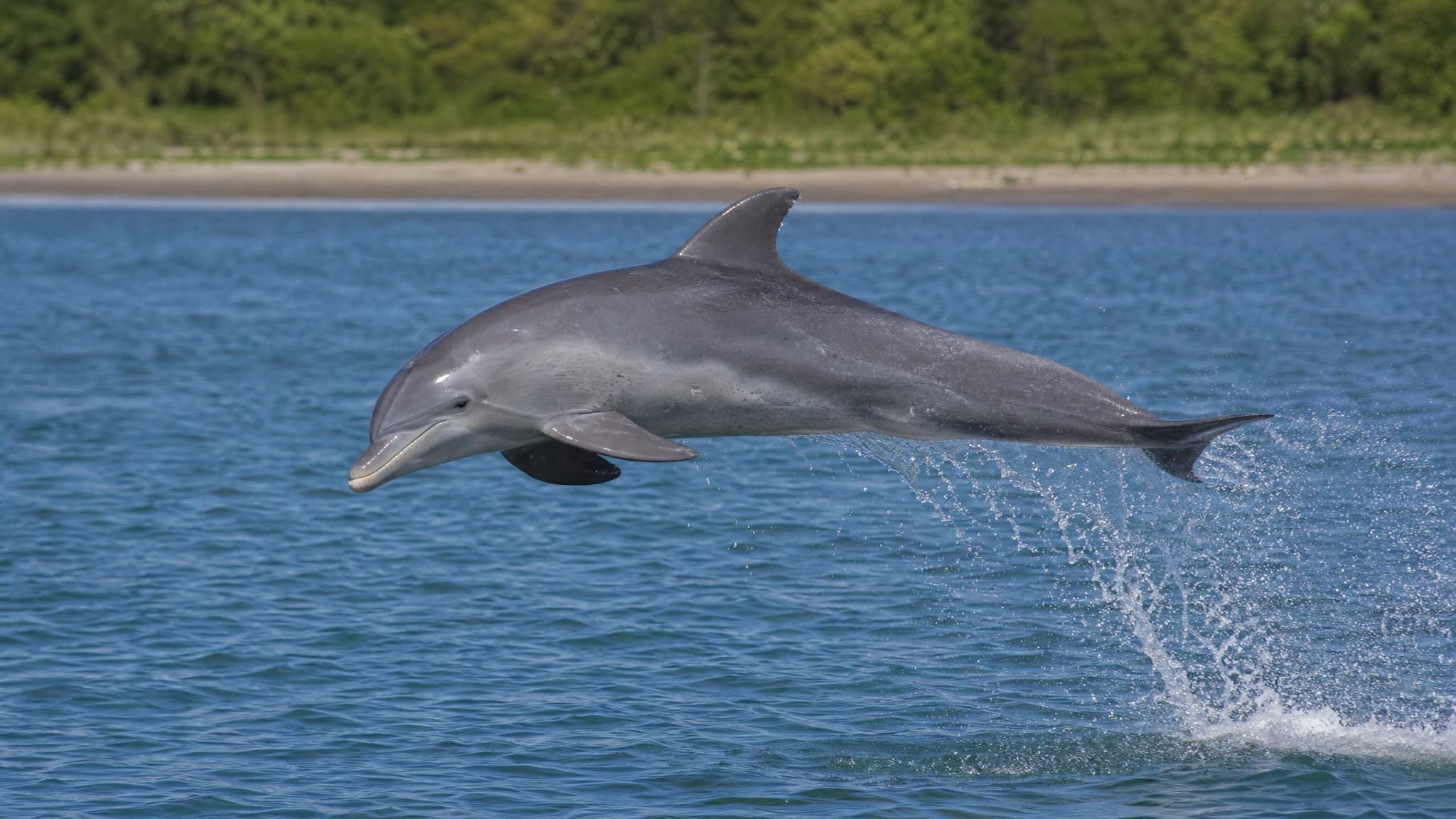
An Indo-Pacific bottlenose dolphin leaps horizontally above coastal water, with its elongated beak, eye, pectoral fins, dorsal fin, and tail flukes visible. A sandy, vegetated shoreline forms the background.
The Indo-Pacific bottlenose dolphin is a coastal dolphin distinguished by its streamlined, dark gray to slate-blue upper body, paler underside, curved dorsal fin, and moderately long, slender beak. Adults often develop dark speckles on the belly, especially with age. It is generally smaller and more delicately built than the common bottlenose dolphin (Tursiops truncatus), although reliable identification at sea can be difficult where the two occur together.
Its range spans warm-temperate and tropical coastal waters of the Indian Ocean and western Pacific, extending from southern Africa and the Red Sea eastward to Japan and Australia. It favors shallow bays, estuaries, reefs, lagoons, and nearshore waters, usually remaining over the continental shelf rather than far offshore. Many communities show strong site fidelity, using relatively restricted home ranges whose use can shift with tides, seasons, and prey movements.
This is a social, toothed whale that commonly travels in small groups, often around 5–15 animals. It communicates with whistles, body contact, and echolocation clicks, using returning echoes to locate prey and navigate. Fish make up most of its diet, supplemented by cephalopods. Individuals may hunt cooperatively, herding fish or using shallow-water tactics that vary among local populations. As a mid-to-upper-level coastal predator, it helps link fish populations, sharks, parasites, and productive reef and estuarine food webs.
Females usually bear a single calf after roughly 12 months of gestation. Calves are born tail-first, swim immediately, nurse for years, and remain closely associated with their mothers even after weaning. Females mature earlier than males, and adults can live for more than 40 years. Male alliances may cooperate in access to females. The species is globally listed as Near Threatened: bycatch in fishing gear, coastal habitat degradation, prey depletion, pollution, vessel activity, and disturbance from tourism can be serious pressures, particularly for small, resident coastal populations.



