Leopard tortoise
Stigmochelys pardalis
 AI-generated
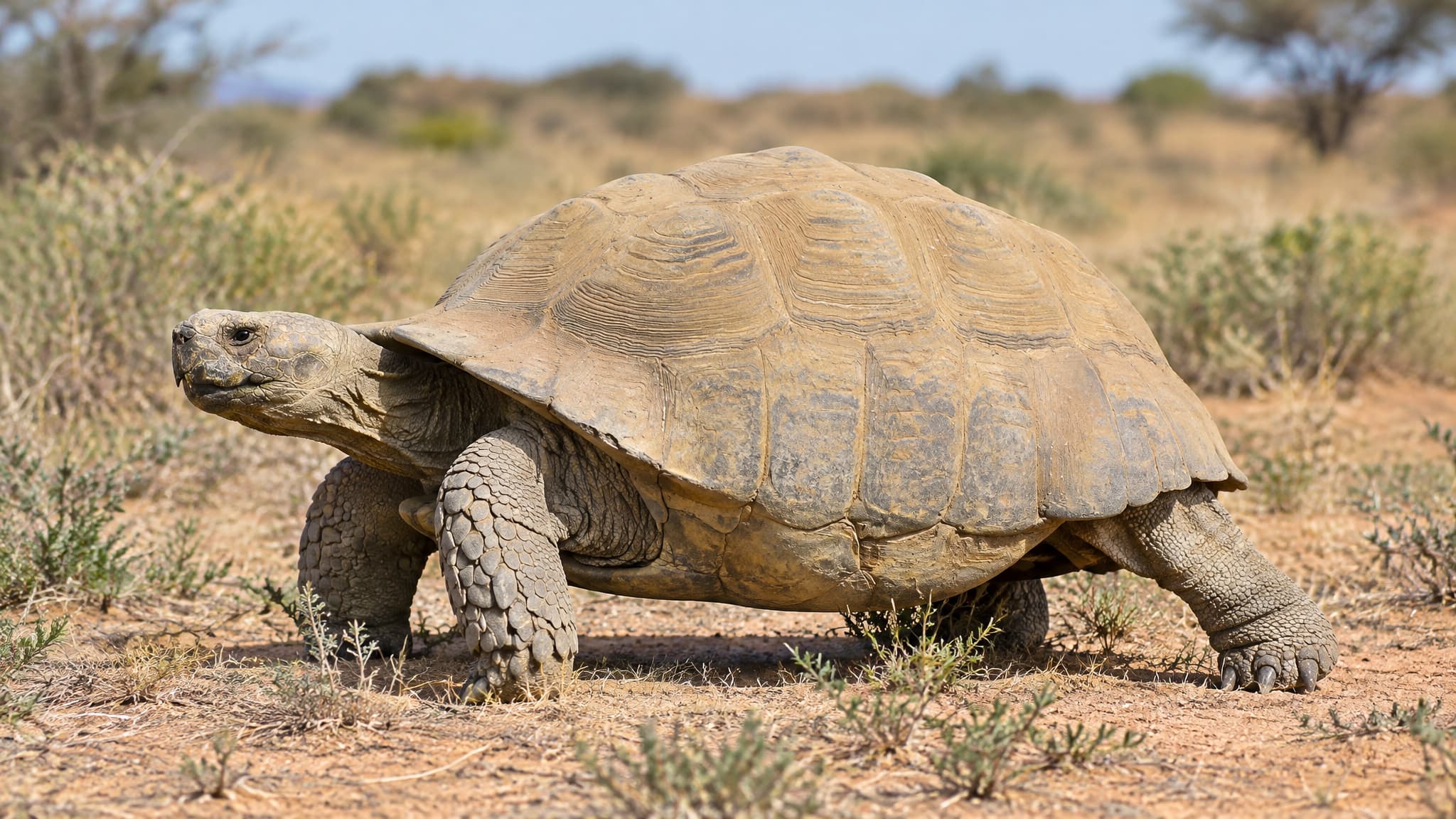
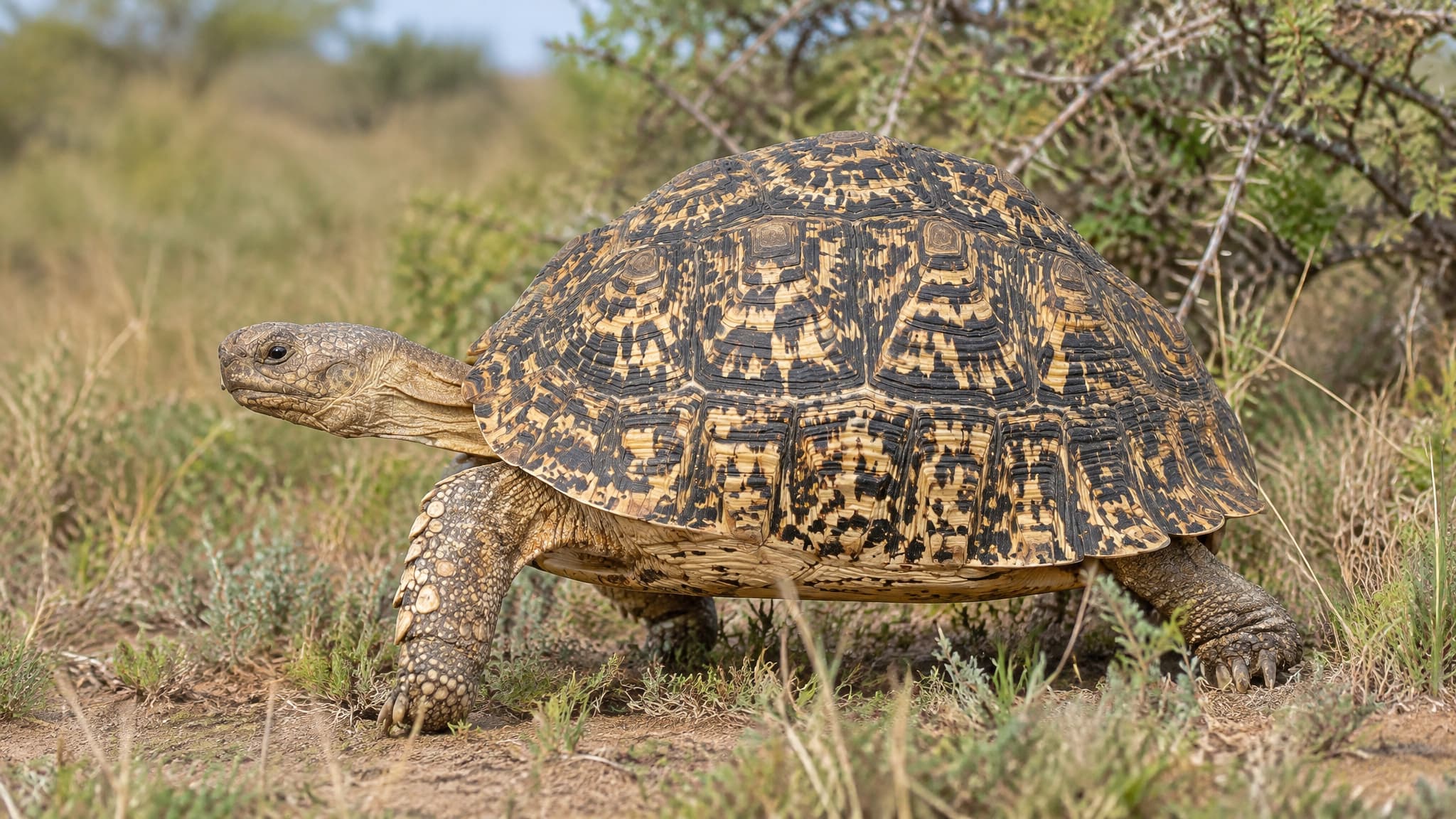
A leopard tortoise moves through dry, grassy scrub in side profile, with its head and sturdy, scaled legs extended beneath a high-domed shell marked by bold dark-and-golden patterns.
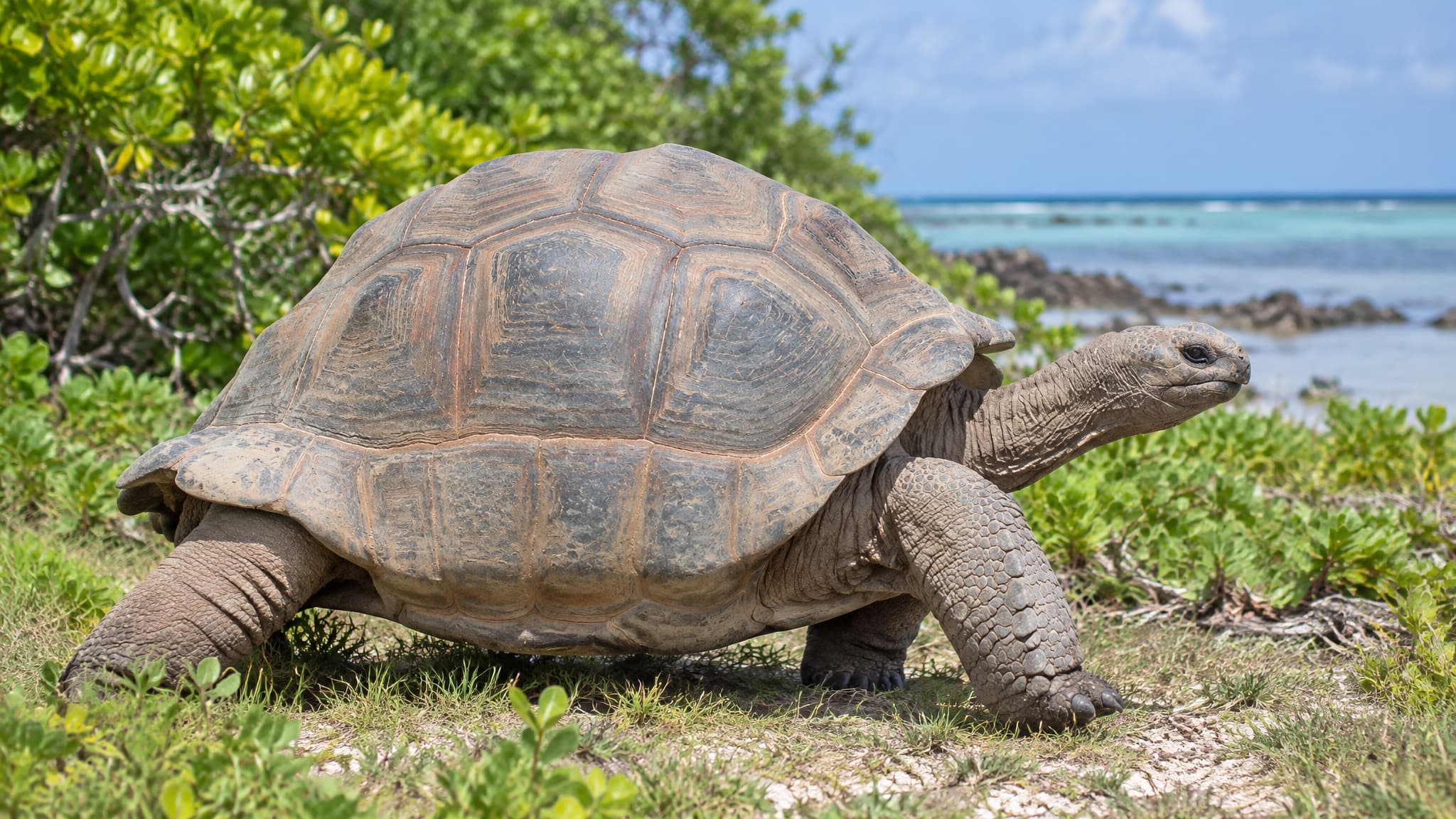
The leopard tortoise (Stigmochelys pardalis) is one of the largest tortoises in the world, ranked fourth by size. Typical adults reach about 40 cm in shell length and 13 kg, while animals from the far north and far south of the range are bigger and commonly weigh up to 20 kg. Exceptional individuals have reached 70 cm and 40 kg. The carapace is high and domed with steep sides. Hatchlings and juveniles show bold black blotches on a yellow background, a pattern that inspired the name, and these markings fade to brown or grey with age.
The species ranges across eastern and southern Africa, from South Sudan and Somalia south to South Africa and Namibia, but it is generally absent from the humid forests of Central Africa. It occupies grassland, thorn scrub, bushveld and savanna from sea level up to about 2,900 m. It does not dig its own burrows except to nest; during extreme heat or cold it shelters in abandoned burrows of jackals, foxes or aardvarks, or in rock crevices and shade.
Leopard tortoises are grazing herbivores. They feed on grasses, forbs, thistles and succulents, and eat berries and fruit when available. Succulent plants supply much of their water. To obtain calcium they gnaw on bones, ash and even dry hyena droppings. They are mainly active by day, become less active in hot weather and the dry season, and live solitary lives outside the breeding period.
Breeding takes place from about May to October. Males compete by ramming and butting rivals and grunt while mating. Females dig a nest and lay clutches of 5 to 30 eggs, and may produce 5 to 7 clutches in a season. Incubation is unusually long, lasting 8 to 15 months depending on temperature, and hatchlings receive no parental care. Sexual maturity comes at 12 to 15 years, and individuals may live 80 to 100 years.
Because seeds can pass through the gut undamaged, the tortoise helps disperse plants across the savanna. Eggs and hatchlings are taken by rock monitors, puff adders, jackals and crows, while adults have few natural enemies, though lions and hyenas have occasionally killed them.
The IUCN lists the species as Least Concern, and it remains common over most of its range. It has been on CITES Appendix II since 1975. Agricultural burning, hunting for food and collection for the pet trade are threats, but they have not yet caused significant declines.