Pantanal cat
Leopardus braccatus
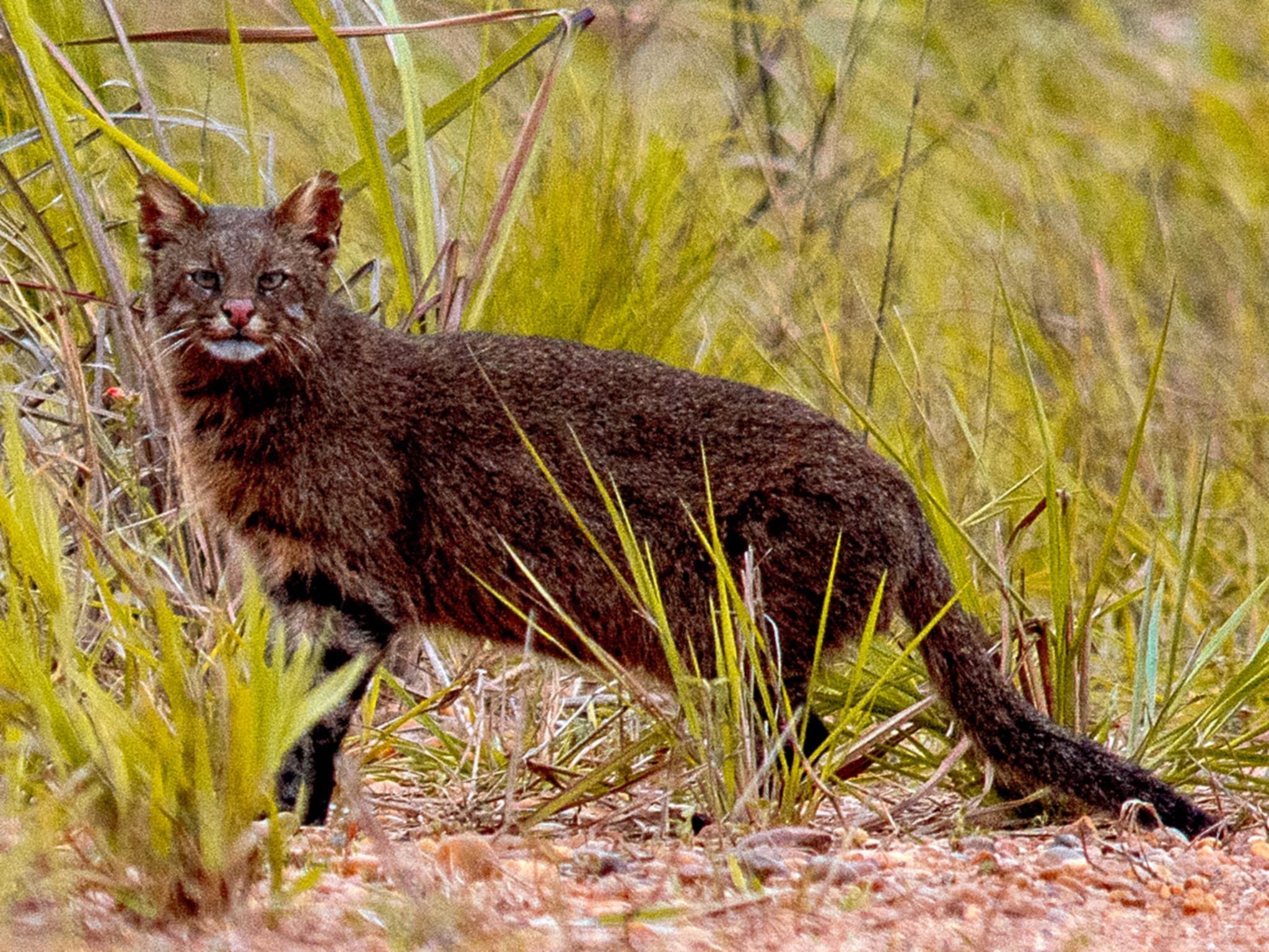
A wild Pantanal cat (Leopardus braccatus) in Parque Estadual das Várzeas do Rio Ivinhema, Mato Grosso do Sul, Brazil. Photo: Jairmoreirafotografia / Wikimedia Commons, CC BY-SA 4.0.
The Pantanal cat is a small South American wild cat, roughly domestic-cat sized and often reported at about 3 kg. Its coat is generally brownish, marked with dark facial stripes and body patterning. A particularly useful field character is the strongly dark, often fully black “booted” lower legs and feet, which help distinguish it from closely related pampas-cat taxa.
Under the modern species-level treatment, it occurs chiefly in open habitats of central Brazil, Paraguay, eastern Bolivia, and northern Argentina. It is associated especially with the Cerrado and Pantanal, but records also come from ecotones and mosaics involving Caatinga and Atlantic Forest. It uses grasslands, savannas, seasonally wet areas, scrub, and woodland edges; some individuals occur in pasture or other modified landscapes.
This cat is a carnivorous, ground-hunting predator. Published dietary evidence includes small mammals, ground birds, lizards, and snakes. It likely helps regulate populations of small vertebrates in open South American ecosystems. Available observations suggest activity can be diurnal or crepuscular, though detailed species-specific behavioral studies remain scarce.
Reproductive knowledge is limited. Older accounts for the former broader L. braccatus concept report litters of one to three kittens after a gestation of about 80–85 days; reported longevity is around nine years in the wild and up to 16.5 years in captivity. Conversion of native grassland and wetland habitats to agriculture and cattle pasture, road mortality, and fragmentation are important concerns. The species is currently Not Evaluated on the IUCN Red List as a separately recognized species.