Central Chilean colocolo
Leopardus colocola
 AI-generated
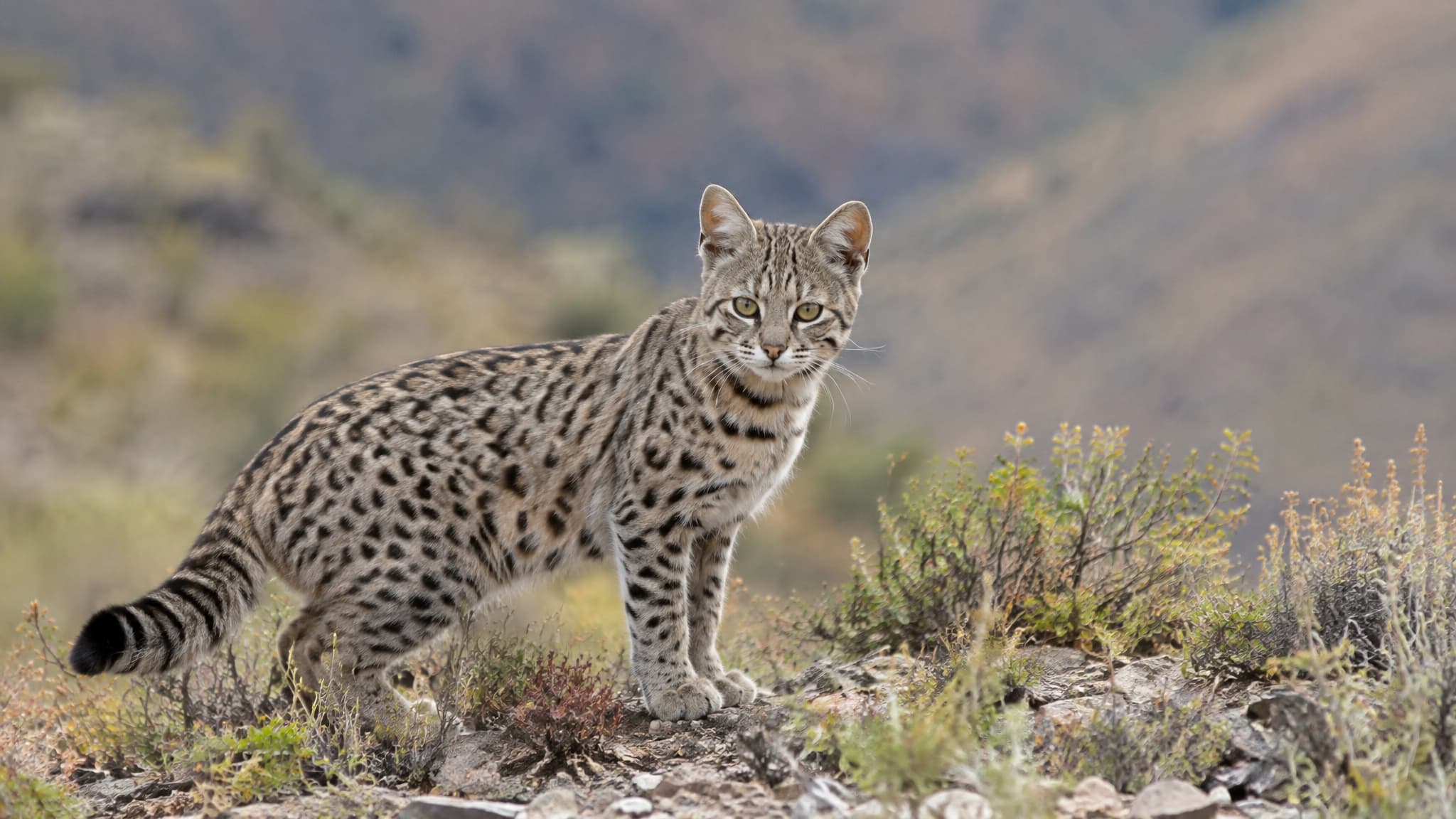
A spotted, ring-tailed cat stands on a rocky, sparsely vegetated slope, facing the camera in a three-quarter pose. Its upright ears, dark facial markings, pale muzzle, and banded tail are clearly visible.
The Central Chilean colocolo is a small, elusive wild cat of central Chile, also called the colocolo or Central Chilean pampas cat. The spelling Leopardus colocolo occurs widely in older works, but current mammal taxonomies recognize Leopardus colocola. It is a member of the South American small-cat genus Leopardus, rather than a leopard. Its coat is variable, typically showing yellowish-brown, gray, or reddish tones with darker markings; the short, ringed tail and barred legs can help distinguish it from other Chilean cats.
Modern revision of the former pampas-cat complex restricts this species to Chile. In central Chile it has been recorded in Mediterranean shrublands, open woodland, deciduous and hygrophilous forest, coastal desert, Andean steppe, vineyards, and forestry plantations. These records show considerable ecological flexibility, although observations in heavily modified land may represent movement between remaining native patches rather than permanent use of all altered habitats.
It is a solitary carnivore whose ecological role is that of a small terrestrial predator. Rodents and other small vertebrates are expected to be important prey, and Chilean food-web research also records it among native predators of introduced European rabbits. Direct observations remain scarce, so broad claims about daily activity, social organization, home range, reproduction, or longevity should be treated cautiously; these aspects need further species-specific study.
Habitat conversion and fragmentation are important conservation concerns in central Chile, where agriculture, urban growth, plantations, roads, and free-ranging domestic animals can increase pressure on a cat already difficult to detect. Because the taxon was recently separated from the wider pampas-cat complex, the Mammal Diversity Database lists L. colocola as Not Evaluated on the IUCN Red List at this newly delimited species level. Protecting connected native vegetation and improving camera-trap and genetic monitoring are especially valuable for clarifying its distribution and conservation needs.