
Marine Iguana
Amblyrhynchus cristatus
 AI-generated
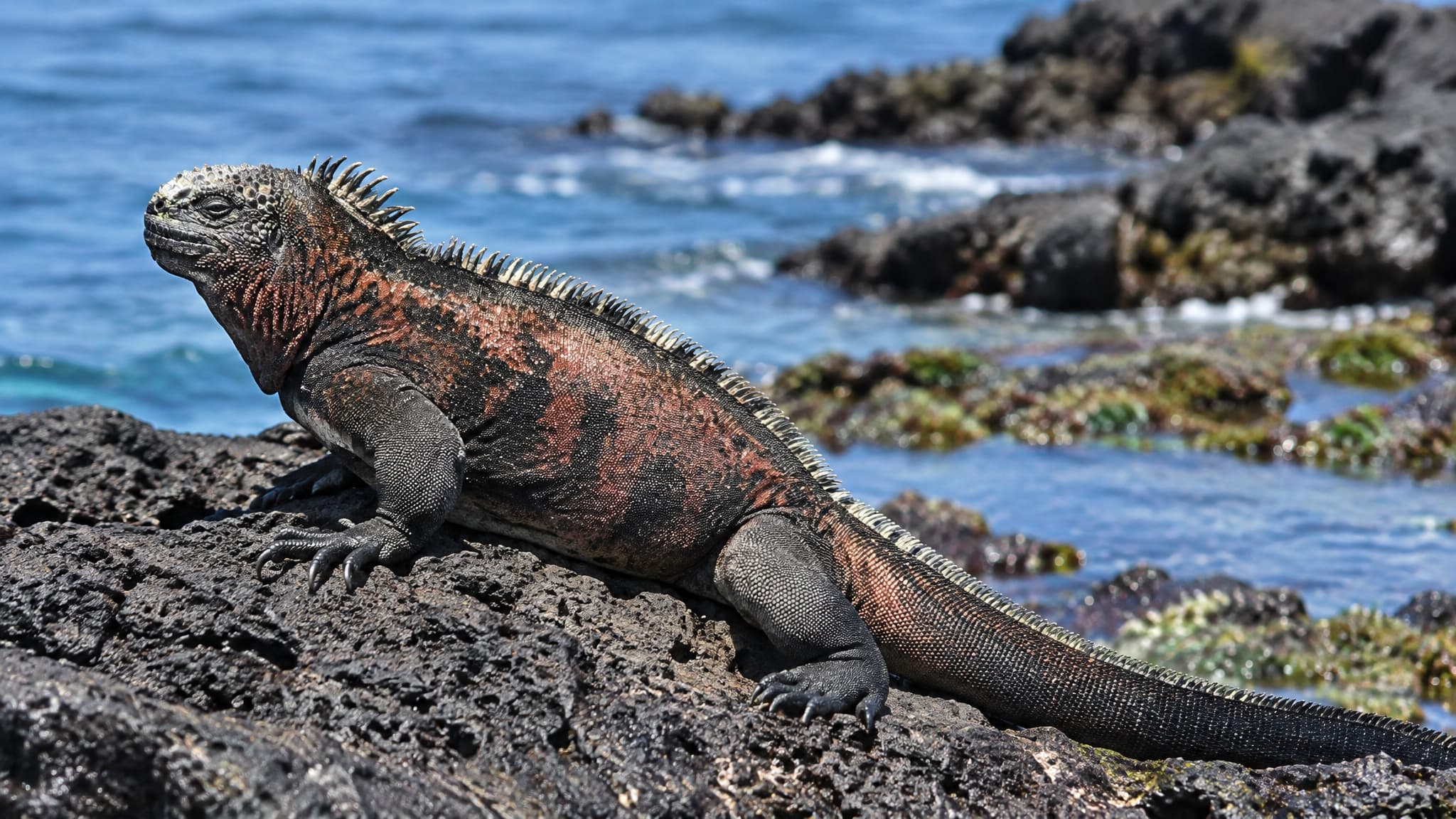
A marine iguana rests on dark volcanic rocks beside the sea, facing left with its body low, sturdy limbs extended, and a long tail and prominent dorsal crest visible.
The marine iguana (Amblyrhynchus cristatus) is the only living lizard that feeds in the sea. It is grey to black, with a row of pyramid-shaped dorsal spines and a short, blunt snout suited to scraping algae off rocks. Adults are usually about 0.6–1.3 m long in total, and the largest males reach the top of that range. During the breeding season, males on some islands become much brighter in color.
The species is endemic to the Galápagos Islands of Ecuador. It lives on the rocky volcanic shores of the archipelago and in the shallow waters next to them. Populations differ in appearance from island to island, and several subspecies are recognized. There is only one confirmed record of a marine iguana outside the Galápagos.
Its diet consists almost entirely of marine algae, both green and red. Small individuals graze on algae in the intertidal zone, while large males dive into the sea. They have been recorded diving to about 30 m and staying underwater for 30 to 45 minutes. Because the water is cold, marine iguanas spend long periods basking on dark rocks to warm up. They also sneeze out concentrated salt through special nasal glands.
Mating takes place on leks, and males defend small territories with head-bobbing displays. Each female digs a burrow in sand and lays one to six eggs. She guards the nest for a short time and then leaves. The eggs hatch after about three to four months, and the young receive no parental care. In the wild, the species usually lives about 5 to 12 years.
As a large grazer of algae on rocky shores, the marine iguana plays an important part in the coastal ecosystem. It is also prey for Galápagos hawks and herons. One striking adaptation is that adults can shrink: during food shortages caused by El Niño, they lose up to 20% of their body mass and later grow back.
The IUCN lists the species as Vulnerable. Its main threats are El Niño events, which are likely to become more frequent with climate change; introduced predators such as rats, cats and dogs; oil spills; and plastic pollution. The species is listed in CITES Appendix II and is fully protected under Ecuadorian law.



