Mata Mata
Chelus fimbriata
 AI-generated
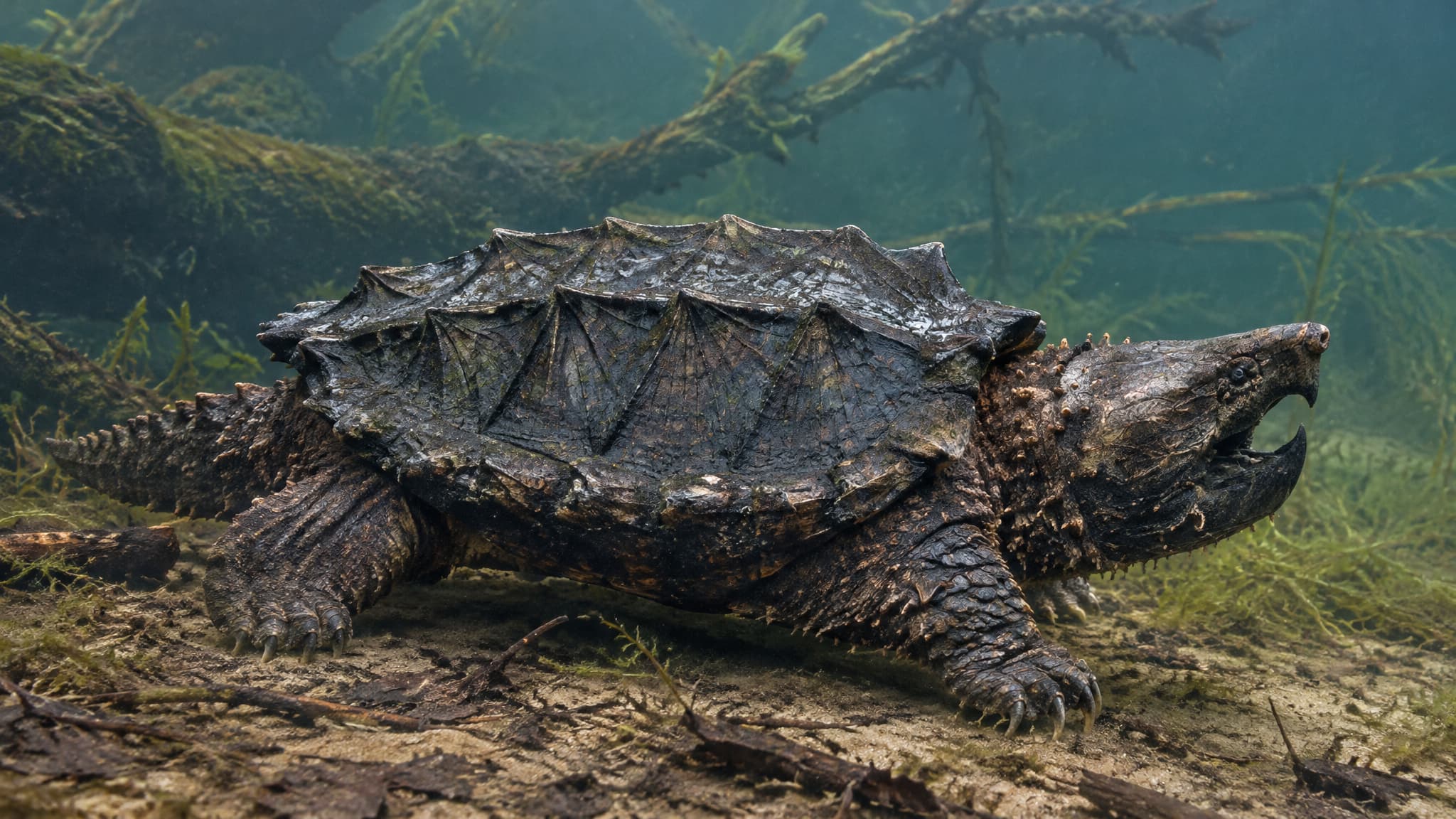
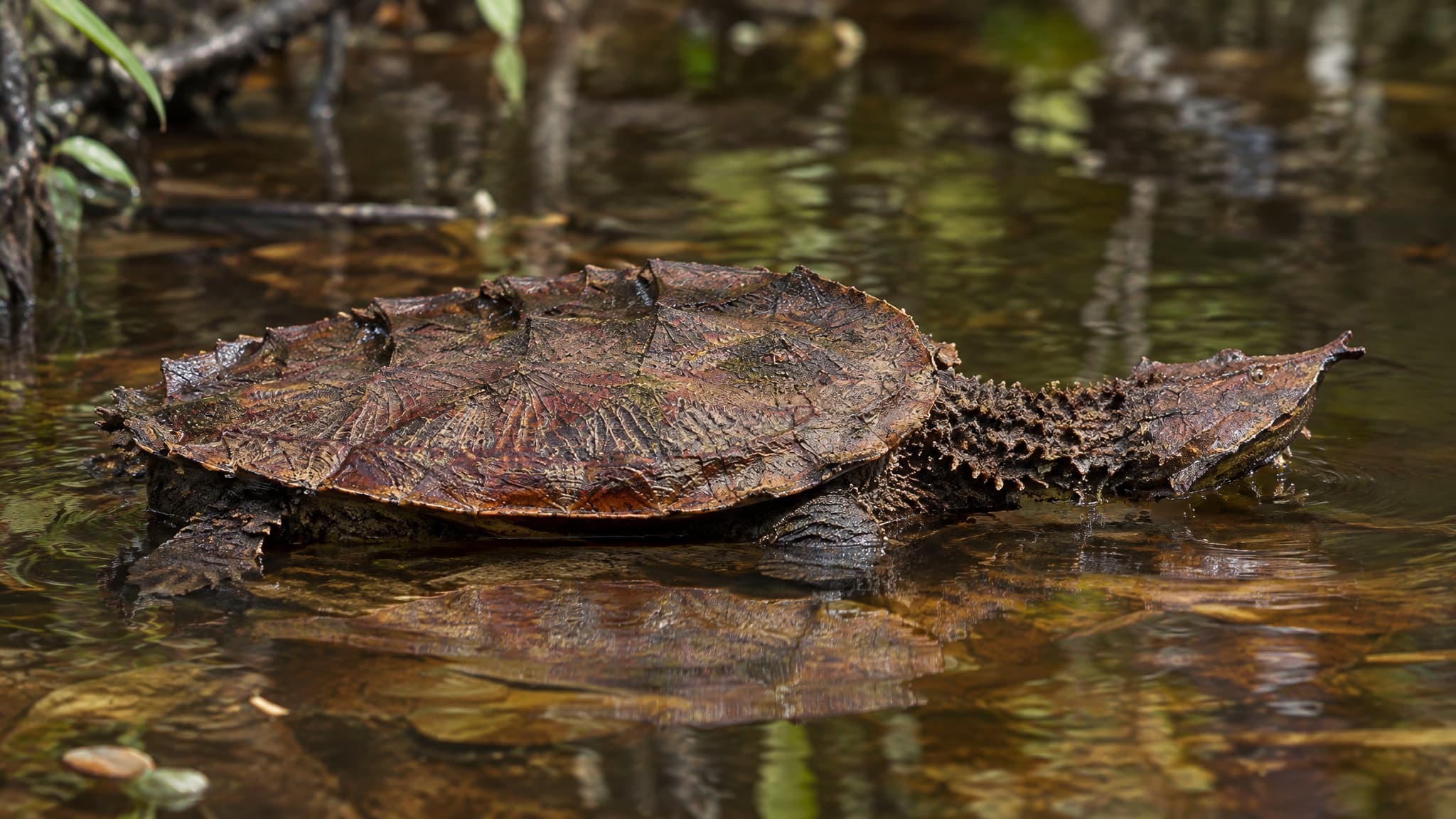
A Mata Mata rests partially submerged in shallow, reflective water, showing its broad, heavily ridged leaf-like shell, fringed edges, textured skin, and long pointed snout.
The mata mata (Chelus fimbriata), also called the Amazon matamata, is a South American side-necked turtle in the family Chelidae and one of the strangest-looking chelonians. Its broad, flat, triangular head is fringed with skin flaps and bumps, and its long, thick neck ends in a tube-like snout that works as a snorkel. The rough, oblong carapace is dark brown to blackish and is often covered in algae. Juveniles are more colorful, salmon-pink to reddish-brown with dark mottling.
The species lives in the Amazon basin and the Mahury drainage. It is recorded from Brazil, Bolivia, Colombia, Ecuador, Peru, French Guiana and Suriname, and a pet-trade release has also been recorded in Florida. In 2020, genetic and morphological work split off the Orinoco and Rio Negro populations as a separate species, Chelus orinocensis. The mata mata prefers shallow, slow-moving, often murky water, including blackwater streams, swamps, marshes and river margins. It is almost entirely aquatic and rarely leaves the water.
The mata mata is a sit-and-wait predator. It walks slowly along muddy bottoms rather than swimming well, and its shape helps it pass as leaf litter or debris. When a fish comes close, the turtle opens its mouth and expands its throat very quickly, creating suction that pulls in the prey with the water. It then expels the water and swallows the food whole, because it cannot chew. It sometimes herds fish into a confined space before striking.
Adults are sexually dimorphic. Males have a concave plastron and long, thick tails. Females nest in the upper Amazon from about October to December. They often dig nests in decaying vegetation at the forest edge rather than on open sandbanks. Each clutch holds 12 to 28 almost spherical eggs about 3.5 cm across. Incubation lasts about 200 days in captivity, and the hatchlings get no parental care. Wild lifespan is poorly known, but captive individuals have lived for more than 35 years.
As a camouflaged ambush predator, the mata mata helps regulate fish populations in Amazonian wetlands. It is widespread and generally considered Least Concern. Even so, demand from the international pet trade, including illegal trade, has led to closer scrutiny. The 2020 split of the genus was a key reason both Chelus species were proposed for CITES Appendix II.