Neotropical river otter
Lontra longicaudis
 AI-generated
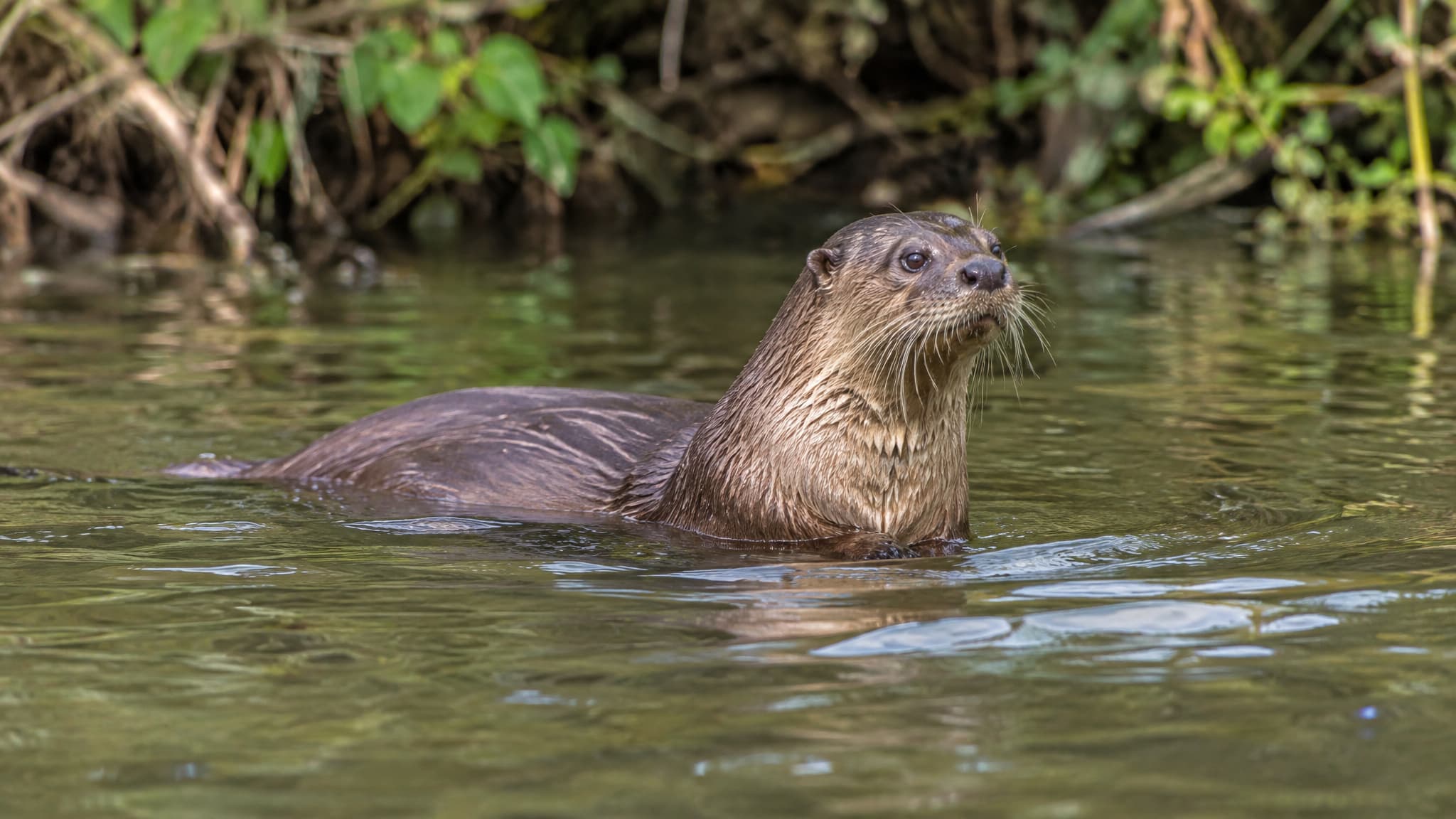
A wet brown otter swims upright in calm, shallow water, with dense riverside vegetation behind it. Its rounded ears, broad muzzle, long whiskers, and pale throat and chest are clearly visible.
The Neotropical river otter is a semi-aquatic mustelid with a streamlined, low-slung body, short sturdy legs, fully webbed toes, and a long, tapering tail used in swimming. Its coat is short, dense, and glossy grayish brown, usually paler on the throat and underside; pale silvery to yellowish markings may show on the muzzle and lips. Males are generally larger than females.
It occurs from Mexico through Central America and much of South America, reaching Uruguay, Paraguay, and northern Argentina. It lives beside permanent freshwater—rivers, streams, lakes, and lagoons—and may also use coastal settings where freshwater is available. Dense riparian vegetation is important, and resting or breeding shelters can include bank burrows, cavities among rocks or roots, vegetation cover, and sometimes caves.
Usually solitary, this otter communicates with scent marks deposited at conspicuous places near water and also makes whistles, hums, and alarm-like calls. It is an agile swimmer and diver. Fish are its principal prey, while crustaceans, mollusks, aquatic insects, amphibians, reptiles, birds, and small mammals supplement the diet when available. As a freshwater predator, it helps shape aquatic food webs and its presence depends on functioning waterside habitat.
Breeding timing varies geographically. Gestation is reported at about 56 days, with litters of one to five young—most often two or three. Cubs are born furred but blind, later emerge from the den and begin swimming with their mother; females provide the recorded parental care. Reliable wild-longevity figures were not established by the consulted sources.
The species is globally classified as Near Threatened. Habitat loss and fragmentation, water pollution, conflict with fisheries and fish farms, accidental entanglement in fishing gear, and hydroelectric development are important threats. In Brazil, an ICMBio assessment likewise classified it as Near Threatened, emphasizing the risks posed by deforestation and degradation of freshwater systems.