
Ocelot
Leopardus pardalis
 AI-generated
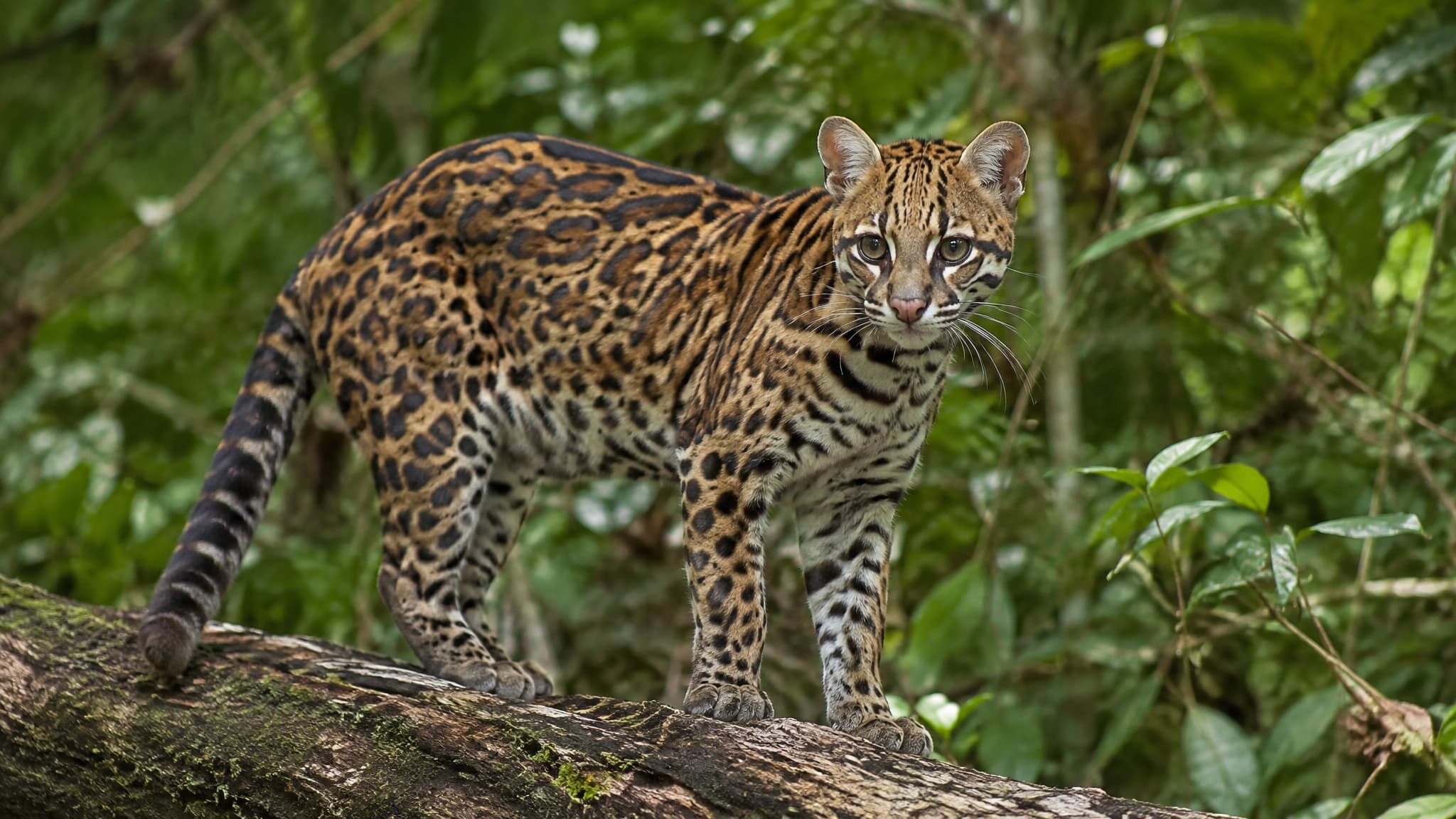
An ocelot stands on a moss-covered fallen log in dense green forest, facing the camera with its spotted coat, banded tail, rounded ears, and long whiskers clearly visible.
The ocelot is a medium-sized, strongly built wild cat and one of the largest species in the genus Leopardus. Its short coat ranges from pale yellowish or tawny to grayish, patterned with dark-edged rosettes, spots, and elongated stripes. A white underside, bold facial markings, rounded ears with pale central patches, and a ringed, relatively short tail help distinguish it from the longer-tailed margay.
It occurs from the southern United States through Central America and much of South America to northern Argentina. Ocelots occupy tropical and subtropical forests, dry woodland, scrub, savanna, mangroves, and wetlands, but dense vegetation is a particularly important feature of their habitat. They may use altered landscapes, yet broad, connected cover is vital for movement and shelter.
Usually solitary and chiefly nocturnal or crepuscular, the ocelot hunts by stealth and relies on keen night vision, hearing, and smell. Its varied carnivorous diet includes rodents and other small mammals, birds, reptiles, amphibians, fish, and invertebrates; it can also take larger prey on occasion. As a mesopredator, it helps regulate prey populations and forms part of food webs that also include larger cats.
Females raise the young alone after a gestation of roughly 79–85 days, commonly producing one to three kittens in a concealed den. Young become independent at around one year of age. Wild lifespan is often reported as about 7–10 years, while captive individuals may live considerably longer. The species is assessed as Least Concern overall, but local populations are affected by habitat loss and fragmentation, road kills, and conflict associated with poultry or livestock predation.



