
Orca
Orcinus orca
 AI-generated
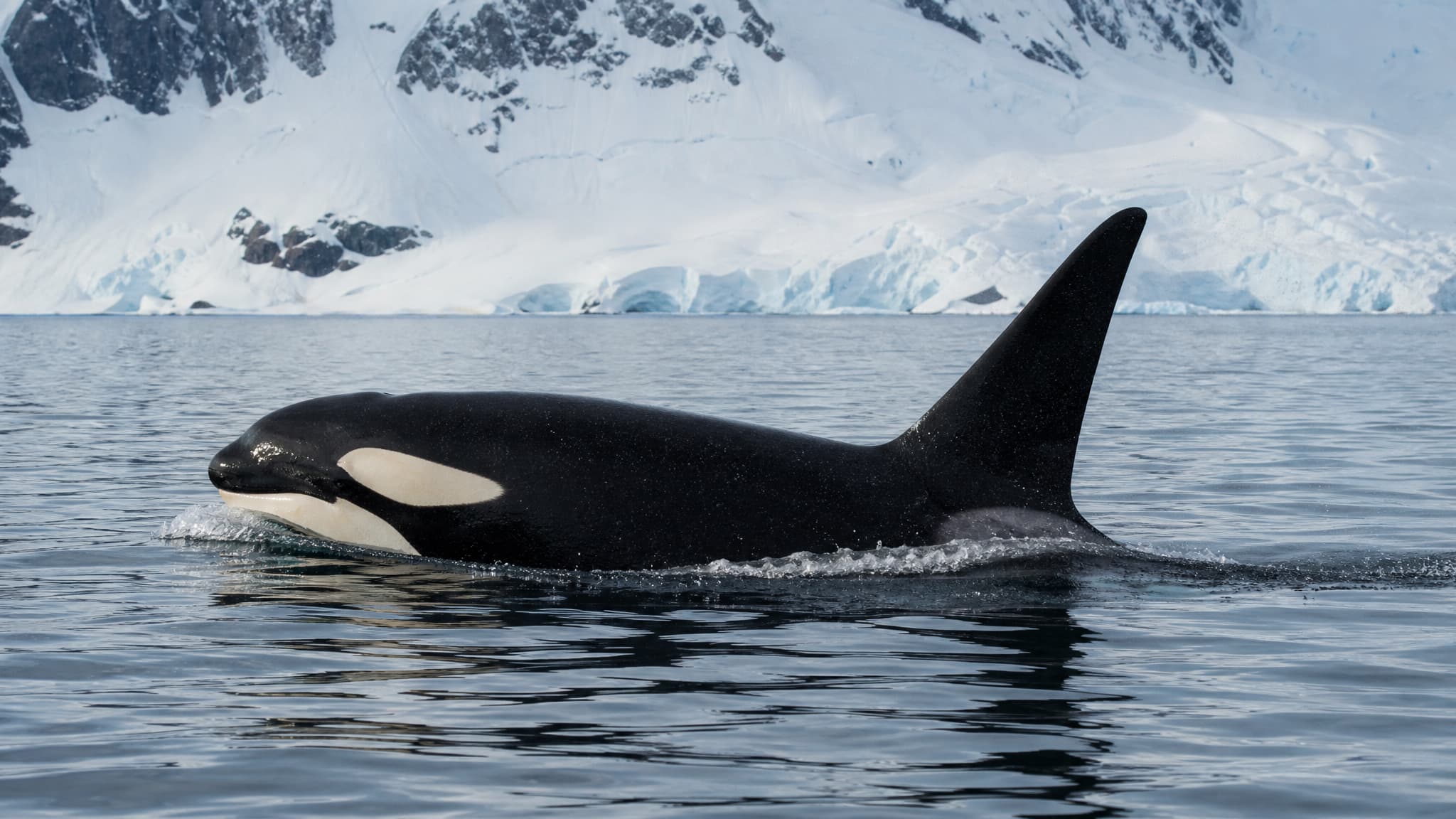
An orca swims leftward at the surface, with its black body, white eye patch, pale lower jaw, and tall dorsal fin visible against a snowy, glaciated coastline. 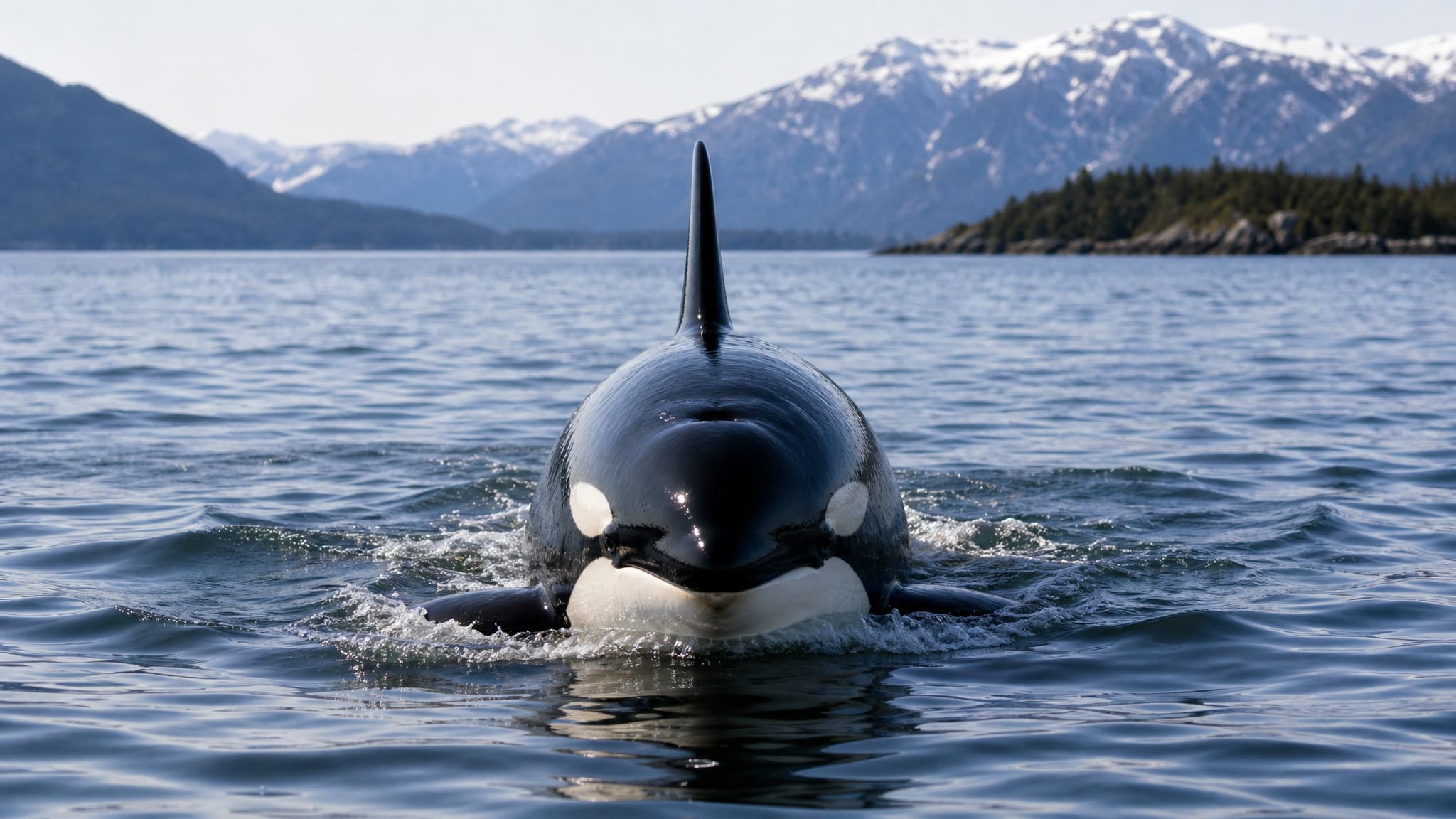 AI-generated
An orca surfaces head-on in calm coastal water, with its black-and-white facial pattern, pectoral fins, and dorsal fin visible. Snow-capped mountains and a forested shoreline form the background.
The orca, also called the killer whale, is the largest member of the dolphin family rather than a “true” baleen whale. Its bold black-and-white pattern includes a white underside, white patches behind and above the eyes, and a gray saddle patch behind the dorsal fin. Adults are powerfully built and sexually dimorphic: males are generally larger and carry a tall, nearly upright dorsal fin, while females’ fins are shorter and more curved.
Orcas occur in every ocean, from polar pack-ice habitats to tropical seas, and are among the world’s most widely distributed cetaceans. They use open ocean, continental shelves, coastal waters, fjords, and occasionally shallow nearshore areas. They are not one uniform ecological type: geographically distinct populations, often called ecotypes, can differ in body form, calls, movements, prey, and hunting traditions.
A highly social apex predator, the orca lives in groups known as pods. Many pods are long-lasting family units centered on maternal relatives. Their communication includes whistles, pulsed calls, and echolocation clicks; in some populations, calls form stable group dialects passed through generations. Hunting is often cooperative and can involve specialized tactics learned socially.
Its diet is entirely carnivorous but remarkably variable. Some populations feed mainly on fish, including salmon; others hunt sharks, rays, seabirds, squid, seals, sea lions, dolphins, or even large whales. By influencing the abundance and behavior of prey, orcas can have major ecological effects across marine food webs.
Females usually produce one calf after a gestation of roughly 15–18 months, with substantial maternal care and a long learning period. Lifespans can extend for many decades; females may live beyond 80 years, whereas males usually have shorter lives. Globally, Orcinus orca is listed as Data Deficient by the IUCN because population status and taxonomy vary among forms. Important threats to particular populations include prey depletion, chemical contaminants, underwater noise, vessel disturbance, and entanglement or other fisheries interactions.



