
Franciscana
Pontoporia blainvillei
 AI-generated
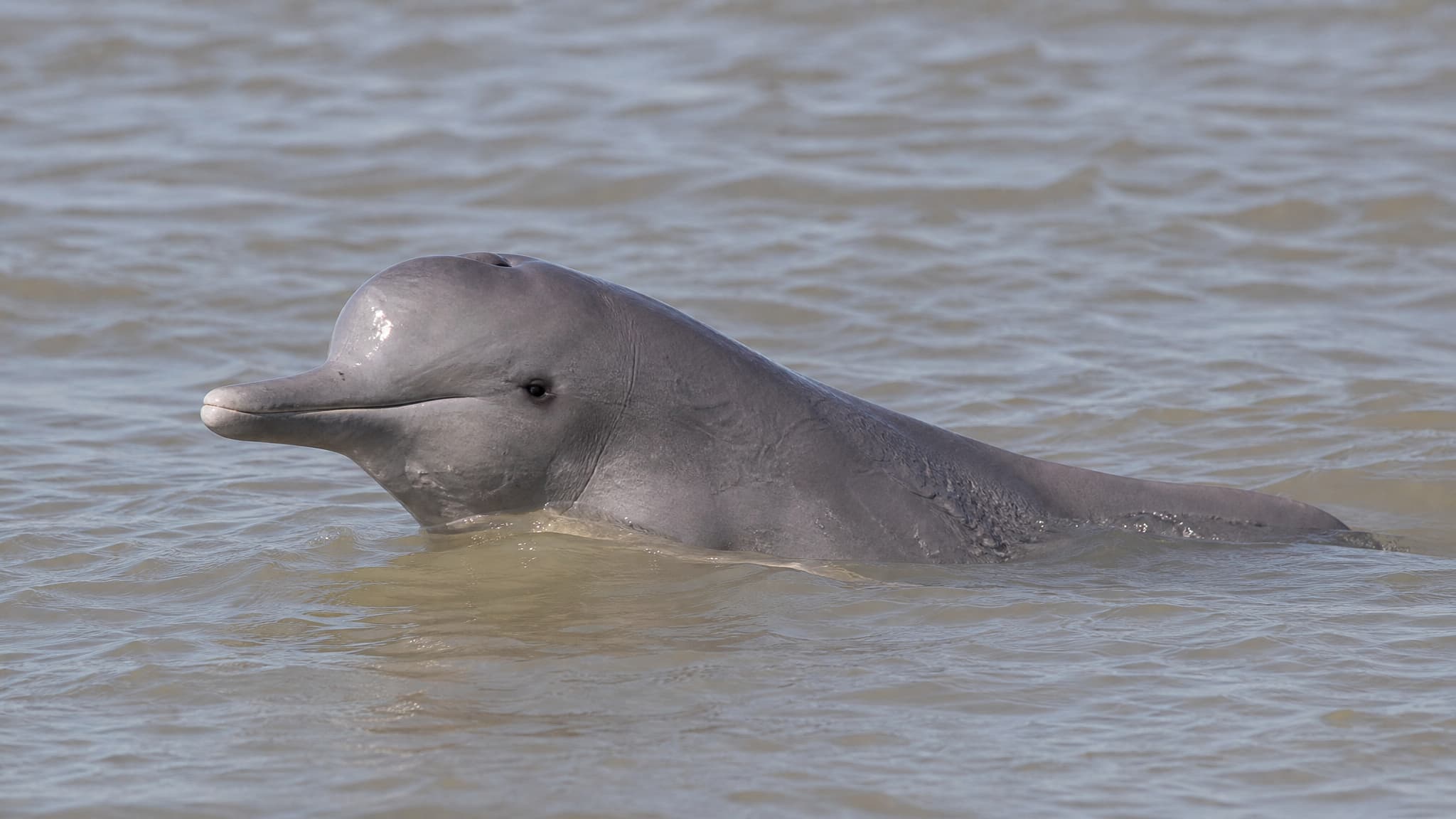
A gray dolphin is shown in left-facing side profile, surfacing in shallow rippled water; its elongated rostrum, eye, blowhole, and mostly submerged rear body are visible.
Franciscana
The franciscana, also called the La Plata dolphin, is a small toothed cetacean distinguished by its exceptionally long, slender beak. Its back and flanks are gray-brown, while the underside is paler; the dorsal fin is small and rounded-triangular, and the broad flippers are often described as trapezoidal. Adult females are generally larger than males. This discreet dolphin is difficult to observe because it usually travels in small groups, avoids boats, and does not make conspicuous splashes at the surface.
It is endemic to the southwestern Atlantic, occurring in coastal waters of Brazil, Uruguay, and Argentina, including parts of the Río de la Plata. Rather than being a true river dolphin, it is chiefly a nearshore marine species, although it also uses certain estuaries. It favors shallow, often turbid coastal waters—commonly within roughly 30–35 metres of depth—and its distribution is not continuous along the Brazilian coast.
Franciscanas are opportunistic carnivores. They take a varied mix of small fishes, crustaceans, and cephalopods, with prey choice changing among regions and seasons. They forage in relation to local prey availability and tides, sometimes feeding cooperatively around schools of fish. As a mid-level marine predator, the species helps link populations of small coastal prey with larger predators; sharks and killer whales are documented natural predators.
Females give birth to one calf after a gestation of about 10–11 months. Timing differs geographically: births are seasonal in southern portions of the range but may occur year-round farther north. Calves nurse for roughly 6–9 months, begin taking solid prey early in life, and both sexes mature young for cetaceans. Individuals may live around 13–20 years, with a maximum recorded age of 21 years.
The main threat is accidental entanglement and drowning in gillnets, a severe risk for an animal that lives so close to heavily fished coasts. Coastal degradation, pollution, and loss of habitat compound this pressure. The species is globally listed as Vulnerable, while Brazil’s national conservation action plan identifies the toninha as Critically Endangered nationally and focuses on reducing bycatch and protecting habitat.



