Radiated tortoise
Astrochelys radiata
 AI-generated
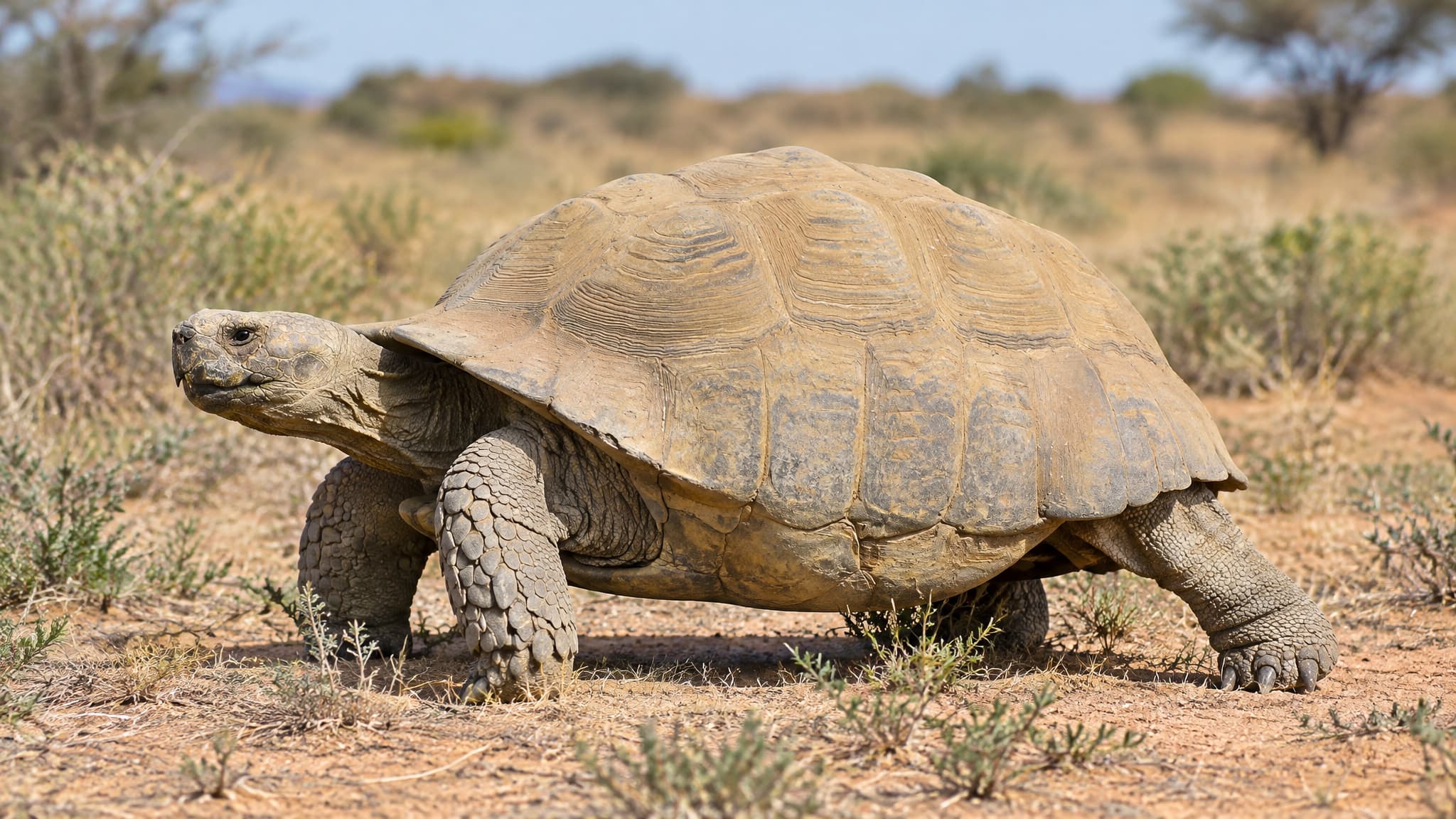
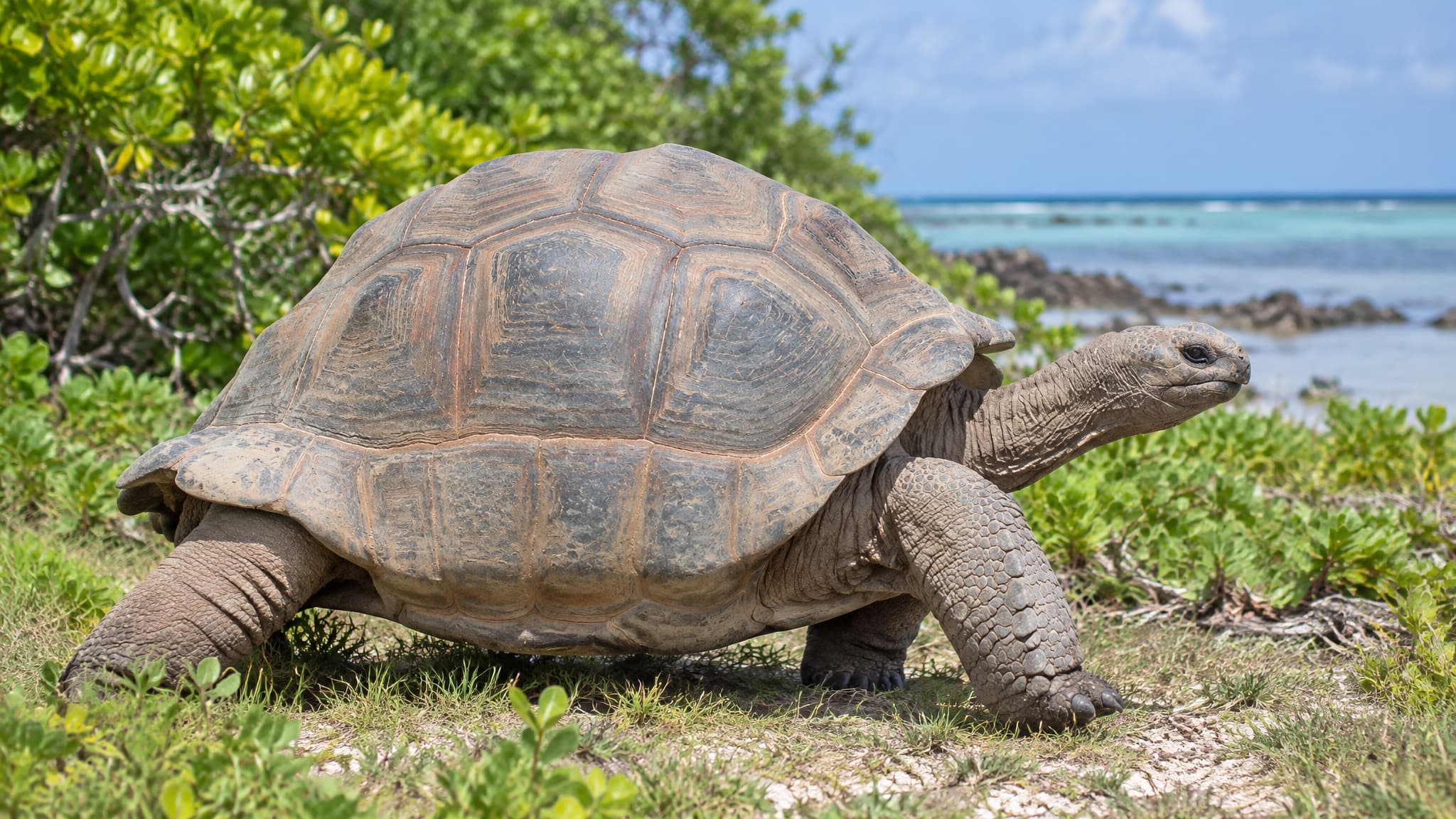
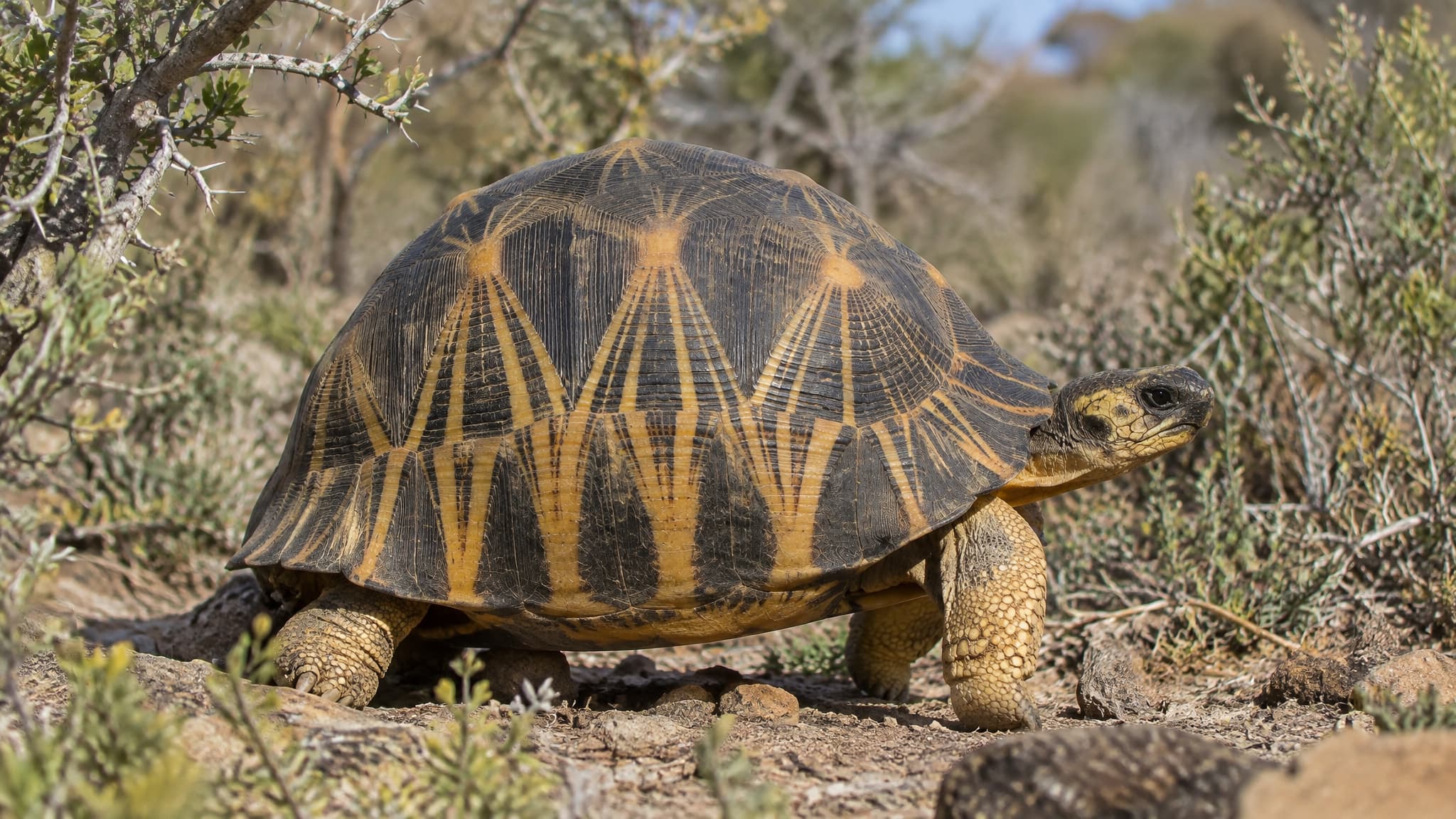
A radiated tortoise walks through dry, thorny scrubland, with its head and sturdy legs extended. Its dark, domed shell shows prominent yellow radiating patterns.
The radiated tortoise (Astrochelys radiata) is among the most striking tortoises in the world. Its high, domed carapace is dark brown to black, and each scute carries a star of bright yellow lines that radiate from a yellow centre, the pattern behind its common name. Adults usually measure 26 to 38 cm in carapace length and weigh 2.5 to 8.8 kg, although exceptional animals are larger: the biggest known specimen, a female in a Madagascar rescue centre, weighs 24 kg. The sexes look alike, but males tend to have longer tails with a more marked notch under the tail. Hatchlings are only 3.2 to 4 cm long and are white to off-white.
The species is endemic to the far south and southwest of Madagascar, where it lives in dry brush, spiny thorn forest, scrubland, woodland and coastal dunes. It has also been introduced to Réunion and Mauritius.
The radiated tortoise is a diurnal herbivore that spends most of its feeding time grazing on grasses, and it also eats flowers, fruit and succulents; the invasive Opuntia cactus is a favourite food. It prefers fresh new growth, which is richer in protein and lower in fibre, and turns to dried leaves when soft plants are scarce. Because individuals graze the same patches again and again, they keep the vegetation closely cropped and help shape the plant cover of their dry habitat.
During courtship the male bobs his head, sniffs the female and may lift her with the front edge of his shell while hissing and grunting. Males first mate at about 31 cm in length, and females need to be somewhat larger before they breed. The female digs a nest 15 to 20 cm deep, lays 3 to 12 eggs and leaves them; incubation usually takes 145 to 231 days. The species is very long-lived: the oldest verified individual, Tu'i Malila, died at an estimated age of 188 years.
The radiated tortoise is listed as Critically Endangered by the IUCN and on CITES Appendix I. Its population, once estimated at about 12 million animals, has collapsed because of habitat loss, collection for food and the illegal pet trade, made worse as local taboos (fady) that once protected it have weakened. In 2018 alone more than 17,000 tortoises were seized from traffickers, and conservation centres in Madagascar now care for close to 26,000 animals while reintroduction programmes return tortoises to the wild.