
Risso’s dolphin
Grampus griseus
 AI-generated
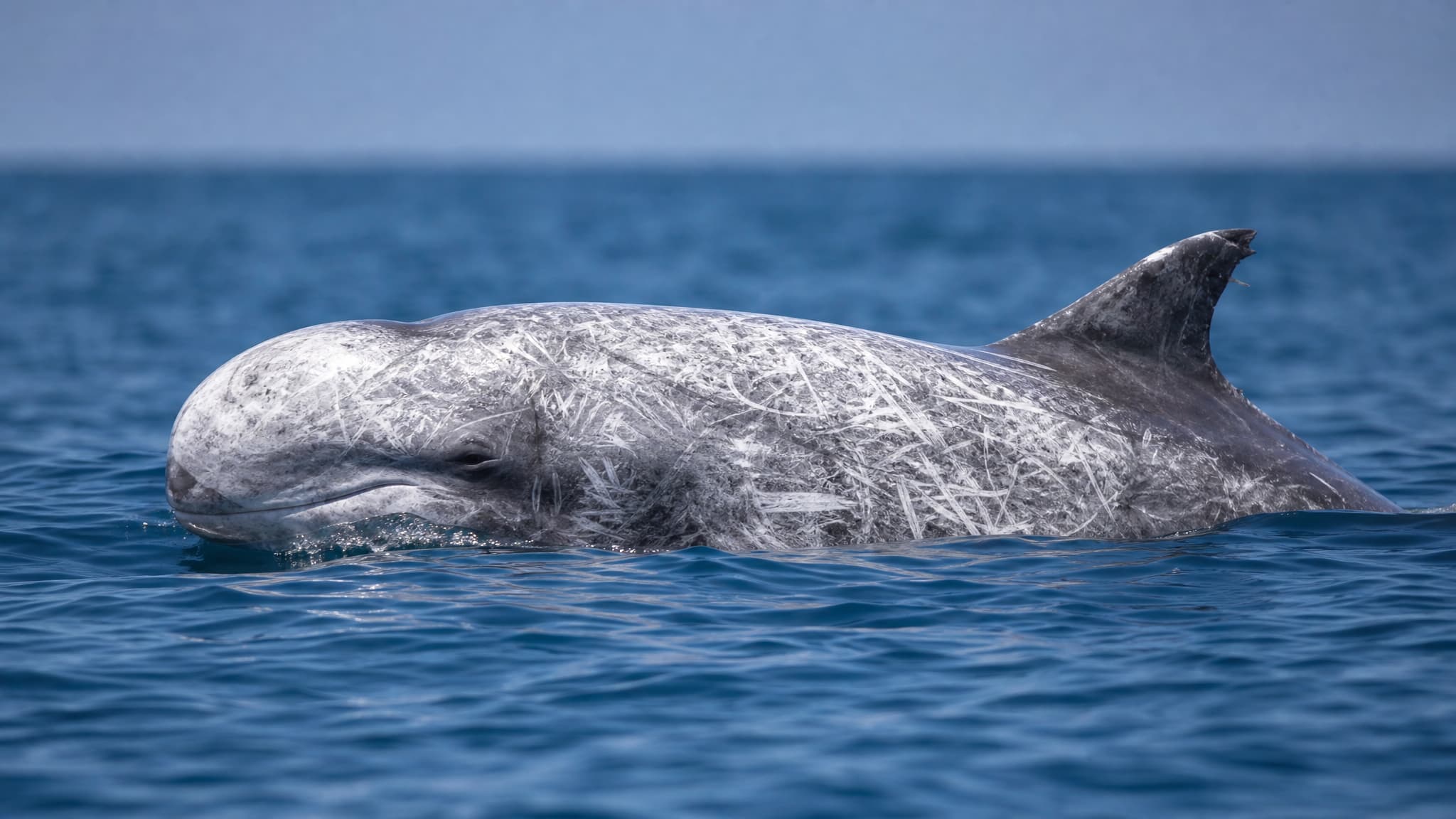
A heavily scarred gray dolphin surfaces side-on in open ocean, showing a rounded forehead, short indistinct snout, and a prominent dorsal fin above the water.
The Risso’s dolphin is a robust, medium-sized oceanic dolphin recognized by its rounded, almost beakless head, a vertical crease on the forehead, and a tall, curved dorsal fin. Adults measure roughly 2.6–4 m long and may weigh about 300–500 kg. Calves are dark gray to brown, but adults progressively become pale gray or nearly white. Their bodies often carry a dense network of pale tooth-rake scars from social interactions, plus marks left by squid, cookie-cutter sharks, and lampreys.
This species occurs across temperate, subtropical, and tropical seas worldwide, including Brazilian waters. It usually favors deep offshore habitats, particularly around continental-shelf edges, slopes, and steep underwater terrain, although it can also enter shallower coastal areas. Risso’s dolphins can dive at least 300 m and remain submerged for up to about 30 minutes, but many dives are shorter.
Squid is the principal food, supplemented by other cephalopods, fish, and krill. Much feeding occurs at night, when prey rises closer to the surface. They are social cetaceans, most often seen in groups of 10–30, though solitary animals and much larger aggregations have been recorded. Surface behavior can be conspicuous: individuals may breach, slap their flippers or tail, spyhop, and communicate using clicks and other sounds. As predators of squid and fish, they help transfer energy from deeper-water prey into the marine food web.
Breeding and births can occur throughout the year, with seasonal peaks varying among regions. Gestation lasts approximately 13–14 months, and newborns are about 1.1–1.7 m long. The species is known to live at least 35 years. Globally, it is assessed as Least Concern, owing to its broad distribution, but it faces localized risks from entanglement in fishing gear, deliberate hunting in some areas, chemical contamination, and disruptive underwater noise. Its long life and high position in the food chain can make accumulated pollutants especially harmful.



