
Brown capuchin
Sapajus apella
 AI-generated
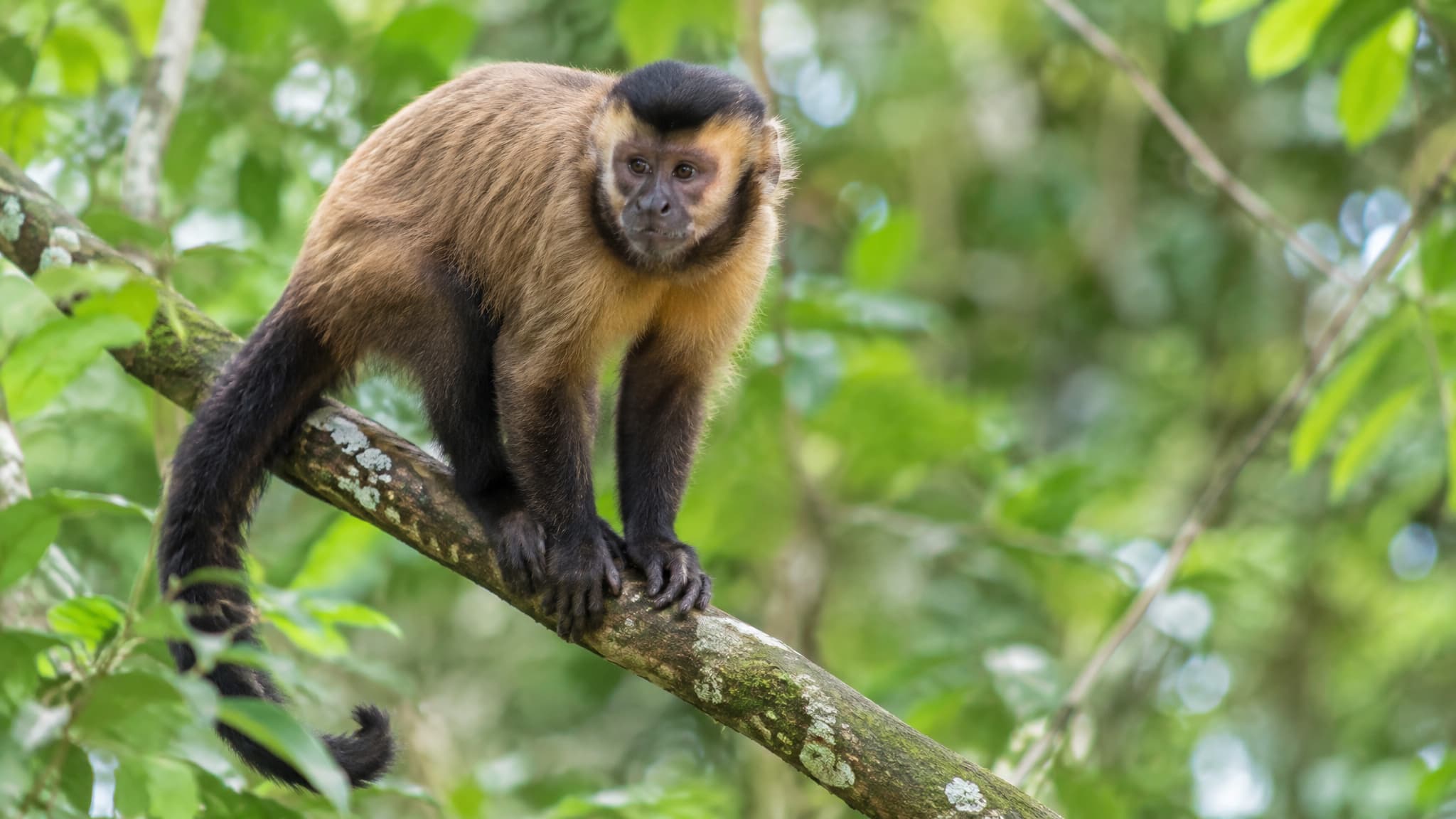
A brown capuchin sits astride a lichen-covered branch in lush forest, facing the camera. Its tan-brown body, dark limbs, crown-like dark cap, and long tail partly screened by foliage are visible.
The brown capuchin, Sapajus apella, is a robust New World monkey distinguished by a dark cap of coarse hair, dark sideburns and noticeable tufts above the ears. Its coat can range from light brown or yellow-brown to nearly black, usually with paler shoulders and underparts; the hands, feet and long prehensile tail are dark. Adults are stockily built with powerful jaws suited to hard foods, and males are substantially larger than females.
This capuchin occurs east of the Andes in northern and central South America. Its modernly recognized range includes parts of Colombia, Venezuela, the Guianas, Brazil, Ecuador, Peru and Bolivia. It occupies a variety of tropical forest settings, including humid lowland forest, gallery forest, secondary growth and some disturbed woodland. Although primarily arboreal, it may descend to the ground while feeding, traveling or playing.
Brown capuchins are active by day and live in social groups structured around dominance relationships. They communicate with calls, facial signals, touch and scent marking, and social grooming helps maintain group bonds. Their omnivorous diet is fruit-rich but flexible: seeds, nuts, other plant material, insects, eggs and small vertebrates may all be eaten. Strong jaws allow them to exploit large fruits and tough plant foods, while their fruit consumption also makes them important seed dispersers in forest ecosystems.
Females usually produce one infant after a gestation of about 150–160 days; twins are uncommon. Infants cling to their mother early in life, and group members may respond to a separated infant's calls. Females commonly remain in their birth group, whereas males disperse on reaching maturity. Wild longevity is incompletely known, but individuals in captivity may reach about 45 years. The IUCN classifies S. apella as Least Concern, though localized populations can still be affected by forest loss, hunting and capture for the pet trade.



