
Short-beaked common dolphin
Delphinus delphis
 AI-generated
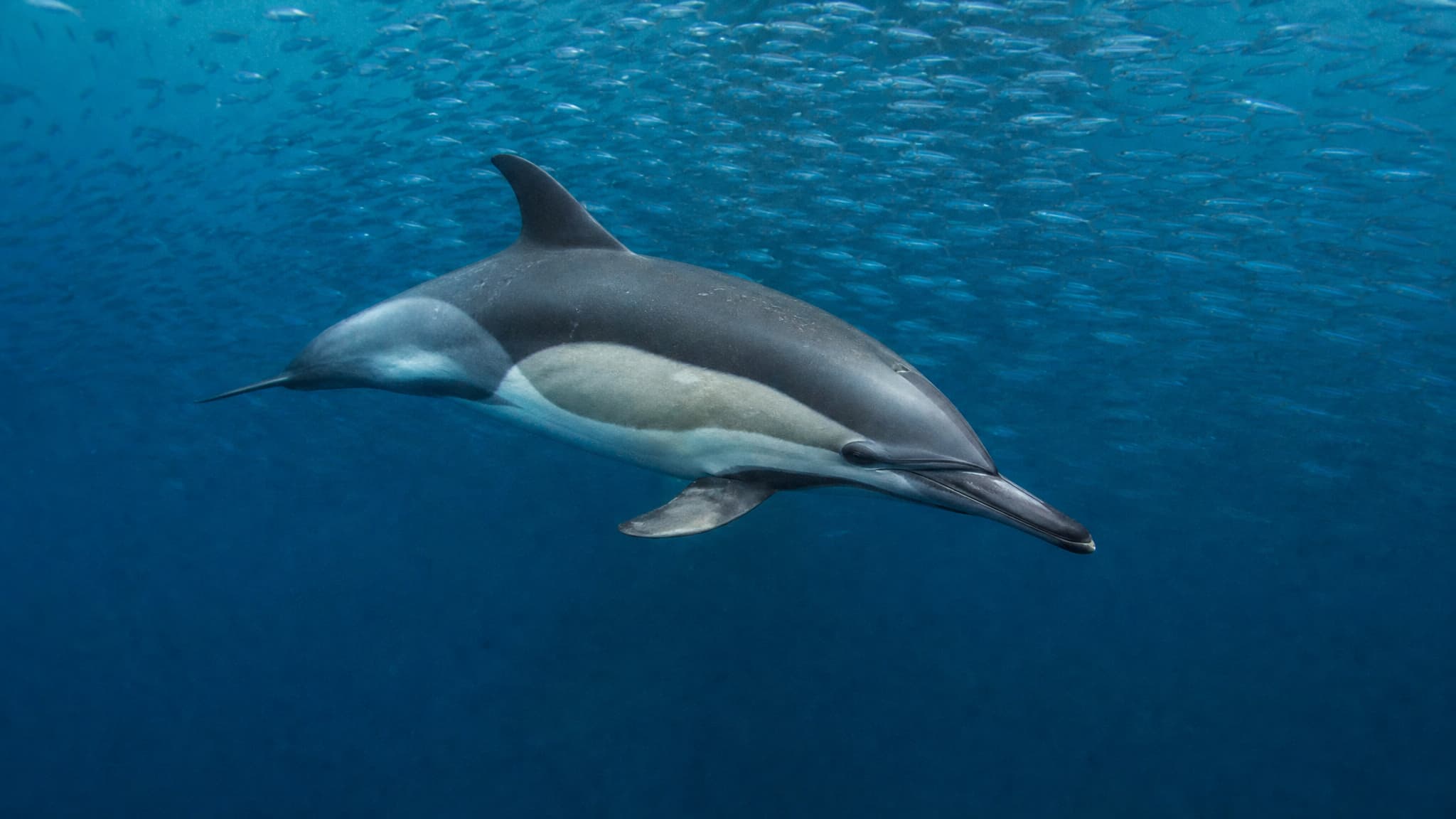
A common dolphin swims in profile through clear blue water, with its streamlined body, tall dorsal fin, pectoral flipper, long beak, and contrasting pale flank clearly visible. 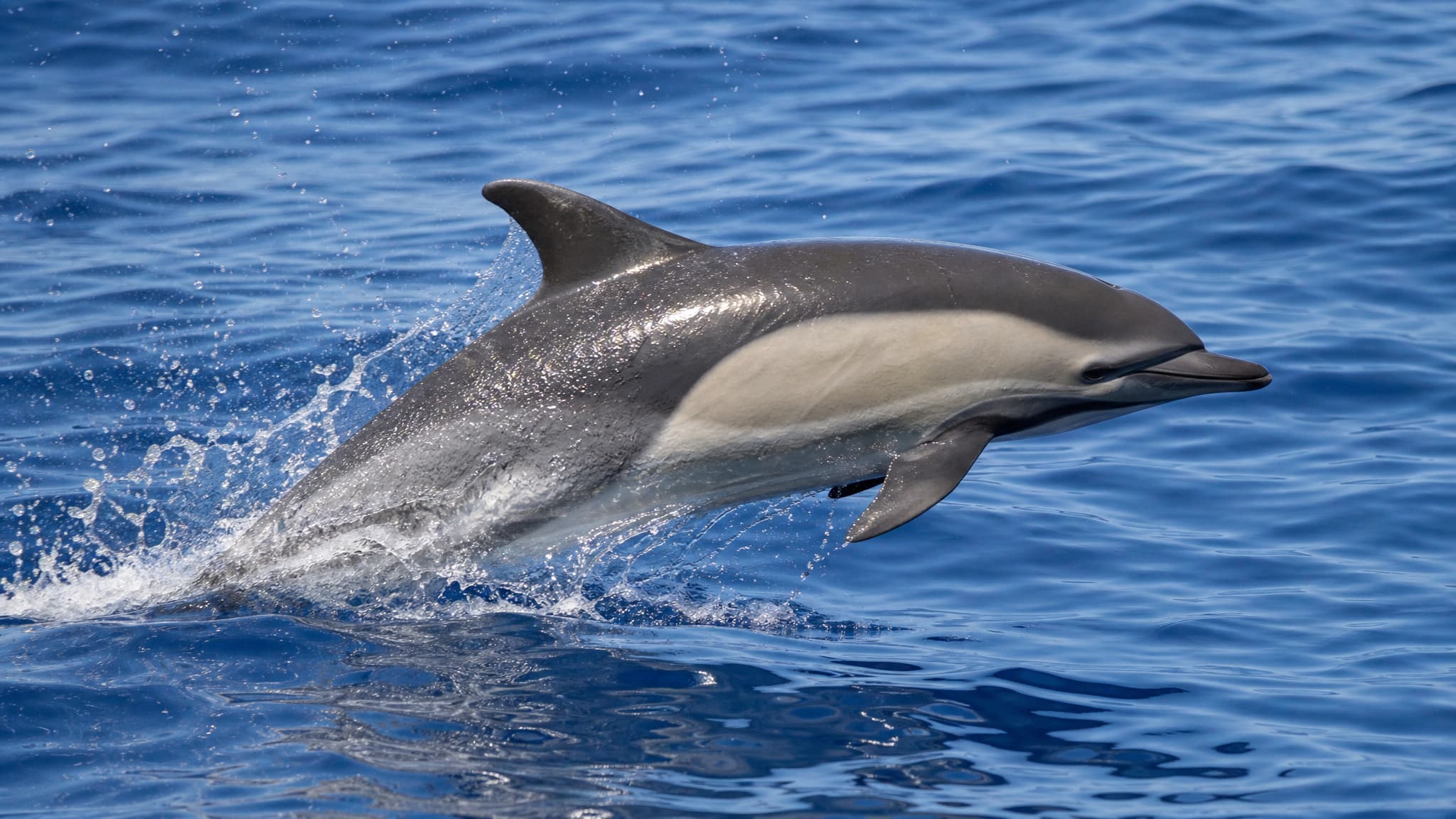 AI-generated
A short-beaked common dolphin leaps diagonally from the open sea, with its dorsal fin, pectoral fin, streamlined body, pale flank, and narrow beak clearly visible amid splashing water.
The short-beaked common dolphin (Delphinus delphis) is a sleek, highly social oceanic dolphin known for its striking, hourglass-like flank pattern. Adults are generally 1.8–2.4 m long, with males slightly larger than females. A dark gray to black cape covers the back, while yellowish-tan and pale gray panels brighten the sides; a dark stripe runs from the lower jaw toward the flipper. Its moderately long beak, rounded forehead, triangular dorsal fin, and many small pointed teeth help distinguish it from other dolphins.
This species has a broad, near-global distribution in tropical, subtropical, and temperate seas. It occurs chiefly offshore but can use continental-shelf waters and coastal areas. Common dolphins often gather near continental slopes, seamounts, ridges, and currents such as the Gulf Stream, where nutrient-rich upwelling supports dense concentrations of prey.
Pods commonly contain hundreds of dolphins and sometimes form aggregations of thousands. They are energetic swimmers, frequently leap, porpoise at the surface, and may ride a vessel’s bow wave. Sound is central to their lives: as toothed whales, they use clicks for echolocation and whistles and other calls for social communication. They may associate with tuna, seabirds, and other dolphin species where feeding opportunities overlap.
Short-beaked common dolphins mainly eat schooling fishes and cephalopods, including squid. They often feed at night, when vertically migrating prey becomes more accessible near the surface, though they can make much deeper dives. As mobile mid-level predators, they help transfer energy from fish and squid populations to larger marine predators and are themselves vulnerable to attacks by sharks and killer whales.
Females usually bear one calf every two to three years after a gestation of roughly 10–11 months. Calves nurse for about a year and may remain dependent on their mothers for longer. Lifespan is estimated at up to about 35 years. Globally the species is listed as Least Concern, yet bycatch and entanglement in fishing gear, hunting in some regions, vessel disturbance, noise, and pollution can seriously affect local populations.



