Short-finned pilot whale
Globicephala macrorhynchus
 AI-generated
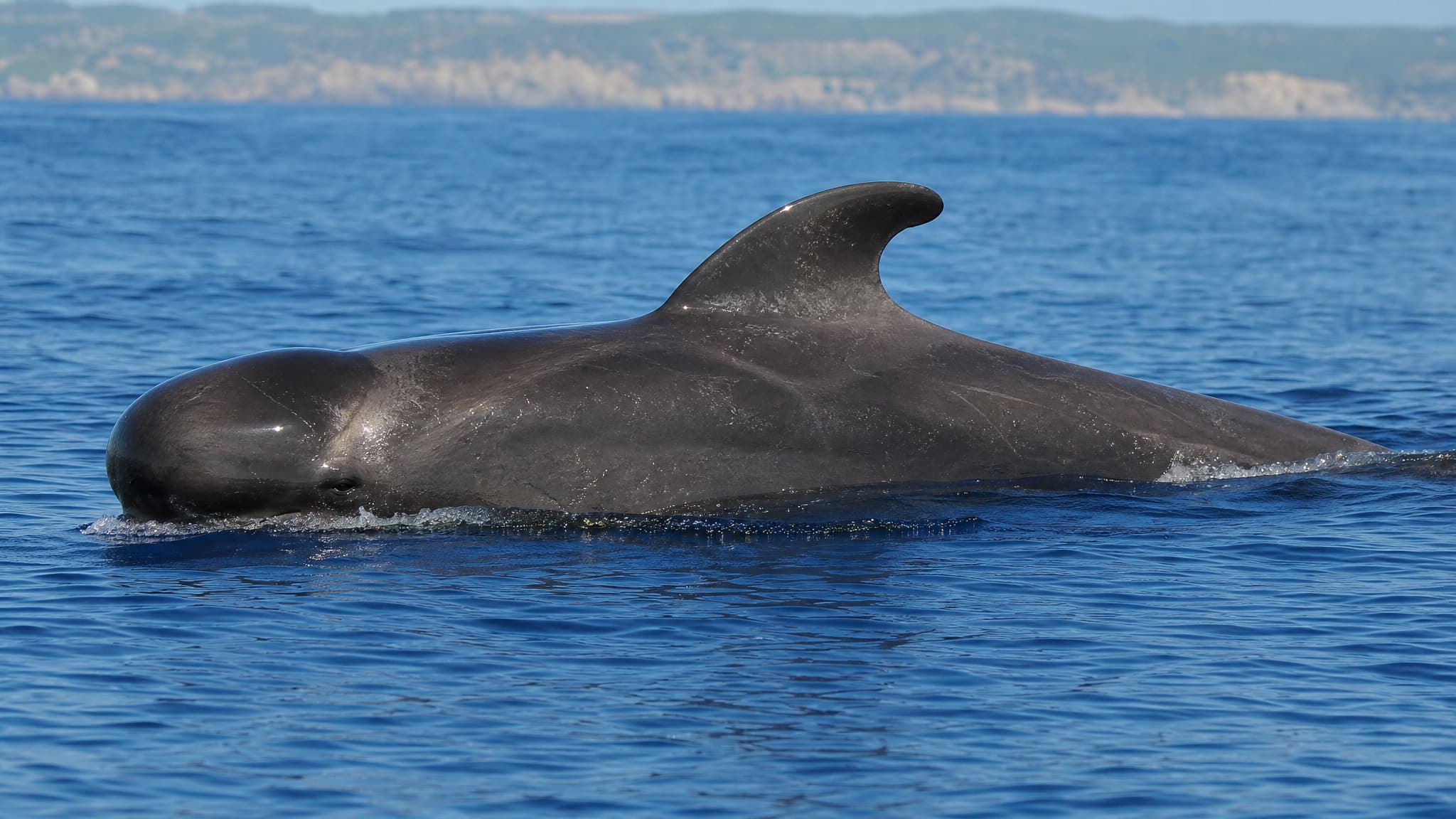
A dark pilot whale-like cetacean surfaces side-on in calm blue water, with a rounded forehead and prominent dorsal fin visible; a distant rocky coastline forms the background.
The short-finned pilot whale is a large, dark-colored oceanic dolphin rather than a baleen whale. It has a rounded, prominent melon, no conspicuous beak, a low sickle-shaped dorsal fin, and relatively short, narrow flippers. A pale gray-to-white, anchor-shaped chest patch and a gray saddle behind the dorsal fin are often visible. Males are substantially larger than females, reaching roughly 4–7 m in length.
This species occurs around the world in warm temperate, subtropical, and tropical seas. It commonly uses deep water near continental slopes and shelves, although it may also occur offshore in the open ocean. It can be difficult to distinguish from the long-finned pilot whale at sea, especially where the two species’ ranges approach one another.
Highly social and vocal, short-finned pilot whales live in stable, female-centered family groups, usually numbering dozens but sometimes hundreds. They communicate with clicks and whistles and make fast, deep dives to find prey. Squid is their principal food, supplemented by octopus and fishes; by feeding on deep-water cephalopods, they are important predators in offshore marine food webs.
Females generally remain with their natal group, while males often disperse. A single calf follows a gestation of about 15 months and nurses for at least two years; births tend to be spaced about 5–8 years apart. Females may live to about 60 years and males about 45 years. The species is globally assessed as Least Concern, but it remains vulnerable to fishery bycatch, directed hunting in some places, vessel strikes, ocean noise, and mass-stranding events linked in part to its strong social cohesion.