
Snow Leopard
Panthera uncia
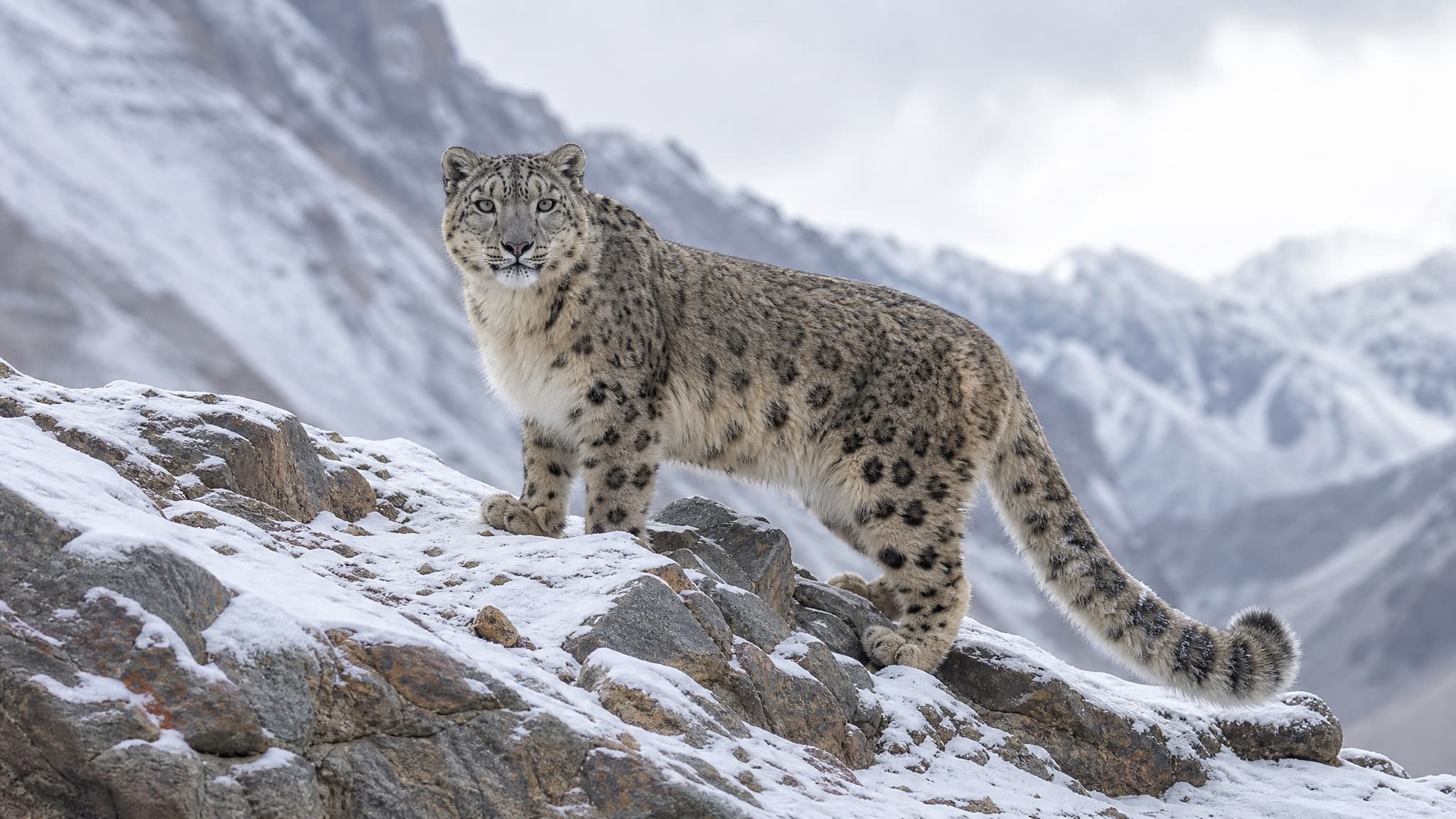 AI-generated
A snow leopard stands on a rocky, snow-covered slope, facing the viewer, with its spotted coat, rounded ears, broad paws, and long, thick ringed tail visible against a snowy mountain backdrop. 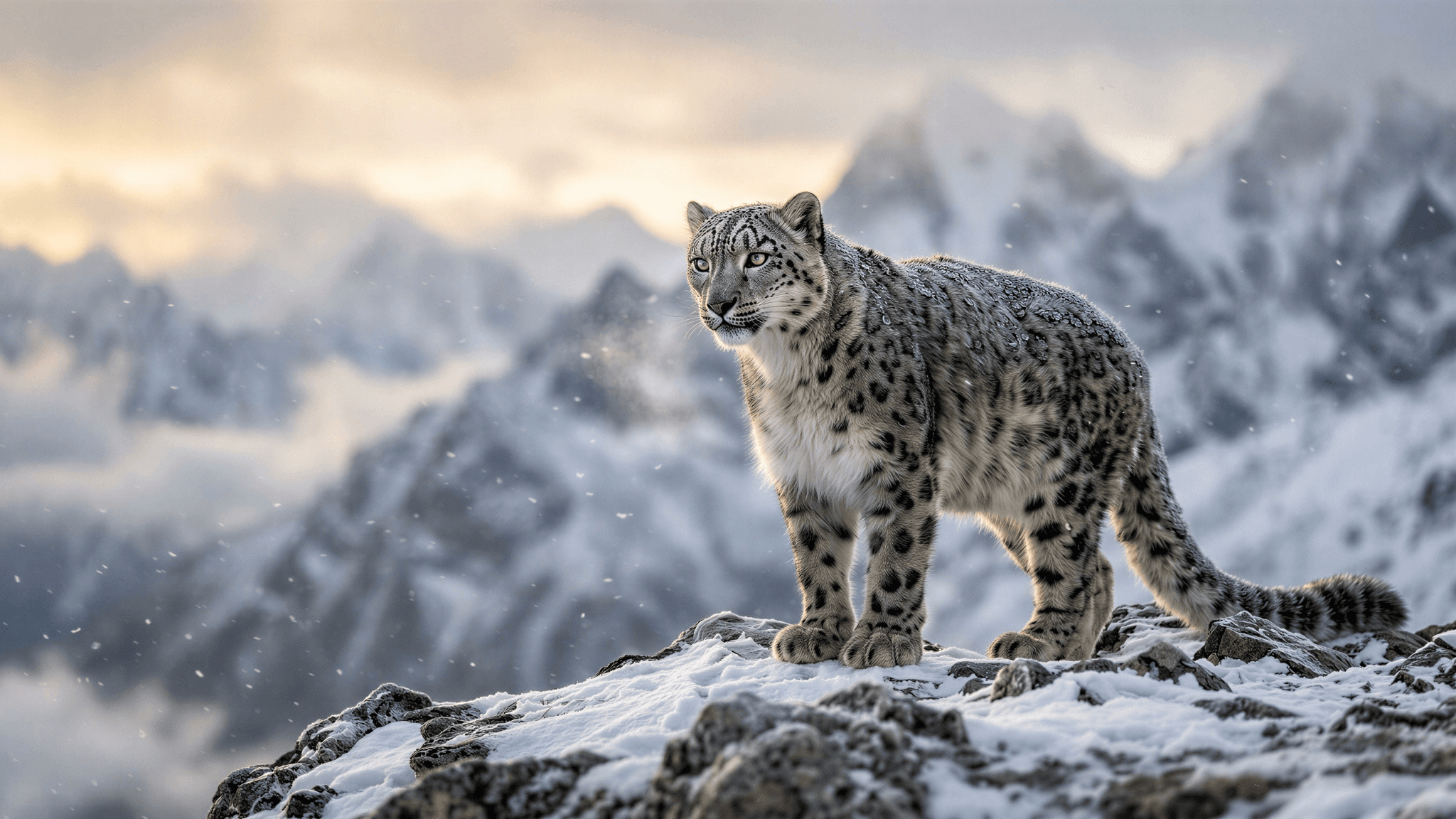
A snow leopard stands alert on a snow-covered rocky ridge, its spotted coat and long ringed tail set against falling snow and mountain peaks.
Snow Leopard
The snow leopard is a powerful but notably elusive wild cat of Central Asia’s high mountains. Its pale smoky-gray to cream coat, overlaid with dark spots and large rosettes, breaks up its outline against rock, scree, and snow. Thick fur, small rounded ears, broad furred paws, and a large nasal cavity help it withstand cold, thin air, and deep snow. Its exceptionally long, bushy tail—often 80–100 cm—assists balance on steep ground and can be wrapped around the body for warmth.
This species occurs patchily across mountain systems in 12 countries, including the Himalaya, Tibetan Plateau, Pamirs, Tian Shan, Altai, and parts of southern Siberia. It generally uses rugged alpine and subalpine slopes, cliffs, ravines, grasslands, and open shrublands, commonly around 3,000–4,500 m above sea level, though it may descend lower seasonally. Solitary adults travel through large, sparsely occupied ranges and leave scent marks and scrapes along routes used by other snow leopards.
An ambush predator, the snow leopard stalks from cover and often uses broken terrain or an elevated position before rushing prey. Wild sheep and goats—such as blue sheep, ibex, argali, and Himalayan tahr—are important foods where available; marmots, pikas, hares, birds, and other smaller animals also supplement the diet. By preying on mountain herbivores, it functions as an apex predator and is part of the ecological balance of high-elevation ecosystems. Declines in wild prey can increase livestock predation and conflict with herding communities.
Breeding is seasonal. Females usually raise one to five cubs, more often two or three, in a sheltered rocky den lined with fur. Cubs begin eating solid food at roughly two months, are weaned at about five months, and remain dependent on their mother for close to a year. Wild longevity is difficult to measure because the species is so hard to observe; available references give a lifespan of about 10–20 years. The snow leopard is listed as Vulnerable on the IUCN Red List. Major threats include poaching, retaliatory killing after livestock losses, loss of natural prey, habitat fragmentation and development, and climate-driven changes to alpine habitats.



