Tucuxi
Sotalia fluviatilis
 AI-generated
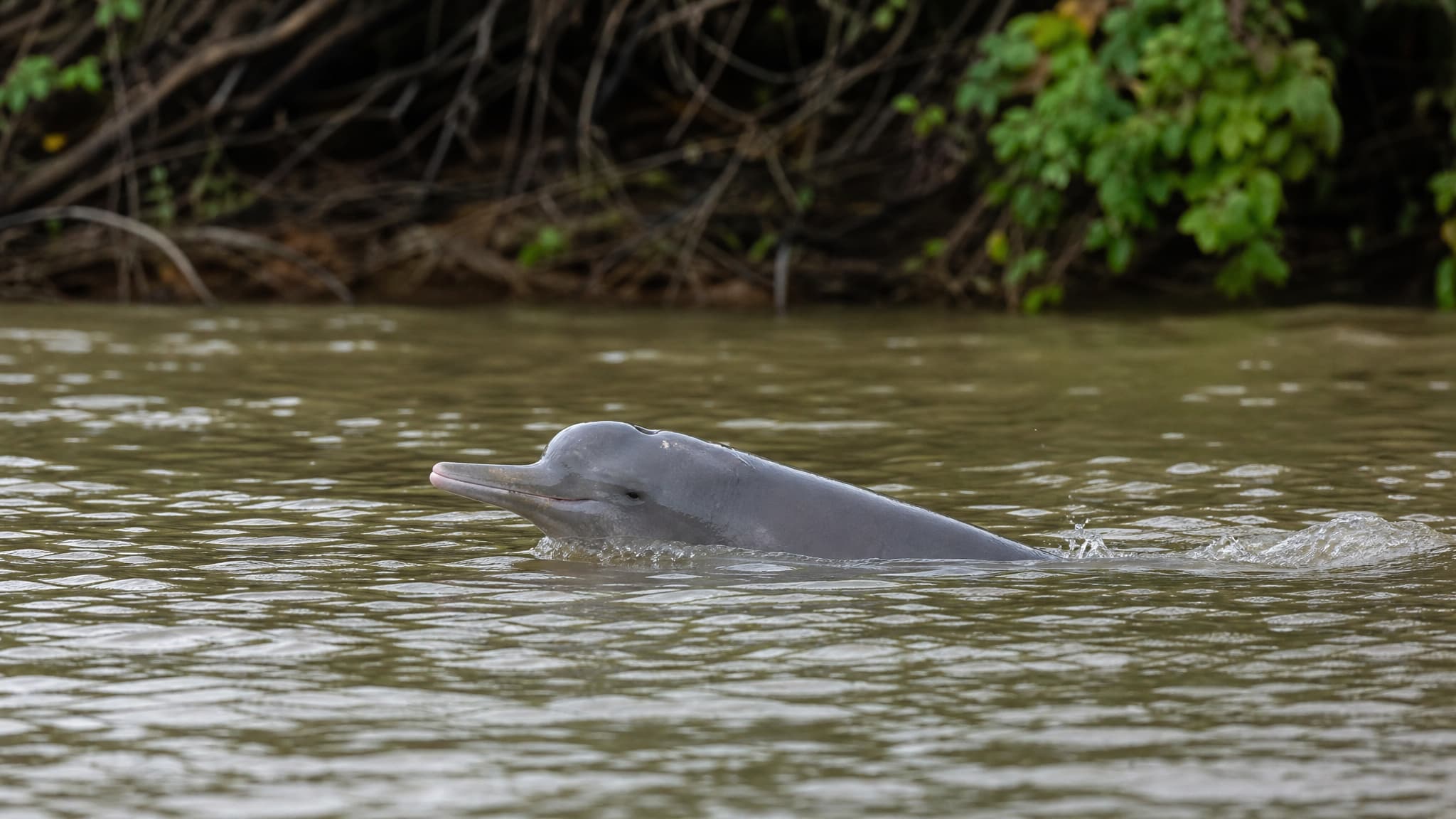
A gray Tucuxi (Sotalia fluviatilis) surfaces in a broad, rippled river, with its long slender snout and eye visible above the water. Dense leafy vegetation lines the far bank.
The tucuxi (Sotalia fluviatilis), also called the gray river dolphin, is a small freshwater dolphin of tropical South America. Its back is blue- to pearl-gray, while the underside is pale gray, white, or sometimes pinkish. It has a relatively short beak, a conspicuous triangular dorsal fin, and 28–35 teeth per jaw row. Adults commonly measure about 1.5 m, although reported lengths vary widely; males and females are broadly similar in overall size.
This species is native to the Amazon River basin, with records in Brazil, Colombia, Ecuador, and Peru. It lives chiefly in river channels, tributaries, and confluences, especially places where currents are less forceful and prey gathers. Tucuxis may use smaller tributaries during high water but generally do not forage deep within flooded forest, unlike the Amazon river dolphin (Inia geoffrensis).
A social, active predator, tucuxis often travel in small groups and communicate with whistles and clicks. Echolocation helps them find food in turbid water. Their diet consists mainly of small fishes; other aquatic prey may be taken where available. By consuming schooling fish, they form part of the Amazon’s aquatic food web and can indicate the health of connected river habitats.
Females usually bear a single calf after a gestation of roughly 10–11.6 months. Births are associated with the low-water season in parts of the range, and individuals reach sexual maturity at around six years. Wild tucuxis may live up to about 35 years. The species is Endangered: entanglement in fishing nets, dams and river fragmentation, declining prey, mercury and other pollution, vessel traffic, and habitat degradation are major concerns.