Sperm Whale
Physeter macrocephalus
 AI-generated
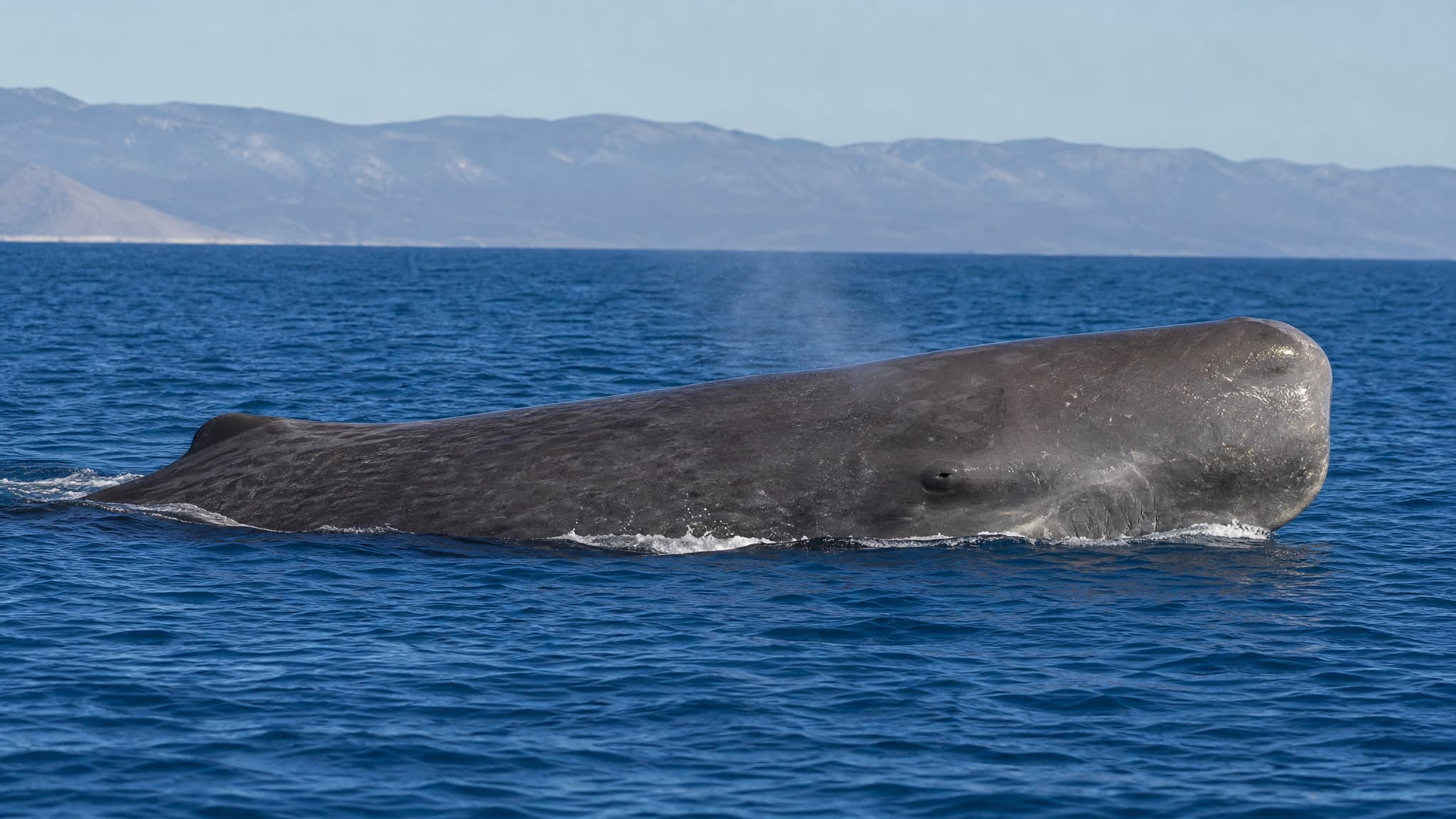
A Sperm Whale (Physeter macrocephalus) surfaces broadside in blue ocean, showing its massive blunt head, small eye, dark wrinkled body, and a faint spout. A mountainous coastline is visible on the horizon.
The sperm whale is the largest living toothed whale and a powerful deep-ocean predator. It is immediately recognizable by its enormous, squared head—about one-third of the body length—its narrow lower jaw, wrinkled skin behind the head, and low, rounded dorsal hump. Adults are generally dark gray, sometimes with pale patches on the underside. Its single blowhole sits to the left of the head rather than centrally, producing the species’ distinctive angled blow. Males are substantially larger than females and may reach about 52 feet (16 m) and 45 tons.
This species occurs in deep waters of every ocean, from equatorial seas toward the edges of Arctic and Antarctic pack ice. Distribution changes with age and sex: females and calves commonly remain in warmer tropical waters, while mature males may range far into temperate and high-latitude seas. It is most associated with offshore waters where the seafloor drops away, allowing access to the deep-diving prey on which it depends.
Sperm whales routinely make foraging dives to around 2,000 feet (610 m), often lasting about 45 minutes, then rest and breathe at the surface before diving again. Squid are important prey, alongside deep-water fishes, sharks, and skates. Sound is central to their underwater lives: their head contains the spermaceti organ, which helps focus sound. Females and young live in enduring social units, whereas young males depart to form bachelor groups and many large adult males become more solitary.
Females mature at roughly nine years old and usually bear one calf after a gestation of about 14–16 months, with births commonly spaced five to seven years apart. Calves nurse for several years, and the species can live up to about 60 years. As a major predator of deep-ocean animals, the sperm whale is an important part of marine food webs. Commercial whaling caused severe historical declines; today, entanglement in fishing gear, ship strikes, underwater noise, marine debris, pollution, and changes affecting prey or habitat remain concerns. The species is globally classified as Vulnerable by the IUCN.