Tropical chicken snake
Spilotes pullatus
 AI-generated
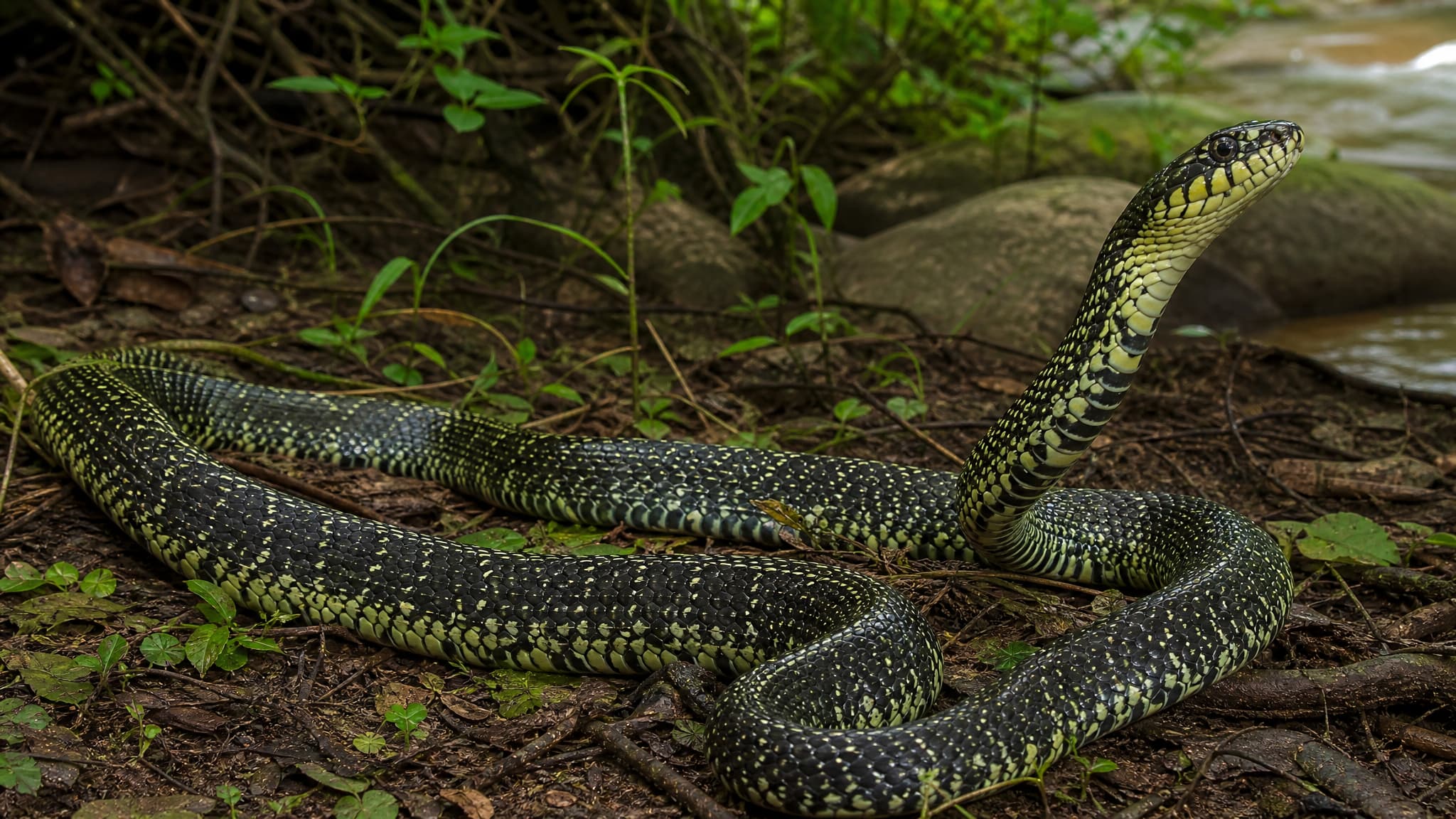
A Tropical chicken snake is coiled on the damp forest floor beside a stream, with its black-and-yellow patterned body and pale-banded neck raised upright.
The tropical chicken snake, Spilotes pullatus, is a large, slender colubrid snake of the Neotropics. It is often called a chicken snake or yellow rat snake in English and is readily recognized in much of its range by a bold black-and-yellow pattern. Patterning is variable: pale markings may form diagonal bands, crossbands, or a net-like design on a predominantly dark body. Adults commonly exceed 2 m and can reach about 2.5 m; the head is distinct from the neck and the pupils are round.
Its distribution extends from southern Mexico through Central America and across much of South America, including Brazil, to northern Argentina; it also occurs on Trinidad and Tobago. This adaptable snake uses forest, forest edge, disturbed vegetation, and areas near water. It is semi-arboreal—capable of moving through trees and hunting on the ground—and is primarily active by day. In Brazil it occurs in all major biomes except the Pampas.
An active, wide-ranging predator, it eats chiefly small mammals and birds, including nestlings and eggs, but amphibians and reptiles may also be taken. Research in Brazil found rodents, marsupials, bats, and birds among recorded prey. By preying on small vertebrates both on the forest floor and in vegetation, it is part of the food-web link between terrestrial and arboreal habitats. When threatened, it may raise its head, flatten or expand the neck, tongue-flick, and strike defensively. It is not considered medically venomous to people, but it should never be handled.
Females lay eggs. In one southeastern Brazilian population, reproductive activity was seasonal: mating occurred around the dry-season/rainy-season transition, eggs were laid mainly in the early rainy season, and clutches contained 5–11 eggs. Incubation in observed captive clutches lasted 101–117 days. Males may engage in ritualized combat, raising their forebodies while entwining. Wild longevity is poorly documented; captive-care references report that individuals may live up to about 15 years. The IUCN assesses the species as Least Concern because of its broad range and apparent tolerance of disturbed habitats, though habitat loss, roads, and intentional killing can still affect local populations.