Spiny softshell turtle
Apalone spinifera
 AI-generated
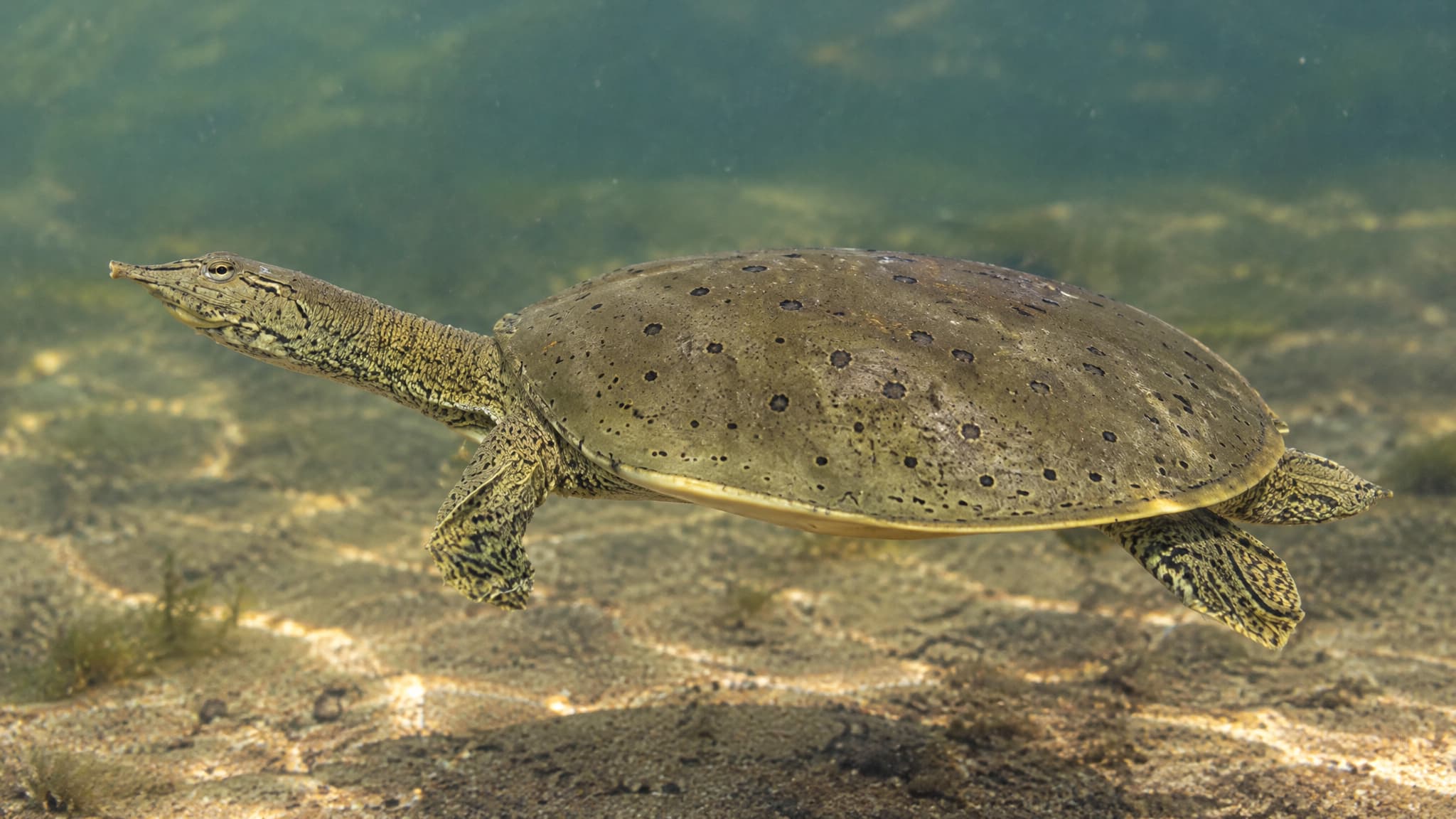
The spiny softshell turtle swims leftward in clear, shallow water above a rocky bottom, showing its flattened, flexible-looking spotted carapace, elongated neck, and paddle-like limbs.
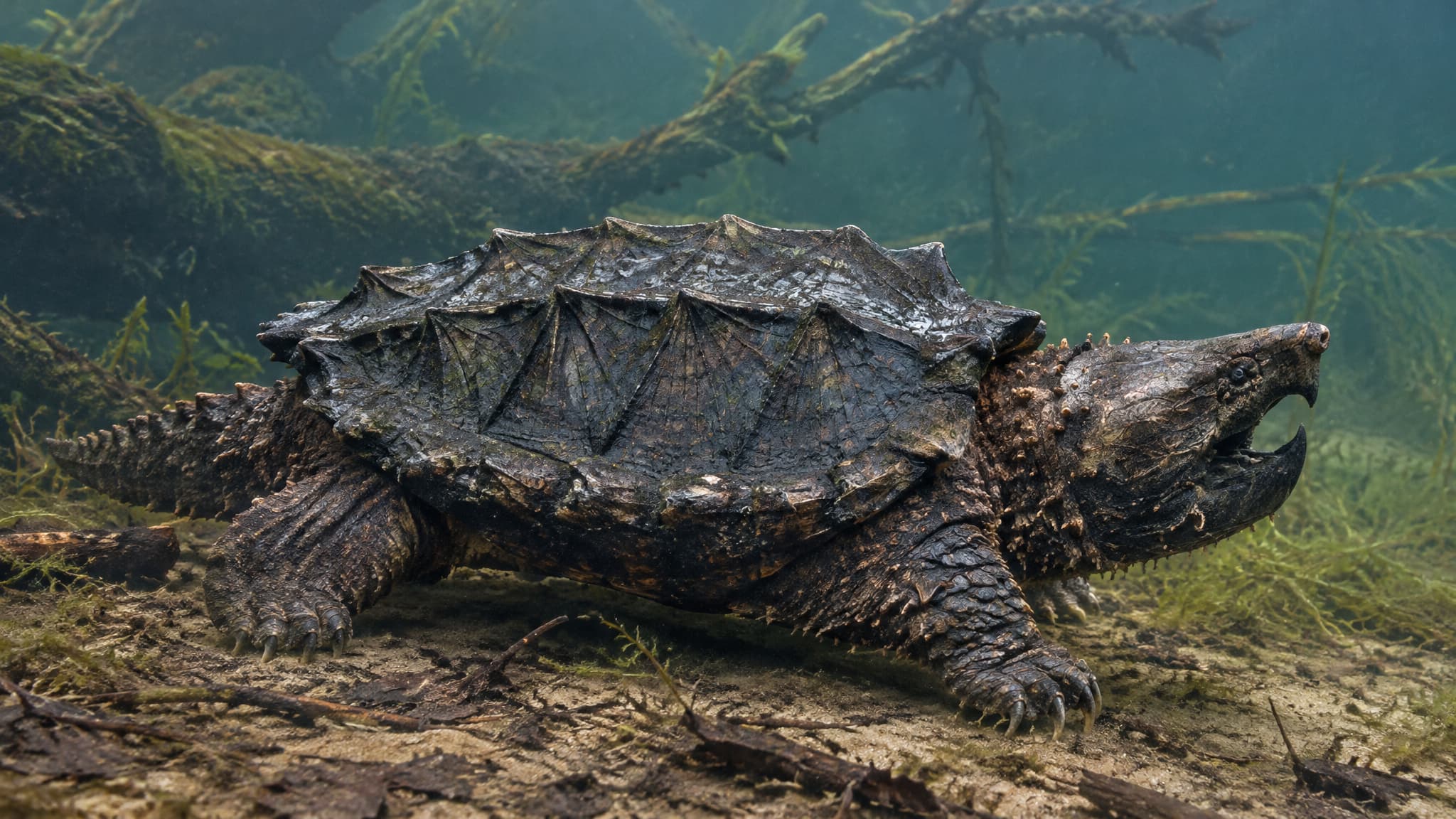
The spiny softshell turtle (Apalone spinifera) is a large North American softshell turtle of the family Trionychidae. Instead of horny scutes, its flat, rounded carapace is covered by leathery skin with flexible edges, and its front edge bears small cone-like projections that give the species its name. The carapace ranges from olive and tan to brown, the plastron is whitish or yellow, and the long, fleshy snout ends in C-shaped nostrils. Each webbed foot carries three claws.
Females are much larger than males. Carapace length runs from about 18 to 54 cm, and the TTWG 2025 checklist gives maximum carapace lengths of 27.5 cm for males and 54.0 cm for females. Males keep the juvenile pattern of dark spots and eyespots, have rougher shells and longer, thicker tails, while females often turn mottled or darker with age.
This is the most widely distributed softshell turtle in North America. It ranges across much of the central and eastern United States, southern Ontario and Québec in Canada, and northern Mexico, and has been introduced in several other states. It lives in rivers, streams, lakes, ponds, bayous and oxbows, usually in shallow water less than 1 m deep with sandy or muddy bottoms and little vegetation. Six subspecies are recognized.
The spiny softshell is active by day, basking on logs and banks and foraging along the bottom. It hunts actively or buries itself in sand to ambush crayfish, aquatic insects, other invertebrates and, at times, fish. Besides breathing air, it can take up oxygen through its skin and the linings of its throat and cloaca, which lets it stay buried underwater during a winter dormancy that lasts from about October to April.
Both sexes mature at 8 to 10 years and mate in deep water in mid to late spring. From around July, females dig flask-shaped nests on sunny sandbars or gravel banks and lay 9 to 38 round, hard-shelled eggs, sometimes nesting more than once a season. Incubation takes about two to three months, and sex is set genetically, not by nest temperature. Raccoons, skunks and foxes raid nests, and herons and large fish eat the young. A large female may live up to 50 years.
As a common bottom predator, the species helps shape populations of crayfish and aquatic insects. It is listed as Least Concern by the IUCN, but local populations suffer from shoreline development, loss of nesting sites, fish poisons such as rotenone, and hunting. The black spiny softshell (A. s. atra) of Mexico's Cuatro Ciénegas basin is Critically Endangered.