Striped Dolphin
Stenella coeruleoalba
 AI-generated
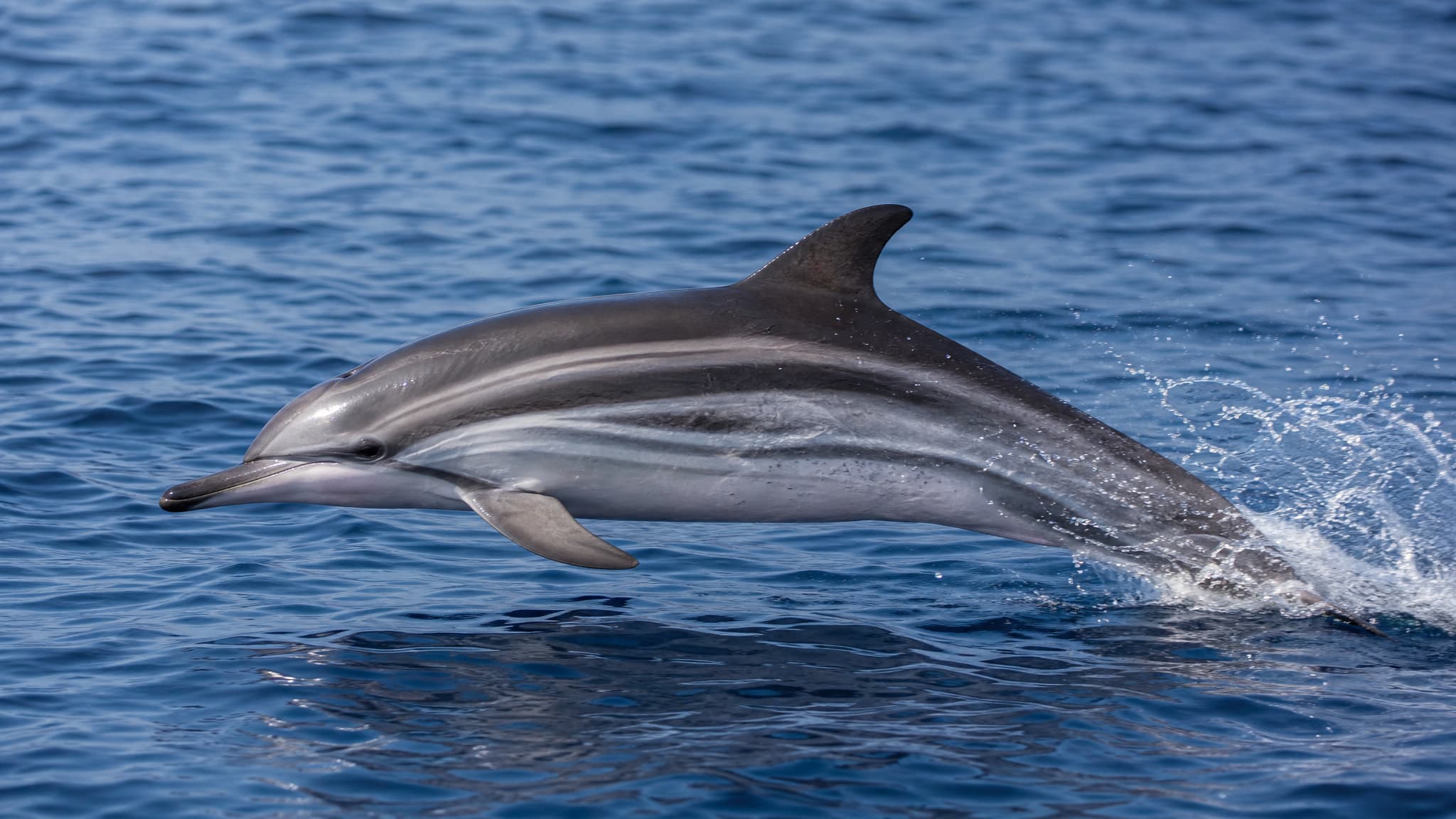
A striped dolphin leaps horizontally above the ocean, with its long beak, pectoral fin, tall dorsal fin, and pale longitudinal body stripes clearly visible.
Striped dolphin
The striped dolphin is a sleek, medium-sized oceanic dolphin recognized by its sharply contrasting blue-gray back, pale underside, and dark stripes along the flanks. A prominent dark line runs from the eye toward the anus, while other markings extend around the eye and toward the flippers. Adults generally reach about 2.4–2.7 metres in length; males are usually somewhat larger and heavier than females.
This species occurs in tropical and warm-temperate seas across the Atlantic, Indian, and Pacific oceans, including the Mediterranean and parts of the Caribbean. It usually favors deep offshore water, particularly around continental slopes, though it may also be encountered nearer shore. In United States waters it occurs in parts of the western Atlantic, Gulf of Mexico, Pacific coast, and around Hawaiʻi.
Striped dolphins are fast, social, and conspicuously active at the surface. Schools may contain dozens to hundreds of animals, and some gatherings are much larger. They communicate with whistles and clicks, use echolocation, and commonly leap, spin, bow-ride, and breach. Their flexible carnivorous diet includes schooling fishes, squid and other cephalopods, and occasionally crustaceans; feeding can occur through much of the water column.
Females typically bear one calf after a gestation of roughly a year, with births often occurring in summer or autumn. Calves nurse for about 12–18 months, and females generally produce a calf every three to four years. Individuals can live for several decades, with a reported maximum lifespan of up to 58 years. As a mobile predator, the species helps link populations of pelagic fish and cephalopods with larger marine food webs.
The striped dolphin is classified as Least Concern, owing to its broad distribution and overall abundance, but it faces important regional pressures. Entanglement and bycatch in fishing gear, directed hunting in some areas, chemical contamination, prey depletion, and disease outbreaks can cause serious local losses. A Mediterranean morbillivirus outbreak in the early 1990s killed more than a thousand dolphins, illustrating the species’ vulnerability where pollution and other stressors affect health.