
Tamanend’s bottlenose dolphin
Tursiops erebennus
 AI-generated
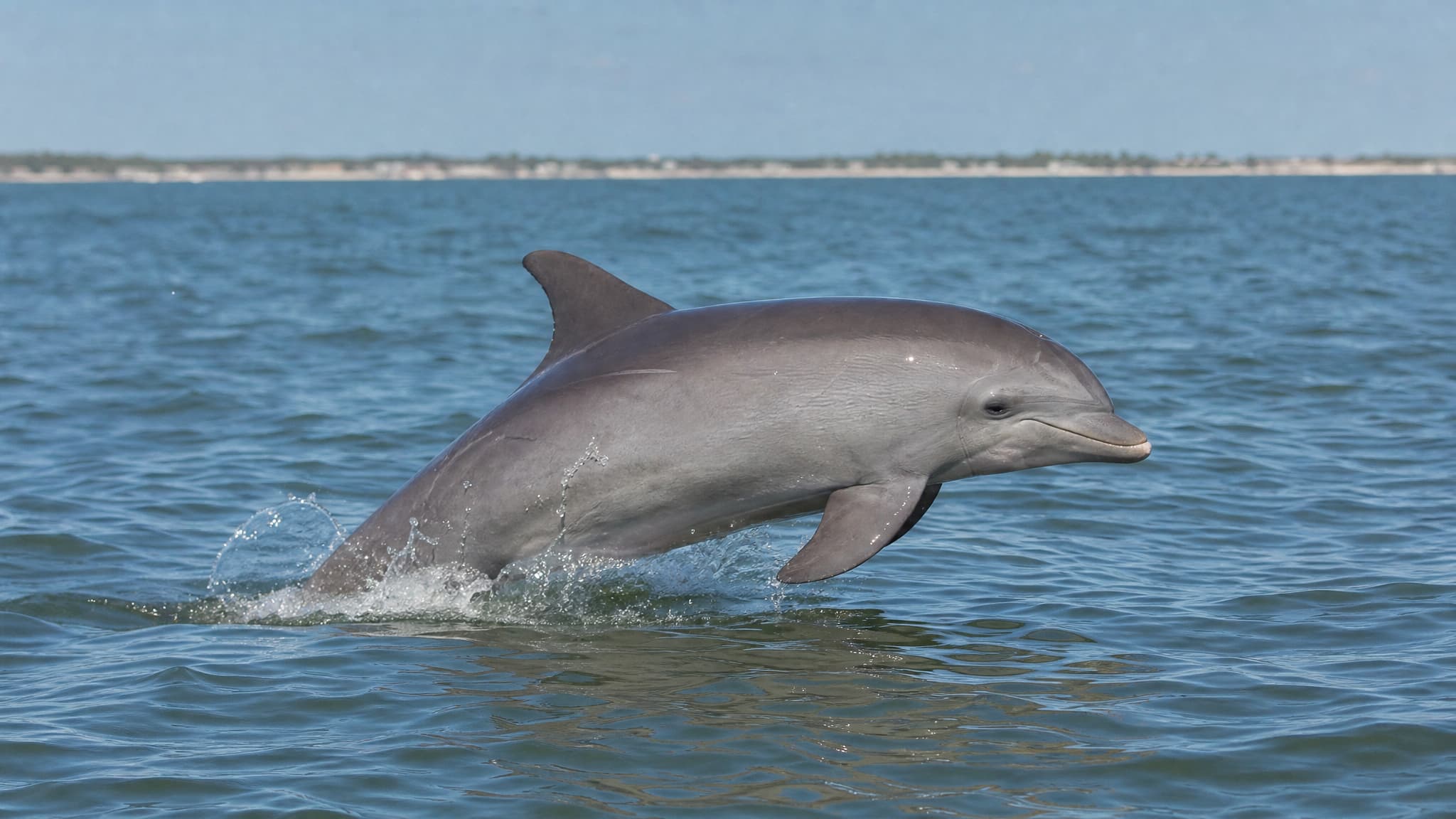
A bottlenose dolphin leaps rightward above coastal seawater, with its dorsal fin, pectoral flipper, rounded forehead, eye, and elongated beak visible. A low sandy shoreline appears in the background.
Tursiops erebennus, the Tamanend’s bottlenose dolphin, is a marine dolphin of the western North Atlantic. It was long treated as the coastal form of the common bottlenose dolphin, T. truncatus, but genetic and skeletal evidence supported recognition as a separate species. It is generally smaller and less robust than the offshore T. truncatus with which it may occur; reliable identification of individuals at sea can nevertheless be difficult.
This dolphin uses nearshore continental-shelf waters, estuaries, bays, and inlets along the eastern United States. Its well-supported core range extends from Florida north to about Long Island, New York, although the precise limits of the species farther south and in adjoining Caribbean and Gulf waters remain under study. Some coastal groups move seasonally in response to water temperature and prey, while others show local site fidelity.
Like other bottlenose dolphins, it is an intelligent, air-breathing odontocete that uses echolocation and hearing to find prey and coordinate with companions. Small groups—often fewer than 15 animals in some coastal areas—feed chiefly on fishes, including sciaenids such as Atlantic croaker, spot, and weakfish. By transferring energy from fish populations to higher trophic levels, it is an important coastal predator and a useful indicator of estuarine ecosystem condition.
Females give birth to a single calf after a roughly year-long gestation, and maternal care continues through nursing and a prolonged learning period. Detailed, species-specific lifespan estimates have not yet been established following its recent taxonomic recognition; related coastal bottlenose dolphins can live for several decades. Entanglement in fishing gear, vessel disturbance, contaminants, habitat degradation, disease, and harmful algal toxins can threaten local populations. The species is currently listed as Not Evaluated by the IUCN.



