Hermann's tortoise
Testudo hermanni
 AI-generated
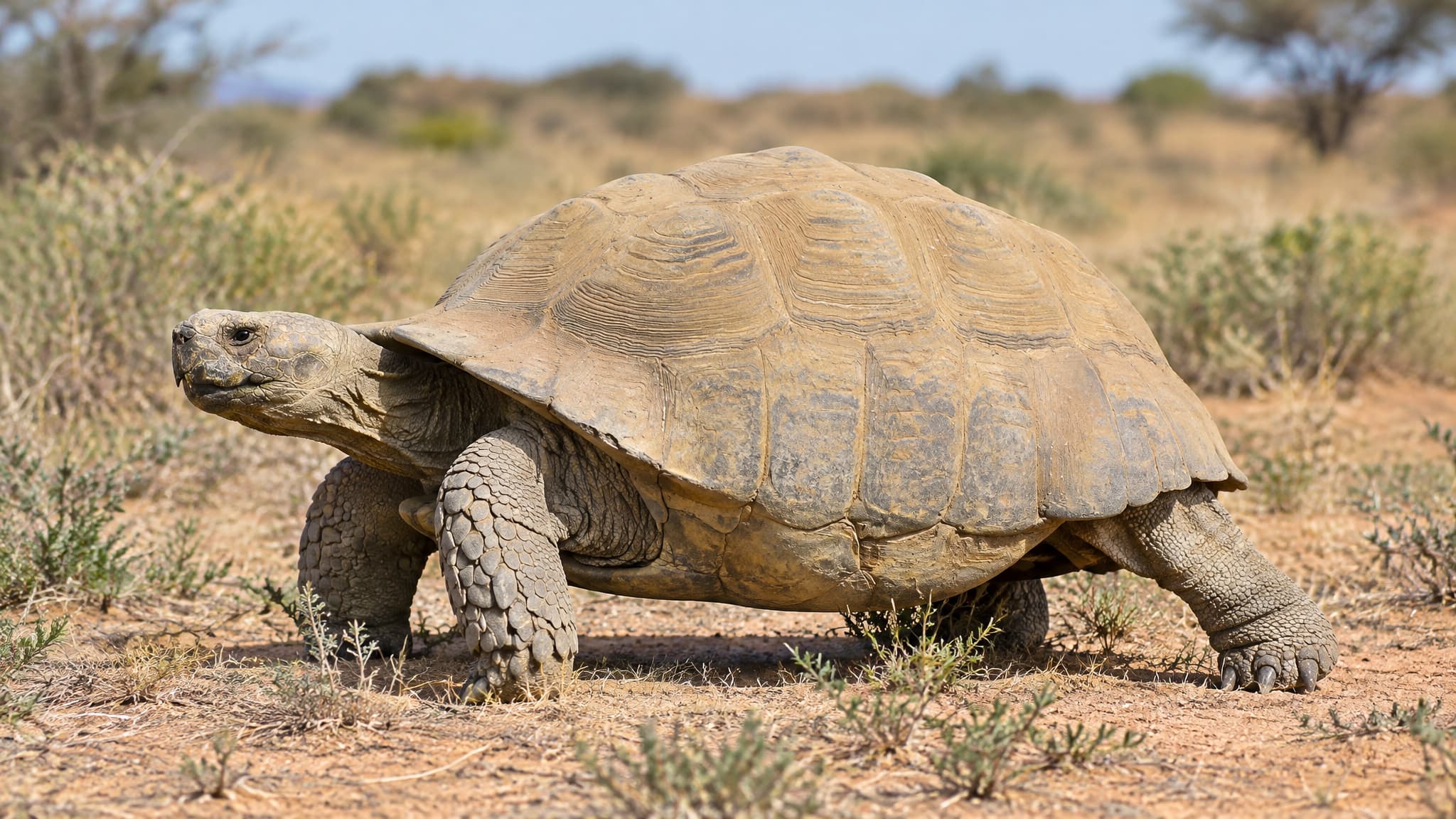
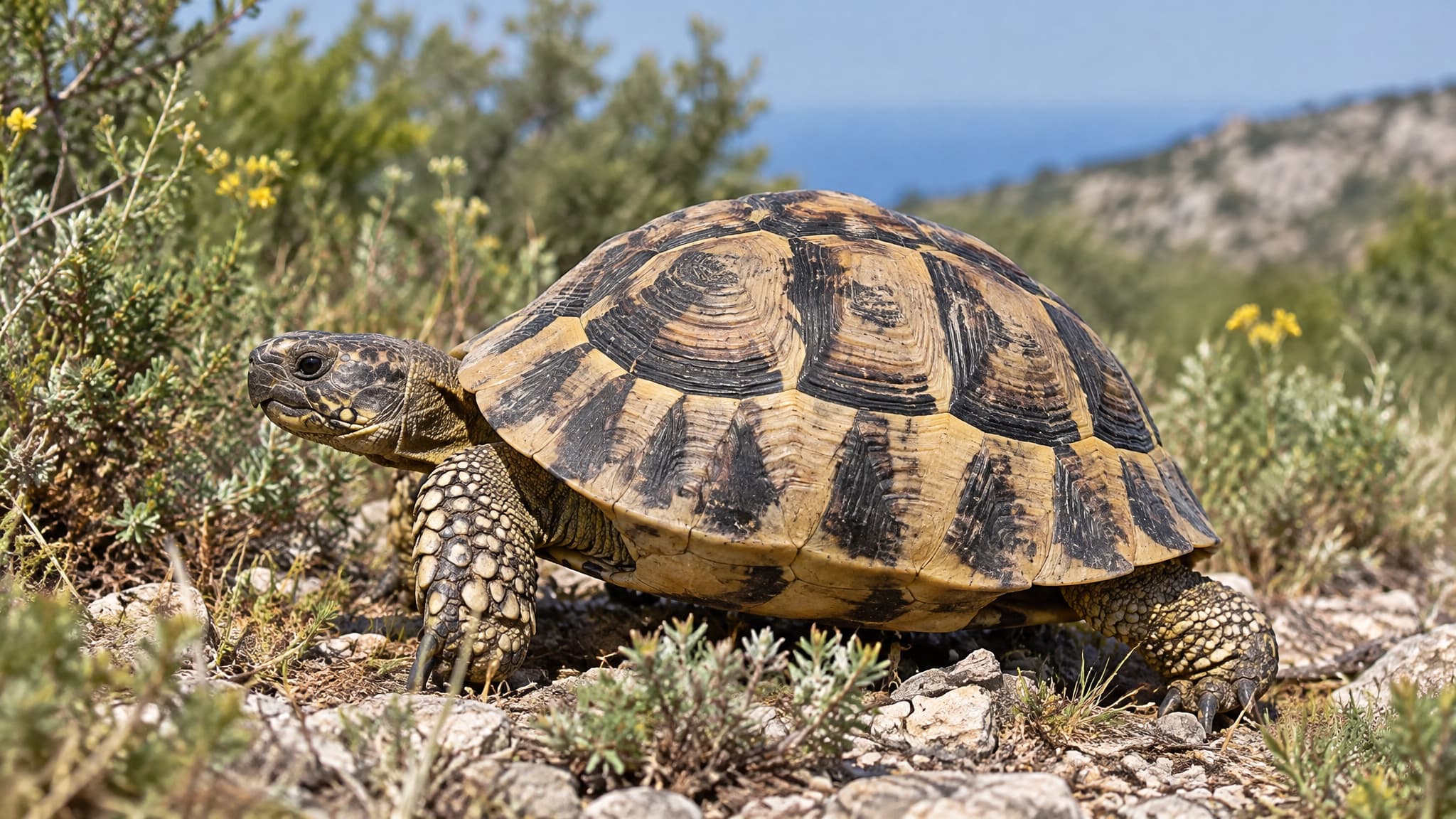
A Hermann's tortoise walks through low Mediterranean scrub and rocky ground, with its domed, boldly patterned shell, scaled legs, and extended head clearly visible. The background shows vegetation and a rocky coastal landscape.
Hermann's tortoise (Testudo hermanni) is a small to medium-sized land tortoise of southern Europe. Adults usually have a carapace about 13 to 18 cm long, and females are on average about 12% larger than males. Western animals rarely exceed about 18 cm, while large eastern individuals can reach about 28 cm. The domed shell is yellowish to olive with dark markings; western tortoises tend to be brightly patterned and eastern ones duller. Dark bands run along the plastron, and the scute above the tail is usually divided, a useful feature for telling it apart from similar Testudo species.
The species ranges from coastal north-eastern Spain and southern France through much of Italy and the Balkans to European Turkey, and lives on several Mediterranean islands such as Corsica, Sardinia and Sicily. Two subspecies are usually recognized: the western T. h. hermanni and the eastern T. h. boettgeri. It favors sunny, semi-open Mediterranean landscapes, especially stony hills with low, sparse shrubs and grass, and also uses woodland edges, dry grassland and farmland. Most populations live below 500 m, though eastern ones reach about 1,300 m.
Hermann's tortoise is mainly herbivorous, grazing on grasses, leaves and wildflowers that it chooses largely by smell; snails, slugs and insects are eaten occasionally. It is active by day, basking in the early morning before feeding, sheltering under dense bushes in the midday heat and foraging again in the late afternoon. It spends the winter in hibernation, buried in leaf litter or soil, usually emerging around February, and may also aestivate in hot, dry summers. Home ranges are small, about 0.9 to 7.4 ha for females and 0.7 to 4.6 ha for males.
Mating begins soon after hibernation, and males court females roughly by ramming and biting them. Between May and July females dig flask-shaped nests and lay one to three clutches a season. Clutches average about 3 eggs in the western subspecies and about 4 in the eastern, with up to 7 and 9 eggs respectively. Incubation takes about 90 days, and the sex of the young depends on temperature: around 26 °C produces males and around 30 °C produces females. Hatchlings appear from mid-August to September and receive no parental care. Adults often live about 30 years, and much longer lives have been suggested.
As a grazer, the tortoise feeds on many Mediterranean plants, and its eggs and young are prey for rats, magpies, snakes, foxes, badgers, hedgehogs and wild boar. Adults have few natural enemies thanks to their shell, and annual adult survival is high, about 85 to 97%. The IUCN lists the species as Near Threatened, although that assessment is old. Habitat loss from farming, building and roads, wildfires, collection for the pet trade and increased predation by boars and carnivores threaten many populations, especially western ones.